Category: Machine Control / Agriculture

  • New Report Considers GNSS Market Outlook 2015-2020

    Research and Markets has added the report “Global Navigation Satellite Systems Market Outlook 2020” to its offerings. The global core GNSS market is forecast to grow at a CAGR of 9 percent during 2015-2020.

    In the report, the analysts have identified and deciphered the market dynamics in important GNSS industry segments, highlighting the areas offering promising possibilities for companies to boost their growth, according to Research and Markets. The report studies the market by sectors including location-based services (LBS), transportation (further divided into road navigation, rail navigation, air navigation and marine navigation), surveying and agriculture. The GNSS application market is further studied by region: North America, Europe, Asia-Pacific, and Rest of World.

    The report provides a complete overview of the GNSS market globally. All the current trends and drivers, coupled with potential growth areas of the GNSS industry, have been evaluated in the report. Furthermore, the report provides information on opportunities in the industry for different companies in the chapter titled Opportunity Assessment.

    Additionally, to provide an exhaustive knowledge of the prospects for GNSS players on the geographical front, the report provides comprehensive knowledge of the 10 most worthwhile GNSS markets around the world (U.S., Canada, UK, France, Germany, RussiaJapan, China, South Korea and India). It includes information about the present state and future outlook of the LBS and telematics markets in these countries along with information about their personal navigation systems such as GPS, BeiDou,Galileo, GLONASS, QZSS and IRNSS.

    The report also looks into the competitive landscape covering business overviews, key financials, product analyses, recent developments and strengths and weaknesses of each of the players.

    Key trends considered in the report include:

    • Driverless Car: New GNSS Technology Use
    • Indoor GNSS Positioning Poised for Growth
    • People, Pets and Thing Finder: The Next Attraction
    • GNSS Based Products: A Burgeoning Market Opportunity
    • GNSS Jamming Gaining Attention

    Companies mentioned include:

    • AgJunction
    • CSR
    • Furuno Electric Co Ltd.
    • Garmin Ltd.
    • MiTAC International Corp.
    • Raytheon Company
    • Rockwell Collins
    • TomTom NV
    • Topcon Corporation
    • Trimble Navigation Ltd.


  • Topcon Partners with Toro on GPS-guided Turf Sprayer

    Topcon Partners with Toro on GPS-guided Turf Sprayer

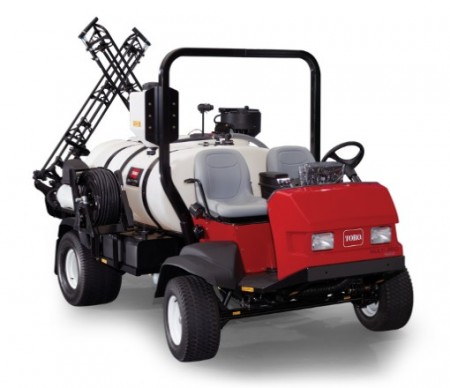
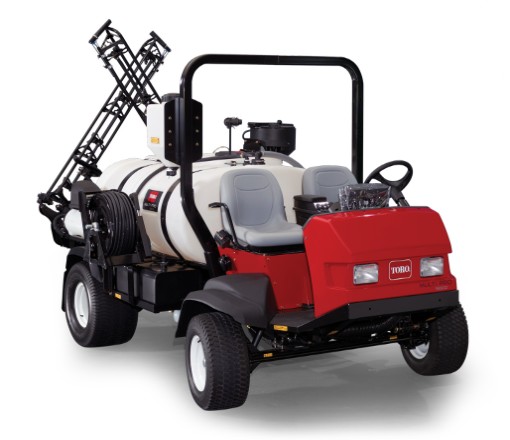
    Topcon Positioning Group is partnering with The Toro Company to develop a GPS-guided sprayer that Toro will start selling to the commercial equipment marketplace this summer. The GeoLink system will be available for the Toro Multi Pro 5800 initially, with plans to offer it for a broader range of Toro sprayers in the future.

    “We’re thrilled to partner with Toro on our debut in the turf spraying marketplace,” said Jason Killpack, director of business development, strategic partnerships for Topcon.

    Source: GPS world staff
    The Toro Multi Pro 5800 sprayer will get Topcon GPS guidance.

    “This new system, which builds upon Topcon innovations developed for precision agriculture, is an excellent example of how positioning technologies can benefit non-traditional industries. We are taking proven precision agriculture technology and providing it as a resource for Toro to employ in its market,” Killpack said.

    “In addition to working in tandem with Toro to develop this exciting new product, it also provides us the opportunity to expand our TopNETlive network, which is a key initiative within our organization.” The TopNETlive network is a subscription-based, real-time, GNSS reference network delivering high-quality correction data to rovers used for surveying, construction, GIS mapping and agricultural applications throughout North America.

    “We started by understanding customer needs, and then selected Topcon as a partner to develop an integrated user-friendly solution,” said Jace Bertsch, marketing manager for Toro. “We are very excited to offer the unique features that have been engineered into this system, and are confident that GeoLink will be successfully deployed in both the golf and sports field market segments. Simply put, GeoLink ensures accurate and consistent coverage, which translates into exceptional results and reduced chemical costs.”

  • Farmers Edge Acquires GranDuke Geomatics for Precision Agriculture

    Farmers Edge Inc., a precision agriculture and independent data-management company, has acquired GranDuke Geomatics Ltd. of Lethbridge, Alberta. The agreement was finalized on Jan. 9, giving control of the geospatial solutions and software development company to Farmers Edge.

    Headquartered in Winnipeg, Canada, Farmers Edge has operations in North and South America, Australia, Russia and Eastern Europe. The company said it’s goal is to increase growers’ profitability maintaining an environmentally sustainable approach by leveraging advanced precision tools and big data analytic solutions.

    Farmers Edge offers its Precision Solutions package for every agribusiness, crop and geography. Precision Solutions is a turnkey comprehensive package that includes variable rate technology, field centric weather monitoring, high-resolution satellite imagery, in-field telematics and real boots on the ground. Farmers Edge allows farmers to collect, store and transfer data, make advanced management decisions and measure results.

    Fertilizer and yield maps provided by GranDuke Geomatics Ltd. are part of the Precision Solutions product line, offering growers an increase in efficiency through automated workflows, specialized software design and cloud-based data processing.

    GranDuke Geomatics Ltd. was founded in 2012 by Guy Duke and Kevin Grant, and with the assistance of the National Research Council offers customized software solutions and geospatial applications to clients in precision agriculture, environmental monitoring, and oil and gas. With 22 employees, GranDuke Geomatics Ltd. will continue to provide advanced GIS and yield data processing services for Farmers Edge.

    “The acquisition of GranDuke is a huge opportunity for our company and our staff,” Grant said. “Farmers Edge is a world-class, fast growing precision agriculture company. We are excited to be a part of their continued growth.”

    “This acquisition is the culmination of a lot of hard work and late evenings providing Farmers Edge with rapid software development and quick product turn-around times for their data analysis and mapping,” Duke said.

    “We’re really excited about the acquisition of GranDuke Geomatics because they bring an outstanding software engineering team and valuable ag technology IP to the table,” said Wade Barnes, president and CEO of Farmers Edge Inc. “We are now incorporating this IP into our decision support tools that bring all the information together to make a meaningful impact on production. We want our growers to have all resources they need to attain the best results from their investment.”

  • TeeJet Launches Precision Ag GNSS Receiver

    TeeJet Launches Precision Ag GNSS Receiver

    The TeeJet RX50 receiver.
    The TeeJet RX50 receiver.

    The new RX520 dual-frequency GNSS receiver from TeeJet Technologies brings reliable, upgradable accuracy and performance to precision farming applications, TeeJet said. It features an integrated L1/L2 GPS+GLONASS receiver and antenna in a single compact enclosure. Integral magnetic mounting allows for a clean, low-profile installation.

    All RX520 receivers include ClearPath technology, which ensures smooth, consistent position data even if brief signal losses occur. The standard L1/L2 SBAS receiver offers +/- 5-8 in pass-to-pass accuracy for a wide variety of field operations. Optional precise point positioning (PPP) provides improved +/- 2-4 in pass-to-pass accuracy and year-to-year repeatability, making it suitable for strip-till and other high-precision operations. PPP accuracy is delivered via TerraStar subscription signal and is offered in 1-, 3-, 6- and 12-month packages.

    “This is a very versatile receiver that is compatible with TeeJet and many third-party guidance and auto steer products,” said Tim Stuenkel, global marketing manager with TeeJet Technologies. “Another great feature is the ability to pay for only the accuracy you need today, with the flexibility to upgrade to higher performance down the road as your needs change.”

    TeeJet Technologies manufactures a comprehensive line of products including agricultural spray nozzles for various pesticide/fertilizer applications, boom components, valves/manifolds, strainers, and spray guns, as well as GPS guidance systems, sprayer control systems, ISOBUS job computers, assisted steering systems and other precision farming products. In addition, TeeJet Technologies continues to invest in research and development to advance precision application and control technology.

  • Report Looks at Feeding Growing Global Population with Precision Farming, IoT

    A new report by Beecham Research examines how the agricultural sector is embracing precision farming to face challenges raised by an increasing worldwide population and the impact of climate change.

    The United Nations predicts the global population will reach 8 billion by 2025, and 9.6 billion by 2050, meaning food production must increase by 70 percent by 2050.

    The report explores how agricultural operations are changing through the Internet of Things (IoT) and related smart and connected farms concepts, including precision agriculture guided by GPS. It provides a geographic analysis discussing public policies, adoption drivers and barriers, and opportunities for the M2M/IoT community.

    The Executive Summary of the report, “Towards Smart Farming: Agriculture Embracing the IoT Vision,” is available here.


  • Tallysman Wraps Antennas in Armored Cable for Precision Ag, M2M

    Tallysman Wraps Antennas in Armored Cable for Precision Ag, M2M

    This photo shows the corrugated conduit covering the RG174 cable with Tallysman’s TW2410 antenna.
    This photo shows the corrugated conduit covering the RG174 cable with Tallysman’s TW2410 antenna.

    Tallysman’s enclosed antennas now come with optional armored corrugated cable. The standard RG174 cable is encased in a corrugated conduit of tough plastic, which maintains its functionality between the temperatures of -40 to +150C.

    The extra protection increases the resilience of the antenna for use in precision agriculture, machine-to-machine, and other rugged applications.

    Tallysman is a manufacturer of high-performance, high-quality products for a wide range of GNSS applications.

  • Automated Pile Driver from Orteco Uses Altus APS-U for Machine Control

    Automated Pile Driver from Orteco Uses Altus APS-U for Machine Control

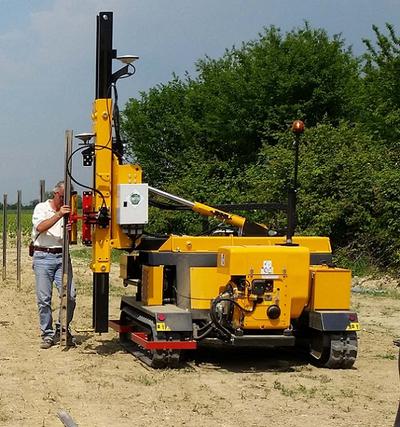
    Orteco is an Italian manufacturer of pile-driving equipment.
    Orteco is an Italian manufacturer of pile-driving equipment.

    Orteco, a specialized manufacturer of pile driving machines based in northern Italy, has introduced a series of robotic pile drivers using APS-U GNSS RTK receivers from Altus Positioning Systems. The products are being supplied to Orteco by Altus’ parent company, Septentrio NV.

    The driverless tracked crawler maneuvers automatically under control of the APS-U, which provides centimeter-level position coordinates and heading information within 0.3 degrees, following a project map loaded into the machine’s computer. It automatically drives itself to each location, positions the mast and drives the post in a perfectly vertical position, stopping the installation at exactly the desired height, then moves automatically to the next spot.

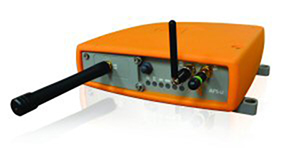
    The Altus APS-U-HDG is a high-precision 272-channel GPS/GLONASS/SBAS receiver with dual antennas designed to provide highly accurate heading and position for machine control applications. Cased in a rugged MIL-STD-810C aluminum housing, the instrument is built to the most rigorous standards for waterproofing, humidity, dust, shock, vibration and extreme temperatures.

    The Altus APS-U-HDG.
    The Altus APS-U-HDG.

    Orteco is building the GNSS-controlled pile driver in various configurations for applications such as photovoltaic farms, fences, roadside barriers and agriculture. It makes pile driving jobs faster, safer and more accurate with fewer workers, increasing productivity and reducing costs, Altus said.

    “The Orteco machines provide a perfect demonstration of the ruggedness, power and performance of the APS-U as a highly accurate heading and positioning sensor in one of the most demanding environments imaginable,” said Altus CEO Neil Vancans. “In extensive tests conducted by Orteco, the APS-U receivers proved themselves up to the task, performing reliably under the constant heavy pounding and vibration of the pile driver.”

    Based in Bologna, Orteco is a specialized manufacturer focused on pile driving with a 40-year history. In 2011, the company reached a milestone of 1,000 pile drivers produced and distributed all over the world. The company’s GNSS-controlled agricultural pile driver, designed to install posts in large vineyards, was recognized as a winner of the Innovation Challenge Enovitis in campo 2014 by Unione Italiana Vini and Veronafiere.

  • U of Michigan Wins ION’s Fifth Autonomous Snowplow Competition

    U of Michigan Wins ION’s Fifth Autonomous Snowplow Competition

    The University of Michigan's snowplow. (Photo: Rory Thomas).
    The University of Michigan’s snowplow earned the team $7,000 and a Golden Snow Globe Award. (Photo: Rory Thomas).

    A team from the University of Michigan took home the fifth Institute of Navigation (ION) Satellite Division’s Autonomous Snowplow Competition. The competition was held Jan. 22-25 at Rice Park in downtown Saint Paul, Minn., in conjunction with the 129th Saint Paul Winter Carnival.

    Sponsored by The ION Satellite Division and held in cooperation with the ION North Star Section, the ION Annual Autonomous Snowplow Competition is a international event open to college and university students, as well as the general public, that challenges teams to design, build, and operate a fully autonomous snowplow using state of the art navigation and control technologies to rapidly, accurately and safely clear a designated path of snow.

    Eight teams participated during the four day competition, each using state of the art navigation systems to plow two different snowfields.

    Teams included students, partners from private industry and faculty advisors from Case Western Reserve University; Dunwoody College of Technology; North Dakota State University, University of Calgary, University of Michigan, Dearborn, and The University of Minnesota – Twin Cities.

    The winning snowplow by the University of Michigan team. (Photo: Kristen Sheikh)
    The winning snowplow by the University of Michigan team. (Photo: Kristen Sheikh)

    Teams were judged based upon their cumulative scores earned throughout the competition phases: 75% of the total score was based upon the plowing competition; and 25% of the total score was based upon the presentations and pre-event report.

    • First place was awarded to the University of Michigan, Dearborn’s team “Zenith 2.0.” The first place prize included $7,000 and a Golden Snow Globe Award.
    • Second place was awarded to the University of Michigan, Dearborn’s team “Yeti 5.0.” The second place prize included $4,000 and a Silver Snow Globe Award.
    • Third place was awarded to the Dunwoody College of Technology’s team “Snow Devils 01012.” The third place prize included $2,000 and a Bronze Snow Globe Trophy.

    In addition, the first place team, University of Michigan, Dearborn, has been invited to display the winning snowplow during ION GNSS+ 2015 conference Sept. 14-18 in Tampa, Florida.

    Sponsors of the Fifth Annual ION Autonomous Snowplow Competition included Lockheed Martin Corporation, ASTER Labs, Inc., Honeywell, Inc., Alliant Techsystems Inc. (ATK), UTC Aerospace, US Bank, Space Exploration Technologies Corp. (SPACEX), The Toro Company, John Deere and Company, Proto Labs, Inc., Nuts and Volts Magazine, Servo Magazine, and Achievement Rewards for College Scientists Foundation (ARCS).

    The competition received national media attention in addition to considerable local coverage helping to advance the goal of driving innovation for the future of autonomous robots.

    The Sixth Annual ION Autonomous Snowplow Competition will be held in January 2016 at the Saint Paul Winter Carnival, St. Paul, Minnesota. For more information, visit www.autosnowplow.com.

    inning team from the University of Michigan, Dearborn’s “Zenith 2.0.” From left: Suneel Sheikh, Jason Spurlock, Benjamin Pollatz, Paraham Moassesi, Scott Zwally, Narasimhamurthi (Nattu) Natarajan (team advisor).
    inning team from the University of Michigan, Dearborn’s “Zenith 2.0.” From left:
    Suneel Sheikh, Jason Spurlock, Benjamin Pollatz, Paraham Moassesi, Scott Zwally, Narasimhamurthi (Nattu) Natarajan (team advisor).
  • By 2020 Connected Cars Will Mean In-Vehicle Services, Automated Driving

    By 2020 a quarter billion connected vehicles will be on the road, enabling new in-vehicle services and automated driving capabilities, according to Gartner, Inc. During the next five years, the proportion of new vehicles equipped with this capability will increase dramatically, making connected cars a major element of the Internet of Things (IoT).

    Gartner forecasts that 4.9 billion connected things will be in use in 2015, up 30 percent from 2014, and will reach 25 billion by 2020.

    “The connected car is already a reality, and in-vehicle wireless connectivity is rapidly expanding from luxury models and premium brands to high-volume midmarket models,” said James F. Hines, research director at Gartner. “The increased consumption and creation of digital content within the vehicle will drive the need for more sophisticated infotainment systems, creating opportunities for application processors, graphics accelerators, displays and human-machine interface technologies. At the same time, new concepts of mobility and vehicle usage will lead to new business models and expansion of alternatives to car ownership, especially in urban environments.”

    Gartner forecasts that about one in five vehicles on the road worldwide will have some form of wireless network connection by 2020, amounting to more than 250 million connected vehicles. The proliferation of vehicle connectivity will have implications across the major functional areas of telematics, automated driving, infotainment and mobility services.

    More detailed analysis is available in the Gartner report “Predicts 2015: The Internet of Things.”

  • Drone Demonstrated for Congressional Science Committee

    The House Science, Space, and Technology Committee held a hearing Jan. 21 on the integration of commercial unmanned aerial vehicles in United States airspace. Colin Guinn, senior vice president of sales for 3D Robotics, demonstrated the Parrot Bebop drone during his testimony.

    C-SPAN aired the event, as reported by the National Journal. Congress has tasked the Federal Aviation Administration with readying airspace for the integration of commercial drones. Drones are currently prohibited for use, but the FAA has granted a growing number of exemptions for certain industries, including an exemption to GNSS company Trimble for its UX5 drone.

    Also, earlier this month, CNN signed a research agreement with regulators to test drone systems for news-gathering purposes.

    Meanwhile, a hobbyist crashed his UAV on the White House lawn early this morning.

  • Trimble Acquires Nexala to Expand Rail Transport Role

    On Dec. 1, Trimble acquired privately held Nexala, a provider of enterprise solutions for the rail transport industry, headquartered in Dublin, Ireland. Financial terms were not disclosed.

    Nexala’s enterprise solutions manage the lifecycle of rail transport vehicles from operation through maintenance and repair. The Nexala enterprise solutions complement Trimble’s existing portfolio of rail solutions, enabling Trimble to address the broader railway workflow — from initial greenfield track alignment planning to managing the maintenance of locomotives in a repair depot.

    Trimble’s existing railway solutions leverage the spectrum of Trimble technology for track and structure construction and maintenance — including construction machine control systems, Building Information Modeling (BIM) software and highly precise track measurement systems — to enable high-quality railway construction on time and budget. On the operations side, Trimble’s fleet mobility solutions, RFID reading technology and Positive Train Control (PTC) mapping systems enable productive and safe operation of passenger and freight railroads. The addition of Nexala will accelerate Trimble’s ability to deliver more complete solutions for both railway infrastructure managers and transport operators.

    Nexala provides an integrated suite of on premise and software as a service (SaaS) solutions for large transport operators and global train and component manufacturers. The solutions include:

    Engineering Maintenance Management (E2M):  The Nexala E2M system is an enterprise-wide engineering, asset and maintenance management system. E2M is designed to control assets, manage stock, streamline procurement, schedule workshop operations and plan maintenance in order to achieve optimum asset availability and labor utilization.

    Real-time Remote Diagnostic Monitoring (R2M):  The Nexala R2M system combines shore-based software and on-train equipment to deliver fault alerts as they occur for effective condition-based maintenance. Communicating with the maintenance depots in real-time, the system allows for efficient fault diagnostics and work scheduling by the maintenance team. In addition, by analyzing irregularities of individual components and their behaviors across the entire fleet, the R2M system allows maintenance actions to be performed to avoid future failures.

    In-Service Performance Planning and Management (P2M):  The Nexala P2M system uses timetable, actual vehicle location and real-time diagnostics information to help identify the root cause of delays and plan journeys for optimum timetable adherence. Through a combination of journey planning and improved driver awareness, it also is used to maximize energy/fuel efficiency and manage driver behavior. The P2M system also provides the operations teams with in-service recommendations when fleet failures occur to reduce delays and penalties. P2M is also available as an on-board cab advisory system for drivers.

    Component Condition Monitoring (C2M):  Nexala’s C2M suite combines trackside and handheld measuring devices with software analytics to proactively monitor wheels, brakes, pantographs and key components for wear and defects. By detecting and analyzing anomalies, it provides predictive advice of maintenance requirements and automates maintenance planning.

    “Many of the largest railways in the world rely on Trimble solutions to plan, build and maintain their track and structures. With the addition of Nexala, we also offer rail vehicle lifecycle management solutions for passenger and freight train operators. Trimble can now provide innovative solutions for both the track infrastructure and the train assets that ride on it,” said Ron Bisio, general manager of Trimble’s Railway Solutions Business. “Our fundamental focus is to provide solutions that drive agility, improve efficiency and provide better visibility into railway operations to maximize productivity.”

    “We are very excited to join Trimble. I believe the addition of Nexala’s solutions to Trimble’s portfolio extends our collective ability to deliver more powerful and robust rail solutions,” said Karl O’Connell, CEO of Nexala. “In addition, Nexala can leverage Trimble’s international footprint to extend our company’s global reach with a team that shares our passion for innovation in the rail transport industry. As part of Trimble, our commitment to our customers remains unchanged as we continue to deliver best-in-class solutions and services.”

    The Nexala business will be reported in Trimble’s Engineering and Construction Segment.

    Nexala is a leader in rail transport vehicle lifecycle management solutions. Nexala’s solutions allow companies to plan for the future, improve operational efficiencies, manage their service levels, and to reduce their costs while at the same time ensuring that the service they provide is maintained to the highest level. Nexala has operations in Ireland, United Kingdom, France, Belgium and North America. Nexala’s customers include Southwest Trains, Eurostar, SNCF, Irish Rail, the Go-Ahead group, Abellio, Siemens Transportation, Alstom and Greater Anglia among others.
  • AgJunction Debuts LiteStar III Guidance System for Aerial Application

    AgJunction, a provider of hardware and software solutions for precision agriculture, today announced the release of its latest aerial guidance product, the LiteStar III from Satloc at the National Agricultural Aviation Association annual convention in Louisville, Kentucky.

    As the next generation of affordable GPS guidance system for aerial applicators, LiteStar III builds upon the features of the previous LiteStar II system with more attributes, including simplified navigation set-up and guidance options.

    “LiteStar III continues to represent the high-value, low-cost solution for entry level aerial applicators,” said T. J. Craig, director of sales for Satloc. “And now, the redesigned system features an all new ultra-bright L7 light bar that improves safety and minimizes fatigue.”

    The LiteStar series of aerial GPS systems have provided consistent market success for Satloc for more than a decade, accumulating a large installed base. “The new LiteStar III marks the beginning of a technology upgrade path for many of our customers,” added Craig.

    “One of the best features is the quick return on investment that operators can expect from the LiteStar III system,” Craig said. “It’s not only a low-cost reliable option for aircraft guidance, but the light bar provides the core information the operator needs for an aerial application, including on-swath indicators and spray on/off indicators.”

    The product is being showcased this week at Satloc booth #829 at the NAAA annual convention and is available through Satloc dealers.