Category: Applications

  • ESA’s HydroGNSS satellites launched to scout for water

    ESA’s HydroGNSS satellites launched to scout for water

    The European Space Agency’s first Scout mission, HydroGNSS, was launched Nov. 28, marking a significant step in advancing global understanding of water availability and the effects of climate change on Earth’s water cycle.

    The two twin HydroGNSS satellites were carried into orbit at 19:44 CET aboard a SpaceX Falcon 9 rocket, as part of the Transporter-15 rideshare flight from the Vandenberg Space Force Base in California.

    Less than 90 minutes after liftoff, the two satellites separated from the rocket. Then, at 22:45 CET, Surrey Satellite Technology Ltd. (SSTL) in the UK confirmed that they had received signals, indicating that both satellites were safely in orbit around Earth.

    How GNSS reflectometry helps

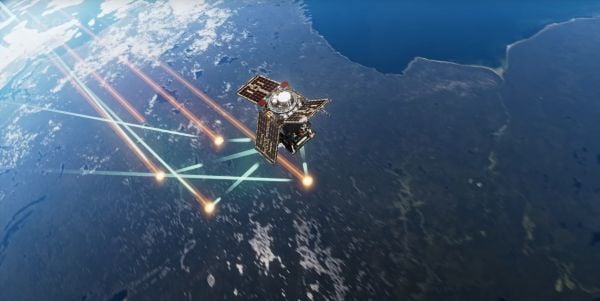
    Both satellites use GNSS reflectometry to scout for water by capturing L-band signals from navigation systems such as GPS and Galileo. These navigation satellites transmit L-band microwave signals that change when they are reflected off Earth’s surface.

    The HydroGNSS satellites then compare these reflected signals with the signals the satellites receive directly from the GNSS satellites to reveal valuable information about the properties related to the water cycle, and more.

    To do this, each HydroGNSS satellite carries a delay doppler mapping receiver and two antennas. A zenith antenna tracks direct GNSS signals and a nadir antenna collects reflected signals and processes them into delay Doppler maps.

    Using this technique, the two small satellites, which orbit Earth 180 degrees apart, will measure soil moisture, freeze-thaw state, inundation and above-ground biomass.

    Understanding the water cycle

    The data will not only be vital for advancing our understanding of Earth’s water cycle, but also for supporting applications such as flood prediction and agricultural planning.

    Also, by observing the extent of inundation and areas of wetland, HydroGNSS will help reveal wetlands – important ecosystems that can act as significant sources of methane – often hidden beneath forest canopies.

    Information on freeze–thaw states will provide insight into the surface radiation balance, energy and carbon exchanges with the atmosphere, and the behaviour of subsurface permafrost in high latitudes.

    Meanwhile, data on above-ground biomass will contribute to estimates of forest carbon stocks and their role in the global carbon cycle.

    More Scouts to come

    The Scout satellite missions harness small, smart satellites to shrink proven technologies or test bold new ways of observing the planet. Each mission races from concept to launch in three years, on a lean budget of €35 million that covers everything from design and construction to in-orbit operations.

    “As the first of ESA’s Scout missions to launch, HydroGNSS marks an important milestone for this new family of rapid, low-cost Earth observation missions, and we extend our thanks to the mission’s prime contractor, SSTL,” said Simonetta Cheli, ESA’s director of Earth Observation Programmes. “The launch also represents a key step in the evolution of our FutureEO programme, where the Scouts embody a fast, agile, innovative and cost-efficient approach – complementing our larger Earth Explorer research missions.

    “We now look forward to seeing how HydroGNSS will employ GNSS reflectometry to deliver valuable insights into key hydrological variables that shape Earth’s water cycle,” Cheli said.

    ESA’s prime contractor for the HydroGNSS mission is SSTL in the UK. SSTL is also responsible for operating the satellites in orbit and for distributing the data. The mission is also thanks to partial funding from the UK Space Agency.

  • VBOX Automotive launches NTRIP base station

    VBOX Automotive launches NTRIP base station

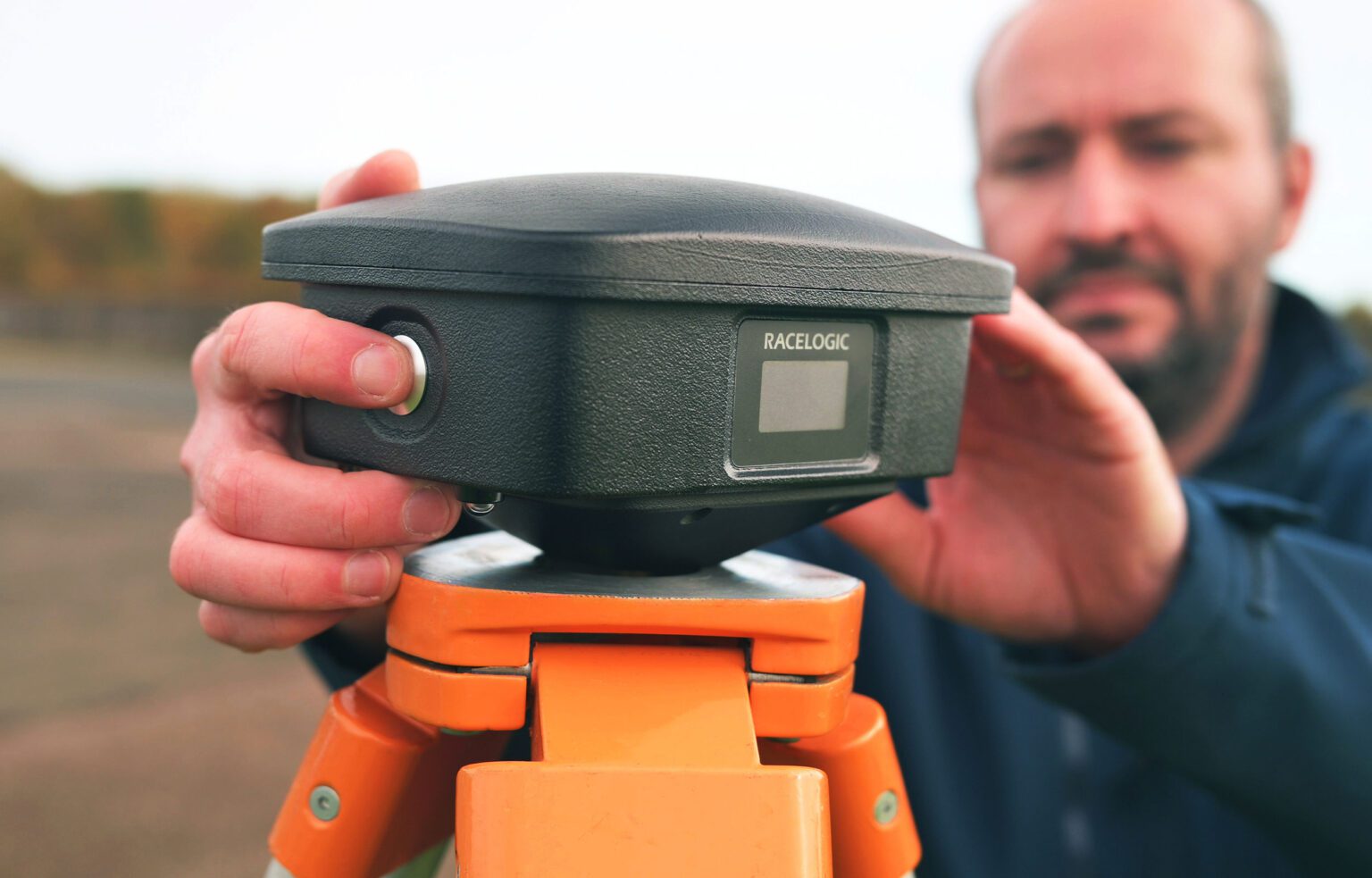
    VBOX Automotive has launched the NTRIP Base Station, expanding its GNSS test equipment range. The system combines a multi-constellation, multi-frequency GNSS engine with a built-in networked transport of RTCM via internet protocol (NTRIP) server.

    The equipment transmits real-time kinematic corrections over radio and cellular or Wi-Fi networks, supporting accurate real-time positioning across wider areas in varied environments compared to traditional radio-only systems.

    The base station launches in three models, with specifications designed to fit users’ needs. All systems combine quad-constellation, dual-frequency GNSS technology with built-in cellular and Wi-Fi connectivity. 

    • Internal GNSS antenna and 2.4 GHz radio
      Quick to deploy for short-range applications, for temporary or mobile testing. 
    • Internal GNSS antenna, no radio
      Compact and simple, ideal for NTRIP or semi-permanent installations with external high-power radio masts. 
    • External GNSS antenna, no radio 
      Optimized for permanent installations with tripod-mounted antennas for maximum satellite visibility, supporting NTRIP or external radio. 

    Compatible with VBOX 4, VBOX 3iS, and external GNSS rovers, the new NTRIP Base Station supports both MSM4 and MSM7 RTCM formats, has up to 24 hours battery life, and is rated to IP67 to handle the demands of long outdoor test sessions. 

    “We have developed the NTRIP Base Station in response to the growing need for accurate positioning in more varied test environments,” said Martin Papps, engineering director at Racelogic. “This new Base Station delivers centimetre-level accuracy without the range and line-of-sight limitations of traditional radio corrections.”

  • AAGS YouTube seminars on geodetic topics in support of a certificate in geodetic surveying

    AAGS YouTube seminars on geodetic topics in support of a certificate in geodetic surveying

    My May 2025 GPS World newsletter highlighted the American Association for Geodetic Surveying (AAGS) “Certificate for Geodetic Surveying” Program. This newsletter will update readers on the program. As I mentioned in the May 2025 newsletter, the Certificate for Geodetic Surveying program is designed to meet the needs of surveyors and others who perform spatial analyses and computations using geodetic methods. 

    Some of you may not be familiar with AAGS. The American Association for Geodetic Surveying (AAGS) aims to guide the community of geodetic, surveying and land information data users into the 21st century by working together to develop new educational programs — such as presentations, seminars, and workshops on geodetic surveying — and by publishing articles and papers that share the latest scientific and technological advances, along with advice for cost-effective, efficient implementation. AAGS also encourages a deeper understanding of geodesy by offering educational materials in geodesy, geodetic surveying and related fields.


    The AAGS Board meets on the second Wednesday of each month at 4:00 p.m. (Eastern Time). Please visit the AAGS website and consider joining our monthly board meetings — a forum to share ideas and learn about geospatial products and services. All are welcome. To be added to the attendee list, email me at [email protected].

    Here’s the latest on the certification program: AAGS has developed questions covering the seven core areas of minimum competence in geodetic certification: (1) Geometric Geodesy, (2) Physical Geodesy, (3) Accuracy and Error, (4) Temporal Aspects, (5) Global Navigation Satellite Systems, (6) Geodetic Survey Networks, and (7) Standards and Guidelines. For details on each topic, see my May 2025 GPS World newsletter. The information below includes examples the Board is considering for the exam.


    AAGS Geodetic Certification Exam — Sample Questions

    In the ECEF coordinate system, the X and Y axes define

    1. minor axis of a reference ellipsoid
    2. spin axis of the Earth
    3. prime meridian and north pole
    4. |equatorial plane
    • Physical Geodesy

    The term ‘deflection of the vertical’ applies to what?

    1. Error introduced when the curvature of the earth is not accounted for
    2. The angular difference between the perpendicular to a reference ellipsoid and perpendicular to the field of gravity at a location.
    3. The distortion induced on the Earth’s gravitational field by a large mass beneath the surface
    4. The difference between true and geodetic North at a location.
    • Accuracy and Error

    A __________________ is the difference between the observed value and the most probable value.

    1. blunder
    2. residual
    3. standard deviation
    4. systematic error
    • Temporal Aspects

    What is the purpose of National Geodetic Survey’s EPP model?

    1. To transform ITRF coordinates to NAD 83 (2011) Epoch 2010.00.
    2. To transform ITRF coordinates to a 2022 Terrestrial Reference Frames Epoch 2020.0 (a way of describing a plate’s rotation).
    3. To transform ITRF coordinates to WGS84 Epoch 2020.00.
    • Global Navigation Satellite Systems (GNSS)

    The satellite ______________________ sets up an arbitrary threshold below which GPS satellites should not be measured.

    1. azimuth
    2. inclination angle
    3. mask angle
    4. zenith angle
    • Geodetic Survey Networks

    In a GPS network adjustment, primary reason for the minimally constrained adjustment is to ensure that

    a) the baseline components are free of large errors

    b) the control point coordinates have no errors

    c) the degree of freedom of adjustment is correct

    d) integer ambiguities have been determined correctly

    • Standards and Guidelines

    Which of the following statements about the State Plane Coordinates System (SPCS) is false?

    1. Eliminates having individual adjacent surveys based on different assumed coordinates
    2. Extensive highway projects can start at one control point and close on another at some distance away.
    3. If a monument is lost, one can use other SPCS monuments to recover the lost monument.
    4. Since SPCS utilizes a “developable surface” to project ground points onto a plane, the resulting projection is “distortion free”

    The draft questions are under expert review to ensure they target the right geodetic concepts and effectively assess the knowledge needed by those creating geospatial products and services. Our aim isn’t to make everyone a geodesist, but to ensure anyone producing geospatial products understands enough geodesy to create, depict, and document them correctly. AAGS is partnering with NSPS to implement the program, aiming for a 2026 launch. I’ll share updates in future emails.

    Many are asking whether AAGS will create training materials to support the certification program. We do not have any official plans at this time. However, Muge Albayrak—an AAGS Director and researcher at Oregon State University—has been working with members to produce YouTube sessions on certification-related topics. So far, AAGS has released four sessions: (1) Astronomical Techniques in Geodesy, (2) Practical Precise Point Positioning (PPP): Properties and Performance, (3) Real-Time GNSS Networks – RTN Alignment – User Perspective, and (4) Real-Time GNSS Networks – RTN Alignment – Managing RTNs.

    We’ve discussed producing shorter YouTube sessions focused on key concepts from the seven competency areas of the geodetic certification program. These would complement the existing member-only educational videos on the AAGS website. For details, see the Resources tab on the AAGS website.


    YouTube of Real-Time GNSS Networks: RTN Alignment — User Perspective and Managing RTNs.

    The American Association for Geodetic Surveying The American Association for Geodetic Surveying

    New 4-Part Educational Video Series on Real-Time GNSS Networks (RTNs) – RTN Alignment
    The American Association for Geodetic Surveying (AAGS) is pleased to share a comprehensive four-part video series focused on Real-Time GNSS Networks (RTNs) and RTN Alignment — a topic that continues to grow in importance as more agencies, universities, and private organizations operate or rely on RTNs.
    This series brings together academic researchers and industry practitioners to provide clear user-level guidance and practical network-management insights grounded in current research and real-world field experience.
    Part 1 — RTN Alignment-User Perspective: Lecture : https://lnkd.in/eMuBqRkz
    Chase Simpson (Assistant Professor of Practice, Oregon State University) explains RTN fundamentals, field procedures, accuracy expectations, and how to combine real-time GNSS with conventional surveying.
    Part 2 — RTN Alignment-User Perspective: Q&A: https://lnkd.in/e_5vcM7Y
    A panel discussion addressing weighting strategies, redundant observations, GEOID2022 implications, and best practices for verifying RTN accuracy in the field.
    Part 3 — Managing RTNs: Lecture: https://lnkd.in/eV5P-daq
    William Ohene (PhD Student, Oregon State University) presents new research on monitoring core station stability, detecting reference station issues, and aligning RTNs with the National Spatial Reference System (NSRS).
    Part 4 — Managing RTNs: Q&A: https://lnkd.in/ejpkJq2Z
    A follow-up discussion on operational considerations for RTN managers, network density, coordinate updates, and improving user confidence across real-time networks.

    Why AAGS is sharing this series
    As part of our mission to support professional education and strengthen the geodetic surveying community, AAGS is committed to providing accessible, high-quality resources on emerging practices, technologies, and research.

    This RTN series supports surveyors, geodesists, GIS professionals, and RTN operators who rely on accurate real-time positioning.

    Watch the full 4-part series here: https://lnkd.in/ejvF6qQQ

    AAGS extends our appreciation to:
    • Lecturer: Chase Simpson
    • Lecturer: William Ohene
    • Moderator: Dave Zilkoski
    • Panel contributors: Karen Meckel, Müge Albayrak, and Brian Weave

    We hope this series supports your professional practice, education initiatives, and technical development.

    Please feel free to share your thoughts or questions — we welcome community discussion.


    As noted, AAGS members can access educational material on the AAGS website covering geodetic topics that will help answer many exam questions. Numerous external resources are also available. For example, NOAA’s National Geodetic Survey (NGS) offers webinars, online lessons, and educational videos, and GeoLearn provides continuing education courses for surveyors.


    Please visit the AAGS website and consider attending our monthly Board meetings. If you’d like to attend, want more information about AAGS, are interested in serving on a committee, or wish to collaborate on YouTube sessions about geospatial topics, email me at [email protected].
  • New mini UAV designed for border patrol

    New mini UAV designed for border patrol

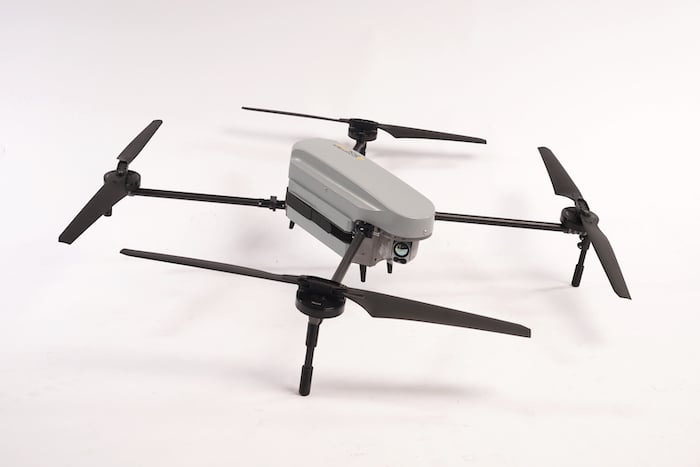
    CopterPIX, an Israeli developer and manufacturer of autonomous multi-rotor UAV solutions, has unveiled its newest platform: the ERE95 Mini.

    CopterPIX made the announement at UVID Dronetech 2025, which took place Nov. 26 at Expo Tel Aviv.

    The ERE95 Mini is designed as an operational platform for border protection, long-range surveillance, and ISR missions. It is fully capable of GNSS-denied missions and integrates a long-range, anti-jamming communication system supporting distances of over 20 km.

    According to the company, the ERE95 Mini has an endurance of 2 hours and can carry up to 5 kg of payload for up to 1 hour. It also has integrated daylight and thermal imaging for advanced surveillance. With a fully foldable frame, the platform collapses into a compact backpack-sized kit, making it suitable for rapid mobility and field operations.

    Its modular “puzzle” architecture allows quick adaptation of SDR modules, optical payloads, and navigation solutions, enabling mission-specific configurations with unprecedented flexibility. To support rapid field deployment, the ERE95 Mini features a mechanical and electrical quick-connect interface, allowing operators to switch payloads in seconds and maintain continuous operational readiness across all missions.

  • India’s DGCA clarifies 10-minute GNSS interference reporting requirement

    India’s DGCA clarifies 10-minute GNSS interference reporting requirement

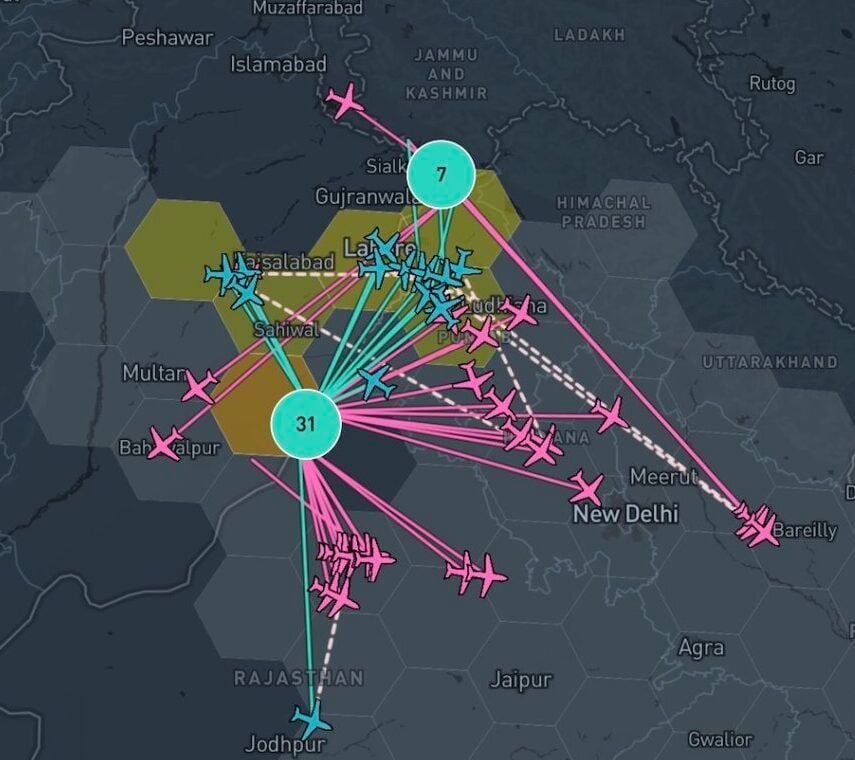
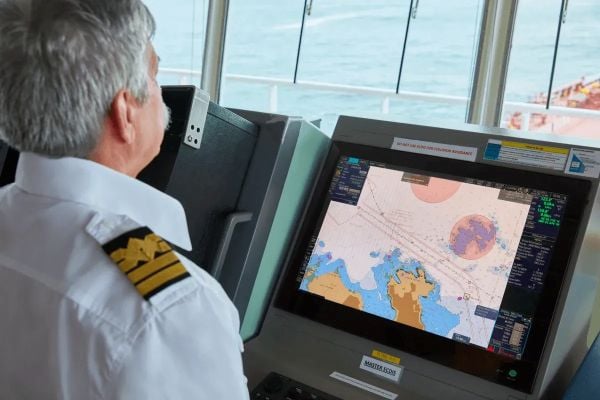
    India’s Directorate General of Civil Aviation (DGCA) has issued an adendum on reporting procedures for suspected GNSS spoofing, reports news service AIN. On Nov. 10, the DGCA began requiring that all spoofing and jamming incidents be reported within 10 minutes, following an intense period of disruptions around Indira Gandhi International Airport in Delhi.

     The addendum is meant to clarify exactly what pilots and operators are required to do both before and after a GNSS interference incident is suspected.

    The disruptions produced false EGPWS alerts, position errors, and incorrect altitude indications, according to OpsGroup. The interference briefly drove ADS-B integrity in the Delhi terminal area to zero, affecting hundreds of aircraft and leaving controllers unable to rely on GPS-based surveillance.

    GPSwise (powered by SkAI Data Services) provides a real time GPS Spoofing and Jamming map spanning the globe.

  • UAVOS partnership to advance HAPS technology for high-altitude missions

    UAVOS partnership to advance HAPS technology for high-altitude missions

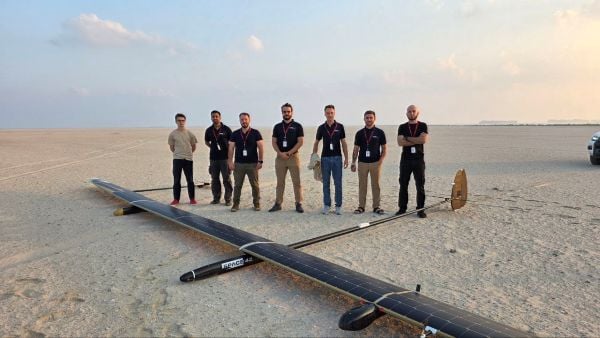
    UAVOS has successfully completed of a test flight of Mira Aerospace’s high-altitude pseudo-satellite (HAPS) ApusNeo 18, with UAVOS providing full engineering and technical support. A key objective of the flight was to evaluate the jointly developed optoelectronic, gyro-stabilized aircraft payload onboard device (POD) by obtaining imagery from altitudes between 3,000 and 12,000 meters.

    During the mission, the POD captured high-resolution imagery with precise geolocation data from an altitude of 12,000 meters, achieving a Ground Sample Distance (GSD) of up to two meters. The test took place in Abu Dhabi, UAE, and lasted continuously for 48 hours.

    “The data-relay station trials were conducted in preparation for upcoming commercial flights in Europe, planned for the coming months,” Aliaksei said.

    The optoelectronic gyro-stabilized aircraft POD is equipped with an innovative automatic temperature control system for  heating and cooling  electronic modules, ensuring reliable operation in the stratosphere at temperatures as low as -70°C under rarefied air conditions.

    The system also provides radio communication at distances exceeding 100 km. The gimbal’s optical unit allows observation within a ±90°C range with high-precision angular positioning. The payload housing features an aerodynamically optimized design, and the total payload weight is 3.6 kg.

    “The successful cooperation with Mira Aerospace reflects our commitment to continuously advancing the capabilities of both companies,” said Aliaksei Stratsilatau, founder and CEO of UAVOS. “We also continue to work toward our ultimate goal of leveraging the HAPS platform for multiple applications, including mobile connectivity, border monitoring, mapping, forest fire detection, and emergency response.”

    To extend the HAPS operational range, the test flight also incorporated a data-relay network based on ground modem repeaters. Each repeater is capable of providing a coverage area of up to 200 km.

    “The data-relay station trials were conducted in preparation for upcoming commercial flights in Europe, planned for the coming months,” Aliaksei said.

  • Osage LLC hosts tour on plans for UAV Skyway Range

    Osage LLC hosts tour on plans for UAV Skyway Range

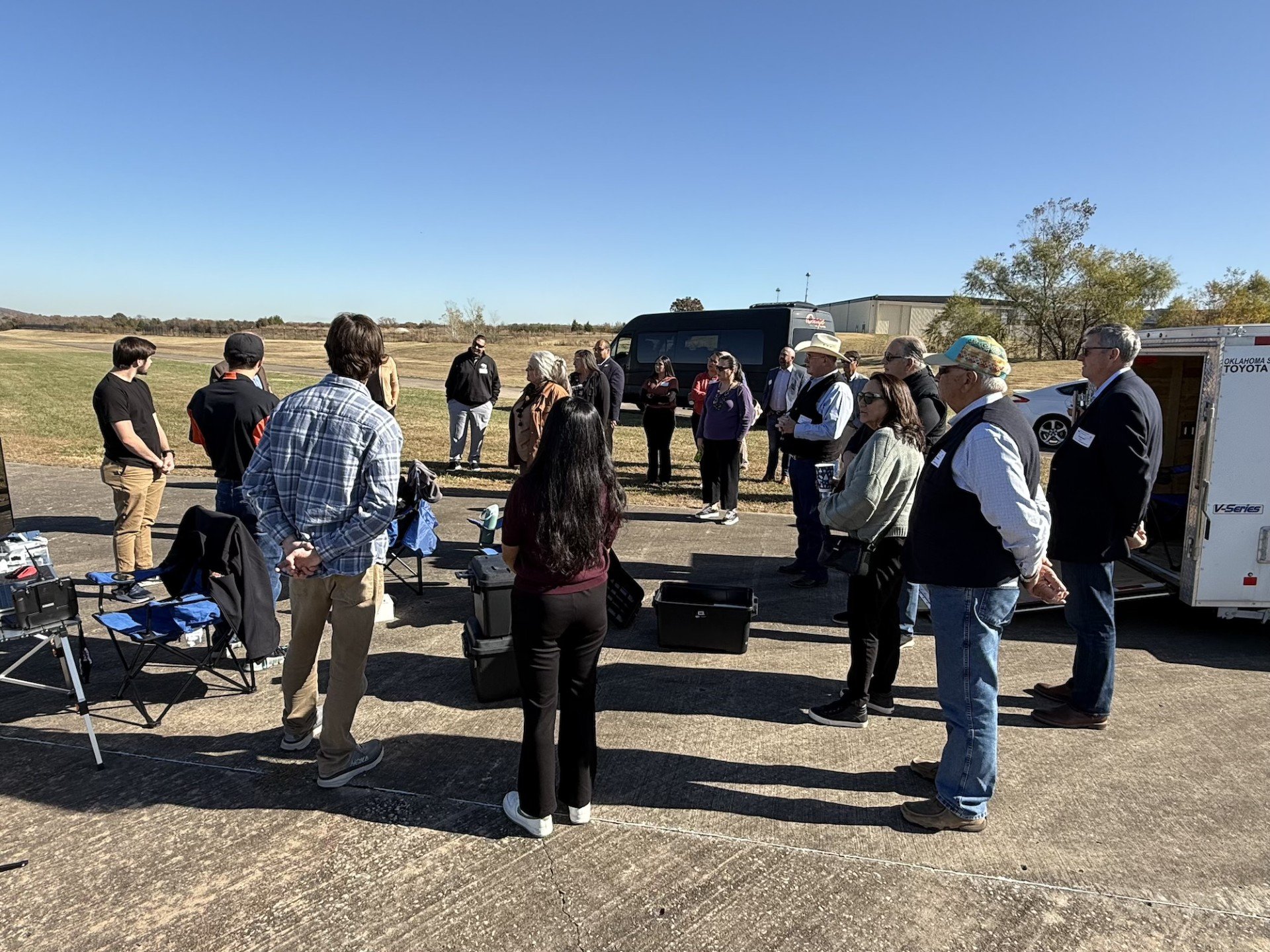
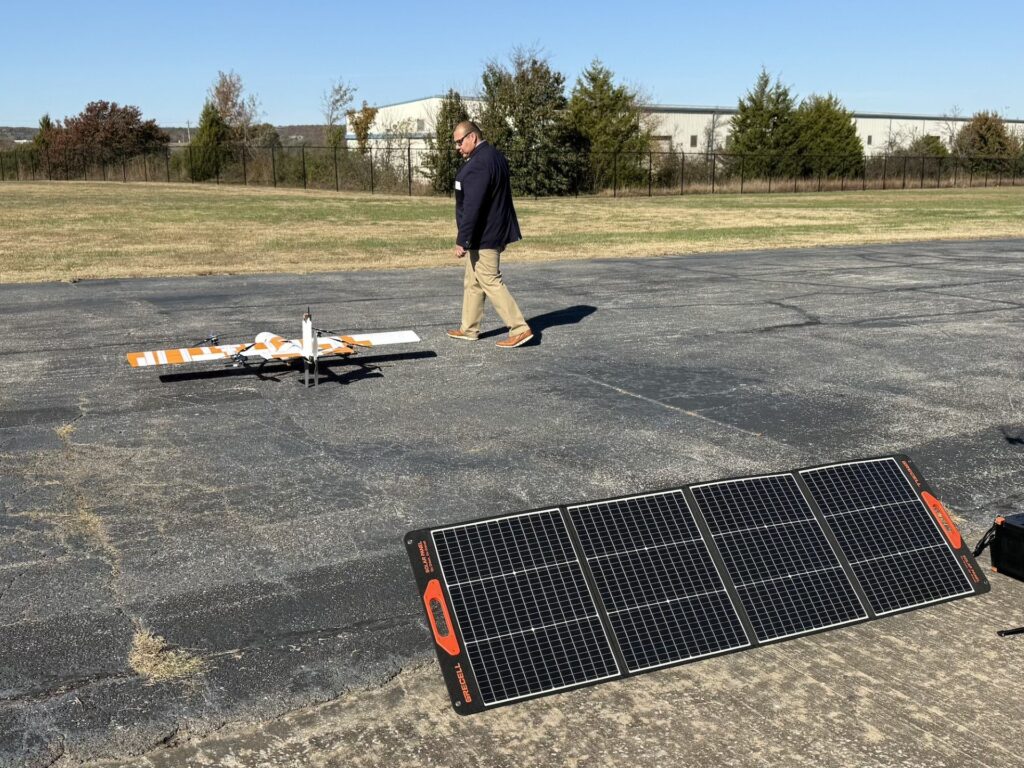
    Osage LLC of Oklahoma welcomed members of the Osage Nation Congress for an in-depth tour and lunch briefing at Skyway Range, offering a first look at an ambitious vision to transform the area into a leading center for uncrewed aerial systems (UAS) innovation, testing and economic growth.

    The visit provided Osage leaders with a comprehensive overview of current operations and long-term development plans to position the Osage Nation at the forefront of advanced aerospace technologies.

    “The tour provided the opportunity to hear and see the potential in Osage LLC’s vision,” said Osage Nation Congressional Speaker Pam Shaw. “I’m looking forward to seeing what is next for Skyway Range. Utilizing this property for the benefit of the Osage people is what it’s all about.”

    Photo: Osage LLC
    Photo: Osage LLC

    Skyway Range is already a nationally recognized asset due to its expansive Beyond Visual Line of Sight (BVLOS) capabilities, encompassing nearly 1,200 square miles of urban and rural testing environments within 114 nautical miles of airspace. The range’s proximity to Tulsa International Airport’s Class C airspace and its unique blend of terrain make it one of the most flexible and capable UAS test ranges in the United States.

    Osage LLC is also part of the Tulsa Regional Advanced Mobility (TRAM) Cluster, a collaboration between public, private, non-profit, tribal and academic partners committed to building a thriving, inclusive advanced mobility ecosystem in northeast Oklahoma. Through this partnership, the region received a Build Back Better Regional Challenge (BBBRC) award from the U.S. Economic Development Administration.

    BBBRC investments are helping Osage LLC and partners, such as Oklahoma State University and Tulsa Innovation Labs, expand research and development capacity, build testing infrastructure, develop industrial facilities, strengthen workforce pathways, and support entrepreneurs — laying the foundation for commercial UAS testing, manufacturing, research, office development, and future mixed-use opportunities.

    Long-term plans for Skyway Range include:

    • A phased development strategy beginning with critical infrastructure north of 36th Street in Tulsa.
    • A new Command Center and enhanced operations hub to support Skyway’s growing commercial testing capabilities.
    • A 50,000 sq. ft. manufacturing facility designed for UAS assembly, prototyping, and light industrial research.
    • Infrastructure and signage improvements to increase commercial readiness and operational capacity.
    •  Future expansion opportunities for additional manufacturing, office, and mixed-use facilities tied to customer demand and Nation-driven land-use decisions.

    Phase One includes $6 million in capital investments approved by Osage Nation Congress, with anticipated completion of office and small-scale manufacturing components by late 2026 to early 2027.

    Osage LLC recently secured its first tenant, Windshape, a Swiss aerospace technology company that specializes in advanced indoor weather simulation and drone performance testing. Windshape held a demonstration for Osage Congressional members and shared how this technology is used globally to validate the safety, reliability, and durability of UAS systems.

  • GLONASS receiver factory targeted by Ukraine

    GLONASS receiver factory targeted by Ukraine

    The Ukrainian Unmanned Systems Forces on Nov. 26 struck a Russian factory that produces GLONASS navigation equipment for Shahed drones and Kalibr missiles, weapons used in a strike in Kyiv that killed seven people dthe day before, The factory is 1,000 km from the border between the countries.

    The report comes from Euromaidan, along with the following video showing the strike’s location and aftermath.

    The VNIIR Progress factory in Cheboksary, Chuvash Republic, Russia, specializes in manufacturing GNSS receivers and antennas for satellite systems, including GLONASS, GPS, and Galileo, as well as navigation modules such as Kometa, which are resistant to electronic warfare measures.

    Thes modules are used on Russian missiles, including the Kalibr, Kh-69, Iskander-M, and S-800 Banderol, as well as on UAVs such as Shahed, Orlan-10 and Forpost. The Kometa module is also part of the Unified Modules for Planning and Correction, which Russia uses to convert conventional bombs into precision-guided munitions.

  • UK Working Group discusses next steps to protect PNT

    UK Working Group discusses next steps to protect PNT

    The UK Hydrographic Office (UKHO) hosted the UK’s first cross-government geodesy, positioning, navigation and timing working group in October. Representatives from 19 government bodies shared insight on the risks, opportunities and interdependencies linked to PNT systems, including GNSS.

    On Nov. 19, the UK announced a £155M investment in PNT. The working group will continue to support collaboration and exchange knowledge as further resilience actions progress, according to the UKHO.

    GNSS supports critical activities across the UK economy. It provides accurate location and timing for communications, maritime and aviation safety, and the smooth running of power and financial networks. As threats to space-based systems grow, improving national resilience is increasingly important.

    “The UKHO’s expertise in geodesy plays a key role in helping the UK understand and protect PNT services. Our specialists provide trusted positioning and timing advice across defense and civil programs, including supporting the safety of navigation in UK waters,” the agency said.

    “It is fantastic to hear that the work with eLoran, GNSS Interference Monitoring Programme, Space Based Time Transfer and the National Timing Centre have received ongoing funding,” said Joe Pearce, senior geodesy and PNT specialist, UKHO. “This funding will assist both our data collection and the mariner. It will protect and assist future geodesy and PNT, improving resilience as these systems come increasingly under threat.”

    The UKHO also provides information on how to protect against GNSS and AIS jamming and spoofing for vessel operators.

  • Siemens offers breakthrough time synchronization to fortify digital substations

    Siemens offers breakthrough time synchronization to fortify digital substations

    Siemens has unveiled its latest innovation for energy infrastructure: the Siprotec 5 Precision Time Protocol (PTP) Grandmaster Clocks (GMC).

    Built to secure the backbone of modern power grids, the GMC ensures resilient, fail-safe time synchronization for digital substations, safeguarding critical protection functions from disruption, shielding against external disturbances, and strengthening cybersecurity to boost overall grid reliability.

    Avoiding GNSS disruptions. Conventional digital substation architectures often rely on redundant GNSS-based grandmaster clocks. However, even with redundancy, they remain vulnerable: disturbances to GNSS signals, whether from natural phenomena like solar storms or intentional interference such as jamming and spoofing, can cause disruptive “‘jumps” in the time base. Such disruptions force merging units to resynchronize, temporarily disabling critical protection functions and can lead to unnecessary removal of equipment from service or even cause false tripping events, impacting grid stability and increasing operational costs. Siemens’ new solution mitigates these risks, ensuring uninterrupted, secure operation. 

    Siemens’ solution separates sample synchronization from global time synchronization using specialized internal time sources. The Siprotec 5 devices, equipped with integrated PTP Grandmaster Clocks compliant with IEEE 1588v2/PTP standard, operate independently from external GNSS signals, using internal oscillators as time references for precise synchronization.

    Changeover technology. A key feature of this approach is Siemens’ patent-pending Seamless PTP grandmaster changeover technology, built into Siprotec 5 devices. This ensures that when primary clocks return, they first align with active backup clocks before resuming their role. In doing so, disruptive time base jumps during switchovers are prevented, keeping protection functions continuously available. 

    The specialized synchronization enables process bus networks in digital switchgears to operate autonomously without external access points, significantly strengthening cybersecurity by isolating the process bus from the station bus network. 

  • SPH Engineering’s new high-resolution GPR antennas for UAVs extend subsurface mapping

    SPH Engineering’s new high-resolution GPR antennas for UAVs extend subsurface mapping

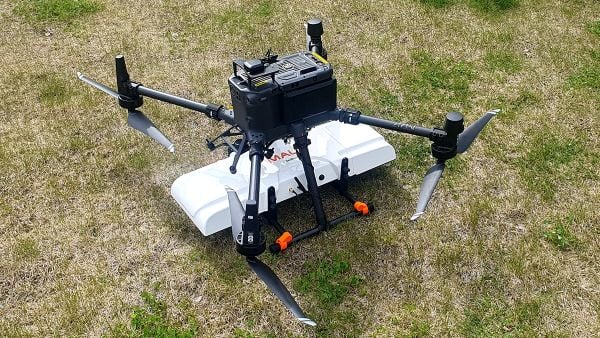
    SPH Engineering is offering two new ground-penetrating radar systems optimized for UAV integration: MALÅ GeoDrone 600 and Zond Aero 600 NG.

    Both 600 MHz antennas significantly enhance high-resolution subsurface investigations with drones, supporting applications in engineering surveys, utility mapping, archaeology, environmental studies and geophysical research. They enable surveyors to capture consistent, high-quality subsurface data in areas difficult, slow, or unsafe to access with traditional ground instruments.

    Operating at 600 MHz, the antennas offer a balance between penetration depth and fine near-surface resolution. Typical penetration from the drone is up to 2 meters, depending on the surface conditions, while SPH Engineering’s True Terrain Following ensures stable antenna height to maintain data quality and repeatability.

    Compared to ground-based carts or vehicle systems, the UAV-borne configuration enables operators to:

    • Survey rocky, uneven, vegetated, or steep terrain
    • Achieve consistent grid spacing and uniform antenna coupling
    • Cover large areas significantly faster than manual GPR methods
    • Improve safety by reducing personnel exposure in risky field conditions

    The MALÅ GeoDrone 600 combines the reliability of MALÅ instrumentation with SPH Engineering’s fully integrated drone workflow. Designed for precision engineering, utility detection, and geophysical mapping, the antenna produces clear, high-quality radargrams suitable for detailed structural assessment and shallow subsurface characterization.

    Key Specifications

    • Central frequency: 600 MHz
    • Operating Bandwidth: 250-900 MHz
    • Typical penetration: up to 2 m (soil-dependent)
    • Sampling: MALÅ HDR technology
    • Antenna design: Shielded
    • Weight: 2.7 kg
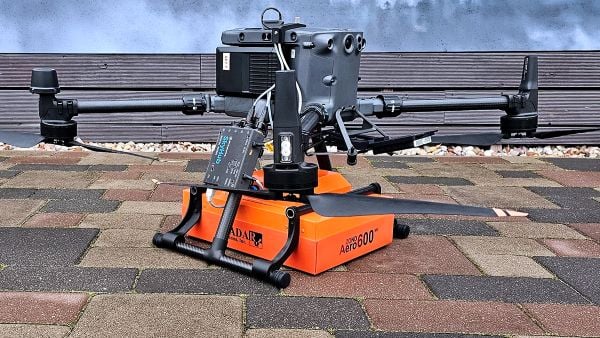
    The Zond Aero 600 NG antenna package. (Photo: SPH Engineering)
    The Zond Aero 600 NG antenna package. (Photo: SPH Engineering)

    The Zond Aero 600 NG is a next-generation shielded antenna designed specifically for airborne GPR operations. It offers a strong signal-to-noise ratio, improved ground coupling at low altitudes, and robust performance over natural terrain, making it particularly suitable for geophysical research, archaeology and environmental geoscience.

    Key Specifications

    • Central frequency: 600 MHz
    • Operating Bandwidth: 300-950 MHz (-12 dB)
    • Typical penetration: up to 2 m (soil-dependent)
    • Sampling: Real-Time Sampling (RTS) with high hardware stacking
    • Antenna type: Shielded
    • Weight: 1.7 kg

    Both antennas are fully compatible with SPH Engineering’s UgCS flight planning software and the SkyHub drone onboard computer, enabling:

    • Automated terrain-following flights over complex topography
    • Precise altitude control for optimal GPR signal geometry
    • Synchronized GNSS + radar trace logging (for Zond Aero 600, MALÅ GeoDrone 600 has built-in data recorder).
  • New data collection and mobile mapping software used in surveying and mapping projects

    New data collection and mobile mapping software used in surveying and mapping projects

    1. Data collection software

    Intuitive workflows require minimal training

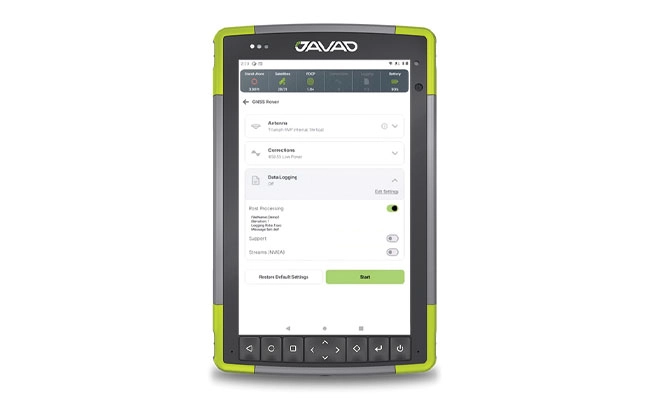
    JAVAD Data Collector (JDC) is designed to run seamlessly on any Android device and interface seamlessly with JAVAD GNSS smart antennas. JDC features simple, intuitive workflows that require minimal training, making it accessible for users of all skill levels.

    The software includes a Signal Bar for a quick view of receiver status, ensuring users can easily monitor their equipment’s performance. Its easy navigation allows users to move through the software efficiently. It is designed to streamline operations of customers ranging from individual surveyors to large surveying firms, making it easier to deploy and manage receivers across teams of any size with minimal training. JDC is available for download through the company website.

    JAVAD GNSS, javad.com

    2. Mobile mapping system 

    Lidar collects 2 million points per second

    Photo:
    Photo: CHC Navigation

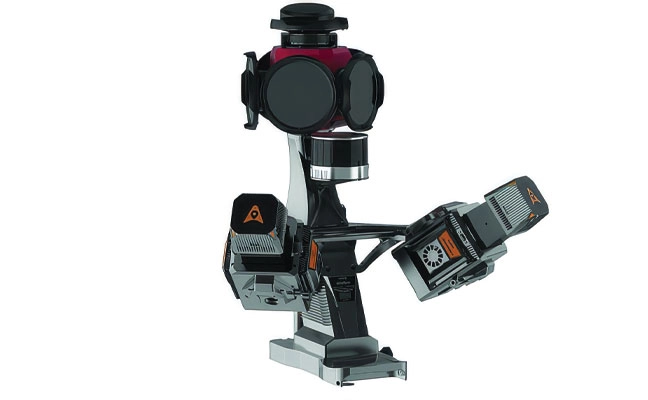
    The AU20 MMS is a vehicle-mounted mobile mapping system designed for accurate and efficient collection of 3D spatial data. It combines high-performance lidar technology, versatile sensor support and intelligent data processing to provide a practical and flexible solution for professionals in road surveying, asset management and infrastructure documentation. Its lidar system uses fourth-generation real-time waveform processing to achieve a scan rate of 2 million points per second and 200 revolutions per second, producing point cloud data with 5 mm accuracy and 3 mm precision. This level of detail allows for the identification of fine surface characteristics and features, supporting comprehensive asset inventories and condition assessments. The system’s long-range, multi-cycle laser technology enables high-density data capture up to 250 m in vehicle-mounted applications.

    CHC Navigation, CHCNAV.com