Category: Space & Earth

  • Simulating new GNSS signals and threats

    Simulating new GNSS signals and threats

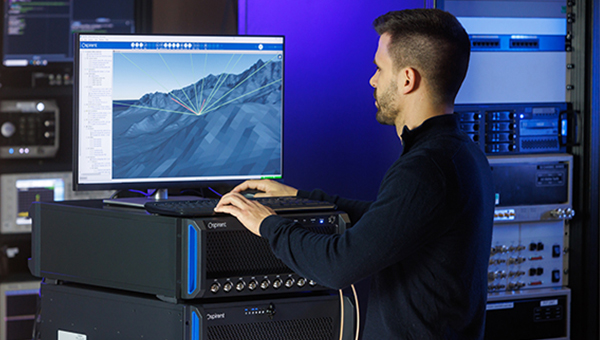
    The Spirent PNT X. (Photo: Spirent Federal Systems)
    The Spirent PNT X. (Photo: Spirent Federal Systems)

    Developers and manufacturers of GNSS receivers have always needed to simulate the signals from GNSS satellites to test receivers in their labs and in the field. Now, as the vital role of GNSS for critical infrastructure and the growing threat of radiofrequency attacks are increasingly recognized, simulators must keep up. In particular, they must enable users to test a variety of new positioning, navigation and timing (PNT)  signals from satellites in low-Earth orbit (LEO) and geostationary orbit (GEO), as well as realistically simulate sophisticated jamming and spoofing attacks.

    In this cover story on simulators, we discuss these challenges with experts at four simulator manufacturers:

    • John Clark, Vice President, Engineering, CAST Navigation
    • Lisa Perdue, Product Line Director, Safran Federal Systems
    • Jan Ackermann, Director Product Line Management, Spirent Communications, and Paul Crampton, Senior Solutions Architect, Spirent Federal Systems
    • Avag Tsaturyan, Systems Engineer, M3 Systems.

    How are the missions/applications of simulators changing?

    Clark: Our customers have been requesting larger simulation systems that can support GNSS and inertial navigation systems (INS) on multiple vehicles simultaneously. Each vehicle is required to support a phased-array (CRPA) antenna sub-system, multiple INS interfaces and signal interference capabilities. This is a change from earlier times when our customers required smaller systems with less capability.

    Perdue: We see a growing focus on testing NAVWAR scenarios and assessing receiver performance against diverse threats. The increasing complexity of receivers with multiple constellations and frequencies demands more advanced simulation capabilities. We provide comprehensive PNT simulators that support hybrid scenarios, in which simulated signals and threats are combined with live signals and sensors, creating a dynamic and realistic testing environment.

    Crampton: For many years, simulators have been used to prove the capability of receivers and the systems into which the receivers are integrated. Testing ensures that receivers can perform as expected, including performance in boundary cases, which are tricky to recreate in live-sky conditions.

    Over time, threats to navigation and timing performance began to dominate the schedules of test labs. Ensuring reliable performance in suboptimal operating environments is critical to receiver users. The workload of test labs has increased to the point where test automation has become necessary, not only in terms of increased efficiency but also just to keep pace with rapidly evolving threat profiles.

    So, one of the main changes we are seeing is the need to speed up the innovation cycle with simplified, automated testing while maintaining test fidelity and robustness. Spirent simulators are enabling testing to “shift left,” to start testing earlier in the development cycle with digital twins — software-only models of receivers and devices — to shorten the time spent on R&D.

    Ackermann: Increasing efficiency, flexibility and realism have been critical drivers in the simulator industry for many years and will continue to drive us forward at an ever-increasing pace. Precision and robustness requirements demand more signals and sensor fusion, which need to be supported by simulators. Greater realism and flexibility means that more representative testing can be done in the lab, saving time and money.

    On the other hand, while lab testing has grown ever more realistic, there are times where in-field verification is required — simulators have had to become more flexible to address this “augmented reality” test environment and optimize field testing. Simulators are being used on ranges to enhance testing, using combinations of real and simulated signals — including resiliency tests that incorporate live-sky signals.

    Are new markets for simulators emerging?

    Clark: Yes, as the world evolves and circumstances change, the ability to validate proper operations of GNSS and GNSS/INS navigation systems under less-than-optimal conditions has become challenging. The use of simulators can greatly enhance your understanding of the behavior of a navigation system, thus allowing for more reliable navigation error planning and mitigation when these errors do occur. This has become a much more important area of concern as the automated navigation and integrated navigation markets mature.

    Perdue: Yes, new markets are emerging in areas such as autonomous vehicles, UAV swarms, urban air mobility and space exploration, including lunar missions. Additionally, the growing focus on cybersecurity and electronic warfare has increased the demand for simulators that can replicate complex cyberattack scenarios and electronic threats.

    Ackermann: New markets for simulators are constantly emerging. As PNT impacts more and more areas of our lives, the geographic and technological spread of simulator requirements continues to expand. Even in existing segments we see new market needs. In automotive, for instance, the emergence of a wide range of safety-critical functions such as intelligent speed assist (ISA) and eCall drive new simulation needs.

    From the emergence of the LEO market to the development of LEO PNT constellations, these markets appear and evolve at a rapid pace. Spirent simulators can be used to generate novel and established signals from LEO PNT constellations with ultra-realistic orbital models for complex rotational effects and satellite parameters. The emerging focus on lunar missions from space agencies around the world means new test environments, more stringent requirements, and the potential for new signals outside of L-band, at S-band and beyond.

    Crampton: Increasing the realism of testing continues to open new opportunities for simulator use. Spirent provides an all-in-one alternative PNT solution for ultra-realistic LEO modeling, inertial emulation, L and S-band signals, etc. — to be fused and tested in unison.
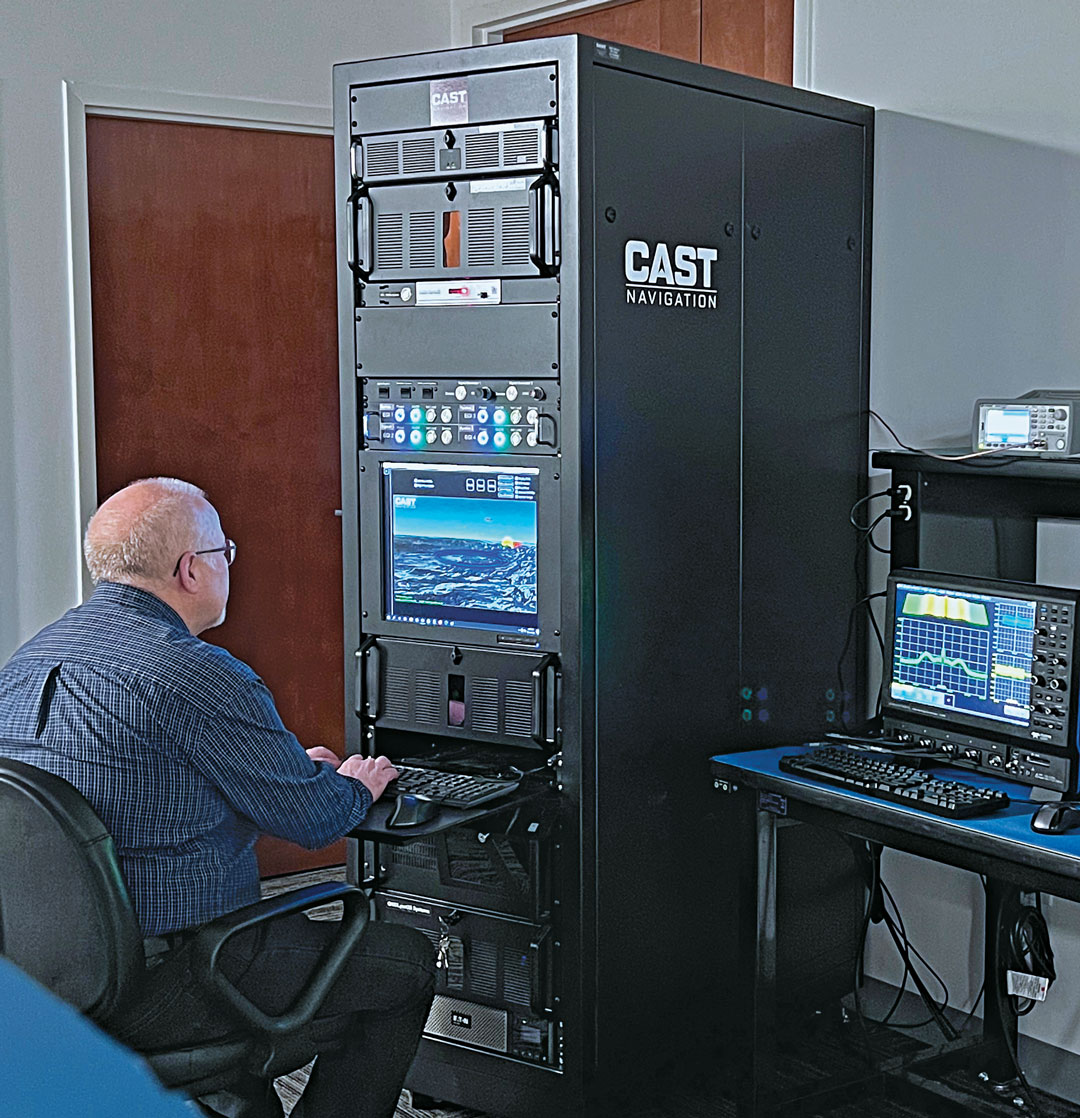
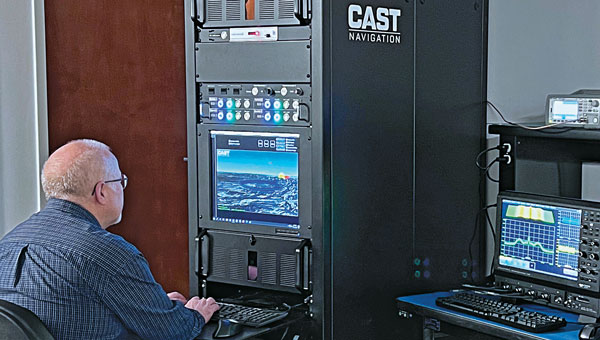
    Senior Software Engineer Neil O’Brien utilizing a CAST-8000 GNSS Simulator to analyze CRPA trajectory data. (Photo: CAST Navigation)
    Senior Software Engineer Neil O’Brien utilizing a CAST-8000 GNSS Simulator to analyze CRPA trajectory data. (Photo: CAST Navigation)

    Are simulator requirements changing?

    Clark: In the past our customers were focused on the simulation of a single element of GNSS signals and a single INS output interface for the testing of vehicles that only supported single element antenna (FRPA) and a single INS capability. Our customers are now requiring simulator systems that produce multiple elements of phase-coherent GNSS signals that are commensurate with multiple INS interface outputs to drive navigation systems that can utilize a phased-array multiple-element antenna sub-system (CRPA) and multiple INS sources simultaneously.

    Perdue: Yes, simulator requirements are always evolving. High signal counts are essential due to the increase in LEO constellations, and there’s a need to replicate multiple threats to create realistic environments. Built-in automation is crucial for managing these complex scenarios. The ability to add custom signals and constellations is necessary for experimenting with new technologies. Our software-defined architecture allows for quick integration of new signals, ensuring flexibility and responsiveness to changing needs. Innovations such as a radio utilizing the RFSoC to provide a high number of multi-frequency outputs from a single system and the BroadSim Duo, which offers dual-frequency capabilities in a compact form factor, demonstrate our approach to meeting these evolving requirements.

    Ackermann: As new markets and use cases emerge, the simulator requirements evolve. The growing prevalence of NAVWAR threats, such as GNSS jamming and spoofing, and the range of systems these attacks are impacting is enhancing the criticality of lab testing.

    Whether seeking to gain battlefield advantage or to secure civil operations (aviation, for instance), the ability to generate a wide range of NAVWAR attack vectors in complex scenarios is needed like never before. New waveforms must be incorporated quickly and realistically, while defensive technologies such as CRPAs must be exercised with a higher level of precision.

    Crampton: Due to the demand for flexible attack vectors and the expanding range of available signals, simulators need to be capable of generating authentic RF environments from novel, user-defined waveforms. A time-saving method has been developed using prerecorded I/Q files. Spirent’s sixth-generation solution, PNT X, accepts raw I/Q data, analyzes the environment and the dynamic movement between receiver and transmitters, and automatically applies the correct motion effects to the generated RF signal. The simulated signal now has real-world dynamics without the need for manual inputs from the user. Realism made simple! Additionally, multiple I/Q-defined transmitters can be seamlessly integrated with native 3D terrain-modeling capabilities to create rich RF environments with multipath and obscuration.

    A continuous, dynamic range is required to better replicate high-power jamming threats for controlled reception pattern antenna (CRPA) testing. With PNT X, high-power jammers can be simulated from the moment they become part of the noise floor to when a vehicle, such as an aircraft using a CRPA, passes by it. This continuous range enables CRPA developers to characterize null-steering ability with greater precision than previously possible.

    Ackermann: As previously mentioned, there is also a growing need for integration and automation. Systems need to work in concert, and testing needs to happen quickly and efficiently to stay ahead of markets and threats. To this end, the ability to automate and to control remotely, and the ability to integrate seamlessly with other simulation and control systems, are core requirements for modern labs. Spirent is simplifying and automating testing with support for multiple industry-standard frameworks.

    In established markets, safety requirements on devices under test drive simulator needs. For instance, functional safety requirements for automotive applications demand the ability to simulate threats and events, while the fidelity requirement of the simulation is elevated to assure conformance.
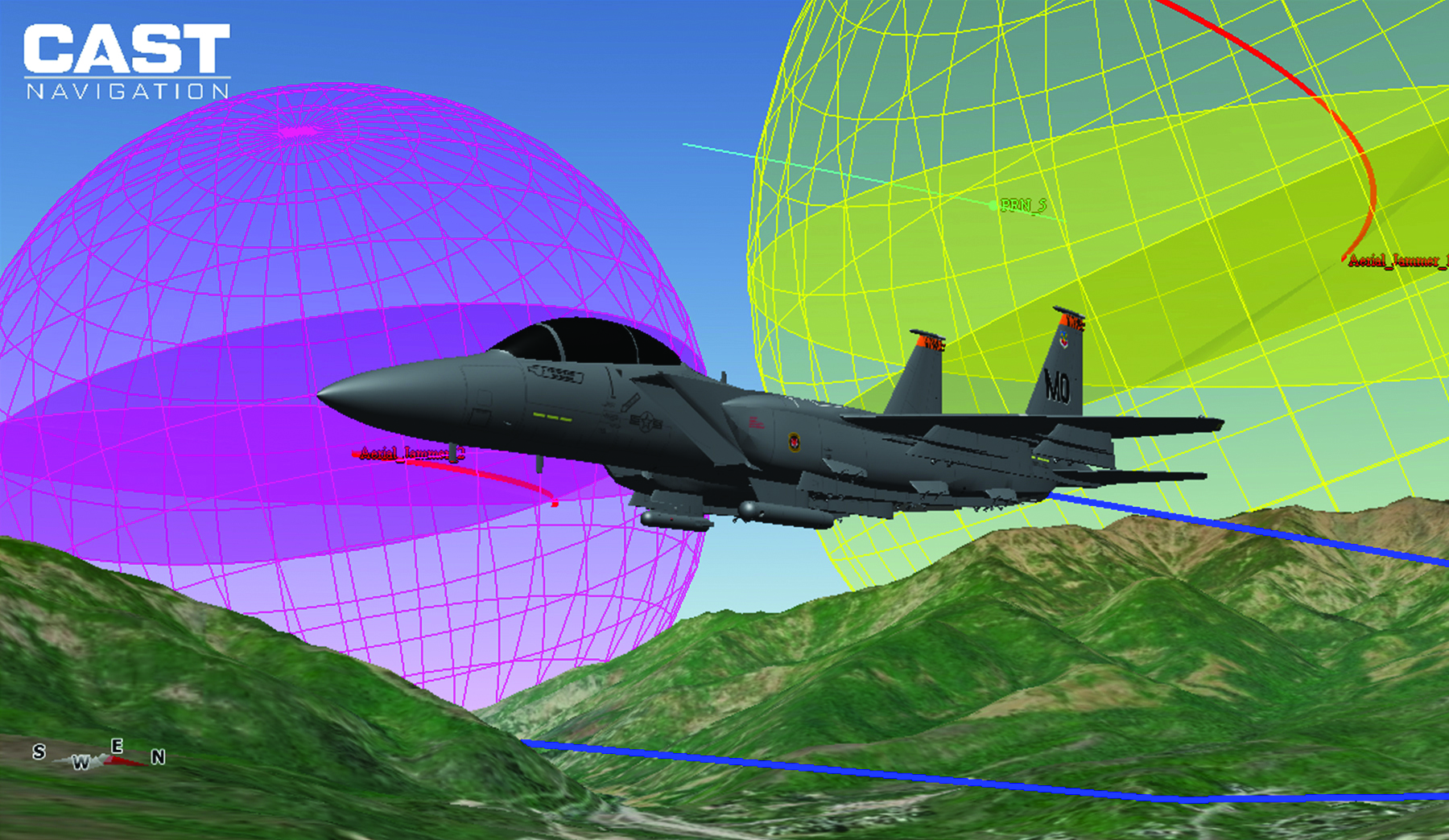
    3D view of an aircraft flying a simulation. (Photo: CAST Navigation)
    3D view of an aircraft flying a simulation. (Photo: CAST Navigation)

    What mix of signals do you support?

    Clark: GPS L1/L2/L5, L1C, L2C, C/A, SBAS, P, Y, SAASM, M-Code AES and MNSA, Glonass and BeiDou

    Perdue: We support a wide array of signals, including GPS, GLONASS, Galileo, BeiDou, and regional systems such as QZSS and IRNSS. Additionally, we incorporate alternative navigation signals, such as those from Xona, and support inertial navigation and timing signals. Our software-defined architecture enables us to handle high signal counts and allows for extensive customization, ensuring we can simulate any required signal environment. This flexibility ensures we meet the diverse needs of various industries and applications, from aviation and maritime to autonomous vehicles and defense.

    Ackermann: Spirent supports all open service GNSS signals and classified GPS testing — including M-Code Regional Military Protection — as well as PRS (through prs[ware] and our partnership with Fraunhofer IIS) on our simulation platforms.

    In addition:

    • Regional systems (e.g., NavIC or QZSS)
    • S-band frequency signals
    • Custom non-ICD signals
    • LEO PNT (Xona Space System’s PULSAR and others)
    • A broad range of interference waveforms, including CW, FM, PM, wideband AWGN, chirp, matched spectrum, etc.
    • Generation of RF from I/Q data injection in L-band and S-band frequencies
    • Correction/augmentation
    • Inertial sensor emulation

    Furthermore, the ability to geolocate custom RF beacons either in a range of orbits or in terrestrial locations adds huge signal flexibility.

    What are the key challenges you face?

    Clark: As our customers’ needs grow and evolve, some of our key challenges have been the ability to continue to evolve our product utilizing cutting-edge technology while still maintaining backwards compatibility with our older technologies. Efforts like this give our customers peace of mind when making a system purchase and enable them to take full advantage of prior purchases when requirements change and system enhancements are necessary.

    Perdue: A key challenge is creating complex simulation environments that require specialized expertise. Customers often lack the knowledge to design these environments effectively. Ensuring simulation accuracy and cybersecurity are significant concerns, especially as new threats emerge alongside new technologies developed to combat existing threats. Translating performance requirements into practical specifications and meeting stringent industry standards adds another layer of complexity. We address these challenges through continuous updates and close collaboration with our customers to ensure our solutions meet their evolving needs.

    Ackermann: For 40 years, we have faced a challenge that, to some degree, is being addressed. Namely, PNT is not widely standardized and therefore test requirements are highly diverse. The scale of Spirent and the empowering flexibility of our systems enables us to overcome this, but it remains challenging.

    The current geopolitical situation also presents challenges, as the number of threats and the potential for negative events demand ever-increasing sophistication in testing. That’s why we built PNT X with high-power jamming and spoofing capability for greater realism and accurate test results.

    Crampton: The complexity of next-gen positioning engines means that our systems have to integrate and interact with other systems, built by other companies with other protocols and specifications. Spirent maintains the precision and stability our customers expect from us while incorporating an open and controllable architecture for easier plug-and-play in complex hardware-in-the-loop environments.


    M3 SYSTEMS

    Please introduce your company.

    Tsaturyan: We represent the Mistral Group, which includes three distinct companies: M3 Systems France, M3 Systems Belgium and Boreal. M3 Systems France teams provide GNSS simulation and test and measurements solutions and radionavigation and signal processing expertise. M3 Systems Belgium teams are experts in air traffic management (ATM) studies. Boreal teams offer beyond-line-of-sight missions for maritime surveillance, Earth observation, and scientific experiments with the BOREAL long-range unmanned aircraft. Each company extends its scope to the challenges of GNSS and UTM with an integrated approach.

    What are your key markets? What challenges are you addressing?

    Our customers are from different industries: we work with space agencies — such as France’s Centre National d’Études Spatiales (CNES) and the European Space Agency (ESA) — private R&D labs and automotive companies and railways. We propose GNSS simulation products such as the Stella GNSS simulator, which allows users to simulate a vehicle in a realistic environment and in real time for low latency. Our simulator is designed to reproduce the sky with high precision. The GNSS signal passes through different layers, each one of which has a different effect. First, there can be an error in the satellite clock, then there can be a delay as the signal passes through the atmosphere, then, on the ground, there is a risk of a spoofing or jamming attack and, in urban areas, multipath from buildings.

    What signals does your simulator support?

    Our GNSS simulator is multiconstellation and multi-frequency. It supports all the available GNSS signals and frequencies. Users can simulate multiple antennas and multiple trajectories, custom atmosphere and multipath effects. We offer several built-in models of multipath. Users also can use their own multipath models and even integrate it with an SE-NAV multipath simulation tool. We also have several built-in jamming signals that users can apply and spoof the real signal coming from the antenna or spoof the simulated signal. Our setup now also supports Galileo’s Open Service Navigation Message Authentication (OSNMA). Our Stella GNSS simulation software can run on three different products designed for specific needs: the Stella GNSS Simulator Base (based on NI’s USRP kit), the Stella GNSS Simulator Suite (based on our bundle), and the Stella GNSS Simulator Advanced (based on NI’s VST). Our VST-based solution is optimized for tests that require high performance in terms of calibration — such as simulating a CRPA antenna, where the channels need to be very tightly synchronized.
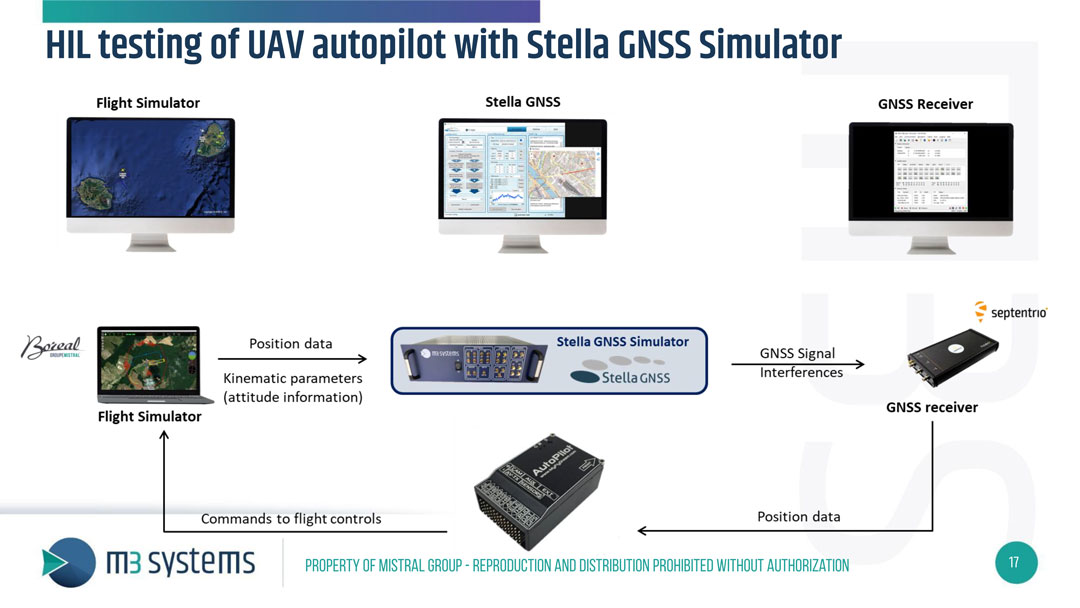
    Photo: M3 Systems
    Photo: M3 Systems

    What does your Stella Suite do?

    The Stella GNSS Simulator offers up to two independent RF simulations, enabling simultaneous simulation and the jamming/spoofing or the simulation of multiple antennas and trajectories.

    Our simulator suite is basically an all-in-one device that allows users to plug in a receiver. This single device enables  users to simulate jamming, spoofing, multiple antennas or multiple trajectories.

    When did you launch this product?

    We released it and demonstrated it during Emerson NI’s “NI Connect” event. They have an annual event in May in Austin, to which they invite all their partners and customers. This year, we were invited there to present our new simulator. We brought a HIL test setup to demonstrate the new configuration of our GNSS simulator: a closed-loop test of a drone autopilot system. When kinematic parameters from the flight simulator are simulated, the trajectory is sent to the Stella GNSS simulator, which then generates the GNSS RF signal and interference to assess the receiver’s performance. The receiver then passes its positioning data to the autopilot, which sends the commands to the flight control unit in the flight simulator. It’s one of the use cases, because to fully test the receiver, in addition to the nominal situation, it is also necessary to introduce some errors — such as interference, jamming, spoofing or meaconing.

    What are some other use cases for this simulator?

    Another use case is the test of Advanced Driver Assistance Systems (ADAS) in a 3D simulation environment. Basically, it is designed to test any unit that includes the GNSS positioning and to test the receiver’s robustness in case of jamming, spoofing, or meaconing.

    Is this all done in the lab or can you put your box in a vehicle?

    With this setup, it’s all done in the lab, but we also offer solutions to record the real signals from a UAV or a ground vehicle.

    Are the challenges changing? Is the market changing?

    Now, a GNSS simulator is no longer sufficient. Testing the receiver’s robustness against various types of attacks, particularly jamming, requires diverse methods. Consequently, there is an emerging need for simulating jamming mitigation antennas, such as Controlled Reception Pattern Antennas (CRPA).


  • US dangerously behind, PNT leadership needed

    US dangerously behind, PNT leadership needed

    Photo: tifonimages / iStock / Getty Images Plus / Getty Images
    Photo: tifonimages / iStock / Getty Images Plus / Getty Images

    Describing a dangerous “asymmetric vulnerability to navigation warfare” a recent paper from the National Security Space Association (NSSA) calls for a wide variety of actions to mitigate the threat. The most important, “Focused leadership, properly empowered and resourced…”

    The nineteen-page paper, in some ways, reads like a primer on GPS and positioning, navigation and timing (PNT), providing background and context for policymakers unfamiliar with the technology and the United States’ broad dependence upon it.

    “Long-standing lack of progress on issues important to U.S. national, homeland, and economic security.”

    The lack of focused leadership, according to the paper, is evidenced by long-standing failures to follow through on a variety of mandates from senior leadership over the course of the last 20 years. Quoting from the Federal Radio Navigation Plan, it cites persistent shortfalls in national capability as including:

    • Assured, real-time PNT in physically impeded environments (e.g., indoors, urban canyons, underground facilities).
    • Sufficient accuracy and integrity in electromagnetically impeded environments — including operations during spoofing, jamming, and natural and unintentional interference.
    • Higher accuracy with high integrity; timely notification/alarming when PNT performance is degraded or misleading, especially for safety-of-life applications or to avoid collateral damage.
    • Ensuring PNT services, including supporting information technology (IT) infrastructure and supply chain are protected from cyber threats
    • Ability to accurately locate sources of intentional and unintentional interference in a timely manner.
    • Insufficient resilience and survivability when GPS services are unavailable or untrusted.

    “American society has been transformed by the availability of GPS.”

    The paper describes four decades of GPS being incorporated into virtually every technology and used by every critical infrastructure. It calls the harm to society should it be lost “incalculable.” It also notes that the operation of many space systems that support critical infrastructure and/or critical national applications is itself dependent upon GPS for proper operation.

    The military utility and advantages brought by GPS are also discussed. These include:

    • Its role as the lynchpin for precision strike.
    • Enabling “… the maneuver, synchronization, and massing of effects from dispersed forces.”
    • PNT to achieve information and decision superiority over an adversary.

    “Merely the threat of disrupting GPS services might be enough to impact U.S. national security and foreign policy.”

    The paper says recent actions by and ongoing threats from adversaries of the United States are a critical concern.

    Electronic warfare (EW) and cyber attacks by Russia, China, Iran, and North Korea demonstrate the ease and effectiveness of such vectors, as well as the seriousness of the threat.

    As one example, Russia’s impending launch of a nuclear-armed anti-satellite weapon has the potential to both destroy or damage GPS satellites nearby and interfere with radio communications. NSSA recently published a paper on the Russian nuclear ASAT threat.

    A potentially even more serious threat would be if Russia should deploy a nuclear-powered directed energy or electronic warfare weapon. Such a device would be “reusable” and could threaten an even larger number of space platforms or, in the case of an EW device, both space-based and terrestrial receivers.

    “GPS blackmail”

    The paper posits that the United States’ overdependence on GPS is so great that it could be subject to “GPS blackmail.” It suggests that this may already have occurred.

    Prior to Russia’s invasion of Ukraine, it destroyed a defunct satellite with a ground-based missile, creating thousands of pieces of debris. Shortly thereafter, state-sponsored TV announced that Russia would destroy all 32 GPS satellites if NATO “crossed its red line.” Despite 90,000 Russian troops massing along the border, “U.S. officials decided against sending certain military equipment to Ukraine to avoid provoking Russia.”

    “…could have cascading effects which unravel America’s socioeconomic fabric…”

    NSSA warns that U.S. “critical infrastructures, national essential functions, and military forces could be at grave risk.” Among the impacts of a major GPS disruption, it counts:

    • Loss of U.S. political prestige and influence.
    • Degradation of the informational element of national power (IT and telecommunications).
    • Severe socioeconomic implications. “given the integration of GPS into critical infrastructures and their interdependencies, lengthy disruption just of the power grid, for example, could have cascading effects which [would] unravel America’s socioeconomic fabric…”
    • Harm to national and homeland defense. Leadership is needed to perform national essential functions.

    While the paper makes several specific recommendations for actions by various departments, it also identifies national-level leadership as key:

    “The United States must rapidly develop and implement a comprehensive, whole of nation, strategy to redress its asymmetric vulnerability to Navwar and restore U.S. leadership in space-based and terrestrial PNT. … Focused leadership, properly empowered and resourced, is essential to the national PNT strategy’s success.”

    The NSSA paper “America’s Asymmetric Vulnerability to Navigation Warfare: Leadership and Strategic Direction Needed to Mitigate Significant Threats” was sponsored by the Resilient Navigation and Timing Foundation and can be accessed here.

  • Iridium focuses on timing and critical infrastructure

    Iridium focuses on timing and critical infrastructure

    Mike O'Connor
    Mike O’Connor

    Satelles, which developed the Satellite Time and Location (STL) system, recently became part of Iridium, which already owned a large share of the company. I spoke with Michael O’Connor, previously Satelles’ CEO, who is now Executive Vice President of Iridium’s PNT Division.

    Besides the ownership change, has anything changed in your organization?

    What was the Satelles business is now part of the broader Iridium company. We’ve been partnered very closely with Iridium since the genesis of Satelles more than a decade ago. It really made strategic sense to become a part of Iridium. The industry is clearly at an inflection point. We don’t have to look too far to understand that the mainstream is catching on to the things that you have been writing about for years. Now, people are realizing what’s actually happening. Various users — especially those near conflict areas — are starting to truly experience jamming and spoofing events. The world is starting to recognize that there’s a need for solutions. The U.S. Department of Transportation has just come out with a complementary PNT plan. They put out a request for a quotation recently to engage the industry.

    Companies like ours, and others in the industry who have been developing solutions to this problem for many years, will finally start to see traction with customers. We just signed an agreement with L3 Harris to roll out GNSS augmentation or complementary PNT for the Federal Aviation Administration (FAA) to networks. Not just industry, but also the U.S. government is now taking steps to implement the resilience that’s needed to protect critical infrastructure. So, the timing is good.

    Does being now fully part of Iridium give you any additional access to the company’s satellite network?

    We will be rolling out, over time, some additional capabilities and expanded service areas. We will be announcing ways in which, by integrating the companies, we can expand more quickly into new geographic areas, providing additional signal coverage in areas where Satelles had not previously been able to do so. As Satelles, we were very focused on timing and national critical infrastructure. Iridium’s business lines align with some of the directions in which Satelles was already intending to grow in any case — such as maritime, internet of things (IoT) and possibly even someday aviation. There are areas where we will be able to expand our reach much more quickly than we ever would have been able to do as a standalone company.

    STL makes indoor positioning possible because the signal is much stronger due to Iridium’s satellites’ much lower orbit than that of GPS satellites, correct?

    Exactly right. It’s really about the signal power. Part of it is being closer to Earth, part of it is that we are on a channel that was dedicated to paging, back when people had pagers on their belts and was designed with a higher power signal than the Iridium satellites’ two-way voice and data channels. Additionally, we’ve designed the signal itself to also have some coding gain. So, all those things ultimately increase the receive sensitivity of a receiver by about 30 dB, which makes the signal 1,000 times stronger.

    In the mix of complementary PNT options and systems, what are your system’s strengths?

    There is no single silver bullet solution to complementary PNT. We can offer our solution, but different applications have different needs, for sure. What Iridium offers with the Iridium STL service is a system that’s available today to protect critical infrastructure — we’ve been delivering this to customers, we have thousands of users; it’s available globally — we effectively have a global license, a global capability, a global satellite constellation. We also have the distinct advantage of a high-power signal that can reach places where GNSS cannot. So, we focus on applications for which we can offer some unique value. A lot of that is based on the underlying Iridium satellite network. A long time ago, Iridium secured global rights for the L-band spectrum. Besides being in LEO, the network has inter-satellite links that enable it to cover the whole world from a finite, manageable set of ground monitoring sites.

    Because of all these aspects of its network, Iridium can offer something unique in the industry. Other solutions have different advantages and disadvantages. There is a breadth of solutions across the industry. All these entities are trying to solve the same important problem. Different users of PNT and different users who have a need for complementary PNT will see the advantages and disadvantages of different solutions out there. So, we like that there’s a thriving ecosystem of solution providers.

    Iridium Communications will provide its Satellite Time and Location (STL) service to more than three dozen L3Harris-operated communications network backbone nodes and a similar number of Federal Aviation Administration (FAA) facilities throughout the United States. (Image: Iridium)
    Iridium Communications will provide its Satellite Time and Location (STL) service to more than three dozen L3Harris-operated communications network backbone nodes and a similar number of Federal Aviation Administration (FAA) facilities throughout the United States. (Image: Iridium)

    Regarding markets, end users and user applications, what’s your focus?

    Our focus today is very much around timing and national critical infrastructure. We are in that market today, but it is one where we also see the greatest growth. We already have several partners who are selling products into those markets — including Adtran Oscilloquartz, VIAVI and Safran — and products available today. That market is just starting to recognize the need for complementary PNT and accelerate its adoption.

    Our primary focus today is making those customers successful with our solutions. Looking at new market opportunities, we are exploring the next products and markets we will pursue, but it is likely to be in an area that overlaps with those in which Iridium already has great partners and customers to which we can provide additional value. Maritime is a good example. Aviation may be a longer sales cycle. It would be speculating as to what that next big market will be because right now we are very focused on that initial market.

    As far as timing for critical infrastructure — cell phone towers, electrical distribution, data centers, etc. — are your boxes replacing the previous ones or sitting next to them?

    They can do either. The products that our partners offer include GNSS plus STL, so it can replace the GNSS-only solution in those systems. A lot depends on the customer and the application, of course. Our partner would provide a solution that includes GNSS plus STL; it typically would replace a GNSS-only solution and provide resilience by having a complementary PNT capability.

    The solutions we’re providing to the FAA are not on-aircraft solutions. They are ground infrastructure solutions that keep the integrity of the ground networks, which are of course Safety of Life critical to the operation of our national airspace. We are providing the timing solution for the FAA within that data center infrastructure.

  • Spirent Communications enables novel LEO PNT signals

    Spirent Communications enables novel LEO PNT signals

    Moreno
    Moreno

    Spirent Communications recently introduced a new GNSS and PNT simulation system, the PNT X, which brings together L-band, S-band, and alternative navigation signals, as well as Regional Military Protection (RMP) support. I discussed the new product with Ricardo Verdeguer Moreno, lead product manager for the company’s positioning technologies business unit.

    What is the PNT X and how does it enhance Spirent PNT test solutions?

    PNT X is the sixth generation of our PNT simulation platforms. It builds on the software-defined architecture that we have on the GSS9000, addressing all the changes in the industry in the decade since we launched it. The core focuses for our development remained system performance, signal fidelity, solution scalability and configuration flexibility. There are also different features that further enhance the realism of our solutions. Additionally, with the future in mind, we have tried to enable testing using as many of the available signals of opportunity as possible, alongside GNSS and emulated inertial outputs.

    What are the use cases that have driven these changes?

    Some of the emerging use cases driving this need for change are demanding more signals and a wider variety of them. For instance, LEO-PNT in concert with GNSS — and particularly when you add in reflections for multipath — can demand a high density of independent signals.

    In addition, many applications are beginning to look beyond L-band, not only for regional systems such as NavIC or KPS, but also for applications such as lunar PNT. That’s why we have made a seamless integration of S-band frequency upconverters into our system.

    What are some other use cases?

    First and possibly foremost is NAVWAR. Jamming and spoofing threats have been growing in prevalence and variety in recent years. With conflict and tensions around the world, and with the greater reliance on PNT from both defense and civil applications, the ability of developers to validate systems against threats in the lab needed to be enhanced. Several of the advances of PNT X have been designed to achieve this.

    One of them, and one of the main changes in our offering, is that we are introducing 3D terrain modelling within the GUI. Previously, simulations using just the GSS9000 were 2D and did not enable users to bring realistic multipath and obscuration signatures into the test. With 3D terrain modelling, users can define the environment in which their vehicle or device is, or is moving through, and this environment will interact realistically with all signals present in the scenario. This can include GNSS, LEO PNT, novel ground-based and space-based PNT signals, jammers, spoofers and I/Q-defined transmitters.

    If you imagine your receiver somewhere in a landscape or a city, and there are jamming beacons somewhere in your vicinity, these could impact the performance of your system. However, the performance of your system will also be impacted by the obscuration of GNSS signals, and of the jamming signals. So, it enables you to convert a pure or ideal GNSS simulation, in which you are considering all the signals that are around you, into a realistic one that only considers the ones that you would see in the real world. We want our users to be able to bring as much of their testing into the lab as possible, and this enhanced realism helps to achieve that.

    Some of the testing we’ve done on this, in partnership with our customers, has yielded some very interesting results.

    Tell me about your new solutions for I/Q-defined transmitters.

    In the past few years, some customers have been dealing with special interference waveforms against which they want to harden their systems. They are starting to use I/Q data to generate those signals in our system without us getting directly involved. The problem is that the content you have in the I/Q file is what gets used to generate RF. Imagine that you have a receiver that is moving around the transmitter. The relative movement will cause some Doppler offsets, signal delays, and power level offsets. By using pre-recorded data, you lose all that information because you cannot consider the dynamics of the scenario.

    Our solution to that problem is SimIQ spatial awareness. PNT X takes the I/Q, analyzes the scenario and the relative movement between both entities and then automatically applies the right effects to the signal. So, the RF that you get when you are testing your PNT system fully matches scenario dynamics.

    Because of features like this, it would be fair to think of PNT X as a platform or a tool for developers and testers. When users want to break new ground — test against new threats or utilize new sources of PNT — they do not have to wait for us to implement those signals. They can define the raw waveform and PNT X will apply all our years of expertise to add realism to that waveform.

    This has obvious applications in the NAVWAR domain, but it also helps to future-proof both the PNT X and our customers’ labs. As we start to look beyond GNSS for added robustness and resilience, and the continuity needed for autonomous platforms, PNT X users can iterate, evaluate, and make informed decisions far of the additional PNT sources coming into operation!

    Photo: taeya18 / iStock / Getty Images Plus / Getty Images
    Photo: taeya18 / iStock / Getty Images Plus / Getty Images

    How does PNT X support testing for LEO PNT signals?

    Thinking about alternative and complementary PNT, and even about new communications technologies in general, LEO is a key focus area. PNT X offers a toolset to enable both the creation of high-performance LEO constellations and the downstream testing of devices utilizing new LEO PNT signals.

    We have built in highly realistic LEO orbits for modelling the constellation and for testing the devices using it. We’ve incorporated factors such as drag coefficients, mass, and cross-section area to deliver the most realistic solution available. For testing applications that can’t feasibly be field-tested, lesser solutions just aren’t viable. For instance, utilizing MEO models for LEO testing just bakes error into the test scenario before you even start.

    In addition to modelling the orbits of the constellations, we are enabling the generation of novel LEO PNT signals. This includes the first and only Xona-certified ICD implementation for generating Xona Space Systems’ PULSAR signals, meaning chipset, receiver, and device developers can utilize the full LEO constellation, using the most precise representation of the real thing, years before it is at FOC.

    We have also sought to enable the development of other PNT systems. PNT X enables the generation of novel PNT signals using two different methodologies. Users can either inject new signals via I/Q data files, or they can use our FLEX software feature to modify existing L-band and S-band signals. In this respect, as in many others, the PNT X represents a platform or a toolkit for developers. We’re offering the opportunity to use our established expertise and precision to push boundaries, and to do so in the most simple and user-friendly fashion. It’s a blend of realism and control that hasn’t existed before in PNT testing, and it can deliver key advantages to the user — in terms of time saved in the field, of being able to iterate and test rapidly and reliably, and of assessing and implementing new technologies ahead of the market.

    There are several complementary PNT systems — not just in LEO but also ground-based. Which ones do you cover?

    In addition to enhancing performance and realism, flexibility is a key goal for us. Take, for example, Locata. With the PNT X, if you have I/Q files of Locata signals, you could simply define ground transmitters in the scenario and assign the I/Q files to each of them. Then, we have the SimIQ spatial awareness feature, so that, no matter what the content of that I/Q is, even if it’s a “pure” waveform of Locata signals, you can start moving around and traveling with any sort of vehicle in our scenario and PNT X automatically applies the realism — all the different signal effects — that are happening because of that movement. It really simplifies testing. Furthermore, Locata signals are in the S-band, so we can natively generate them with our upconverters. Locata is simply a good example because it mixes all these features and capabilities. Because it’s a ground-based system as well, you can use terrain modeling to locate your transmitters and to understand how performance would be impacted by realistic multipath and obscuration effects.

  • Space PNT targets large LEO telecom constellations

    Space PNT targets large LEO telecom constellations

    Cyril Botteron.
    Botteron.

    SpacePNT SA — established in 2020 in Neuchâtel, Switzerland — provides advanced PNT technologies and solutions for satellites. I discussed the company and its products with its co-founder and CEO, Cyril Botteron.

    What is your company’s niche within PNT?

    We have developed our own FPGA-based hardware/software/firmware spaceborne GNSS receiver technology specially targeting the fast-growing New Space satellite market and the demanding applications requiring real-time and on-board dm-level positioning and ns timing accuracy, or highest signal reception sensitivity for GEO or Moon missions.

    What is your background and that of the other people in the company?

    I have been working in the PNT domain since 1999, when I started my Ph.D. in wireless localization at the University of Calgary, in Canada. Then, after finishing my Ph.D. in early 2003, I joined the Institute of Microtechnology in Neuchâtel, Switzerland and transferred a few years later to the Swiss Federal Institute of Technology Lausanne (EPFL). There, for more than 15 years, I led PNT and GNSS receiver R&D activities, several in connection with the Galileo project, which was just starting back then. In parallel, I also worked as part-time Galileo GNSS receiver expert for the European Commission for more than 10 years.

    Today, SpacePNT is still growing and counts 11 people including the equivalent of 7-8 full-time engineers with many years of experience in their respective domains who have entirely developed the company’s hardware and software technology. Some of them followed me from EPFL at SpacePNT, while others were previously working for Syderal Swiss, a company that has developed electronics and space equipment for more than 50 missions without any failure, but that, unfortunately, stopped its operations in 2022.

    One particularity about our core engineering team is that we have been able to bring together very talented and complementary people, allowing us to perform all the electrical and software design, analysis, development, verification, and qualification engineering tasks of our FPGA-based spaceborne GNSS receiver products internally. I think this is quite remarkable given our still relatively small size and the tremendous complexity in developing satellite GNSS receivers.

    What are the origins of your company’s current product offerings?

    It all started in EPFL more than 10 years ago, after we had developed some advanced FPGA-based GNSS receiver acquisition algorithms as part of an EU Galileo project aiming to acquire the GPS signals in difficult indoor environments, without assistance and with a very short time-to-first-fix. At that time, we realized that such algorithms could also be used to enable autonomous space navigation toward the moon thanks to the terrestrial GNSS signals. Indeed, when you are at moon altitude, or about 400,000 kilometers from here, it is very difficult to acquire the GNSS signals because they are so attenuated and there is no assistance network up there to help with the GNSS signal acquisition process.

    So, we started to build a first proof-of-concept prototype implemented on a powerful FPGA commercial development board to see whether it was possible to acquire the GPS L1C/A signals at moon altitude. After a successful demonstration and because from the moon you cannot see so many satellites from a single GNSS constellation, we added to the prototype the capability to also receive the Galileo E1 signals in order to compute a position fix. Then, in order to improve the least-squares solution we were obtaining — which was very coarse, with an accuracy of several kilometers — we decided to add a second frequency in order to take advantage of the modernized GPS L5 and Galileo E5a signals providing better pseudo-range observables.

    After that, the accuracy of the receiver prototype was still limited to a few kilometers at moon altitude due to the poor system geometry. Indeed, from a moon user perspective, all the GNSS satellites are constrained in the same direction towards Earth, leading to a huge dilution of geometry on the order of 1000. This means that even if the pseudo-range observables are estimated with a 1-meter accuracy, the position accuracy will still be on the order of 1000 m because of the poor system geometry. So, we made two additional important improvements. The first one was the addition in the receiver of a model of orbital forces to model all forces acting on the satellite and filter the solution. The second one was to aid the acquisition algorithms from the navigation solution to acquire more rapidly new GNSS signals.

    At the end of 2017, we finally achieved a successful hardware-in-the-loop demonstration in our laboratory with this proof-of-concept prototype fed by a real radio frequency signal generated using a GPS+Galileo full constellation Spirent simulator, demonstrating an accuracy of just a few hundreds of meters at moon altitude. It is at that time that part of my EPFL team and I decided to leverage the knowledge we had accumulated toward the development of a commercial spaceborne GNSS receiver product.

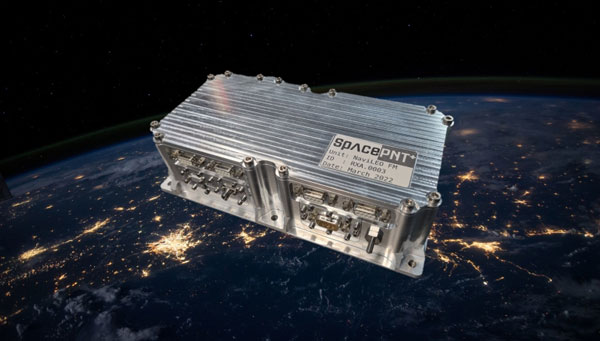
    Interestingly, the first product we started to develop was not a moon receiver but one targeting LEO satellites and LEO constellations called NaviLEO, because there was more demand for solutions covering LEO orbit satellites than for moon mission, especially in 2019. Today, moon PNT technology is also becoming very important.

    How did you become involved with the European Space Agency’s moon mission?

    After we started the development of our first NaviLEO spaceborne GNSS receiver product, we won an open competitive call from the European Space Agency (ESA) to develop a moon GNSS receiver prototype that we named NaviMoon. This development built upon the NaviLEO spaceborne receiver development that integrated high-performance, radiation-tolerant COTS EEE components and a radiation-tolerant HW/SW/FW architecture, including latch-up protections and ECC, but this time with a better clock and improved super-high-sensitivity algorithms.

    What are the special challenges of making a lunar GNSS receiver?

    There are several of them as the super-high sensitivity algorithms and the navigation algorithms are quite complex. One special challenge we had to overcome was related to the hardware. Indeed, for the proof-of-concept, we realized at EPFL, we used a commercial development board integrating a very large FPGA, which allowed us to rapidly develop the algorithms without being limited with the FPGA computational resources. However, when you need to make a space product, then you need to select radiation-tolerant components and also want to minimize power consumption, so the choice of a suitable radiation-tolerant FPGA is very limited. Therefore, a main challenge during the lunar receiver prototype development was to develop super-high sensitivity GNSS algorithms that could fit within the limited computational resources of the NaviLEO hardware. In addition, we also needed to find a better radiation-tolerant low-phase-noise clock allowing very long coherent integrations of the received signals to extract them from the environmental thermal noise.

    What happened next?

    After the first ESA contract to develop this NaviMoon engineering model, we won a follow-up competitive ESA call to build a flight model that ESA will send around the moon circa 2025 to demonstrate for the first time the use of terrestrial GNSS signals for autonomous navigation in a cislunar orbit. For the manufacturing and testing of the hardware, we partnered in this project with European Engineering & Consultancy (EECL) in the UK. Surrey Satellite Technology (SSTL), also in the UK, is the satellite prime in charge of the ESA/SSTL Lunar Pathfinder satellite that will host our NaviMoon receiver. It will also host a laser retroreflector array that will make it possible to verify the real-time positioning accuracy provided by the receiver in cislunar orbit. We already delivered the flight model to SSTL in June of last year and are very much looking forward to this in-cislunar orbit demonstration. It will be the culmination of a very long development that started 10 years ago at EPFL and has only been possible thanks to the hard work and dedication of all the people who worked on it, including the support from ESA.

    What are your key innovations?

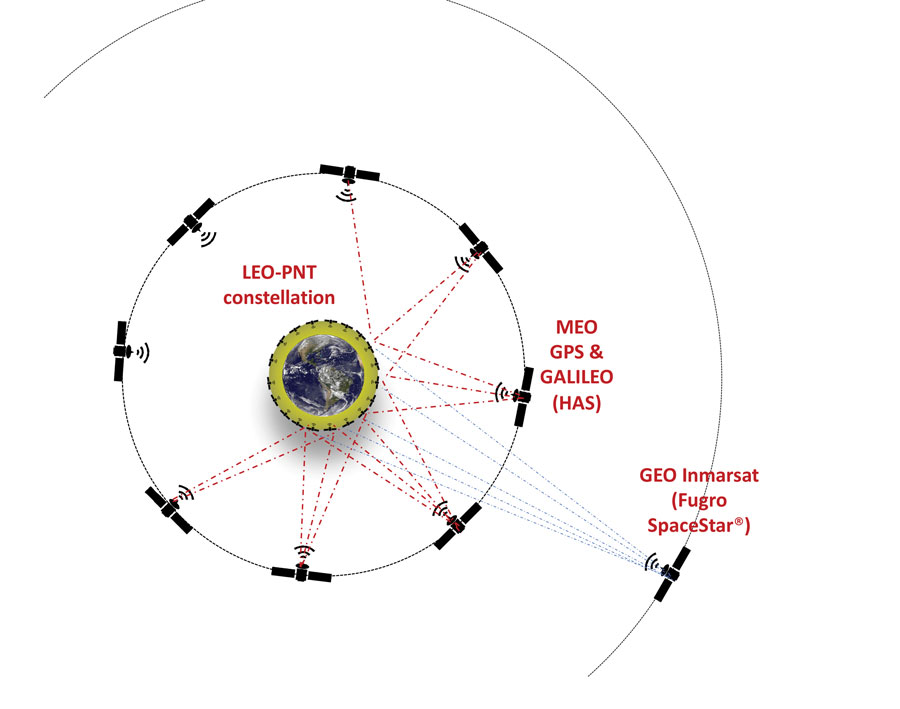
    Besides the fully in-flight reprogrammable radiation-tolerant hardware we developed and the super-high sensitivity algorithms and orbital forces model integrated in our NaviMoon navigation filter, another key innovation we developed at SpacePNT is our own precise orbit determination (POD) algorithm that can process the clock and ephemeris corrections transmitted in real-time by Galileo satellites (the High Accuracy Service) or by GEO satellites (the Fugro SpaceStar service) and that we are integrating into our NaviLEO-POD product. Thanks to these real-time corrections received from the same GNSS antenna as used to receive the GNSS signals, our NaviLEO POD receiver technology can deliver to the other payloads onboard the satellites, totally autonomously and in real-time, a position and a time with sub-decimeter and ns-level accuracy, which is outstanding if we think of the velocity of a LEO satellite, which travels at a speed more than several tens of thousands of km/h.

    One of your press releases refers to NaviLEO as a “spaceborne GNSS receiver product platform.” What does that mean?

    When we started the development of our first GNSS product, NaviLEO, we already had in mind the development in the near future of additional receiver products to cover additional markets, e.g., with dual-antenna to provide optimal visibility from LEO to GEO, or with a better on-board clock to enable autonomous moon navigation. This is why we developed the original NaviLEO hardware as a flexible “product platform” or “technological base” that our other spaceborne GNSS receiver products could inherit and build upon.

    This is also why I said in that press release that the successful in-orbit demonstration of our NaviLEO receiver product platform is a significant achievement towards future missions. What I meant is that the NaviMoon flight model we already delivered to ESA last year, as well as other NaviLEO flight models we are delivering to other customers this year, are also based on the same fully in-flight reprogrammable technological platform as NaviLEO. Therefore, having this receiver platform already successfully demonstrated in a LEO environment is a great achievement towards the future missions, including the coming ESA/SSTL Lunar Pathfinder demonstration in cislunar orbit. Moreover, this in-orbit validation has also allowed us to de-risk our second-generation product platform, because our second generation reuses the same key radiation-tolerant electronics components, repacked to enable a more cost-effective and larger-scale manufacturing. 

    Are you mostly targeting telecoms?

    The large LEO telecom constellations are one of our main targets for our second-generation product. Indeed, given the large quantities involved and the market pressure to make the satellites cheaper, it is necessary to develop a technology well-optimized for cost reduction and serial manufacturing. That is something we clearly had in mind when we defined the requirements of our second-generation hardware product that we will qualify in the coming months. We are also targeting additional markets, both with our current first-generation and coming second-generation products, for instance, the Earth observation market or LEOPNT market for which decimeter and nanosecond accuracy can make a huge difference to the quality and performance of the services these satellites can deliver to the end-users, or the GEO and Moon markets for which our super-high-sensitivity receiver technology is perfectly suited.

    Use of a NaviLEO-POD receiver onboard each satellite of a LEO-PNT constellation, allowing the autonomous generation of PNT signals within each satellite. (Image: SpacePNT)
    Use of a NaviLEO-POD receiver onboard each satellite of a LEO-PNT constellation, allowing the autonomous generation of PNT signals within each satellite. (Image: SpacePNT)

    What are the key technical challenges using GNSS satellites “from the other side,” so to speak?

    What makes it extremely difficult to use GNSS satellites at altitudes above them is the fact that GNSS satellites always have their main lobe antenna gain directed toward Earth and do not transmit any signal power toward outer space. So, when you are above a GNSS constellation, you cannot receive any signal power from the satellites directly beneath you, and in fact the only signals you can receive are coming from the spillover around Earth of the satellites that are on the other side of Earth, or that come from the secondary side lobes of the GNSS transmit antennas.

    Since the antenna gain of the secondary side lobe is reduced by about 14dB as compared to the main lobe directed toward Earth, this is yet another reason why super-high-sensitivity algorithms are needed for moon and GEO missions, to allow the use of these lower power signals transmitted by the GNSS secondary antenna side lobes.

    More specifically, what are the challenges of moon navigation?

    Moon navigation, whether in transit to the moon, in a lunar orbit, or on the lunar surface represents several challenges. These include the definition of a reference time and geometric reference frame to be used on the moon, and the definition of standards for communications and positioning to be followed by the different moon users and moon service providers in order to achieve interoperability, amongst others.

    Do ESA and NASA plan to place navigation satellites in orbit around the moon? If that’s the case, are you bridging the gap until the new system is deployed?

    Yes, exactly. NASA and ESA are collaborating to define the LunaNet Interoperability Specification. It is a common framework of mutually agreed standards to be applied by users and service providers in a cooperative network and support missions on and around the moon. In this framework, PNT services are envisioned to be provided in two ways to lunar users, through dedicated communication links and through a GNSS-like lunar navigation system.

    As there is no such infrastructure available yet, however, our NaviMoon GNSS receiver solution that ESA will demonstrate as part of the ESA/SSTL Lunar Pathfinder mission circa 2025 is a first step toward the effort to develop lunar PNT capabilities. It will also illustrate how GNSS can play a meaningful role in lunar PNT, analogously to the way that LEO-PNT complements GNSS for Earth users.

    How can your system contribute to complementary PNT?

    In a nutshell, a complementary PNT constellation can provide PNT services similar to a GNSS system, making each LEO-PNT satellite transmit PNT signals that contain both its real-time ephemeris and time of transmission. To do that, what every LEO satellite of a LEO-PNT constellation needs is a means to compute its own precise ephemeris and to precisely synchronize its time-frequency with the others. This is exactly what our NaviLEO POD solution can do. Thanks to its on-board real-time POD algorithm and the real-time GNSS clock and ephemeris corrections it can receive from GEO satellites, such as Fugro SpaceStar service, or from MEO satellites, such as the Galileo high accuracy service, it can disseminate within the satellite the real-time precise orbit determination of the satellite needed to compute and transmit its own precise ephemeris. It can also compute and transmit the ns-level timing frequency synchronization with GPS or Galileo system time. The LEO-PNT satellite can then use these data to generate the PNT timing signals sent toward the PNT terrestrial users. The beauty of this concept is that there is no need for inter-satellite links, additional ground station infrastructure or atomic clocks on the LEO-PNT satellites. The GNSS receiver equipment can do it all by itself, delivering a time fully synchronized with a GNSS time scale that is maintained by the atomic clocks onboard the GNSS monitor stations and GNSS satellites. Our system is also resilient to short GNSS outages, thanks to NaviLEO POD’s advanced algorithms that optimally combine the multi-constellation multi-frequency GNSS measurements with a precise model of orbital forces allowing the propagation of the navigation even in the absence of GNSS measurements. Finally, what I think is remarkable is that thanks to the MEO or GEO real-time correction signals used to correct the ephemeris and clock errors present in the real-time signals transmitted by the GNSS satellites, a LEO-PNT satellite equipped with our solution can potentially transmit ephemeris and clock signals towards the terrestrial users that contain fewer errors than the real-time ones transmitted by today’s GNSS satellites.

    Plus, of course, the received signal on Earth from LEO satellites is much, much stronger than that from GNSS satellites, which has many advantages, right?

    Absolutely. The additional power means that signals transmitted from LEO satellites are much more difficult to jam or spoof, thanks to the higher received signal power. In addition, because the LEO satellites travel much faster than the GNSS satellites above a terrestrial user, the signals are much more dynamic. So, even if one wanted to make a very complex spoofing attack with UAVs, everything is so dynamic and moving so fast, that it would be very difficult to implement. This may make the receiver more complex but also brings advantages. For instance, if one user application does not need a high accuracy fix, it is possible to use the Doppler effect to locate a receiver with just one or two LEO satellites.

    Are you working on any other related projects?

    We are also working on an enhanced orbit propagation tool called SimORBIT and commercialized by Spirent. It enables realistic testing of emerging LEO satellite constellations with the generation of output files in SP3-c format, as well as in the proprietary Spirent MOT and MOTI formats. We are also constantly improving our receiver technology and widening our product offerings.

  • VIAVI Solutions adds a box between the antenna and receiver

    VIAVI Solutions adds a box between the antenna and receiver

    Photo:
    De Falcis

    VIAVI Solutions — with corporate headquarters in Chandler, Arizona, and offices in 22 countries — makes a wide array of testing solutions for network operators, equipment manufacturers, enterprises, government, aerospace, and railways. I spoke with Nino De Falcis, Senior Director, Global PNT Business Development.

    What problem are you addressing?

    A GNSS clock is a single point of failure and is at risk of cyber-attacks that are on the rise, such as jamming and spoofing. In a typical configuration, a GNSS legacy clock includes an antenna, a receiver, a holdover oscillator and fan-out input/output. The GNSS antenna is the point of attack for many bad guys. That’s the problem we are addressing in the critical infrastructure that we are serving, including defense, 5G, public safety, utilities, data centers, financial systems and transportation. Bad guys now have also demonstrated that they can jam or even, in Russia’s case, shoot down GNSS satellites, which makes GNSS even more vulnerable, both in space and on the ground. GNSS constellations do not have spoofing detection or mitigation through authentication, except for Galileo’s Open Service Navigation Message Authentication (OSNMA). Additionally, their signals are not encrypted, so they are easy to spoof and do not work indoors.

    What is your solution?

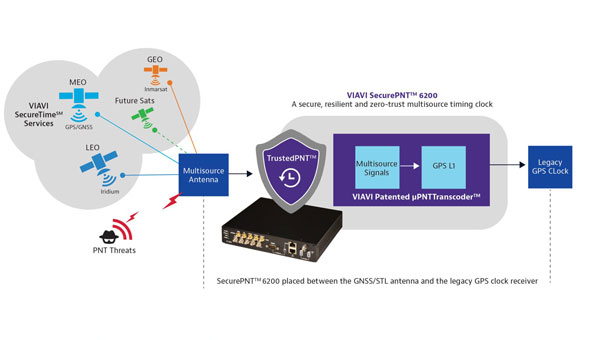
    Instead of replacing the hundreds of thousands of legacy GNSS clocks that are deployed, we are just adding our box in line between the antenna and the receiver, as an accessory. We call it the zero-trust multisource PNT clock, and it is our new SecurePNT-6200 product. Additionally, we offer our new suite of SecureTime services, which combines multiple signals of opportunity, coupled with the 6200 clock. We already have Iridium LEO and Inmarsat GEO sources and will soon add support for other future satellites as well as terrestrial sources. You can even aggregate a stand-alone cesium clock into our resilient 6200 clock. Then, we output the legacy signal to feed it to the GPS receiver.

    Our resilient multi-source clock aggregates all those signals of opportunity, and then AI sensor fusion weighs, cross-verifies, authenticates, qualifies. It does a lot of processing to select the best uncompromised source. The source is then converted to the legacy GPS L1 signal before feeding it to the GPS receiver. We call it a transcoder and have a patent on this technology. We are the only company offering this solution, though we allow third parties to do the same.

    How are you processing your data?

    We’re inputting all the constellations — almanacs, ephemerides, etc. — and fusing all those internal and external sources, weighing their quality and estimating the PNT state. We then apply the zero-trust, AI-based jamming and spoofing detection and mitigation. So, we’re doing the authentication, the verification, the qualification, the learning of patterns using all the data sets that we are accumulating between those different sources from GNSS, LEO, GEO or cesium clocks. We can also aggregate sources from the ground, such as eLoran or any terrestrial source that could be activated in the next two or three years. When we switch from one source to another — in the sky, in space, and/or on the ground — we go quickly into holdover so that we don’t have a phase hit during the switchover.

    What is your timing source?

    Our ground control stations are connected to the NIST to provide a GNSS-independent timing source. So, our solution doesn’t depend on GNSS and its coverage is global and traceable to UTC.

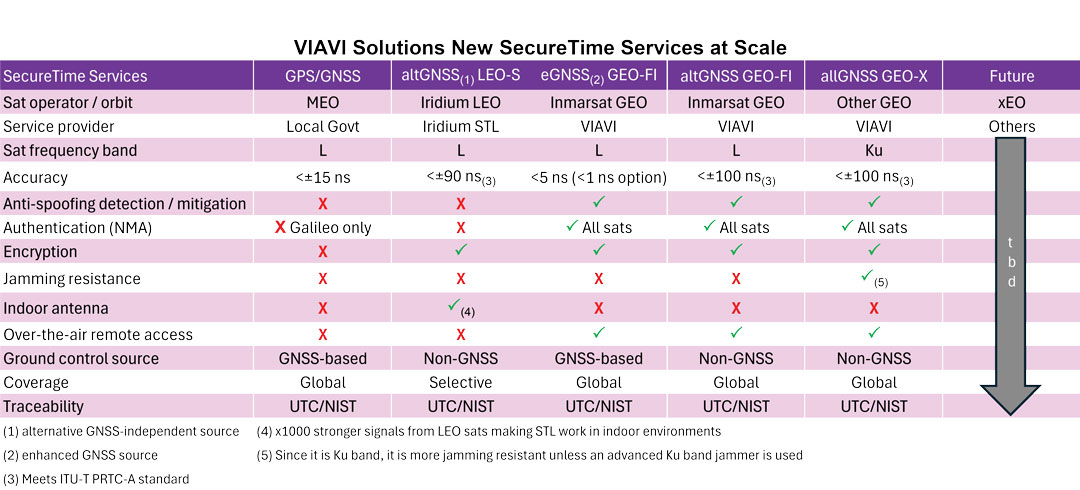
    VIAVI chart

    How do LEO and GEO complement each other?

    Through Iridium LEO, we’re addressing the encryption, jamming protection, and indoor antenna capabilities that GNSS does not have. However, there are still two missing pieces: spoofing detection and authentication. To address those two gaps of Iridium, we have Fugro Inmarsat GEO, both in L-band and Ku band. Some end users have already approached us and will receive a combination of all three sources — GNSS, LEO and GEO. By the time you get all of those, if anything happens in a critical infrastructure, you’re covered. It is just a matter of your risk profile and how much you want to pay for these services. There is not one service that fits all. The pros and cons of each service are presented in the table above.

    What unique capability does VIAVI offer?

    We are the only company today that can provide multi-orbit, multi-constellation, multi-band capability. All the solutions — GPS, Iridium and Inmarsat — are L-band, but we are going to come out with Ku band capability, too. Jamming and spoofing Ku band will be much, much more difficult than doing it in L-band, which has already been jammed and spoofed in known warzones, because the frequency is so high and if you get jammed, you can easily switch to a different transponder, and there are many of them. For the defense applications that we are serving, this capability can be the difference between winning or losing a war. We have many engagements with defense accounts, as well as commercial and government accounts and our solution has been embraced very successfully so far.

    What performance have you achieved?

    We have built spoofing detection into our product for defense-in-depth attacks. We are offering 5 ns accuracy to UTC and can go down to 1 ns accuracy using our new SecureTime eGNSS service. That is breakthrough performance. If you look at GPS, we are at 15 ns with a high-end receiver, but typical receivers are in the 20 ns to 30 ns range, so we’re at least 15 times better than that.

    To detect jamming and spoofing, we see all the different signals from space and ground, if any, and map them into our AI fusion software platform that we have, which is our new TrustedPNT technology. These services have been tested and proven in live-sky battlefield scenarios at USAF’s NAVFEST 2024 Test Event in May 2024, including successfully providing assured PNT in a simulated warzone with complete denial of GPS and GNSS services. When attacked, our solution switched from GPS to LEO source and then from LEO to GEO, while surviving the various jamming and spoofing attacks. Once the attack stops, we fail back to GPS. If we add more sources, we will be able to switch from one to another depending on the relevant weaknesses, while amalgamating the different sources to create a solution that is higher in performance than any one constellation by itself.

    In conclusion?

    Adding an accessory costs a lot less than replacing your legacy clock. Additionally, adding diversified sources from multiple orbits and bands can significantly bolster the robustness and survivability of your overall PNT solution.

    Learn more about VIAVI’s new solutions below.

  • PNT without GNSS: Exclusive interviews

    PNT without GNSS: Exclusive interviews

    Photo: Safran Federal Systems
    Photo: Safran Federal Systems

    GNSS — delivering up to millimeter accuracy from 20,200 km in space with a received signal of one tenth of one millionth of one billionth of a Watt — is, in Arthur C. Clarke’s famous definition, “indistinguishable from magic.” Yet, in addition to the inherent errors in the transmission, propagation, and reception of their signals, GNSS are increasingly challenged by jamming and spoofing attacks, especially in and near conflict zones.

    For that reason, as any regular reader of this magazine knows, combating jamming and spoofing and building resilience in positioning, navigation, and timing (PNT) systems has been a constant theme of many of our articles and industry news items for years.

    The U.S. National Space-Based Positioning, Navigation and Timing Advisory Board has been focusing on how to “protect, toughen and augment” GPS, with the third word referring both to enhancements to GPS and to the “provision and use of alternate sources of PNT that complement, back up, or replace (partly or entirely) use of GPS.”(*)

    For this cover story, I discussed complementary sources of PNT with executives from four companies that design, produce, and/or operate them. They cover a wide range of complementary PNT technologies. Read the exclusive interviews below: 

    • Iridium owns and operates a constellation of satellites in low-Earth orbit (LEO) and has global rights for L-band spectrum. This enables it to operate the Satellite Time and Location (STL) system developed by Satelles before it recently became part of Iridium. STL protects critical infrastructure by providing a timing signal that is independent of GNSS constellations and 1,000 times stronger than the GPS signal.
    • Spirent Communications latest simulation system brings together GNSS and a wide range of other PNT systems. It simulates L-band, S-band, alternative navigation signals, signals of opportunity and emulated inertial outputs. It focuses particularly on the new and emerging LEO constellations, including Xona Space Systems’ PULSAR signals, and enables users to inject new signals via I/Q data files.
    • SpacePNT has developed an FPGA-based hardware/software/firmware spaceborne GNSS receiver technology specifically targeting the fast-growing New Space satellite market. The company’s innovations include a precise orbit determination algorithm that can process signals from the Galileo High Accuracy Service and from geostationary orbit (GEO) satellites.
    • VIAVI Solutions has developed a system that aggregates signals of opportunity, as well as Iridium LEO and Inmarsat GEO sources; weighs and cross-verifies them; then converts the output to the legacy GPS L1 signal and feeds it to a GPS receiver. It can also aggregate a stand-alone cesium clock.

    (*) From Dr. John Betz’s presentation on “Augmenting GPS for Critical Infrastructure” at the April 24, 2024, meeting of the PNT Advisory Board.

  • Europe’s Ariane 6 takes flight

    Europe’s Ariane 6 takes flight

    Photo: ESA
    Photo: ESA

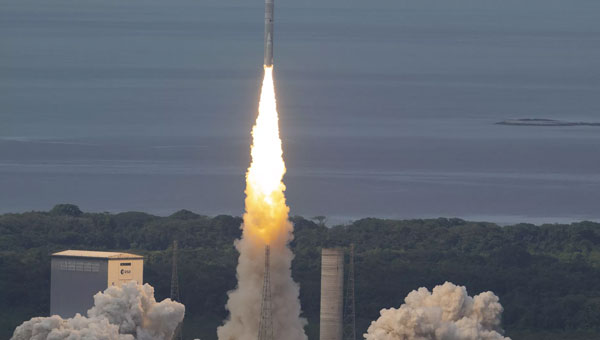
    Europe’s new heavy-lift rocket, Ariane 6, was launched into space from Europe’s Spaceport in French Guiana on July 9, 2024.

    Ariane 6 is the latest in Europe’s Ariane rocket series, taking over from Ariane 5. It features a modular and versatile design that can launch missions from low-Earth orbit (LEO) and out into deep space. Galileo Second Generation (G2) satellites are projected to join the constellation in 2026 with the Ariane 6 launcher. G2 satellites will use electric propulsion and host a more powerful navigation antenna, better atomic clocks and fully digital payloads.

    This inaugural flight, designated VA262, is a demonstration flight to test the capabilities of Ariane 6 in escaping Earth’s gravity and operating in space. It had several passengers on board. The next Ariane 6 is planned for launch this year on its first commercial flight under Arianespace as operator and launch service provider.

  • GEODNET enters distribution and OEM agreements

    GEODNET enters distribution and OEM agreements

    Photo: GEODNET
    Photo: GEODNET

    The Global Earth Observation Decentralized Network (GEODNET) Foundation — the organization governing the blockchain-based global navigation network GEODNET — has entered new distribution and OEM agreements with AllyNav, Bad Elf, bynav, Sensori Robotics and Unmanned Life. 

    GEODNET’s blockchain-based global real time kinematics (RTK) and GNSS correction network consist of more than 7000 stations, which aim to provide a unique value proposition combining affordability, precision and reliability. 

    GEODNET will partner with AllyNav for precision farming; Bad Elf for surveying applications; bynav for automotive and internet of things (IoT) OEMs; Sensori Robotics for IoT robotic lawnmowers; and Unmanned Life for UAV orchestration.  

    The GEODNET ecosystem is undergoing continuous growth with an average of 100 to 200 GNSS reference stations added per week during the first half of 2024, the company says.  

    GEODNET is the world’s largest GNSS reference network for RTK-based positioning, according to the company. Standard GPS is usually off by two meters; however, devices connected to GEODNET’s global RTK network can achieve accuracy within 1-2 cm. Many IoT and autonomous applications, such as UAVs, smart mowers, and Advanced Driver Assistance Systems (ADAS), have shifted to RTK in place of standard GPS positioning.  

    GEODNET is a community-based Decentralized Physical Infrastructure Network (DePIN). Users can contribute to the network by installing and operating a reference station known as a satellite miner. Satellite miners deliver precise RTK correction data to devices equipped with GNSS receivers within a range of approximately 20-40 kms. GEODNET aims to provide the world’s most robust precision navigation system to a variety of industries, including self-driving cars, agriculture, consumer robots and more. 

  • Iridium expands Satellite Time and Location service to Europe and Asia Pacific

    Iridium expands Satellite Time and Location service to Europe and Asia Pacific

    Image: Iridium
    Image: Iridium

    Iridium Communications has expanded the commercial availability of its Satellite Time and Location (STL) service to parts of Europe and the Asia Pacific. This expansion is driven by increasing demand and aims to provide an alternative positioning, navigation and timing (PNT) solution to protect critical infrastructure against GPS and Galileo spoofing and jamming. 

     The Iridium STL service, capable of operating globally, is designed to ensure the fidelity of timing systems with a signal 1,000 times more powerful than GPS. This makes it particularly suited for indoor use without the need for rooftop antennas, offering a secure and cost-effective solution for sectors such as transportation, energy grids, data centers, telecommunications networks and financial services. 

     The expansion follows a significant rise in GPS jamming and spoofing activities in Europe and parts of Asia, posing serious threats to critical infrastructure. The newly available STL service is designed to help safeguard essential systems and improve operational security and efficiency. 

     The STL solutions are designed to be small, cost-effective and easy to install. These solutions can be integrated into existing GNSS-reliant systems or used as stand-alone units. 

     With the expanded authorization, Iridium STL can now be purchased by companies in North America, parts of Europe and the Asia Pacific region. The company plans to continue scaling and training sales and support staff to further extend the service’s global reach. 

  • Spirent accepting orders for Xona PULSAR simulator

    Spirent accepting orders for Xona PULSAR simulator

    Photo: Xona Space Systems
    Photo: Xona Space Systems

    Spirent has implemented Xona Space Systems’ PULSAR production signals for seamless integration into the existing SimXona product line. The PULSAR X1 production signal implementation has passed a diligent Xona certification and the PULSAR X5 signal verification process is currently underway. It is expected to pass certification during the summer of 2024. Spirent is now accepting orders for SimXona with production signals capability.

    Xona is developing PULSAR, a high-performance positioning, navigation and timing (PNT) service built on a backbone of low-Earth orbit (LEO) small satellites. Xona’s smallsat signals will improve PNT resilience and accuracy by augmenting GNSS while operating with an independent navigation and timing system architecture. Xona is fully funded to launch its production class satellite, the In-Orbit Validation mission, in 2025.

    Spirent is the leading provider of PNT test solutions and recently launched a sixth-generation simulation system, PNT X. Designed for navigation warfare (NAVWAR) testing, PNT X is an all-in-one solution with a native implementation of SimXona.

  • First fix: Trouble in orbit

    First fix: Trouble in orbit

    The solar storm in May that produced a beautiful aurora borealis as far south as Mallorca, Spain, also stopped GNSS-based precision agriculture for a couple of days. The same month, articles in major U.S. newspapers detailed aspects of a growing confrontation between the United States, Russia and China —vying for dominance in near-Earth space, now part of the military fighting domain — that could lead to far greater disruption. Nearly all satellites are highly vulnerable to cyberattacks, ground- or space-based lasers, high-powered microwaves, the debris field from a destroyed satellite and the radiation produced by a nuclear explosion in space. The last one would disable by far the greatest number of satellites because of its range and because commercial satellites, which constitute more than 90 percent of all satellites in orbit, are not hardened against such radiation.

    Matteo Luccio
    Luccio

    A May 16 article in The Wall Street Journal titled “Russia Launched Research Spacecraft for Antisatellite Nuclear Weapon Two Years Ago, U.S. Officials Say,” reported that in February 2022, shortly before it invaded Ukraine, Russia launched Cosmos-2553, “designed to test components for a potential antisatellite weapon that would carry a nuclear device.” It linked the launch to a continuing Russian nuclear antisatellite program and said that, if deployed, the weapon “would give Moscow the ability to destroy hundreds of satellites in low-Earth orbit (LEO) with a nuclear blast.”

    “The Pentagon,” the article pointed out, “has become increasingly reliant on commercial satellites.” In LEO, it reported, there are almost 6,700 U.S. satellites, while China has 780 and Russia only 149. Therefore, the Russians would have a lot less to lose should they choose to explode a nuclear weapon in LEO.

    A May 17 article in The New York Times was titled “New Star Wars Plan: Pentagon Rushes to Counter Threats in Orbit.” The subhead read: “Citing rapid advances by China and Russia, the United States is building an extensive capacity to fight battles in space.” It said that, in a major shift in military operations, the Defense Department “is looking to acquire a new generation of ground- and space-based tools that will allow it to defend its satellite network from attack and, if necessary, to disrupt or disable enemy spacecraft in orbit.” Meanwhile, “both Russia and China have already tested or deployed systems such as ground-based high-energy lasers, antisatellite missiles or maneuverable satellites that could be used to disrupt [U.S.] space assets.”

    The decision to strengthen U.S. warfighting capacity in space, it said, is driven mostly by China’s expanding fleet of military tools in space, which threatens to prevent U.S. Navy operations in the Western Pacific. “The Pentagon is separately working to launch a new generation of military satellites that can maneuver, be refueled while in space or have robotic arms that could reach out and grab — and potentially disrupt — an enemy satellite.”

    These are all reasons to quickly develop and deploy a wide mix of complementary PNT solutions that would lessen reliance on GNSS satellites and, therefore, make them less of a target.