Category: GNSS

  • US Army approves production of MAPS Gen II for GPS resilience and modernization

    US Army approves production of MAPS Gen II for GPS resilience and modernization

    Project Manager Positioning, Navigation and Timing’s Mounted PNT product office has received full-rate production approval for the Mounted Assured Positioning, Navigation and Timing System Generation II (MAPS Gen II), a key Army modernization initiative, from the Program Executive Office Intelligence, Electronic Warfare and Sensors. This approval allows the Mounted PNT office, in collaboration with Collins Aerospace, to begin full-rate production and fielding of MAPS Gen II as it moves toward initial operating capability.

    MAPS Gen II provides GPS anti-spoofing and anti-jamming capabilities through sensor fusion algorithms and non-radio frequency sensors. These features enable mounted soldiers to operate in environments where military GPS is denied or degraded. The system supports U.S. Army forces by allowing them to move, shoot and communicate effectively while distributing PNT data to multiple users on a single platform. This is designed to eliminate redundant GPS receivers and antennas.

    The system includes anti-jamming and anti-spoofing protection, a sensor fusion processor that integrates multiple PNT sources, and open architectures such as APSN and VICTORY. It outputs PNT data through multiple distribution standards, ensuring compatibility across platforms.

  • Jammertest returns to Norway for fourth consecutive year

    Jammertest returns to Norway for fourth consecutive year

    For the fourth consecutive year, Jammertest will take place in Bleik on Andøya, Norway, with applications now open until March 15, 2025. This event serves as a critical platform for industry and equipment manufacturers to test their systems against jamming and spoofing attacks, identify vulnerabilities and develop more resilient solutions. It attracts participants from diverse sectors, including the global automotive and security industries, telecommunications, academia and government authorities.

    The event’s importance is underscored by the growing reliance of civilian services on satellite communications. Essential societal functions — such as transportation, emergency services, electronic communication, financial systems, and power supply — depend on accurate satellite-based positioning and timing. However, incidents of signal interference have highlighted vulnerabilities. For example, rescue helicopters in Norway have faced landing difficulties due to disrupted signals, and airports have been affected by illegal jammers. Airlines have also reported spoofing activity. According to the Norwegian Communications Authority, GNSS interference is an escalating concern that demands ongoing testing and innovation.

    Jamming refers to the deliberate disruption of signals such as GPS or radio frequencies, while spoofing involves transmitting false signals to deceive receivers. Both tactics pose significant risks to civilian infrastructure. The Jammertest provides a unique opportunity for participants to evaluate their equipment under real-world conditions at Andøya’s remote location. This setting allows for “open air” testing without risking disruptions to civilian infrastructure or air traffic control systems — an advantage not feasible in densely populated areas.

    Andøya’s geography makes it an ideal site for these trials. Surrounded by mountains and isolated from major population centers, it enables high-power signal testing while minimizing societal impact. Participants receive direct feedback on how their systems perform under controlled interference scenarios.

    About Jammertest

    Jammertest is recognized as the world’s largest open arena for testing resilience against jamming and spoofing attacks. It is organized in collaboration with several Norwegian authorities, including the Norwegian Public Roads Administration, Norwegian Communications Authority, Norwegian Defense Research Establishment, Norwegian Metrology Service, Norwegian Space Agency, Norwegian Mapping Authority, and Testnor.

    This year’s event is scheduled from Sept. 15-19, 2025.

  • Astranis advances resilient GPS technology for US Space Force

    Astranis advances resilient GPS technology for US Space Force

    Astranis has completed a critical demonstration for the U.S. Space Force’s Resilient GPS (R-GPS) program, showcasing its ability to transmit core GPS waveforms using software-defined radio hardware. Conducted ahead of schedule and within budget, the demonstration highlights Astranis’ ability to adapt its flight-heritage high-orbit satellite hardware to meet new resilience requirements for the Space Force.

    The test took place at Astranis’ headquarters in San Francisco, California, using a flight-like software-defined radio and positioning, navigation and timing algorithms provided by Xona Space Systems, a partner and subcontractor for the R-GPS program. Astranis transmitted a GPS Course Acquisition (C/A) navigation signal through its resilient GPS payload and demonstrated signal acquisition and recovery of Legacy Navigation messages with an off-the-shelf GPS receiver. According to Astranis, this validated that its resilient GPS design, Nexus, complies with GPS specifications “out of the box,” ensuring compatibility with existing user equipment without requiring costly upgrades.

    Astranis was selected in September 2024 as one of four contractors to design next-generation resilient GPS satellites under the Space Force’s initiative. The company received its Authority to Proceed on Sept. 19, 2024, and has since exceeded program objectives ahead of schedule. The R-GPS program aims to augment the existing GPS constellation with smaller, cost-effective satellites to enhance resilience against threats such as jamming or spoofing.

    Astranis is advancing its satellite design in preparation for the Space Force’s goal of launching the first eight R-GPS satellites by 2028. The company’s approach leverages its MicroGEO satellite design and software-defined radio technology to deliver resilient capabilities while maintaining compatibility with legacy equipment.

  • Hexagon | NovAtel, GPR to advance sensor fusion for precise positioning

    Hexagon | NovAtel, GPR to advance sensor fusion for precise positioning

    Hexagon | NovAtel has entered into a Memorandum of Understanding (MOU) with GPR, Inc. to integrate GPR’s WaveSense ground-penetrating radar sensors into NovAtel’s SPAN GNSS/INS solution. This collaboration aims to explore the integration of NovAtel’s SPAN system with GPR’s subsurface mapping technology, enhancing positioning solutions for applications requiring high reliability and centimeter-level accuracy, such as autonomous systems, mining and other mission-critical operations.

    NovAtel’s SPAN GNSS+INS technology has historically provided reliable position, velocity and attitude (PVA) data by combining GNSS signals with IMU data. This approach ensures continuous accuracy during short GNSS interruptions caused by environmental factors like foliage or buildings. By incorporating WaveSense’s ground-penetrating radar as an additional input, the system can maintain accurate PVA solutions even during extended GNSS outages due to obstructions, signal interference, or jamming. This integration is particularly beneficial in GNSS-denied environments or areas lacking clear surface structures.

    WaveSense technology operates by scanning up to 10 ft below the ground to map unique subterranean features. These stable underground patterns serve as a reliable reference for navigation, unaffected by adverse weather conditions such as snow, rain or fog. The combination of SPAN and WaveSense technologies is expected to significantly enhance navigation accuracy and reliability in challenging environments, according to the company.

    Under the terms of the MOU, NovAtel and GPR will collaborate on specific use cases to demonstrate the combined capabilities of SPAN and WaveSense in demanding applications. Following these demonstrations, the partnership may advance toward a full product definition and supply agreement, according to the companies.

  • US Air Force tests alternative PNT systems for GPS-denied environments

    US Air Force tests alternative PNT systems for GPS-denied environments

    The Air Force Life Cycle Management Center’s Positioning, Navigation and Timing (PNT) Program Office, Integrated Solutions for Systems (IS4S) and AEVEX Aerospace have completed flight tests for the Resilient-Embedded GPS/INS (R-EGI) Modular Open Systems Architecture (MOSA). The tests demonstrated R-EGI’s ability to integrate third-party alternative PNT solutions to ensure reliable navigation in GPS-denied environments.

    This achievement marks a step forward in developing R-EGI, demonstrating its ability to integrate a “plug & play” third-party alternative PNT capability that ensures reliable navigation in GPS-denied environments.

    “This flight test represents a pivotal moment in the evolution of resilient PNT systems,” said Jeff Hebert, senior scientist for PNT at the Air Force. “The rapid and cost-effective integration of third-party PNT solutions into Department of Defense weapons systems is precisely why R-EGI and its open architecture were envisioned.”

    The R-EGI system’s open MOSA design enables seamless integration of government and third-party applications to address emerging navigation threats. Its Mission Capability Navigation (MCNAV) component allows for seamless integration of external alternative PNT solutions under challenging conditions.

    During six test flights on a Special Operations Command C-146A Cougar aircraft, R-EGI operated successfully in GPS-denied environments, validating the system’s resilience and capacity for real-time adaptability. Using AEVEX Aerospace’s LynxVBN vision-based navigation system, it maintained approximately 10 m of positioning accuracy for up to 2.5 hours. Notably, LynxVBN was integrated into R-EGI’s MCNAV software in just one hour, underscoring the system’s adaptability. As the algorithms continue to improve and evolve, R-EGI’s alternative PNT accuracy will only become more refined, enhancing its capability to perform in increasingly complex and challenging environments, according to the company.

    “After demonstrating that the R-EGI architecture could integrate multiple GPS receiver vendors, and then three months later, witnessing its performance, from the Cougar-provided live-stream data feed, in real-time GPS-denied flight scenarios was the most impressive showcase we’ve seen in the program’s history,” said Major Bernard Mutz, project manager for R-EGI

    The successful integration of alternative PNT technologies into R-EGI seeks to enhance the system’s GPS resilience. Also, it sets a new benchmark for reliable, flexible navigation in GPS-degraded environments, said Mikel Miller, senior vice president for PNT at IS4S.

  • More on EUSPA’s first ever GNSS and Secure SATCOM User Technology Report

    More on EUSPA’s first ever GNSS and Secure SATCOM User Technology Report

    In case you missed it, the European Union Agency for the Space Program (EUSPA) recently issued its first ever User Technology Report addressing both GNSS and Secure SATCOM. Though they seem to be different and distinct topics, EUSPA does a reasonable job of drawing them together with an “Editor’s Special — Synergies from Space” at the end of the document.  

    The first half of the report deals with GNSS and is an exploration and celebration of how far we have come with GNSS. While the report is aimed at “users” and is designed to be “technical,” it is written to be accessible by most who are generally familiar with the topic.

    Also, a careful reading reveals several messages for policymakers.  

    Protecting Frequencies

    The report opens with a celebration of what has now become a multi-constellation, multi-frequency, open positioning, navigation and timing (PNT) system with 110 satellites, two regional augmentation systems (Japan’s QZSS and India’s NavIC), and Satellite Based Augmentation Systems (SBAS). All of this depends, of course, on clear and uninterrupted signals. 

    One of the first cautions policy makers should note is a subheading in the section that reads “Frequencies: a scarce resource to be protected.” This is the first of many mentions of the need to protect signals and users from accidental and malicious interference. 

    From 2016 to 2019, the European Union’s STRIKE3 project deployed equipment to monitor L1/E1 signals in 23 countries across the globe. They found more than 450,000 signals that could interfere with GNSS, 59,000 of which were assessed to be intentional jamming or spoofing. 

    This was well before the current wars in Ukraine and the Middle East and before Russia’s malicious ongoing electronic warfare in the Baltic. So, even in the absence of aggressive nation-state actions, which could flare up at any time, STRIKE3 showed that GNSS interference was a significant problem threatening users’ reliance on GNSS.

    Both the European Union and the United States have undertaken projects in response to widespread jamming and spoofing.

    In Europe, EUSPA has begun the EGIPRON project, or European Global Interference PROtection Network. It aims to develop and deploy “…an interference monitoring system covering all European territories and worldwide areas of European interest” working with contractors Qascom and Leonardo.

    The U.S. Department of Transportation (DOT) announced the “GNSS Situational Awareness Common Operational Picture GovCloud Environment” at the December 2024 National PNT Advisory Board meeting. The government version was described as operational, with a public version to be available in mid-2025.

    These detection — and hopefully geolocation — systems will be great tools. Policy makers must remember, though, that better understanding the scope of the problem will not solve it. 

    Better laws and regulations to empower enforcement, along with improved enforcement capability, will both be needed if even a dent is to be made in the problem. Getting these in place will be significant legislative and budgetary challenges. Even then, the problem of accidental and malicious GNSS interference will not be solved. Authorities will just be able to manage it a bit better.  

    Toughen Receivers 

    A great majority of the GNSS portion of the document is appropriately devoted to receivers. They are, after all, the only part of the GNSS system over which users have any discretion and control. 

    Receiver design, signal processing, antennas and PNT processing are all discussed. The most attention is paid to describing the characteristics and appropriate uses of five different families of GNSS receivers:

    • Mass Market Entry-Level
    • Mass Market Premium
    • Professional Non-Regulated
    • Professional Regulated
    • Special Applications

    Using the right kind of GNSS receiver for a given application is essential for safety and effectiveness. 

    The question for policymakers, though, is not whether the right technology exists to mitigate risks — it does. Rather, the issue is whether that technology is being used appropriately. 

    Most GNSS users are uninformed about GNSS issues and tend to purchase equipment based upon price rather than resilience. Policymakers must consider how to motivate users, especially in critical applications, to purchase and use more expensive equipment. Government leaders have many levers of influence at their disposal, from education to regulation and requirements. As of yet, however, we have seen few in use.

    Alternative & Complementary PNT

    The booklet devotes a page to “Complementary PNT Technologies” with the subhead “Complementary PNT technologies are redefining navigation solutions.” Saying “one size does not fit all” — which can also be said for GNSS — includes a graphic from the most recent European Radionavigation Plan of a conceptual, system of systems PNT architecture.

    Perhaps more significantly, other pages have mentions of the desirability of “diversifying” PNT sources and “hybridizing” PNT sources. 

    Safety-Critical Applications 

    Overall, the GNSS section of the User Technical Report is an excellent general overview and reference document.

    Its description of SBAS, however, might give a misimpression to the uninformed reader. 

    The title on page 12 reads “SBAS enhance GNSS performance and enable safety critical operations.” 

    SBAS improves GNSS accuracy with corrections and ionospheric models and helps with integrity. However, it does little to prevent service disruptions due to interference.

    The title for SBAS conflict on page 12, with a comment on page 17, discusses “GNSS Vulnerabilities and Mitigation Measures.” The very last note on the page and in the tiniest type reads, “For critical applications, implement alternative (non-GNSS) technologies as a backup to ensure continuous PNT information.”

    This latter statement is very much in keeping with the most current, 2023 version of the European Radionavigation Plan, which says:

    “Thus, for critical applications or critical infrastructure protection, it is broadly accepted that GNSS, even in a multi-constellation and multi-frequency environment, should not be the unique source of  PNT information. For those applications, an alternative PNT solution (back-up but also complementary) should be developed and maintained, not necessarily based on radio frequency technologies.”

    To a certain extent, this has been echoed in the United States as well. 

    In 2020, a Presidential Executive Order warned against over-reliance on GPS/GNSS, saying the government “must ensure critical infrastructure can withstand disruption or manipulation of PNT services.”

    Following this, in its January 2021 report on a PNT demonstration project, the DOT said:

    “Promoting critical infrastructure owner/operator use of those technologies that show strong performance, operational diversity, operational readiness, and cost-effectiveness is worthwhile. Based on this demonstration, those technologies are LF and UHF terrestrial and L-band satellite broadcasts for PNT functions with supporting fiber optic time services to transmitters/control segments.”

    Additionally, a 2023 presentation to an international group by the Office of the Assistant Secretary of the Air Force was titled “Alt. PNT — the Pathway to Resilience.” 

    GNSS are great systems, but we cannot let our understandable enthusiasm for what are truly miracles of technology unintentionally mislead others. Policymakers must be constantly on the lookout for such missteps and help us all maintain a broader, user-focused perspective. 
  • FCC to Meet on GPS Alternatives

    FCC to Meet on GPS Alternatives

    Federal Communications Commission (FCC) Chair, Brendan Carr announced in a March 5 blog post that the commission would be addressing GPS alternatives along with Next Generation 911 issues at its next meeting.

    Pledging that “…public safety and national security will be top priorities for us at the FCC” along with quick action on related issues, Chairman Carr said the commission’s March 2025 open meeting will start “… with an inquiry that explores alternatives to GPS.”

    Describing GPS as indispensable but not infallible, Carr’s post showed a substantial appreciation of PNT and GPS alternative issues as well as much of the related policy history.

    It also cites President Trump, Senator Cruz, and Senator Markey as advocating action to “… ensure we have a resilient system in place.”

    In 2020, President Trump issued Executive Order 13905 on “Strengthening National Resilience Through Responsible Use of Positioning, Navigation, and Timing Services.” Designed to stimulate adoption of open market commercial solutions, it does not seem to have made the nation’s PNT substantially more resilient in the intervening five years. This may be because GPS is free and time and navigation have been provided by the government as free utilities for hundreds of years. Also, many GPS users may be unsure about the need for alternatives since the federal government has not yet acted to protect itself with an alternative system. Potential users are also reluctant to purchase commercial PNT services as they are unsure which commercial services will have the longevity to make the cost and effort of adoption and integration worthwhile.

    President Trump also supported the need for GPS alternatives in Space Policy Directive 7, “The United States Space-Based Positioning, Navigation, and Timing Policy.” It called for the government to “…identify and implement, as appropriate, alternative sources of PNT for critical infrastructure, key resources, and mission-essential functions.”  This directive was issued shortly before the end of the first Trump administration and, though the directive still stands, this provision has not yet been acted upon.

    Carr’s mention of Senators Cruz and Markey undoubtedly refers to their joint sponsorship of the National Timing Resilience and Security Act of 2018. The act called for the Department of Transportation to ensure establishment of at least one terrestrial timing system as a backup for GPS signals. The first Trump administration and the Biden administration never requested funding for such an effort, so the mandate has yet to be implemented.

    Regarding GPS alternatives Carr’s post also says “…it is important that we catch up to other countries that are looking at robust alternatives of their own.” This is likely a reference to a memo ADM Allen, the chair of the National Space-based Positioning, Navigation and Timing Advisory Board, sent to the deputy secretaries of Defense and Transportation in July of last year. It warns about the U.S. falling behind in PNT, especially compared to China.

    An FCC meeting on GPS alternatives is also timely as the commission has received two petitions related to provision of nation-wide PNT services. One is from NextNav, seeking spectrum to underwrite its proposal to work with telecom providers. The other is from the National Association of Broadcasters (NAB), asking to mandate and accelerate implementation of the new ATSC 3.0 television broadcast format. NAB says its Broadcast Positioning System signals will be included as part of that format.

    While GPS alternatives will be discussed at the upcoming meeting, no decisions on systems is contemplated. Carr says the commission:

     “… will vote on an inquiry to explore other Positioning, Navigation, and Timing (PNT) systems that can be complements or alternatives to GPS. Beyond answering technical questions, we hope this effort will engage stakeholders across government and industry to encourage the development of new PNT technologies and solutions.”

    On March 6, the commission released a fact sheet with an attached draft Notice of Inquiry (NOI). The 24-page draft seeks public input on a wide variety of PNT policy and technical issues. The NOI is intended to:

    • Discuss current PNT technologies and efforts, both from governmental and private sector entities, for developing complementary and resilient PNT technologies.
    • Seek comment on various space-based solutions for resiliency of PNT, such as medium Earth orbit (MEO) satellite systems and low Earth orbit (LEO) satellite systems.
    • Seek comment on various terrestrial solutions for resiliency of PNT, such as leveraging TV broadcast infrastructure, ground-based transmitters, and/or user equipment positioning.
    • For all technologies, ask commenters for information on the benefits and challenges of particular PNT technologies or solutions based on factors such as: geographic coverage; availability of existing equipment; use of spectrum resources; the extent to which the technology should be viewed as a complement to or substitute for GPS and other PNT technologies; performance characteristics such as range and precision; durability; international considerations; and the cost and incentives to develop, deploy, and maintain the technology or solution.
    • Seek comment on additional actions that the Commission could take to facilitate the security of PNT technologies available to consumers.
    • Seek comment on whether to amend the Commission’s existing rules or adopt new rules to promote adoption of complementary and alternative PNT technologies.
    • Ask questions about what role public-private partnerships, testbeds, or Innovation Zones may play to test and develop PNT technologies.

    The FCC open meeting’s agenda also includes two items about 911 services. One of those is “Strengthening 911 Location Accuracy Rules” especially for the vertical (z) axis. This seems to be a separate and distinct issue from the PNT agenda item with the burden of performance and response placed on telecom providers. That said, some eventual linkage cannot be entirely discounted.

    The meeting will take place on March 27 from 10:30 to 12:30 EDT. A formal agenda will be posted approximately a week in advance. The meeting can be live streamed at https://www.fcc.gov/March2025 and a recording will be available on YouTube shortly thereafter.

  • ESA, EnSilica partner to enable resilient GNSS

    ESA, EnSilica partner to enable resilient GNSS

    In partnership with the European Space Agency (ESA), EnSilica, a maker of mixed-signal application-specific integrated circuits, will design and develop a key silicon component to enable resilient multi-band global navigation satellite system (GNSS) capabilities. These are vital to ensuring the world’s critical infrastructure and services remain robust and secure in the face of evolving global threats, according to the company.

    The ESA NAVISP Element 2 program helps to increase the competitiveness of participating European states in the global market for satellite navigation and enables these countries to be positioned to capitalize on emerging market opportunities across positioning, navigation and timing (PNT) technologies and services.

    “As we and our infrastructure become ever more dependent on PNT services in everyday life, it is important to have highly integrated, resilient and precise technology sourced in Europe and the UK,” said Paul Morris, vice president of RF and communications business unit at EnSilica. “This collaboration will allow us to accelerate such technology, starting with a next-generation radio design enabling our partners to focus on integrating their custom algorithms.”

    EnSilica has a growing satellite communications market footprint and is working with support from ESA and the UK Space Agency (UKSA), with the latter organization awarding the company £10.38 million ($12.8 million) in February 2025 for a development project under its Connectivity in Low-Earth Orbit program. Part of the company’s expertise is in architecting and implementing systems-on-chip with high-performance RF, including mmWave, and complex baseband processing.

    Ian Lankshear, CEO of EnSilica, added, “I am extremely proud of our team to have been secured this agreement under the ESA NAVISP Element 2. This project will enable us to further enhance GNSS technology and continue to develop commercial solutions that are critical for resilient and reliable satellite navigation. We are grateful for the ongoing support from ESA and the UKSA, and we continue to focus on PNT and the broader satellite communications market as a key growth driver of our business.”

  • US Air Force to test Xona LEO GPS alternative

    US Air Force to test Xona LEO GPS alternative

    The Air Force Research Laboratory awarded Xona Space Systems a contract to demonstrate and refine its commercial positioning, navigation and timing (PNT) solutions for Department of Defense (DOD) missions. The agreement, facilitated through the Space Technology Advanced Research — Fast-tracking Innovative Software and Hardware (STAR-FISH) program, increases Xona’s total contracted commitments to more than $20 million.

    Under the contract, Xona will evaluate its PULSAR satellite navigation service across commercial user devices in scenarios where GPS/GNSS signals may be denied or challenged. Testing will focus on assessing resistance to jamming and spoofing, reducing multipath interference and implementing secure key distribution protocols. The initiative aims to expedite the development of advanced alternative PNT capabilities in commercial off-the-shelf equipment, aligning with DOD requirements for rapid deployment.

    Xona has collaborated with GPS/GNSS hardware providers QinetiQ, StarNav and Locus Lock to integrate PULSAR-enabled devices. These partners will participate in performance demonstrations as part of the multi-year effort, which includes leveraging Xona’s simulation tools and plans to utilize the first PULSAR satellite scheduled for launch in June 2025.

  • ESA to develop optical PNT technology

    ESA to develop optical PNT technology

    The European Space Agency (ESA) has signed a contract with a consortium of European companies to conduct a definition study (Phase A/B1) and associated critical technology predevelopment to drive the development of optical positioning, navigation and timing (PNT) technology.

    This initiative marks the initial phase toward a potential in-orbit demonstrator for optical time synchronization and ranging, which is scheduled for proposal at the ESA Council at the Ministerial Level in November. According to ESA, the primary objective is to validate inter-satellite optical links for future implementation in operational satellite navigation systems.

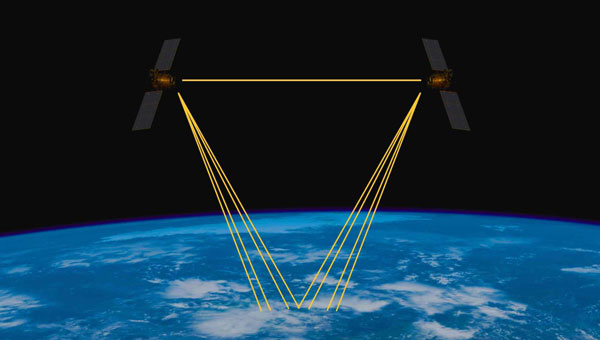
    Optical technology presents promising advancements in navigation accuracy and robustness. While optical links, which use laser beams for data transmission, are already established in satellite communications, their application in navigation requires further technological development and in-orbit validation.

    The consortium, led by German OHB System, comprises 33 companies from various ESA member states. Following the initial study, the next phase would involve developing and testing the technology in orbit to validate novel system concepts and explore new architectures. The results will assess the readiness of optical technology and inform decision-makers about its potential incorporation into future operational systems.

    Laser-based technology offers the potential for enhanced system resilience and robustness, potentially reducing dependence on space atomic clocks and ground segments. Optical links also provide natural immunity to jamming and spoofing attempts.

    The high data transfer rates of inter-satellite optical links could enable new, more robust architectures, supporting a multi-layer system approach to navigation. This aligns with the vision of ESA’s low-Earth orbit (LEO)-PNT program.

    Additionally, optical systems can significantly improve the performance of current navigation systems. Experts anticipate achieving millimeter-level spatial accuracy and picosecond-level timing, which could ultimately lead to enhanced services benefiting billions of users worldwide.

  • GNSS disruption at sea level: An interference study in the Baltic Sea

    GNSS disruption at sea level: An interference study in the Baltic Sea

    For years, aviation safety organizations and maritime authorities have relied on ADS-B-based reports to assess GNSS interference. Services such as gpsjam.org, spoofing.skai-data-services.com and flightradar24 have provided valuable insights into interference patterns at high altitudes. However, this data tells only part of the story. Ground-based infrastructure — ports, telecommunications networks, and precision navigation systems — operate in a vastly different signal environment. High-altitude detections cannot reliably indicate the presence or impact of interference at sea level.

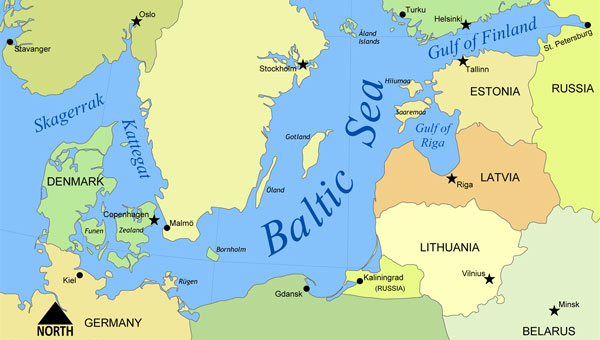
    To address this critical knowledge gap, GPSPATRON and Gdynia Maritime University have conducted a six-month study on GNSS interference in the Baltic Sea. Using terrestrial GNSS monitoring technology, the project examined the frequency, duration and characteristics of interference events affecting maritime navigation and other critical applications.

    Data collection and analysis

    At the core of this study is a terrestrial GNSS monitoring system developed by GPSPATRON, designed to capture and analyze signal disruptions in real-time. Installed at the Faculty of Navigation at Gdynia Maritime University, this system continuously recorded GNSS signal integrity and transmitted the collected data to a cloud-based analytics platform. This platform facilitated the automated detection, classification and visualization of GNSS interference events, providing a comprehensive understanding of interference patterns and their potential impact on maritime navigation. The results paint a stark picture of persistent and evolving interference patterns in the Baltic region. More than 84 hours of GNSS interference were recorded, with October exhibiting the highest activity. Two primary interference types were identified: multi-constellation jamming, prevalent in the summer months, and multi-tone interference, which emerged in October.

    Key findings

    • Persistent GNSS Interference: A total of 84 hours of GNSS interference was detected, indicating continuous disruptions in the region. Most incidents were caused by jamming rather than spoofing.
    • October saw peak interference levels: The month recorded six major jamming events totaling 29 hours, showing an escalation in disruption frequency and severity.
    • Maritime sources of interference suspected: Signal pattern analysis confirms that the source was mobile, reinforcing the likelihood of a single ship or multiple vessels operating the same advanced jamming technology.
    • High-Precision Jamming Signatures: The interference signals detected exhibit structured modulation patterns and frequency agility, suggesting the use of highly sophisticated jamming techniques. These characteristics indicate high-grade equipment, potentially of military origin, with capabilities far exceeding those of common commercial jammers. The consistency and precision of these disruptions highlight the need for further investigation into the source and intent behind these operations.
    • No link to ADS-B reports: Despite extensive ground-level interference, ADS-B-based monitoring systems failed to register corresponding events, highlighting their limitations in assessing terrestrial threats.
    • Long-duration disruptions: Some interference events lasted more than seven hours, significantly affecting GNSS-dependent operations in maritime navigation and port activities.

    Implications for maritime and critical infrastructure

    The findings of this study expose a critical gap in current GNSS monitoring methods. High-altitude interference reports, primarily based on ADS-B data, fail to capture the real impact of jamming and spoofing at ground level. Maritime operations, port logistics, and other critical infrastructure remain vulnerable due to this oversight.

    Ports, telecommunications providers, and emergency services rely heavily on GNSS for navigation, timing synchronization, and security. Without precise ground-level monitoring, disruptions can go unnoticed, leading to cascading failures across multiple sectors.

    A major concern is the false sense of security created by ADS-B-based detection systems. While these services report daily interference incidents, they do not reflect the full extent of ground-based GNSS disruptions. As a result, infrastructure operators may underestimate the risk, assuming that existing monitoring solutions provide adequate coverage. This misconception is dangerous, as it masks the severity of interference threats that remain undetected in high-altitude datasets.

    To mitigate these risks, there is an urgent need for a dedicated GNSS interference monitoring network along the Baltic Sea coast. Such a network would provide real-time, localized data to accurately assess threats, detect interference sources, and enhance infrastructure resilience against GNSS disruptions.

    Conclusion

    This study confirms that GNSS interference is a persistent issue at sea level, posing a serious threat to critical infrastructure, which predominantly operates at ground level. Prolonged interference events were recorded, some lasting several hours, leading to significant degradation in positioning and timing accuracy. This disruption directly impacts maritime operations, telecommunications, emergency response, and other sectors reliant on GNSS services.

    High-altitude interference detection alone is insufficient, as it fails to capture threats affecting ground-level operations. Relying solely on ADS-B-based reports creates a false sense of security, leaving critical systems vulnerable to undetected risks.

    To mitigate these risks, there is a clear need for a dedicated ground-based GNSS interference monitoring network. Such a system would provide real-time detection, precise geolocation of interference sources, and timely countermeasures to protect infrastructure.

    GPSPATRON and Gdynia Maritime University urge regulatory bodies to take proactive steps toward enhancing GNSS interference detection and mitigation. Without coordinated action, vulnerabilities in national infrastructure will continue to escalate, leading to potentially severe operational and security consequences.

    The full report can be downloaded from the GPSPATRON website.

  • Northrop Grumman advances airborne navigation for US Navy

    Northrop Grumman advances airborne navigation for US Navy

    The U.S. Navy has selected Northrop Grumman to advance its airborne navigation capabilities by integrating Northrop Grumman’s LN-251M, the upgrade of the LN-251 inertial navigation system (INS)/GPS. This new system incorporates M-Code technology, which provides an encrypted, military-specific signal with improved resistance to jamming, offering better protection against potential threats.

    According to the company, the LN-251M represents a significant advancement in naval aircraft navigation, being the first M-Code navigation system designed for this purpose. The M-code technology offers increased robustness against GPS signal degradation, which allows pilots to operate more effectively in areas where GPS signals may be compromised or unavailable.

    The LN-251 series is designed to integrate seamlessly with existing aircraft navigation systems and is compatible with future software and GPS modernization upgrades.