Spirent Communications recently introduced a new GNSS and PNT simulation system, the PNT X, which brings together L-band, S-band, and alternative navigation signals, as well as Regional Military Protection (RMP) support. I discussed the new product with Ricardo Verdeguer Moreno, lead product manager for the company’s positioning technologies business unit.
What is the PNT X and how does it enhance Spirent PNT test solutions?
PNT X is the sixth generation of our PNT simulation platforms. It builds on the software-defined architecture that we have on the GSS9000, addressing all the changes in the industry in the decade since we launched it. The core focuses for our development remained system performance, signal fidelity, solution scalability and configuration flexibility. There are also different features that further enhance the realism of our solutions. Additionally, with the future in mind, we have tried to enable testing using as many of the available signals of opportunity as possible, alongside GNSS and emulated inertial outputs.
What are the use cases that have driven these changes?
Some of the emerging use cases driving this need for change are demanding more signals and a wider variety of them. For instance, LEO-PNT in concert with GNSS — and particularly when you add in reflections for multipath — can demand a high density of independent signals.
In addition, many applications are beginning to look beyond L-band, not only for regional systems such as NavIC or KPS, but also for applications such as lunar PNT. That’s why we have made a seamless integration of S-band frequency upconverters into our system.
What are some other use cases?
First and possibly foremost is NAVWAR. Jamming and spoofing threats have been growing in prevalence and variety in recent years. With conflict and tensions around the world, and with the greater reliance on PNT from both defense and civil applications, the ability of developers to validate systems against threats in the lab needed to be enhanced. Several of the advances of PNT X have been designed to achieve this.
One of them, and one of the main changes in our offering, is that we are introducing 3D terrain modelling within the GUI. Previously, simulations using just the GSS9000 were 2D and did not enable users to bring realistic multipath and obscuration signatures into the test. With 3D terrain modelling, users can define the environment in which their vehicle or device is, or is moving through, and this environment will interact realistically with all signals present in the scenario. This can include GNSS, LEO PNT, novel ground-based and space-based PNT signals, jammers, spoofers and I/Q-defined transmitters.
If you imagine your receiver somewhere in a landscape or a city, and there are jamming beacons somewhere in your vicinity, these could impact the performance of your system. However, the performance of your system will also be impacted by the obscuration of GNSS signals, and of the jamming signals. So, it enables you to convert a pure or ideal GNSS simulation, in which you are considering all the signals that are around you, into a realistic one that only considers the ones that you would see in the real world. We want our users to be able to bring as much of their testing into the lab as possible, and this enhanced realism helps to achieve that.
Some of the testing we’ve done on this, in partnership with our customers, has yielded some very interesting results.
Tell me about your new solutions for I/Q-defined transmitters.
In the past few years, some customers have been dealing with special interference waveforms against which they want to harden their systems. They are starting to use I/Q data to generate those signals in our system without us getting directly involved. The problem is that the content you have in the I/Q file is what gets used to generate RF. Imagine that you have a receiver that is moving around the transmitter. The relative movement will cause some Doppler offsets, signal delays, and power level offsets. By using pre-recorded data, you lose all that information because you cannot consider the dynamics of the scenario.
Our solution to that problem is SimIQ spatial awareness. PNT X takes the I/Q, analyzes the scenario and the relative movement between both entities and then automatically applies the right effects to the signal. So, the RF that you get when you are testing your PNT system fully matches scenario dynamics.
Because of features like this, it would be fair to think of PNT X as a platform or a tool for developers and testers. When users want to break new ground — test against new threats or utilize new sources of PNT — they do not have to wait for us to implement those signals. They can define the raw waveform and PNT X will apply all our years of expertise to add realism to that waveform.
This has obvious applications in the NAVWAR domain, but it also helps to future-proof both the PNT X and our customers’ labs. As we start to look beyond GNSS for added robustness and resilience, and the continuity needed for autonomous platforms, PNT X users can iterate, evaluate, and make informed decisions far of the additional PNT sources coming into operation!
How does PNT X support testing for LEO PNT signals?
Thinking about alternative and complementary PNT, and even about new communications technologies in general, LEO is a key focus area. PNT X offers a toolset to enable both the creation of high-performance LEO constellations and the downstream testing of devices utilizing new LEO PNT signals.
We have built in highly realistic LEO orbits for modelling the constellation and for testing the devices using it. We’ve incorporated factors such as drag coefficients, mass, and cross-section area to deliver the most realistic solution available. For testing applications that can’t feasibly be field-tested, lesser solutions just aren’t viable. For instance, utilizing MEO models for LEO testing just bakes error into the test scenario before you even start.
In addition to modelling the orbits of the constellations, we are enabling the generation of novel LEO PNT signals. This includes the first and only Xona-certified ICD implementation for generating Xona Space Systems’ PULSAR signals, meaning chipset, receiver, and device developers can utilize the full LEO constellation, using the most precise representation of the real thing, years before it is at FOC.
We have also sought to enable the development of other PNT systems. PNT X enables the generation of novel PNT signals using two different methodologies. Users can either inject new signals via I/Q data files, or they can use our FLEX software feature to modify existing L-band and S-band signals. In this respect, as in many others, the PNT X represents a platform or a toolkit for developers. We’re offering the opportunity to use our established expertise and precision to push boundaries, and to do so in the most simple and user-friendly fashion. It’s a blend of realism and control that hasn’t existed before in PNT testing, and it can deliver key advantages to the user — in terms of time saved in the field, of being able to iterate and test rapidly and reliably, and of assessing and implementing new technologies ahead of the market.
There are several complementary PNT systems — not just in LEO but also ground-based. Which ones do you cover?
In addition to enhancing performance and realism, flexibility is a key goal for us. Take, for example, Locata. With the PNT X, if you have I/Q files of Locata signals, you could simply define ground transmitters in the scenario and assign the I/Q files to each of them. Then, we have the SimIQ spatial awareness feature, so that, no matter what the content of that I/Q is, even if it’s a “pure” waveform of Locata signals, you can start moving around and traveling with any sort of vehicle in our scenario and PNT X automatically applies the realism — all the different signal effects — that are happening because of that movement. It really simplifies testing. Furthermore, Locata signals are in the S-band, so we can natively generate them with our upconverters. Locata is simply a good example because it mixes all these features and capabilities. Because it’s a ground-based system as well, you can use terrain modeling to locate your transmitters and to understand how performance would be impacted by realistic multipath and obscuration effects.
SpacePNT SA — established in 2020 in Neuchâtel, Switzerland — provides advanced PNT technologies and solutions for satellites. I discussed the company and its products with its co-founder and CEO, Cyril Botteron.
What is your company’s niche within PNT?
We have developed our own FPGA-based hardware/software/firmware spaceborne GNSS receiver technology specially targeting the fast-growing New Space satellite market and the demanding applications requiring real-time and on-board dm-level positioning and ns timing accuracy, or highest signal reception sensitivity for GEO or Moon missions.
What is your background and that of the other people in the company?
I have been working in the PNT domain since 1999, when I started my Ph.D. in wireless localization at the University of Calgary, in Canada. Then, after finishing my Ph.D. in early 2003, I joined the Institute of Microtechnology in Neuchâtel, Switzerland and transferred a few years later to the Swiss Federal Institute of Technology Lausanne (EPFL). There, for more than 15 years, I led PNT and GNSS receiver R&D activities, several in connection with the Galileo project, which was just starting back then. In parallel, I also worked as part-time Galileo GNSS receiver expert for the European Commission for more than 10 years.
Today, SpacePNT is still growing and counts 11 people including the equivalent of 7-8 full-time engineers with many years of experience in their respective domains who have entirely developed the company’s hardware and software technology. Some of them followed me from EPFL at SpacePNT, while others were previously working for Syderal Swiss, a company that has developed electronics and space equipment for more than 50 missions without any failure, but that, unfortunately, stopped its operations in 2022.
One particularity about our core engineering team is that we have been able to bring together very talented and complementary people, allowing us to perform all the electrical and software design, analysis, development, verification, and qualification engineering tasks of our FPGA-based spaceborne GNSS receiver products internally. I think this is quite remarkable given our still relatively small size and the tremendous complexity in developing satellite GNSS receivers.
What are the origins of your company’s current product offerings?
It all started in EPFL more than 10 years ago, after we had developed some advanced FPGA-based GNSS receiver acquisition algorithms as part of an EU Galileo project aiming to acquire the GPS signals in difficult indoor environments, without assistance and with a very short time-to-first-fix. At that time, we realized that such algorithms could also be used to enable autonomous space navigation toward the moon thanks to the terrestrial GNSS signals. Indeed, when you are at moon altitude, or about 400,000 kilometers from here, it is very difficult to acquire the GNSS signals because they are so attenuated and there is no assistance network up there to help with the GNSS signal acquisition process.
So, we started to build a first proof-of-concept prototype implemented on a powerful FPGA commercial development board to see whether it was possible to acquire the GPS L1C/A signals at moon altitude. After a successful demonstration and because from the moon you cannot see so many satellites from a single GNSS constellation, we added to the prototype the capability to also receive the Galileo E1 signals in order to compute a position fix. Then, in order to improve the least-squares solution we were obtaining — which was very coarse, with an accuracy of several kilometers — we decided to add a second frequency in order to take advantage of the modernized GPS L5 and Galileo E5a signals providing better pseudo-range observables.
After that, the accuracy of the receiver prototype was still limited to a few kilometers at moon altitude due to the poor system geometry. Indeed, from a moon user perspective, all the GNSS satellites are constrained in the same direction towards Earth, leading to a huge dilution of geometry on the order of 1000. This means that even if the pseudo-range observables are estimated with a 1-meter accuracy, the position accuracy will still be on the order of 1000 m because of the poor system geometry. So, we made two additional important improvements. The first one was the addition in the receiver of a model of orbital forces to model all forces acting on the satellite and filter the solution. The second one was to aid the acquisition algorithms from the navigation solution to acquire more rapidly new GNSS signals.
At the end of 2017, we finally achieved a successful hardware-in-the-loop demonstration in our laboratory with this proof-of-concept prototype fed by a real radio frequency signal generated using a GPS+Galileo full constellation Spirent simulator, demonstrating an accuracy of just a few hundreds of meters at moon altitude. It is at that time that part of my EPFL team and I decided to leverage the knowledge we had accumulated toward the development of a commercial spaceborne GNSS receiver product.
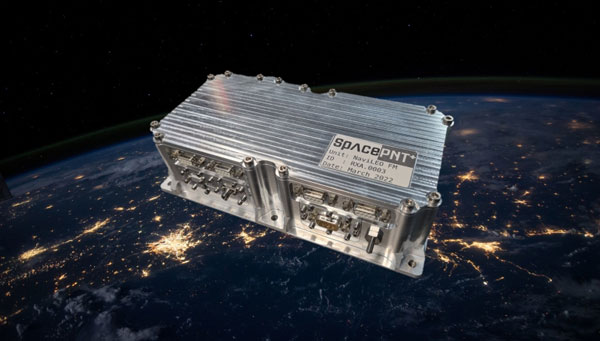
Interestingly, the first product we started to develop was not a moon receiver but one targeting LEO satellites and LEO constellations called NaviLEO, because there was more demand for solutions covering LEO orbit satellites than for moon mission, especially in 2019. Today, moon PNT technology is also becoming very important.
How did you become involved with the European Space Agency’s moon mission?
After we started the development of our first NaviLEO spaceborne GNSS receiver product, we won an open competitive call from the European Space Agency (ESA) to develop a moon GNSS receiver prototype that we named NaviMoon. This development built upon the NaviLEO spaceborne receiver development that integrated high-performance, radiation-tolerant COTS EEE components and a radiation-tolerant HW/SW/FW architecture, including latch-up protections and ECC, but this time with a better clock and improved super-high-sensitivity algorithms.
What are the special challenges of making a lunar GNSS receiver?
There are several of them as the super-high sensitivity algorithms and the navigation algorithms are quite complex. One special challenge we had to overcome was related to the hardware. Indeed, for the proof-of-concept, we realized at EPFL, we used a commercial development board integrating a very large FPGA, which allowed us to rapidly develop the algorithms without being limited with the FPGA computational resources. However, when you need to make a space product, then you need to select radiation-tolerant components and also want to minimize power consumption, so the choice of a suitable radiation-tolerant FPGA is very limited. Therefore, a main challenge during the lunar receiver prototype development was to develop super-high sensitivity GNSS algorithms that could fit within the limited computational resources of the NaviLEO hardware. In addition, we also needed to find a better radiation-tolerant low-phase-noise clock allowing very long coherent integrations of the received signals to extract them from the environmental thermal noise.
What happened next?
After the first ESA contract to develop this NaviMoon engineering model, we won a follow-up competitive ESA call to build a flight model that ESA will send around the moon circa 2025 to demonstrate for the first time the use of terrestrial GNSS signals for autonomous navigation in a cislunar orbit. For the manufacturing and testing of the hardware, we partnered in this project with European Engineering & Consultancy (EECL) in the UK. Surrey Satellite Technology (SSTL), also in the UK, is the satellite prime in charge of the ESA/SSTL Lunar Pathfinder satellite that will host our NaviMoon receiver. It will also host a laser retroreflector array that will make it possible to verify the real-time positioning accuracy provided by the receiver in cislunar orbit. We already delivered the flight model to SSTL in June of last year and are very much looking forward to this in-cislunar orbit demonstration. It will be the culmination of a very long development that started 10 years ago at EPFL and has only been possible thanks to the hard work and dedication of all the people who worked on it, including the support from ESA.
What are your key innovations?
Besides the fully in-flight reprogrammable radiation-tolerant hardware we developed and the super-high sensitivity algorithms and orbital forces model integrated in our NaviMoon navigation filter, another key innovation we developed at SpacePNT is our own precise orbit determination (POD) algorithm that can process the clock and ephemeris corrections transmitted in real-time by Galileo satellites (the High Accuracy Service) or by GEO satellites (the Fugro SpaceStar service) and that we are integrating into our NaviLEO-POD product. Thanks to these real-time corrections received from the same GNSS antenna as used to receive the GNSS signals, our NaviLEO POD receiver technology can deliver to the other payloads onboard the satellites, totally autonomously and in real-time, a position and a time with sub-decimeter and ns-level accuracy, which is outstanding if we think of the velocity of a LEO satellite, which travels at a speed more than several tens of thousands of km/h.
One of your press releases refers to NaviLEO as a “spaceborne GNSS receiver product platform.” What does that mean?
When we started the development of our first GNSS product, NaviLEO, we already had in mind the development in the near future of additional receiver products to cover additional markets, e.g., with dual-antenna to provide optimal visibility from LEO to GEO, or with a better on-board clock to enable autonomous moon navigation. This is why we developed the original NaviLEO hardware as a flexible “product platform” or “technological base” that our other spaceborne GNSS receiver products could inherit and build upon.
This is also why I said in that press release that the successful in-orbit demonstration of our NaviLEO receiver product platform is a significant achievement towards future missions. What I meant is that the NaviMoon flight model we already delivered to ESA last year, as well as other NaviLEO flight models we are delivering to other customers this year, are also based on the same fully in-flight reprogrammable technological platform as NaviLEO. Therefore, having this receiver platform already successfully demonstrated in a LEO environment is a great achievement towards the future missions, including the coming ESA/SSTL Lunar Pathfinder demonstration in cislunar orbit. Moreover, this in-orbit validation has also allowed us to de-risk our second-generation product platform, because our second generation reuses the same key radiation-tolerant electronics components, repacked to enable a more cost-effective and larger-scale manufacturing.
Are you mostly targeting telecoms?
The large LEO telecom constellations are one of our main targets for our second-generation product. Indeed, given the large quantities involved and the market pressure to make the satellites cheaper, it is necessary to develop a technology well-optimized for cost reduction and serial manufacturing. That is something we clearly had in mind when we defined the requirements of our second-generation hardware product that we will qualify in the coming months. We are also targeting additional markets, both with our current first-generation and coming second-generation products, for instance, the Earth observation market or LEOPNT market for which decimeter and nanosecond accuracy can make a huge difference to the quality and performance of the services these satellites can deliver to the end-users, or the GEO and Moon markets for which our super-high-sensitivity receiver technology is perfectly suited.
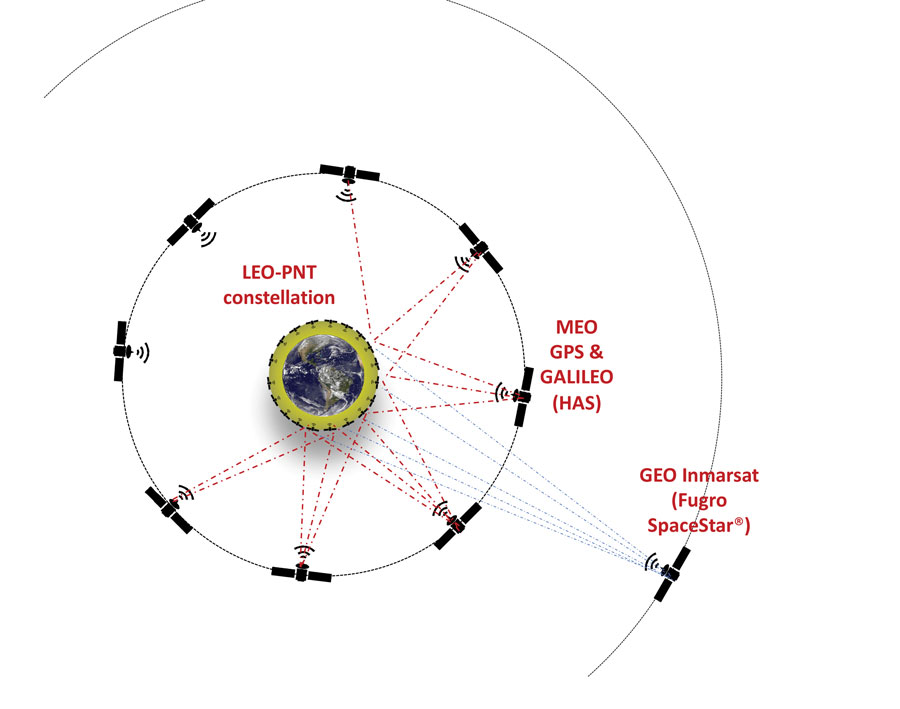
Use of a NaviLEO-POD receiver onboard each satellite of a LEO-PNT constellation, allowing the autonomous generation of PNT signals within each satellite. (Image: SpacePNT)
What are the key technical challenges using GNSS satellites “from the other side,” so to speak?
What makes it extremely difficult to use GNSS satellites at altitudes above them is the fact that GNSS satellites always have their main lobe antenna gain directed toward Earth and do not transmit any signal power toward outer space. So, when you are above a GNSS constellation, you cannot receive any signal power from the satellites directly beneath you, and in fact the only signals you can receive are coming from the spillover around Earth of the satellites that are on the other side of Earth, or that come from the secondary side lobes of the GNSS transmit antennas.
Since the antenna gain of the secondary side lobe is reduced by about 14dB as compared to the main lobe directed toward Earth, this is yet another reason why super-high-sensitivity algorithms are needed for moon and GEO missions, to allow the use of these lower power signals transmitted by the GNSS secondary antenna side lobes.
More specifically, what are the challenges of moon navigation?
Moon navigation, whether in transit to the moon, in a lunar orbit, or on the lunar surface represents several challenges. These include the definition of a reference time and geometric reference frame to be used on the moon, and the definition of standards for communications and positioning to be followed by the different moon users and moon service providers in order to achieve interoperability, amongst others.
Do ESA and NASA plan to place navigation satellites in orbit around the moon? If that’s the case, are you bridging the gap until the new system is deployed?
Yes, exactly. NASA and ESA are collaborating to define the LunaNet Interoperability Specification. It is a common framework of mutually agreed standards to be applied by users and service providers in a cooperative network and support missions on and around the moon. In this framework, PNT services are envisioned to be provided in two ways to lunar users, through dedicated communication links and through a GNSS-like lunar navigation system.
As there is no such infrastructure available yet, however, our NaviMoon GNSS receiver solution that ESA will demonstrate as part of the ESA/SSTL Lunar Pathfinder mission circa 2025 is a first step toward the effort to develop lunar PNT capabilities. It will also illustrate how GNSS can play a meaningful role in lunar PNT, analogously to the way that LEO-PNT complements GNSS for Earth users.
How can your system contribute to complementary PNT?
In a nutshell, a complementary PNT constellation can provide PNT services similar to a GNSS system, making each LEO-PNT satellite transmit PNT signals that contain both its real-time ephemeris and time of transmission. To do that, what every LEO satellite of a LEO-PNT constellation needs is a means to compute its own precise ephemeris and to precisely synchronize its time-frequency with the others. This is exactly what our NaviLEO POD solution can do. Thanks to its on-board real-time POD algorithm and the real-time GNSS clock and ephemeris corrections it can receive from GEO satellites, such as Fugro SpaceStar service, or from MEO satellites, such as the Galileo high accuracy service, it can disseminate within the satellite the real-time precise orbit determination of the satellite needed to compute and transmit its own precise ephemeris. It can also compute and transmit the ns-level timing frequency synchronization with GPS or Galileo system time. The LEO-PNT satellite can then use these data to generate the PNT timing signals sent toward the PNT terrestrial users. The beauty of this concept is that there is no need for inter-satellite links, additional ground station infrastructure or atomic clocks on the LEO-PNT satellites. The GNSS receiver equipment can do it all by itself, delivering a time fully synchronized with a GNSS time scale that is maintained by the atomic clocks onboard the GNSS monitor stations and GNSS satellites. Our system is also resilient to short GNSS outages, thanks to NaviLEO POD’s advanced algorithms that optimally combine the multi-constellation multi-frequency GNSS measurements with a precise model of orbital forces allowing the propagation of the navigation even in the absence of GNSS measurements. Finally, what I think is remarkable is that thanks to the MEO or GEO real-time correction signals used to correct the ephemeris and clock errors present in the real-time signals transmitted by the GNSS satellites, a LEO-PNT satellite equipped with our solution can potentially transmit ephemeris and clock signals towards the terrestrial users that contain fewer errors than the real-time ones transmitted by today’s GNSS satellites.
Plus, of course, the received signal on Earth from LEO satellites is much, much stronger than that from GNSS satellites, which has many advantages, right?
Absolutely. The additional power means that signals transmitted from LEO satellites are much more difficult to jam or spoof, thanks to the higher received signal power. In addition, because the LEO satellites travel much faster than the GNSS satellites above a terrestrial user, the signals are much more dynamic. So, even if one wanted to make a very complex spoofing attack with UAVs, everything is so dynamic and moving so fast, that it would be very difficult to implement. This may make the receiver more complex but also brings advantages. For instance, if one user application does not need a high accuracy fix, it is possible to use the Doppler effect to locate a receiver with just one or two LEO satellites.
Are you working on any other related projects?
We are also working on an enhanced orbit propagation tool called SimORBIT and commercialized by Spirent. It enables realistic testing of emerging LEO satellite constellations with the generation of output files in SP3-c format, as well as in the proprietary Spirent MOT and MOTI formats. We are also constantly improving our receiver technology and widening our product offerings.
VIAVI Solutions — with corporate headquarters in Chandler, Arizona, and offices in 22 countries — makes a wide array of testing solutions for network operators, equipment manufacturers, enterprises, government, aerospace, and railways. I spoke with Nino De Falcis, Senior Director, Global PNT Business Development.
What problem are you addressing?
A GNSS clock is a single point of failure and is at risk of cyber-attacks that are on the rise, such as jamming and spoofing. In a typical configuration, a GNSS legacy clock includes an antenna, a receiver, a holdover oscillator and fan-out input/output. The GNSS antenna is the point of attack for many bad guys. That’s the problem we are addressing in the critical infrastructure that we are serving, including defense, 5G, public safety, utilities, data centers, financial systems and transportation. Bad guys now have also demonstrated that they can jam or even, in Russia’s case, shoot down GNSS satellites, which makes GNSS even more vulnerable, both in space and on the ground. GNSS constellations do not have spoofing detection or mitigation through authentication, except for Galileo’s Open Service Navigation Message Authentication (OSNMA). Additionally, their signals are not encrypted, so they are easy to spoof and do not work indoors.
What is your solution?
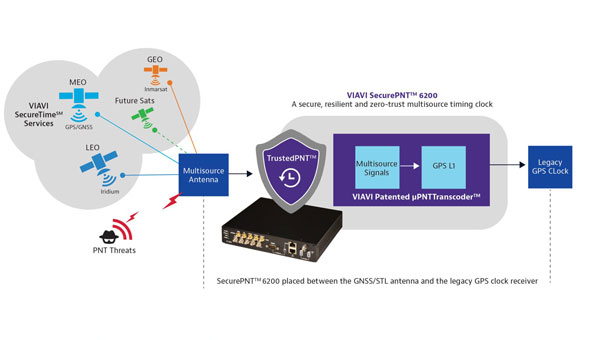
Instead of replacing the hundreds of thousands of legacy GNSS clocks that are deployed, we are just adding our box in line between the antenna and the receiver, as an accessory. We call it the zero-trust multisource PNT clock, and it is our new SecurePNT-6200 product. Additionally, we offer our new suite of SecureTime services, which combines multiple signals of opportunity, coupled with the 6200 clock. We already have Iridium LEO and Inmarsat GEO sources and will soon add support for other future satellites as well as terrestrial sources. You can even aggregate a stand-alone cesium clock into our resilient 6200 clock. Then, we output the legacy signal to feed it to the GPS receiver.
Our resilient multi-source clock aggregates all those signals of opportunity, and then AI sensor fusion weighs, cross-verifies, authenticates, qualifies. It does a lot of processing to select the best uncompromised source. The source is then converted to the legacy GPS L1 signal before feeding it to the GPS receiver. We call it a transcoder and have a patent on this technology. We are the only company offering this solution, though we allow third parties to do the same.
How are you processing your data?
We’re inputting all the constellations — almanacs, ephemerides, etc. — and fusing all those internal and external sources, weighing their quality and estimating the PNT state. We then apply the zero-trust, AI-based jamming and spoofing detection and mitigation. So, we’re doing the authentication, the verification, the qualification, the learning of patterns using all the data sets that we are accumulating between those different sources from GNSS, LEO, GEO or cesium clocks. We can also aggregate sources from the ground, such as eLoran or any terrestrial source that could be activated in the next two or three years. When we switch from one source to another — in the sky, in space, and/or on the ground — we go quickly into holdover so that we don’t have a phase hit during the switchover.
What is your timing source?
Our ground control stations are connected to the NIST to provide a GNSS-independent timing source. So, our solution doesn’t depend on GNSS and its coverage is global and traceable to UTC.
How do LEO and GEO complement each other?
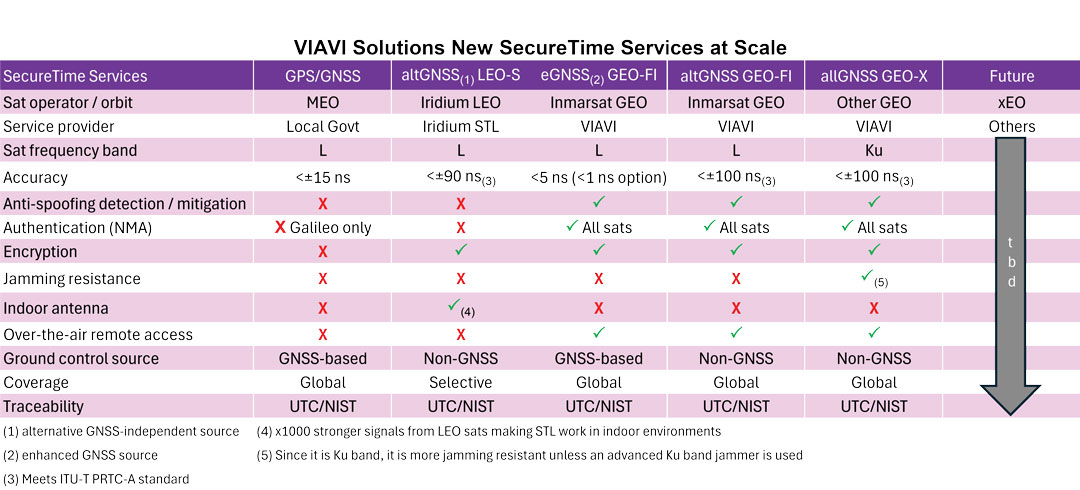
Through Iridium LEO, we’re addressing the encryption, jamming protection, and indoor antenna capabilities that GNSS does not have. However, there are still two missing pieces: spoofing detection and authentication. To address those two gaps of Iridium, we have Fugro Inmarsat GEO, both in L-band and Ku band. Some end users have already approached us and will receive a combination of all three sources — GNSS, LEO and GEO. By the time you get all of those, if anything happens in a critical infrastructure, you’re covered. It is just a matter of your risk profile and how much you want to pay for these services. There is not one service that fits all. The pros and cons of each service are presented in the table above.
What unique capability does VIAVI offer?
We are the only company today that can provide multi-orbit, multi-constellation, multi-band capability. All the solutions — GPS, Iridium and Inmarsat — are L-band, but we are going to come out with Ku band capability, too. Jamming and spoofing Ku band will be much, much more difficult than doing it in L-band, which has already been jammed and spoofed in known warzones, because the frequency is so high and if you get jammed, you can easily switch to a different transponder, and there are many of them. For the defense applications that we are serving, this capability can be the difference between winning or losing a war. We have many engagements with defense accounts, as well as commercial and government accounts and our solution has been embraced very successfully so far.
What performance have you achieved?
We have built spoofing detection into our product for defense-in-depth attacks. We are offering 5 ns accuracy to UTC and can go down to 1 ns accuracy using our new SecureTime eGNSS service. That is breakthrough performance. If you look at GPS, we are at 15 ns with a high-end receiver, but typical receivers are in the 20 ns to 30 ns range, so we’re at least 15 times better than that.
To detect jamming and spoofing, we see all the different signals from space and ground, if any, and map them into our AI fusion software platform that we have, which is our new TrustedPNT technology. These services have been tested and proven in live-sky battlefield scenarios at USAF’s NAVFEST 2024 Test Event in May 2024, including successfully providing assured PNT in a simulated warzone with complete denial of GPS and GNSS services. When attacked, our solution switched from GPS to LEO source and then from LEO to GEO, while surviving the various jamming and spoofing attacks. Once the attack stops, we fail back to GPS. If we add more sources, we will be able to switch from one to another depending on the relevant weaknesses, while amalgamating the different sources to create a solution that is higher in performance than any one constellation by itself.
In conclusion?
Adding an accessory costs a lot less than replacing your legacy clock. Additionally, adding diversified sources from multiple orbits and bands can significantly bolster the robustness and survivability of your overall PNT solution.
GNSS — delivering up to millimeter accuracy from 20,200 km in space with a received signal of one tenth of one millionth of one billionth of a Watt — is, in Arthur C. Clarke’s famous definition, “indistinguishable from magic.” Yet, in addition to the inherent errors in the transmission, propagation, and reception of their signals, GNSS are increasingly challenged by jamming and spoofing attacks, especially in and near conflict zones.
For that reason, as any regular reader of this magazine knows, combating jamming and spoofing and building resilience in positioning, navigation, and timing (PNT) systems has been a constant theme of many of our articles and industry news items for years.
The U.S. National Space-Based Positioning, Navigation and Timing Advisory Board has been focusing on how to “protect, toughen and augment” GPS, with the third word referring both to enhancements to GPS and to the “provision and use of alternate sources of PNT that complement, back up, or replace (partly or entirely) use of GPS.”(*)
For this cover story, I discussed complementary sources of PNT with executives from four companies that design, produce, and/or operate them. They cover a wide range of complementary PNT technologies. Read the exclusive interviews below:
Iridium owns and operates a constellation of satellites in low-Earth orbit (LEO) and has global rights for L-band spectrum. This enables it to operate the Satellite Time and Location (STL) system developed by Satelles before it recently became part of Iridium. STL protects critical infrastructure by providing a timing signal that is independent of GNSS constellations and 1,000 times stronger than the GPS signal.
Spirent Communications’ latest simulation system brings together GNSS and a wide range of other PNT systems. It simulates L-band, S-band, alternative navigation signals, signals of opportunity and emulated inertial outputs. It focuses particularly on the new and emerging LEO constellations, including Xona Space Systems’ PULSAR signals, and enables users to inject new signals via I/Q data files.
SpacePNT has developed an FPGA-based hardware/software/firmware spaceborne GNSS receiver technology specifically targeting the fast-growing New Space satellite market. The company’s innovations include a precise orbit determination algorithm that can process signals from the Galileo High Accuracy Service and from geostationary orbit (GEO) satellites.
VIAVI Solutions has developed a system that aggregates signals of opportunity, as well as Iridium LEO and Inmarsat GEO sources; weighs and cross-verifies them; then converts the output to the legacy GPS L1 signal and feeds it to a GPS receiver. It can also aggregate a stand-alone cesium clock.
(*) From Dr. John Betz’s presentation on “Augmenting GPS for Critical Infrastructure” at the April 24, 2024, meeting of the PNT Advisory Board.
The European Union Aviation Safety Agency (EASA) has updated its Safety Information Bulletin (SIB) to address the growing number of GNSS outages and disruptions.
This updated advisory, SIB No. 2022-02R3, highlights the increasing sophistication and impact of GNSS jamming and spoofing, which have become significant concerns for aviation safety.
The bulletin is directed at competent authorities, Air Traffic Management/Air Navigation Services (ATM/ANS) providers, air operators, aircraft and equipment manufacturers and organizations involved in the design or production of ATM/ANS equipment. It aims to inform these stakeholders about the risks and necessary precautions related to GNSS interference.
Since February 2022, there has been a notable increase in GNSS jamming and spoofing, particularly in regions surrounding conflict zones and other sensitive areas such as the Mediterranean, Black Sea, Middle East, Baltic Sea and the Arctic, reports the EASA. These interferences can disrupt the accurate reception of GNSS signals, leading to various operational challenges for aircraft and ground systems.
Tackling jamming and spoofing
The bulletin addresses jamming and spoofing. Jamming involves intentional radio frequency interference that prevents GNSS receivers from receiving satellite signals, rendering the system ineffective or degraded, while spoofing involves broadcasting counterfeit satellite signals to deceive GNSS receivers, resulting in incorrect positioning, navigation and timing (PNT) data. Jamming typically results in immediate and noticeable effects, whereas spoofing is more difficult to detect and poses a higher safety risk.
Some symptoms of suspected GNSS spoofing include incoherence in navigation position, abnormal differences between ground speed and true airspeed, time and date shifts and spurious Terrain Awareness and Warning System (TAWS) alerts. These disruptions can lead to significant operational issues, such as re-routing or diversions, loss of Airborne Collision Avoidance System (ACAS) and misleading surveillance data.
EASA recommends several measures to reduce the risks associated with GNSS interference. These measures include establishing coordinated procedures between authorities, ATM/ANS providers and airspace users. The agency also suggests utilizing complementary PNT infrastructure and encourages users to implement a process to collect and report information on GNSS degradation.
Specific recommendations
For air operators:
Train flight crews to recognize and respond to GNSS interferences.
Promptly report any GNSS anomalies.
Assess operational risks and maintain alternative navigation procedures.
For ATM/ANS providers:
Establish monitoring and reporting processes for GNSS degradations.
SandboxAQ has released AQNav, designed for navigation across air, land and sea when GPS signals are jammed or unavailable.
As of June 2024, AQNav has logged more than 200 flight hours and 40 sorties across multiple regions of the world on four different aircraft types, ranging in size from single-engine planes to large military transport aircraft.
AQNav is a geomagnetic navigation system that uses proprietary artificial intelligence (AI) algorithms, powerful quantum sensors and the Earth’s crustal magnetic field. The system seeks to provide an un-jammable, all-weather, terrain-agnostic, real-time navigation solution in situations where GPS signals are unavailable, denied or spoofed.
The system uses extremely sensitive quantum magnetometers to acquire data from Earth’s crustal magnetic field, which exhibits geographically unique patterns – similar to a human fingerprint. AQNav uses AI algorithms to compare this data against known magnetic maps, allowing the system to quickly and accurately find its position. Due to the high sensitivity of quantum sensors, AI algorithms are applied to improve the signal-to-noise ratio, removing any mechanical, electrical or other interference that would impact the system’s ability to acquire its location.
It is available globally and can be used in air, land and sea applications. The system does not rely on visual ground features or satellite transmissions to function and is not affected by weather conditions.
AQNav operates at room temperature, requires no shielding and has a small form factor that can be integrated into a wide variety of platforms, from multi-engine airliners to UAVs. Its passive technology emits no electronic signals, which reduces the aircraft’s detectability.
AQNav seeks to increase useful navigation for aircraft navigating within the frameworks of regulatory bodies such as the International Civil Aviation Organization and the Federal Aviation Administration (FAA). SandboxAQ and its partners are continuing to explore a broad range of use cases for both commercial and defense applications.
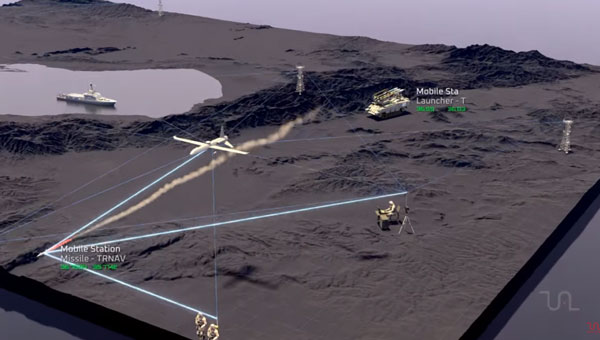
Tualcom has released TRNAV, a terrestrial navigation solution designed to operate with or without GNSS signals.
TRNAV establishes a mesh network of ground stations capable of operating independently from GNSS by using precise pre-established locations or connecting to GNSS when available. The system maintains location accuracy comparable to GNSS by connecting to at least three ground stations. Its highly synchronized timing system ensures a minimal drift of 10ns over a week without GNSS.
The system features a re-synchronization capability that allows the entire network to be updated instantly when just one station reconnects to a GNSS satellite, maintaining high precision across all platforms. Users can integrate mobile stations to enhance network flexibility and range, with the potential to cover distances up to 250km under ideal conditions.
TRNAV also offers a high-bandwidth communication channel for various data types, which offers extensive communication capabilities within the established network. The system employs AES-256 encryption and advanced waveform technologies, including DSSS/FHSS for robust and secure operations even in challenging environments.
As GNSS integrity and availability face increasing threats, TRNAV provides a reliable and resilient alternative for assured positioning, navigation and timing (PNT). Whether in defense, emergency response, or critical infrastructure, TRNAV’s adaptable architecture offers seamless and secure navigation and communication.
Iridium Communications has expanded the commercial availability of its Satellite Time and Location (STL) service to parts of Europe and the Asia Pacific. This expansion is driven by increasing demand and aims to provide an alternative positioning, navigation and timing (PNT) solution to protect critical infrastructure against GPS and Galileo spoofing and jamming.
The Iridium STL service, capable of operating globally, is designed to ensure the fidelity of timing systems with a signal 1,000 times more powerful than GPS. This makes it particularly suited for indoor use without the need for rooftop antennas, offering a secure and cost-effective solution for sectors such as transportation, energy grids, data centers, telecommunications networks and financial services.
The expansion follows a significant rise in GPS jamming and spoofing activities in Europe and parts of Asia, posing serious threats to critical infrastructure. The newly available STL service is designed to help safeguard essential systems and improve operational security and efficiency.
The STL solutions are designed to be small, cost-effective and easy to install. These solutions can be integrated into existing GNSS-reliant systems or used as stand-alone units.
With the expanded authorization, Iridium STL can now be purchased by companies in North America, parts of Europe and the Asia Pacific region. The company plans to continue scaling and training sales and support staff to further extend the service’s global reach.
The U.S. Department of Transportation (DOT) awarded nine contracts for its Complementary Positioning, Navigation and Timing (CPNT) Action Plan.
The DOT’s CPNT Action Plan was issued in September 2023. The Action Plan aims to promote the use of CPNT services in the nation’s transportation systems and other critical infrastructure sectors. It provides a comprehensive roadmap to ensure the safety, security and efficiency of critical infrastructure through the adoption of CPNT technologies.
Also, in February 2024, the DOT, through the Volpe National Transportation Systems Center, issued a solicitation for proposals for the testing, evaluation and performance monitoring of positioning, navigation and timing (PNT) safety systems and critical infrastructure sectors.
According to SAM.gov, the companies granted contracts are:
Carahsoft Technology
Locata
Hoptroff
Microsemi Frequency and Time
NAL Research
NextNav
Parsons Government Services
Safran Trusted 4D
Tern AI
Through these contracts, the DOT aims to identify and support CPNT technologies that can ensure the reliability and security of critical PNT services, mitigating the risk of disruption and enhancing national resilience. The proposals demonstrate technological readiness and effectiveness. They also contribute to a collaborative effort to safeguard essential infrastructure against emerging threats to PNT services.
GPS vulnerabilities have been widely reported in the press. What steps have been taken to back up GPS use in U.S. critical infrastructure?
Jules McNeff
“President Biden on April 30 issued a National Security Memorandum on Critical Infrastructure Security and Resilience. GPS plays a vital role in the operation of critical infrastructure, and some sectors are considering their own backups. Other than conducting studies and meetings to admire the problem, the federal government has done virtually nothing to provide a comprehensive answer. In fact, the government is now dismantling the Loran system, though enhanced Loran (eLoran) is a viable and affordable GPS backup, specifically recommended for use by prior U.S. Department of Defense and U.S. Department of Homeland Security Deputy Secretaries. Given the vital role PNT and GPS play, it’s a mystery why such a viable solution is simply ignored.”
— Jules McNeff Overlook System Technologies
Will GPS remain the Gold Standard of space-based PNT services for the foreseeable future?
“GPS led the emergence and growth of a global space-based PNT service enterprise and has been the Gold Standard since its inception. The U.S. Department of Defense and Air Force (now Space Force) have maintained that standard through stable, transparent, and consistent policies and continuous performance improvements for the services it provides to all users. Now, in the face of foreign competition, hostile threats, budgetary pressures, reorganizations and management fragmentation, dilution of corporate memory, and inconsistent leadership support, those policy and performance foundations are in danger of eroding. The outcome for GPS and its future in the global PNT Enterprise is purely in the hands of our federal leadership today.”
The European Space Agency (ESA) has upgraded the ground segment of the Galileo satellite navigation system, without any disruption to its users. This update enhances the Galileo Control Segment responsible for managing the constellation of orbiting satellites.
The upgrade involved a series of improvements to both the operational control centers and the extensive network of ground stations. These enhancements are designed to boost the robustness and reliability of the Galileo system, which is crucial to critical applications such as navigation, timing services and emergency response.
With Galileo’s First Generation close to completion, the ground segment required an upgrade to System Build 2.0 to bring critical enhancements to the system, especially for the roll-out of the Public Regulated Service (PRS), which provides highly accurate and robust encrypted signals for authorized governmental users
With the cooperation of the European Union Space Programme Agency (EUSPA) and key industrial partners, ESA ensured a seamless transition, highlighting the effectiveness of international collaboration in advancing satellite navigation technologies.
Click here to visit the official ESA blog and learn more.
The solar storm in May that produced a beautiful aurora borealis as far south as Mallorca, Spain, also stopped GNSS-based precision agriculture for a couple of days. The same month, articles in major U.S. newspapers detailed aspects of a growing confrontation between the United States, Russia and China —vying for dominance in near-Earth space, now part of the military fighting domain — that could lead to far greater disruption. Nearly all satellites are highly vulnerable to cyberattacks, ground- or space-based lasers, high-powered microwaves, the debris field from a destroyed satellite and the radiation produced by a nuclear explosion in space. The last one would disable by far the greatest number of satellites because of its range and because commercial satellites, which constitute more than 90 percent of all satellites in orbit, are not hardened against such radiation.
Luccio
A May 16 article in The Wall Street Journal titled “Russia Launched Research Spacecraft for Antisatellite Nuclear Weapon Two Years Ago, U.S. Officials Say,” reported that in February 2022, shortly before it invaded Ukraine, Russia launched Cosmos-2553, “designed to test components for a potential antisatellite weapon that would carry a nuclear device.” It linked the launch to a continuing Russian nuclear antisatellite program and said that, if deployed, the weapon “would give Moscow the ability to destroy hundreds of satellites in low-Earth orbit (LEO) with a nuclear blast.”
“The Pentagon,” the article pointed out, “has become increasingly reliant on commercial satellites.” In LEO, it reported, there are almost 6,700 U.S. satellites, while China has 780 and Russia only 149. Therefore, the Russians would have a lot less to lose should they choose to explode a nuclear weapon in LEO.
A May 17 article in The New York Times was titled “New Star Wars Plan: Pentagon Rushes to Counter Threats in Orbit.” The subhead read: “Citing rapid advances by China and Russia, the United States is building an extensive capacity to fight battles in space.” It said that, in a major shift in military operations, the Defense Department “is looking to acquire a new generation of ground- and space-based tools that will allow it to defend its satellite network from attack and, if necessary, to disrupt or disable enemy spacecraft in orbit.” Meanwhile, “both Russia and China have already tested or deployed systems such as ground-based high-energy lasers, antisatellite missiles or maneuverable satellites that could be used to disrupt [U.S.] space assets.”
The decision to strengthen U.S. warfighting capacity in space, it said, is driven mostly by China’s expanding fleet of military tools in space, which threatens to prevent U.S. Navy operations in the Western Pacific. “The Pentagon is separately working to launch a new generation of military satellites that can maneuver, be refueled while in space or have robotic arms that could reach out and grab — and potentially disrupt — an enemy satellite.”
These are all reasons to quickly develop and deploy a wide mix of complementary PNT solutions that would lessen reliance on GNSS satellites and, therefore, make them less of a target.