Category: GNSS

  • Timing center to protect UK from risk of satellite failure

    Timing center to protect UK from risk of satellite failure

    The UK’s emergency service responders and other critical services could be set for more resilient time systems through the National Timing Centre.

    The United Kingdom has established a new timing center to reduce reliance of public services and its economy on GNSS satellites. The center uses a network of atomic clocks housed at secure locations, and consists of a team of researchers based at sites across the U.K.

    The National Timing Centre will provide additional resilience for accurate timing, which underpins many everyday technologies including emergency response systems, 4G/5G mobile networks, communication and broadcast systems, transport, the stock exchange and the energy grid — all of which depend on precision timing from GNSS.

    A large-scale GPS failure would cause a £1 billion a day economic impact to the UK. Loss of this accurate data would also have severe and life-threatening effects, such as on getting ambulances to patients or getting power to homes around the country. The center’s land-based technologies will improve the UK’s resilience and provide important back-up.

    The UK’s current dependence on satellite technologies has been identified by the government as a potential security risk if a satellite were to experience a failure. The Blackett Review in 2018 looked at the UK’s vulnerabilities to over-reliance on Global Navigation Satellite Systems (GNSS).

    The Blackett Review, published in January 2018 by the UK Government Office for Science, identified an over-reliance on GNSS.

    National Timing Centre to add resilience

    The government is investing £36 million to create the National Timing Centre, which will ensure the UK economy and public services have additional resilience to the risk of satellite failure. The investment will build a resilient network of clocks across the UK. It includes £6.7 million which will be made available via Innovate UK funding calls to SMEs and industry to innovate around timing and clocks.

    Science Minister Amanda Solloway announced the center on Feb. 19. “Our economy relies on satellites for accurate timing,” she said. “Without satellites sending us timing signals, everything from the clocks and maps on our phones, to our emergency services and energy grid would be at risk. I’m delighted that this world-first centre will see our brightest minds, from Surrey to Strathclyde, working together to reduce the risks from satellite failure.”

    “The failure of these systems has been identified as a major risk, and The National Timing Centre programme will help to protect both vital services and the economy from the disruption this would cause while delivering considerable economic benefits,” said UK Research and Innovation Chief Executive Professor Sir Mark Walport.

    “We are proud to be leading the way in providing trusted and assured time and frequency,” said National Physical Laboratory CEO Pete Thompson. “The work undertaken by the team here has ensure the National Timing Centre programme will provide huge benefits to society, whilst underpinning secure applications in the future.”

    The center also includes researchers at the University of Birmingham, the University of Strathclyde, University of Surrey, BT Adastral Park, Suffolk, BBC, Manchester, and the National Physical Laboratory in Teddington.

    The £76 million investment furthers the government’s commitment to significantly boost R&D investment across every part of the UK, including funding transformational technologies and increasing the number of researchers.

    The funding is provided through the Strategic Priorities Fund, which supports high-quality discipline research and development priorities, with investment also going towards autonomous systems and national collections.

    Alongside investment in the new center, the UK government is investing a further £40 million in a new research programme, Quantum Technologies for Fundamental Physics.

    Total investment through the National Quantum Technologies Programme is set to pass £1 billion since its inception in 2014.

  • EGNOS payload enters service on Eutelsat 5 West B

    EGNOS payload enters service on Eutelsat 5 West B

    The EGNOS payload aboard the Eutelsat 5 West B satellite has entered service, according to Eutelsat Communications. The satellite carries a payload for the European GNSS Agency (GSA) called GEO-3. GEO-3 is designed to be aboard a geostationary satellite to augment GNSS signals.

    A solar-array problem affected the satellite shortly after its Oct. 9 launch.

    Eutelsat 5 West B is hosting the EGNOS payload under a 15-year agreement signed in 2017 with the European GNSS Agency (GSA). The contract also includes technical services and a European ground infrastructure, including two gateways installed at Eutelsat’s Rambouillet and Cagliari teleports.

    Image: GSA
    Image: GSA

    “Eutelsat is proud of the collaboration with its customer GSA, its partners including the European Space Agency, and its suppliers, culminating in the entry into service of this next generation technology of EGNOS on Eutelsat 5 West B,” said Yohann Leroy, Eutelsat’s Deputy CEO and Chief Technical Officer. “We are delighted to host this payload, which will significantly enhance the performance of global navigation satellite systems across Europe, notably Galileo, in the coming years.”

    “With this new payload in service, EGNOS is moving towards the transition to its new generation,” said Pascal Claudel, GSA acting executive director and CEO. “This has been done thanks to the constructive collaboration with Eutelsat. Delivery and continuity of satellite services are part of our mission as delegated by the European Commission. It is essential that we, at the GSA, ensure these services to support economic growth and that the European Union’s citizens and companies can benefit from the latest GNSS technology.”

  • Executive Order requires resilience of critical PNT infrastructure

    Executive Order requires resilience of critical PNT infrastructure

    On Feb. 12, President Donald Trump signed an Executive Order establishing a comprehensive national policy to promote the responsible use of positioning, navigation and timing (PNT) services by the federal government.

    The order directs federal agencies to take steps to reduce disruption of critical infrastructure that relies on PNT, including GPS. It also directs critical infrastructure owners and operators to strengthen their systems’ resilience.

    Markets affected include including the electrical power grid, communications infrastructure and mobile devices, all modes of transportation, precision agriculture, weather forecasting and emergency response.

    The federal government will engage both the public and private sectors to identify and promote responsible use of PNT services, with the goal of ensuring that “critical infrastructure can withstand disruption or manipulation of PNT services.”

    “Because of the widespread adoption of PNT services, the disruption or manipulation of these services has the potential to adversely affect the national and economic security of the United States,” the order states. “To strengthen national resilience, the Federal Government must foster the responsible use of PNT services by critical infrastructure owners and operators,” the order reads.

    PNT Profiles

    The Commerce Department is tasked with developing PNT profiles, due a year from today, for PNT-dependent  systems, networks and assets. The profiles will be developed through consultation with the private sector.

    The profiles will also:

    • identify appropriate PNT services;
    • detect the disruption and manipulation of PNT services; and
    • manage the associated risks to the systems, networks and assets dependent on PNT services.

    The profiles will be reviewed and updated every two years.

    Reaction to the Order

    Reacting to the Executive Order on PNT,  J. David Grossman, executive director of the GPS Innovation Alliance (GPSIA), stated:

    “The GPS Innovation Alliance (GPSIA) welcomes today’s Executive Order recognizing the critical economic and societal benefits of GPS and other Global Navigation Satellite Systems (GNSS). Resiliency is among the core attributes that have made GPS the gold standard for delivering positioning, navigation, and timing (PNT) functions to our military as well as a wide range of other sectors, including transportation, agriculture, electricity, and finance. Today’s Executive Order represents a crucial next step in ongoing efforts to maintain the security, robustness, and redundancy of PNT capabilities, including GPS, that millions of Americans rely on every day. GPSIA looks forward to working with key government stakeholders to support the implementation of this effort.”

    The Department of Transportation stated,

    “Our challenge is to enable increased resilience across our transportation systems and ensure the traveling public and freight transporters experience an increased level of safety and efficiency without the possibility of interference caused by loss or manipulation of PNT.

    Department of Homeland Security Acting Secretary Chad F. Wolf said,

    “From mobile phone applications to automobile navigation, our digital, interconnected society is dependent every day on PNT services.That is why it’s critically important that PNT services remain properly functioning as a major component of the nation’s critical infrastructure. By adopting responsible use of PNT services, the federal government and owners and operators of critical infrastructure can contribute meaningfully to national resilience and ensure the continuous, uninterrupted delivery of services to the nation.”

    Photo: adamkaz/E+/Getty Images
    Photo: adamkaz/E+/Getty Images

  • Orolia’s Sarbe Evo line meets new Cospas-Sarsat requirements

    Orolia’s Sarbe Evo line meets new Cospas-Sarsat requirements

    The new line of Sarbe search and rescue beacons. (Photo: Orolia)
    The new line of Sarbe search and rescue beacons. (Photo: Orolia)

    Orolia is introducing the Sarbe Evo line at the Singapore Air Show, taking place Feb. 11-16 at the Changi Exhibition Centre. The line is being exhibited at Orolia’s Booth G10.

    The search-and-rescue (SAR) beacon range has been improved to deliver upgraded operational capabilities, to meet the latest Cospas-Sarsat testability and maintenance requirements.

    Part of Orolia since 2011, the Sarbe brand is a worldwide market leader for military (tri-forces) Personal Locator Beacons and Emergency Locator Transmitters. Sarbe beacons have been at the forefront of innovation in life saving Locator Beacons and critical communications for over fifty years.

    Sarbe equipment is often integrated into air crew clothing such as Air Crew Life Preservers, ejection seats and survival packs, and can be optionally equipped with remote antennas and automatic activation.

    The Sarbe Evo line offers new operational improvements in order to meet revised Cospas-Sarsat requirements in operating lifetime, location accuracy, voice signals management, integrated protocols, testability and maintenance.

    Orolia’s development of the Sarbe Evo line has focused on the following key elements to improve customer safety:

    • Upgraded battery management with use-monitoring
    • Exceeds Cospas-Sarsat endurance requirements
    • Built-in-test further enhanced
    • More robust and frequent GPS/GNSS position acquisition with GPS, Galileo and GLONASS satellite constellations
    • Audio system improvement for greater clarity under all operating conditions
    • Introduction of the National Location Protocol
    • Rugged and reliability improvement (qualified to MIL-STD-810G standards) to support complex rescue missions in harsh environments

    For both commercial and military needs in SAR operations, Orolia’s main goal remains the provision of highly accurate location data, and real-time voice and data communication to SAR operators through robust line of sight transmission.

  • L3Harris passes critical design review for digital GPS IIIF payload

    L3Harris passes critical design review for digital GPS IIIF payload

    L3Harris logoThe design improves capabilities over the 70% digital payload used for GPS III space vehicles 1-10

    L3Harris Technologies passed the critical design review (CDR) phase in development of a fully digital navigation payload for the U.S. Air Force’s GPS III Follow-On satellites.

    CDR is a major milestone demonstrating the new payload’s design — specifically the fully digital Mission Data Unit (MDU) — is mature enough to proceed to final development, test and delivery.

    The new MDU is the heart of the navigation payload and will provide more powerful signals and ensure flawless atomic clock operations. It will also provide improved capabilities over L3Harris’ 70% digital MDU used for GPS III space vehicles 1-10 (GPS III SV 1-10).

    “The digital payload is flexible enough to adapt to advances in GPS technology and future warfighter mission needs,” said Ed Zoiss, president, Space and Airborne Systems, L3Harris. “Proceeding to the next stage in the GPS IIIF navigation payload development process moves the program closer to supporting evolving Air Force mission requirements.”

    In September 2018, the Air Force selected GPS III prime contractor Lockheed Martin to build up to 22 GPS IIIF satellites, which add even more capabilities and technology to the new GPS III satellites — including the new fully digital navigation payload. GPS IIIF SV11 and 12 are currently under contract.

    L3Harris is in a production cadence, having delivered to Lockheed Martin in July the eighth of 10 navigation payloads for the first 10 GPS III satellites.

    GPS III SV 01 and 02 launched in December 2018 and August 2019 respectively, and are performing well on orbit. GPS III SV03 is expected to launch in April.

    The remaining payloads are in various stages of integration with the satellites in Lockheed’s Colorado facility. L3Harris has provided navigation technology for every U.S. GPS satellite ever launched.

  • Third GPS III arrives at Cape Canaveral for April launch

    Third GPS III arrives at Cape Canaveral for April launch

    The nation’s third next-generation GPS III satellite — and the first delivered by Lockheed Martin to the new U.S. Space Force — has arrived in Florida for an expected April launch.

    On Feb. 5, the third Lockheed Martin-built GPS III space vehicle (GPS III SV03) was shipped to Cape Canaveral from the company’s GPS III Processing Facility near Denver aboard a massive Air Force C-17 aircraft traveling from Buckley Air Force Base, Colorado.

    GPS III SV03 — nicknamed “Columbus” — is the latest of up to 32 next-generation GPS III/GPS III Follow-On (GPS IIIF) satellites Lockheed Martin has designed and is building to help the Space Force modernize GPS with new technology and capabilities.

    On Jan. 13, 2020, GPS III SV01 (“Vespucci”) was set healthy and active by the 2nd Space Operations Squadron (2 SOPS) at Schriever Air Force Base, in Colorado. 2 SOPS is now using the GPS III Contingency Operations (COps)-upgraded OCS ground control system to operate both the new GPS III and previously launched GPS satellites.

    GPS III SV02 (“Magellan”), launched on Aug. 22, 2019, has completed its on-orbit testing and is currently awaiting its turn for integration into the constellation.

    On Jan. 21, 2020, the Space Force called up GPS III SV04 for a launch later this summer. GPS III SV05-09 are now in various stages of assembly and test at Lockheed Martin’s commercial-like large satellite production line for GPS III satellites near Denver.

    The company is expected to soon complete its critical design review with the Space Force to begin production on the first two GPS IIIF satellites under contract.

    GPS III Advantages

    GPS III is the most powerful and resilient GPS satellite ever put on orbit. Developed with an entirely new design for U.S. and allied forces, GPS III has three times greater accuracy and up to eight times improved anti-jamming capabilities over any previous GPS satellites in the constellation.

    GPS III is also the first GPS satellite to broadcast the new L1C civil signal, which is shared by other international global navigation satellite systems, like Galileo, to improve future connectivity worldwide for commercial and civilian users.

    “Every day, more than four billion civil, commercial and military users rely on the positioning, navigation and timing (PNT) services provided by 31 GPS satellites launched since 1997,” said Tonya Ladwig, Lockheed Martin’s program manager for GPS III. “We are excited to help the Space Force refresh the constellation to ensure U.S. and allied forces always have the best technology and that the U.S. Global Positioning System remains the gold standard for PNT.”

    GPS III was designed to evolve with new technology and changing mission needs. The satellite’s evolutionary modular design will allow new GPS IIIF capabilities to start being added at the 11th satellite. These will include a fully digital navigation payload, a Regional Military Protection capability, an accuracy-enhancing Laser Retroreflector Array, and a Search & Rescue payload.

    ”It’s an exciting time across the GPS mission as we bring together the best of our space, ground, and operations systems to help the United States Space Force modernize this critical national capability,” commented Johnathon Caldwell, Lockheed Martin’s vice president for Navigation Systems.

    Lockheed Martin’s GPS III team is led by the Production Corps, Medium Earth Orbit Division, at the Space Force’s Space and Missile Systems Center, Los Angeles Air Force Base.

    2 SOPS, at Schriever Air Force Base, manages and operates the GPS constellation for both civil and military users.

    Lockheed Martin shipped the U.S. Space Force’s third GPS III satellite to Cape Canaveral, Florida, ahead of its expected April launch. (Photo: Lockheed Martin)
    Lockheed Martin shipped the U.S. Space Force’s third GPS III satellite to Cape Canaveral, Florida, ahead of its expected April launch. (Photo: Lockheed Martin)
  • $24K pledged to open David Last Memorial Scholarship Fund

    $24K pledged to open David Last Memorial Scholarship Fund

    David Last (Photo: @harriethallphoto via Dana Goward)
    David Last (Photo: @harriethallphoto via Dana Goward)

    The Resilient Navigation and Timing (RNT) Foundation is leading a drive to establish a scholarship fund in honor of the late Professor David Last.

    Professor Last was one of the first members of the foundation and had served on its International Advisory Council since its inception. He perished in the crash of a small plane he was piloting on the Nov. 25, 2019.

    The foundation and three of its members have begun the drive with pledges totaling $24,000.

    The fund will be administered in the United Kingdom and is envisioned to pay student expenses for attendance at navigation-related conferences and symposia.

    Individuals and organizations wishing to contribute to the scholarship fund should contact the foundation at [email protected]. Donations can also be made through the foundation’s website.

  • Seen & Heard: Karma drone down, GLONASS guides missiles

    Seen & Heard: Karma drone down, GLONASS guides missiles

    “Seen & Heard” is a monthly feature of GPS World magazine, traveling the world to capture interesting and unusual news stories involving the GNSS/PNT industry.


    Photo: Karma drone/GoPro
    Photo: Karma drone/GoPro

    Bad karma

    The GoPro Karma drone has been grounded since the new year began, reports The Verge. Multiple owners say their Karma controllers are flashing errors about not receiving a GPS signal, and that they can’t calibrate the compass. They’re not able to fly the drones even after disabling GPS. A GoPro spokesperson told The Verge that it is “actively troubleshooting” the issue.


    Going wild at the casino

    A Waze ad in January misdirected drivers headed to Atlantic City’s Borgata Hotel Casino & Spa into New Jersey’s Pine Barrens. Jackson Township police helped numerous motorists stuck on unpaved roads about 45 miles from the casino, which is just off the Atlantic City Expressway. The address on the ad was correct, but the location pinned with the ad is actually in the Colliers Mills wildlife area.


    Photo: Rock penguins/Charles Bergman/Shutterstock.com
    Photo: Rock penguins/Charles Bergman/Shutterstock.com

    Feed the birds, not the mice

    Irish structural engineer John Houston used a Trimble R10 GNSS receiver and Centerpoint RTX to help mitigate a serious threat to Gough Island’s birds. The Royal Society for the Protection of Birds seeks to eradicate invasive mice left from 19th-century ships. The survey will help locate temporary infrastructure for workers to distribute poisoned bait to kill the voracious rodents, which feed on two million defenseless eggs and chicks each year. Though 1,000 kilometers from the nearest reference station, Houston achieved centimeter accuracy on all survey points. See the monster mice here.


    Photo: U.S. Marines at Al Asad Air Base in 2018. (Cpl. Jered T. Stone/Marine Corps)
    Photo: U.S. Marines at Al Asad Air Base in 2018. (Cpl. Jered T. Stone/Marine Corps)

    Missiles guided by GLONASS

    According to Israeli military intelligence website DEBKAfile, Russia gave Iran access to GLONASS to target the U.S. base in Iraq on Jan. 8. The strike injured 34 American soldiers. DEBKAfile reports that Russia-provided GLONASS access allowed Iranian missiles to hit with an accuracy of 10 meters at the Ain Assad base in western Iraq. “According to Russian sources, 19 missiles were fired from the territory of Iran, 17 of which hit the targets,” DEBKAfile said.

  • GLONASS company to build 27 more satellites

    GLONASS company to build 27 more satellites

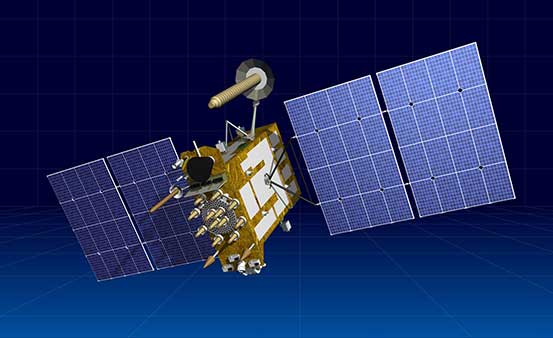
    Artist's rendering of a Glonass-K satellite. (Image: ISS-Reshetnev)
    Artist’s rendering of a Glonass-K satellite. (Image: ISS-Reshetnev)

    ISS-Reshetnev Company — the primary GLONASS contractor — has a backlog of orders for navigation satellites up to 2025, according to General Director Nikolay Testoyedov.

    Testoyedov discussed GLONASS production on Dec. 30, 2019, at a meeting hosted by ISS-Reshetnev Company for Russia’s Science and Technical Council.

    “Within the Federal Target Program, GLONASS ISS-Reshetnev Company is tasked with the production of 27 navigation satellites,” Testoyedov said. “Taking all things together, we plan to double the number of satellites launched in 2020 compared to 2019.”

    The orders require production at full capacity at the company’s facilities. At any given time, about 50 satellites are in varying stages of production, including 12 ground spares. Some of them are slated for launch in 2020.

    In 2019 eight satellites designed and built by the company were launched into various orbits. As of today,  104 ISS-Reshetnev-made satellites are in space, or two-thirds of Russia’s entire orbital fleet of satellites. ISS-Reshetnev also successfully completed several projects for the manufacture of satellite onboard systems and instruments, including the international ExoMars-2020 program slated to launch this year.

    Glonass-M satellite goes into service

    The Glonass-M navigation satellite launched on Dec. 11, 2019, entered service Jan. 13.

    A joint team of experts representing ISS-Reshetnev Company and the operating organization successfully completed all procedures moving the Glonass-M satellite to its proper orbital position, and switched on its main instruments. To this date, all the required data has been received from the satellite, which allowed it to be commissioned into service.

    The new Glonass-M replaced a retired satellite of the GLONASS constellation that had surpassed its designed life expectancy by seven years.

  • ION Fellows named: Rodriguez, Gao, Humphreys

    ION Fellows named: Rodriguez, Gao, Humphreys

    The Institute of Navigation (ION) announced the recipients of the 2020 Fellow memberships during the ION International Technical Meeting (ITM) and Precise Time and Time Interval Systems and Applications (PTTI) held Jan. 21- 24 in San Diego, California.

    Election to Fellow membership recognizes sustained professional accomplishments that have significantly contributed to the advancement of the arts and sciences of Positioning, Navigation and/or Timing (PNT) in the areas of technology, management, practice or teaching and a demonstrated and sustained impact on the PNT community.

    Fellows have maintained an observable presence in the ION community over the long term, including contributions to ION programs and publications.

    José Ángel Ávila Rodríguez has been elected for his pioneering contributions to the design of the Galileo signal plan, and leadership in the modernization of Galileo.

    Yang Gao has been elected for significant contribution to the development, dissemination and commercialization of high-precision GNSS technologies; and for significant educational and training impact on navigation engineers and professionals.

    Todd E. Humphreys has been elected for significant and fundamental contributions to PNT security and precise GNSS positioning for the mass market, and for dedication to GNSS education and outreach.

    With their new Fellowship plaques are (from left) Gao, Humphreys and Rodríguez. (Photo: ION)
    With their new Fellowship plaques are (from left) Gao, Humphreys and Rodríguez. (Photo: ION)
  • ION award winners honored for GNSS and PNT contributions

    ION award winners honored for GNSS and PNT contributions

    ION logoThe Institute of Navigation (ION) presented its annual awards during the ION International Technical Meeting (ITM) and Precise Time and Time Interval Systems and Applications (PTTI) meeting in San Diego, California, Jan. 21-24.

    The ION Annual Awards Program is sponsored by The Institute of Navigation to recognize individuals making significant contributions or demonstrating outstanding performance relating to the art and science of navigation.

    Ramsey Faragher received the Per Enge Early Achievement Award for outstanding innovations in mobile positioning and navigation, and in particular for pioneering the revolutionary SuperCorrelation technology. The Per Enge Early Achievement Award is presented in recognition of outstanding contributions made early in one’s career.

    Pascal Rochat received the Distinguished PTTI Service Award for advancing the state-of-the-art in high stability atomic clocks and for producing the only space-based H-maser in the world, operating on all Galileo satellites. The Distinguished PTTI Service Award is presented to recognize outstanding contributions related to the management of PTTI systems.

    Jordan D. Larson, Demoz Gebre-Egziabher and Jason H. Rife received the Samuel M. Burka Award for their paper “Gaussian-Pareto Overbounding of DGNSS Pseudoranges from CORS” published in the Spring 2019 issue of NAVIGATION, Journal of The Institute of Navigation, Vol. 66, No. 1, pp. 139-150. The Samuel M. Burka Award recognizes outstanding achievement in the preparation of a paper advancing the art and science of positioning, navigation and timing.

    Joseph J. Rushanan received the Captain P. V. H. Weems Award for sustained contributions to the design of GPS, including M-code, the L1C signal, and the promotion of assurance concepts for all GPS users. The Captain P. V. H. Weems Award is presented to individuals for continuing contributions to the art and science of navigation.

    André Hauschild received the Tycho Brahe Award for outstanding and sustained contributions in the field of GNSS-based navigation, timing and attitude determination of space vehicles. The Tycho Brahe Award is given in recognition of outstanding contributions to the science of space navigation, guidance and control.

    James J. Miller received the Norman P. Hays Award for exemplary leadership in establishing and sponsoring the National Space-based Positioning, Navigation and Timing (PNT) Advisory Board to serve the worldwide user community. The Norman P. Hays Award is given in recognition of outstanding encouragement, inspiration and support contributing to the advancement of navigation.

    Zaher (Zak) M. Kassas received the Thomas L. Thurlow Award for foundational work in the theory and practice of exploiting signals of opportunity for accurate and reliable positioning, navigation and timing. The Thomas L. Thurlow Award recognizes outstanding contributions to the science of navigation.

    Suneel I. Sheikh received the Distinguished Service Award in recognition of his visionary leadership in promoting positioning, navigation and timing education through the establishment, promotion and administration of the ION Satellite Division’s Autonomous Snowplow Competition. The Distinguished Service Award recognizes extraordinary service to The Institute of Navigation.

  • BAE Systems to get Collins GPS and Raytheon ATR businesses

    BAE Systems to get Collins GPS and Raytheon ATR businesses

    Logo: BAE SystemsBAE Systems Inc. has reached definitive agreements for the proposed acquisitions of Collins Aerospace’s military GPS business and Raytheon’s Airborne Tactical Radios (ATR) business.

    The two high-performing businesses are being sold in connection with obtaining the required antitrust clearances for the previously announced pending merger between Raytheon and United Technologies Corporation (UTC).

    The proposed acquisitions are structured as asset transactions with associated tax benefits, and they remain subject to customary closing adjustments. The asset purchase agreement for the Collins military GPS business calls for cash of $1.925 billion, with an expected tax benefit of approximately $365 million. For Raytheon’s ATR business, the purchase agreement calls for cash of $275 million, with an expected tax benefit of approximately $50 million.

    “As militaries around the world increasingly operate in contested environments, the industry-leading, battle-tested products of these two businesses will complement and extend our existing portfolio of solutions we offer our customers,” said Jerry DeMuro, CEO of BAE Systems, Inc. “This unique opportunity to acquire critical radio and GPS capabilities strengthens our position as a leading provider of defense electronics and communications systems, and further supports our alignment with the modernization priorities of the U.S. military and its partners.”

    These proposed acquisitions are subject to the successful closure of the Raytheon-UTC transaction, as well as the satisfaction of other customary closing conditions, including receipt of the required U.S. regulatory approvals. Upon closure, both business lines would be integrated into the company’s Electronic Systems sector.

    “These are strong businesses with talented employees who share our focus on quality and technology innovation,” said Tom Arseneault, president and COO of BAE Systems Inc. “We are confident of a smooth transition that will accelerate our future together and look forward to welcoming these new employees to the BAE Systems team once the transactions are approved.”

    Collins’ Military GPS Business

    Based in Cedar Rapids, Iowa, Collins’ military GPS business is a longstanding provider of mission critical military GPS receiver solutions and has been a pioneer in military GPS receiver markets for over 40 years. Today, it designs and produces advanced, hardened and secure GPS products to include M-Code, anti-jamming, and anti-spoofing technologies. The business has an installed base of over 1.5 million devices on approximately 280 platform types around the world, including ground, airborne, and weapon systems.

    Given the requirement for ubiquitous, secure geo-positioning in contested battlefields, this technology offering will continue to be critical to the U.S. military and partners worldwide. For example, the business is currently developing the next generation of M-Code GPS technologies for the U.S. military, which will advance our collective position to address the priority growth area of precision guided munitions.

    Raytheon’s Airborne Tactical Radios Business

    Raytheon’s ATR business is a leading provider of airborne tactical radio solutions. Based in Fort Wayne, Indiana, and Largo, Florida, the ATR business designs, manufactures, and supplies a wide array of mission-critical communication systems to the U.S. Department of Defense, allied governments, and large defense aircraft manufacturers. The business has leveraged its innovative technologies to develop secure communications solutions that are installed on a broad range of military airborne platforms.

    Coupled with the Electronic Systems sector of BAE Systems, Inc., Raytheon’s ATR business will enhance our positions in airborne communications with broad spectrum, multi-band, multi-channel radios including battle proven, robust, anti-jam, and encryption capabilities. The ATR business brings both complementary waveform expertise and a long trusted partnership with the U.S. Army.

    These businesses will be excellent strategic fits with the strong BAE Systems Electronic Systems sector, and our combined capabilities will benefit our customers and all of our stakeholders.