Category: Uncategorized

  • Trimble Demonstrates Concept Applications for Google’s Project Tango

    Trimble showcased today two concept apps running on the latest tablet platform of Google’s Project Tango program, an initiative to give mobile devices a human-scale understanding of space and motion. The Trimble concept applications, SketchUp Scan and Trimble Through The Wall, demonstrate potential new ways construction professionals could use their Google tablets for greater efficiency and insight on the job in the future.

    The concept apps were demonstrated at the Google I/O Developer Conference.

    Trimble's SketchUp Scan allows Tango users to create as-built SketchUp models of rooms using a simple scanning process.
    Trimble’s SketchUp Scan allows Tango users to create as-built SketchUp models of rooms using a simple scanning process.

    Using depth sensors on the Tango device, SketchUp Scan enables users to quickly capture a room, apartment or entire floor in 3D and automatically create an editable model. This model can be shared by email or on a variety of social networks, including Google+, Facebook and Twitter. The model also can be uploaded from the Tango device to the 3D Warehouse, Trimble’s platform for posting and sharing 3D models.

    “Many 3D applications for smartphones and tablets attempt to capture the full scope of a room, but SketchUp Scan has the unique ability to create an editable 3D SketchUp model,” said Omar-Pierre Soubra, director of Collaboration at Trimble. “Having the ability to edit the 3D model of the space right after the image capture enables users to add features—from windows and doors, to furniture, office equipment or nearly anything else—using millions of 3D models available in the 3D Warehouse.”

    Trimble's Through the Wall application gives building operators the ability to see what's behind the wall.
    Trimble’s Through the Wall application gives building operators the ability to see what’s behind the wall.

    Trimble Through The Wall leverages the tracking capabilities of Tango devices to reveal what is located inside walls and other structures. Using data from Computer-Aided Design (CAD) or 3D Building Information Modeling (BIM) software, such as Tekla Structures, Trimble Through The Wall can display and overlay pipes, electrical wires and heating, ventilation and air conditioning (HVAC) infrastructure on top of walls, at their correct location.

    “Trimble’s leadership in technologies for building design, construction and renovation—as well as our portfolio of positioning, modeling and visualization software—made it only natural for us to develop a Tango concept application that tracks and displays what is behind a wall,” said Bryn Fosburgh, vice president responsible for Trimble’s Construction Technology Divisions. “Since Tango devices are designed to be aware of their environment and location, they provide an excellent complement to our strategy of making construction more efficient and transparent.”

    SketchUp Scan and Trimble Through The Wall are concept applications running on the Project Tango Tablet development kits. These development kits are provided by Google only to professional developers, providing a “sandbox” in which developers can experiment with various concept applications. The final functionality of Trimble’s concept applications are still under design.

  • Mercury Rising: When to Expect the Warmest Day of the Year

    US-Warmest-Day-of-the-Year-Map

    Following the first official day of summer, many areas in the United States are approaching their highest temperatures for the year. To give people a better idea of the warmest time of year for their area, the National Climatic Data Center (NCDC) has created a new “Warmest Day of the Year” map for the contiguous United States.

    The map is derived from the 1981–2010 U.S. Climate Normals, NCDC’s 30-year averages of climatological variables including the average high temperature for every day. From these values scientists can identify which day of the year, on average, has the highest maximum temperature, referred to here as the “warmest day.”

    Although the amount of solar radiation reaching the Earth peaked at the summer solstice on June 21 in the Northern Hemisphere, temperatures for most of the United States tend to keep increasing into July. The temperature increase after the solstice occurs because the rate of heat input from the sun during the day continues to be greater than the cooling at night for several weeks, until temperatures start to descend in late July and early August.

    But, this isn’t the case everywhere. The “Warmest Day of the Year” map shows just how variable the climate of the United States can be. For instance, the June values in New Mexico and Arizona reflect the North American Monsoon, a period of increased rainfall affecting the Southwest United States. Because these areas tend to be cloudier and wetter from July through September, the temperature is highest on average in June. Similarly, the persistence of the marine layer along the Pacific Coast leads to cool temperatures in early summer with the warmest days on average later in the season.

    Temperature Normals are important indicators that are used in forecasting and monitoring by many U.S. economic sectors. Knowing the probability of high temperatures can help energy companies to prepare for rising electricity demand and farmers to monitor heat-sensitive crops. They are also useful planning tools for the healthcare, construction, and tourism industries. You may want to check the Normals before planning your next event or vacation.

    While the map shows warmest days of the year on average throughout the United States, this year’s actual conditions may vary widely based on weather and climate patterns. For prediction of your actual local daily temperature, and to see how it matches up with the Climate Normals, check out a local forecast at Weather.gov.

  • Generate Contour Maps on iPads and iPhones

    screen568x568-1   screen568x568

    CMTINC.COM (Corvallis Microtechnology, Inc.) has added a new dimension to its iOS-based GPS/GIS application software by releasing the Contour – Volume – Stakeout app for iPad and iPhone. Now that higher accuracy GPS receivers are available for use with iOS devices, it makes sense to develop GPS/GIS apps that utilize elevation values, the company said.

    The Contour – Volume – Stakeout app will generate contour lines and a colored contour map based on elevations or on the values of any numeric variable of interest (such as the amount of fertilizer to apply). It can compute volumes (such as the amount of soil to move) based on the contour information. It also provides stakeout functions to let the GPS guide the user toward a point or along a line or area boundary.

    The data to be contoured can be digitized and entered via the app itself, or it can be imported via Shapefiles or a text file. To aid data collection, the app provides a function to generate sampling grid points over an area. The contour map can be printed to PDF. The contour data can be exported to a text file. The Feature data can be exported to DXF and Shapefiles, and the contour data can be exported to a .CSV text file.

    The app is now available at the iTunes App Store.

  • gvSIG Joins United Nation’s Mountain Partnership

    MPflowers

    The gvSIG Association is a new Mountain Partnership member, with GIS maps as focal point. The Mountain Partnership is a United Nations voluntary alliance of partners dedicated to improving the lives of mountain people and protecting mountain environments around the world.

    “The gvSIG Association hopes to collaborate in this international alliance, working together with the common objective to achieve sustainable mountain development around the world,” the association said.

    The Mountain Partnership addresses challenges facing mountain regions by tapping the wealth and diversity of resources, knowledge, information and expertise, from and between its members, to stimulate concrete initiatives at all levels that will ensure improved quality of life and environments in the world’s mountain regions.

    Currently, 53 governments, 14 intergovernmental organizations, and 167 major groups (such as civil society, NGOs, and the private sector) are members.

    “With this agreement, we add our knowledge and experience in free geomatics to the work of a lot of organizations that take part in this alliance already,” the gvSIG Association said.

  • Jacobson Chronicles Evolution of GPS in New Book

    Jacobson Chronicles Evolution of GPS in New Book

    Flying-for-GPS-JacobsonFlying for GPS, a chronicle of Len Jacobson’s role in the development and promotion of the Global Positioning System, has just been published.

    The book spans a 50-year career, during which Jacobson flew 2½ million miles as a missionary for GPS and as a developer of user equipment. He kept an extensive log of all of his flights, and it enabled him to recreate in his book much of what happened with GPS during his career, and his impressions of why these events occurred.

    Flying for GPS covers the user-equipment evolution from expensive, complex and voluminous military sets to today’s low-cost chips buried in our cell phones. It traces a system designed primarily for military and civilian aircraft, ships, and land vehicles to an essential utility of everyday life, enabling new businesses, more safety, and the ability to track everything that moves. It is also a memoir written for the GPS community.

    An excerpt of Flying for GPS will appear in the July issue of GPS World magazine. In 2013, Jacobson wrote about his early GPS experiences for the magazine.

    Flying for GPS draws from Jacobson’s GPS experience while working for Hughes Aircraft, Magnavox, Interstate Electronics (IEC), and his own company, Global Systems and Marketing, Inc.

    Len Jacobson.
    Len Jacobson.

    He worked on various assignments from most of the major GPS companies and several small businesses that were trying to find a position in the GPS market. He also participated as an expert witness in many legal cases involving GPS, from patent disputes to accident reconstruction to parolee tracking.

    In parallel with the evolution of GPS, the book chronicles the changes in commercial air travel as Jacobson experienced it, from flying on a PanAm 707 in 1963 to an Air France A380 today. The book is available now from www.xlibris.com, Amazon, Barnes & Noble, and soon from ebook outlets.

    Len Jacobson is a retired GPS consultant, having worked in the field since 1968. He is still active in the Institute of Navigation, for which he served as western regional vice president twice and held leadership roles in several of its conferences. He lives in Long Beach, California. Visit his site at www.lenjacobson.com.

  • GNSS Manufacturing and Purchase Decisions Outlined in Thursday’s Webinar

    GNSS Manufacturing and Purchase Decisions Outlined in Thursday’s Webinar

    The two GLONASS stumbles in May prompted industry leaders to again promote multi-GNSS user equipment and the development of of reliable back-up/redundant positioning, navigation, and timing (PNT) systems to cope with potential drop-outs of space-based services due to jamming, unintentional interference, spoofing, or other disruptions. But neither multi-GNSS nor back-up/alternative PNT fully exists at this time, effectively for all users. When will reliable, robust, consistent, and continuous positioning become a reality?

    The two concepts of multi-GNSS, at both high-precision and mass-market levels, and alternative, non-space-based PNT, will come into widespread availability sometime over the next five to 15 years — that much can be assumed with a degree of confidence. But more precision as to when is completely lacking, and the uncertainty affects product design and life-cycles, and user decisions on equipment purchase.

    Should manufacturers and users rely on whatever technology we currently possess until the perfect system comes available, or should they continuously upgrade at each iterative step along the way?

    I will moderate an expert panel discussion this week, featuring informed viewpoints from GNSS high-precision and mass-market manufacturing, signal simulation, and alternative PNT providers. Visit env-gpsworld-integration.kinsta.cloud/webinars to register for this free, insightful presentation. The webinar takes place Thursday, June 5, at 10 a.m. Pacific time / 1 p.m. Eastern U.S. Time / 5 p.m. Greenwich Mean Time.

    Speakers

    Host/Moderator:

    Alan Cameron

    Alan Cameron, group publisher, GPS World and Geospatial Solutions

    Cameron was recently promoted to publisher of two North Coast Media brands. He was previously editor-in-chief and publisher of GPS World magazine, where he has worked since 2000. He also writes the monthly GNSS System Design & Test e-mail newsletter and the Wide Awake blog, both of which can be found on this site.

    s_aultSteve Ault, Product Manager, NavCom Technologies

    Steve Ault has 13 years of experience in the GNSS market, having previously worked for Magnavox and Leica in the 1990s before joining NavCom in late 2006. He has also worked on a wide variety of radio-based technologies dating back to the early 1980s, which include cellular phone infrastructure, VSAT systems, and military command and control communications systems. Steve holds a B.S. in Business Management and is a six-year veteran out of the U.S. Air Force. He is currently the product manager for NavCom Technologies and oversees all of NavCom’s marketing activities.

    jpottleJohn Pottle, Fellow, Institute of Engineering Technology and Royal Institute of Navigation

    John Pottle is marketing director at Spirent’s Positioning Technology division, based in the UK. Spirent leads the world in enabling its customers to build robust, resilient, positioning, navigation and critical infrastructure systems. Before joining Spirent, Mr. Pottle spent 12 years in satellite communications and broadcasting, first with BT International in London and later with Intelsat in the USA. Mr. Pottle holds a Bachelor of Science degree in Communication Engineering and an MBA. He is a Fellow of the Institution of Engineering Technology and a Fellow of the Royal Institute of Navigation.

    p_mattosPhilip Mattos is an R&D scientist for several GNSS companies.

    Philip Mattos was the chief architect of STMicroelectronics GPS/GNSS chipsets since a software receiver in the 1980s and dedicated silicon from the early ’90s, adding Galileo, GLONASS and BeiDou. He is now a consultant to chip manufacturers and agencies. He holds Masters degrees in electrical engineering from Cambridge and telecomms and computer science from the University of Essex, was awarded an external Ph.D. on his GPS work from Bristol University, where he is a Research Fellow, and is a visiting professor at University of Westminster. He has contributed to the design of the Galileo system for many years, and continues to advise on its future evolution.

    p_benshoofPaul Benshoof, Global Business Development Manager, Locata Corporation

    Paul Benshoof is currently the Global Business Development Manager of Locata Corporation, a company that has invented terrestrial positioning networks which function as local ground-based replicas of GPS, fully capable of providing accurate PNT in user-defined regions. He spent the last 22 years working in GPS with duties that include procuring military GPS receivers, developing assets to support navigation warfare advanced technology demonstrations, supervising international test programs for NATO and allied forces, coordinating guidance and navigation test & evaluation infrastructure improvement programs, and directing GPS Test Center of Expertise.

    Register for the webinar today.

  • The Business — June 2014

    The Business section from the June 2014 issue. Download the PDF here.

    Includes: NovAtel Launches OEM617D, FlexPak-S SAASM Enclosure; Applanix, American Aerospace Partner on Mapping for UAVs; VectorNav Launches Dual-Antenna GPS-Aided Inertial Nav System; Sparton Offers GPS-Assisted Inertial Navigation System; Leica Geosystems Offers CC55 Controller; DeCarta Search Engine Expands to 120 Countries; Events; Briefs

  • New Tide Gauge Uses GPS to Measure Sea-Level Change

    New Tide Gauge Uses GPS to Measure Sea-Level Change

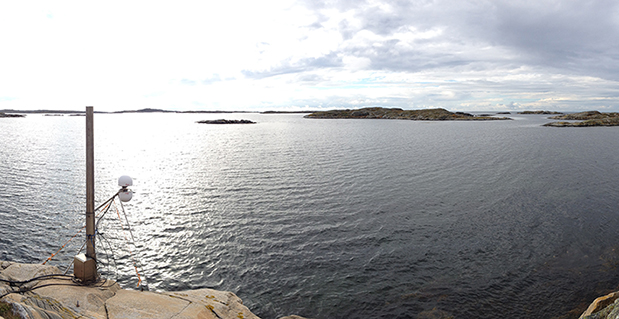
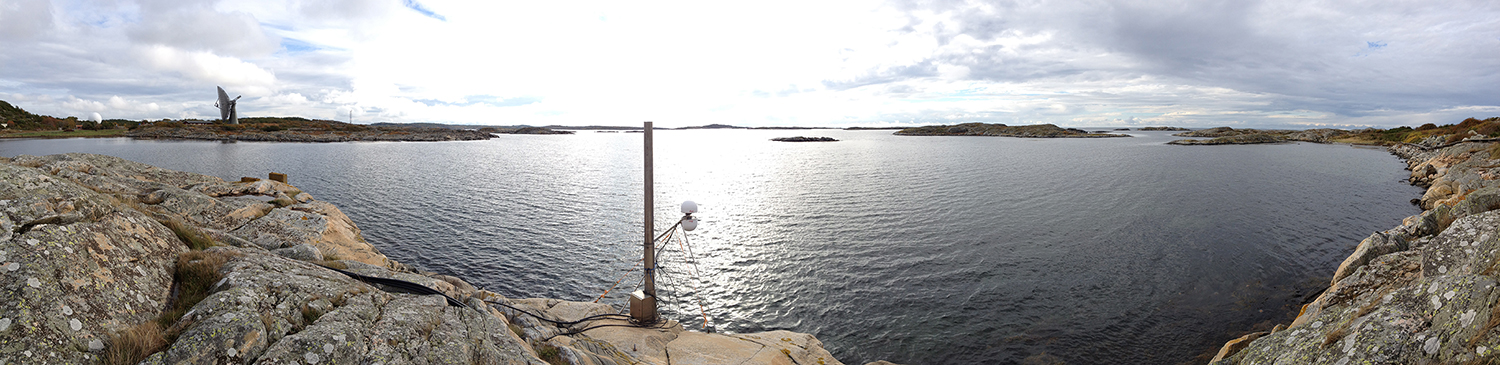
    A panorama from the GNSS tide gauge at Onsala Space Observatory. When satellites pass over the sky, the GNSS tide gauge uses signals direct from the satellite and signals reflected off the sea surface to measure the sea level. Photo: Johan Löfgren
    A panorama from the GNSS tide gauge at Onsala Space Observatory. When satellites pass over the sky, the GNSS tide gauge uses signals direct from the satellite and signals reflected off the sea surface to measure the sea level. Photo: Johan Löfgren

    A new way of measuring sea level using satellite navigation system signals, for instance GPS, has been implemented by scientists at Chalmers University of Technology in Sweden. Sea level and its variation can easily be monitored using existing coastal GPS stations, the scientists have shown.

    Measuring sea level is an increasingly important part of climate research, and a rising mean sea level is one of the most tangible consequences of climate change. Researchers at Chalmers University of Technology have studied new ways of measuring sea level that could become important tools for testing climate models and for investigating how the sea level along the world’s coasts is affected by climate change.

    Johan Löfgren and Rüdiger Haas, scientists at Chalmers Department of Earth and Space Sciences, have developed and tested an instrument that measures the sea level using a GNSS tide gauge.

    ”The global mean sea level is rising because of climate change, but the change depends on where you are in the world,” says Rüdiger Haas. “We want to be able to make detailed measurements of sea level so that we can understand how coastal societies will be affected in the future.”

    When satellites pass over the sky, the GNSS tide gauge uses signals direct from the satellite and signals reflected off the sea surface to measure the sea level. Photo: Johan Löfgren
    When satellites pass over the sky, the GNSS tide gauge uses signals direct from the satellite and signals reflected off the sea surface to measure the sea level. Photo: Johan Löfgren

    The GNSS tide gauge uses GPS and GLONASS signals. BeiDou and Galileo will be added in the future.

    ”We measure the sea level using the same radio signals that mobile phones and cars use in their satellite navigation systems,” says Johan Löfgren. “As the satellites pass over the sky, the instrument ‘sees’ their signals — both those that come direct and those that are reflected off the sea surface.”

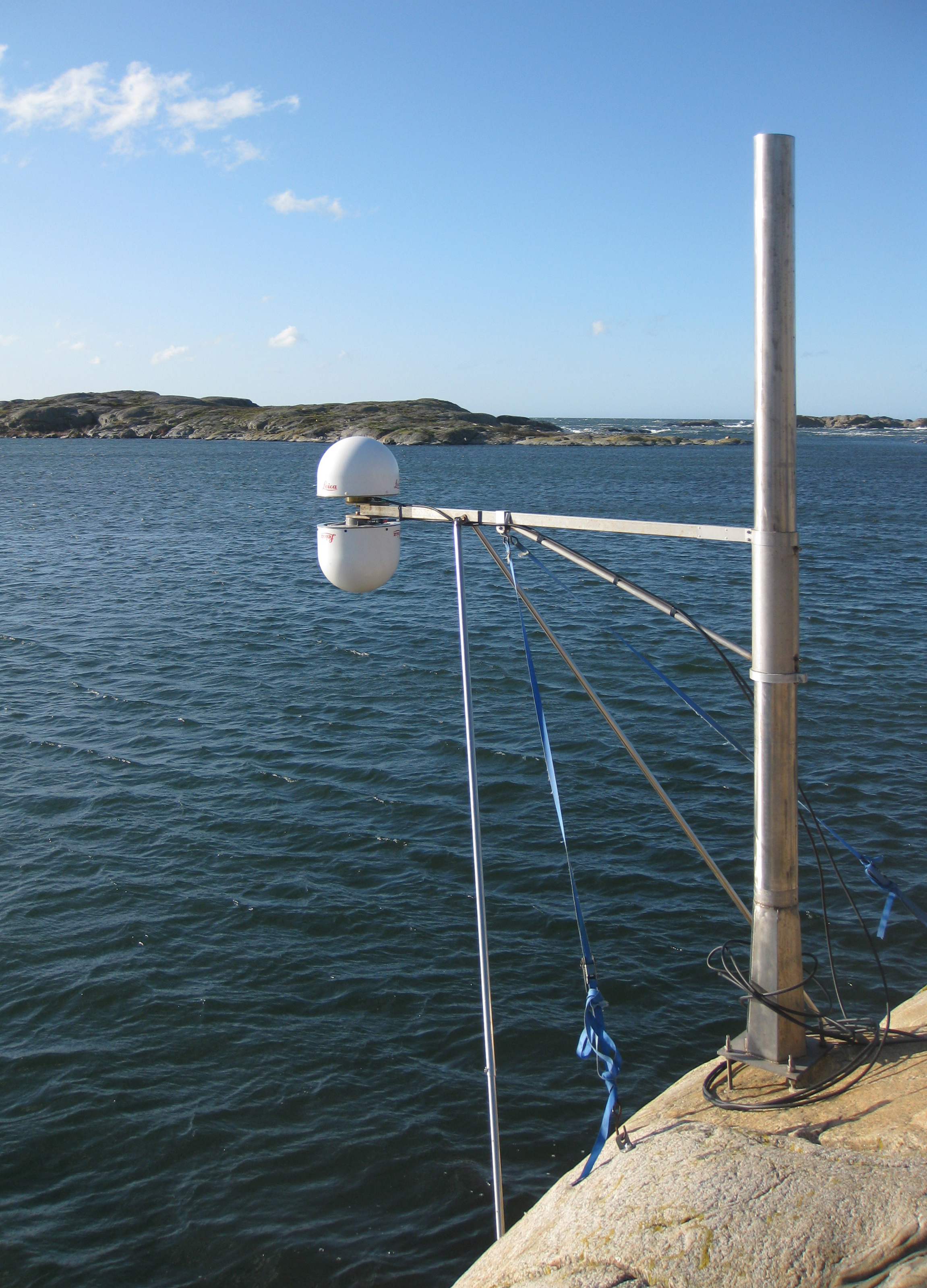
    Two antennas, covered by small white radomes, measure signals both directly from the satellites and signals reflected off the sea surface. By analyzing these signals together, the sea level and its variation can be measured, up to 20 times per second. The sea level time series is rich in physical phenomena such as tides (caused mostly by the gravitational pull of the Moon and the Sun), meteorological signals (high and low pressure), and signals from climate change. Through advanced signal processing, these signals can be studied further.

    The new GNSS tide gauge can measure changes in both land and sea at the same time, in the same location. That means both long-term and short-term land movements (post-glacial rebound and earthquakes) can be taken into consideration.

    ”Now we can measure the sea level both relative to the coast and relative to the center of the Earth, which means we can clearly tell the difference between changes in the water level and changes in the land,” says Johan Löfgren.

    This summer, other high-precision instruments will be installed to work with the Onsala GNSS tide gauge, in collaboration with SMHI, the Swedish Meteorological and Hydrological Institute.

    The GNSS tide gauge at Onsala Space Observatory uses signals from satellite navigation systems like GPS to measure the sea level. Photo: Johan Löfgren
    The GNSS tide gauge at Onsala Space Observatory uses signals from satellite navigation systems like GPS to measure the sea level. Photo: Johan Löfgren

    ”Our tide gauge station will become part of a network of stations along the coast of Sweden that will be able to monitor changes in the water level to millimeter precision well into the future,” says Gunnar Elgered, professor at Chalmers Department of Earth and Space Sciences.

    The scientists have also shown that existing coastal GNSS stations, installed primarily for the purpose of measuring land movements, can be used to make sea-level measurements.

    ”We’ve successfully tested a method where only one of the antennas is used to receive the radio signals. That means that existing coastal GNSS stations — there are hundreds of them all over the world — can also be used to measure the sea level,” says Johan Löfgren.

    More about the research

    The method is described in two new scientific articles:

    Sea level time series and ocean tide analysis from multipath signals at five GPS sites in different parts of the world

    and Sea level measurements using multi-frequency GPS and GLONASS observations

    This work was previously reported in these publications:

    Larson, K.M., J. Lofgren, and R. Haas, Coastal Sea Level Measurements Using A Single Geodetic GPS Receiver, Adv. Space Res., Vol. 51(8), 1301-1310, 2013, doi:10.1016/j.asr.2012.04.017, 2013.

    Larson, K.M., R. Ray, F. Nievinski, and J. Freymueller, The Accidental Tide Gauge: A Case Study of GPS Reflections from Kachemak Bay, Alaska, IEEE GRSL, Vol 10(5), 1200-1205, doi:10.1109/LGRS.2012.2236075, 2013.

  • GPS Developers, Manufacturers Highlighted in New Report

    Plimsoll Publishing is offering a new analysis, “GPS System Developers & Manufacturers,” which provides a detailed overview of the global market and delivers a comprehensive individual analysis on the top 100 companies, including Braemac (CA) LLC, Furuno Electric Co. Ltd. and Harman International Industries, Inc.

    The report includes a wealth of information on the financial trends over the past four years. The analysis is aimed at anyone wanting to:

    • See the market leaders
    • Identify companies heading for failure
    • Seek out the most attractive acquisition
    • Analyze industry trends
    • Benchmark their own financial performance

    Eighteen companies have a declining Plimsoll financial rating, while 12 have shown good sales growth. Each of the largest 100 companies is meticulously scrutinized in a one-page individual assessment and is analyzed using up-to-date and current financial data.

    Every business is examined on the following features:

    • The Plimsoll Chart: A graphical assessment of a company’s financial performance
    • Four-year assessment of the profit/loss and balance sheet
    • A written summary highlighting key performance issues

    The analysis is available for purchase on the Research & Markets website.

  • NovAtel Launches OEM617D Single-Card GNSS Receiver with RTK

    NovAtel Launches OEM617D Single-Card GNSS Receiver with RTK

    NovAtel's OEM617D receiver.
    NovAtel’s OEM617D receiver.

    NovAtel Inc. has released the OEM617D receiver, a compact, dual-antenna, dual-frequency, single-card receiver with NovAtel’s ALIGN heading functionality and RT-2 Real Time Kinematic (RTK) GNSS positioning technology, in dynamic and static environments.

    NovAtel made the announcement at AUVSI’s Unmanned Systems 2014, being held this week in Orlando, Florida.

    The OEM617D offers complete dual-frequency operation with GPS, GLONASS, and BeiDou signals maximizing GNSS availability globally. It also tracks Galileo, SBAS, and QZSS. It is designed for rotary-wing aircraft, marine, autonomous ground vehicle, and other applications requiring precise position and heading accuracy.

    NovAtel’s advanced firmware and correction capabilities enhance the positioning performance of the OEM617D receiver, the company said. Firmware is field upgradable and scalable, depending on application needs. In addition to RTK centimeter-level real-time positioning, and ALIGN precise heading and relative positioning, the OEM617D offers GLIDE for decimeter-level pass-to-pass accuracy and RAIM for increased GNSS pseudorange integrity.

    “We continually listen to our customers to ensure we develop new innovations that address their performance requirements and ensure their competitive success in the marketplace,” said Cameron Henderson, NovAtel’s product manager, Core Cards. “With the release of OEM617D, we’ve delivered robust and accurate positioning on our smallest form factor, making it a great solution for the unmanned market.”

  • Trimble Launches New Version of 4D Control Software

    Trimble-deformation-O

    Trimble has introduced the latest version of its deformation monitoring software, Trimble 4D Control version 4.3. The latest version features new optional monitoring applications — the High Rise App, the SeismoGeodetic App and the Trimble 4D Control Site Setup App for Trimble Access — to better analyze complex data communicated from a broad range of GNSS, optical, geotechnical, seismic, atmospheric and metrological sensors.

    Trimble says it is continuing to expand the ways in which quantifying movement change can be automated using a range of geodetic, seismic and engineering sensors. The opportunities in automation play a significant part in effective project safety management and construction strategies, the company said. Equally important is the analysis of complex data communicated via simple visual terms in order to understand the impacts of change between disciplines.

    Version 4.3 includes a dedicated page to support the functionality of the High Rise App and Composite Views for combining charts, plots and other displays. High-frequency charts, comparative bar charts, tabular and windrose analysis as well as a new visualization tool designated for in-place inclinometers and tilt meter arrays are ways to examine complex data and present findings in a meaningful way, Trimble said.

    In addition to the new High Rise App, SeismoGeodetic App and Trimble 4D Control Site Setup App, the software release and apps also provide new functionality for data processing, visualization and analysis. The interactive Web Interface, Trimble 4D Control Web, provides improved multi-select control and more granularity for customizing alarms.

    High Rise App: The High Rise App is intended to monitor high-rise structures during construction using GNSS and inclination sensors. Integrated processing of GNSS, total station and inclination data delivers precise and reliable coordinates on demand for stake-out jobs on structures subject to tilt such as towers and high rise buildings.

    SeismoGeodetic App: The SeismoGeodetic App integrates the advantages of high-precision GNSS data and high frequency strong motion data. The data from co-located GNSS receivers and Trimble REF TEK strong motion accelerometers can now be processed in an integrated approach resulting in high-precision 3D positions up to a sample rate of 500 Hz.

    Trimble 4D Control Site Setup App for Trimble Access: The Trimble 4D Control Site Setup App for Trimble Access field software allows the user to create, enhance or modify a total station site setup for Trimble 4D Control using a Trimble field controller. Once the site setup has been transferred to Trimble 4D Control, round measurements can be performed immediately without the need to run the Site Setup functionality on the server.

    Trimble 4D Control version 4.3, High Rise App, SeismoGeodetic App and the Trimble 4D Control Site Setup App for Trimble Access software are available now from Trimble’s worldwide Infrastructure distribution network.

  • Avenza Releases MAPublisher 9.4 for Adobe Illustrator

    mapublisher-adobe-O

    Avenza Systems Inc., producers of the PDF Maps app for mobile and geospatial plugins for Adobe Creative Suite, including Geographic Imager for Adobe Photoshop, has released MAPublisher 9.4 for Adobe Illustrator. This latest update includes new  features such as streamlined import, support for additional formats when exporting a document to web tiles, and a new image attribute type to support images imported from the PDF Maps app on both iOS and Android platforms.

    “We’re excited to release MAPublisher 9.4 because of its continued evolution to make it even easier to create great looking maps with enhanced cartography tools,” said Ted Florence, President of Avenza. “The enhancements and features in this release have been developed from customer feedback with significant improvements to import and export interoperability. The primary focus of this release is to increase productivity for cartographers and GIS professionals by enabling them to easily and quickly import data, create high-quality map products, and easily publish or export to print and digital formats.”

    Enhancements and new features of MAPublisher 9.4 include:

    • Streamlined data import: Import (formerly Simple Import) and Multiple Data Import (formerly known as Advanced Import). Improved interface provides additional coordinate system information and easier access to format specific Adobe Illustrator options that affect how data is imported.
    • New image attribute type to store an image for each record in a layer’s MAP Attribute table. Image attributes are supported when importing from the PDF Maps app (in KMZ format) and exporting to Google Earth (in KMZ format).
    • Export Document to Web Tiles now supports MapBox and Tile Map Service map providers. A new anti-aliasing option to optimize art or type is now available.
    • New ability to export a coordinate system file for non-geospatial image formats.
    • New ability to specify grid constraints to limit the geographical extent of a Measured Grid. In addition, a new option is available for ticks to follow the line at the grid boundary.
    • New file export option to assign metadata for TAB/MIF and KML/KMZ formats. The metadata assignment option allows layer attributes to be assigned to format specific metadata fields.
    • Improved preview quality makes it easier to see how settings affect the scale bar.
    • Newly designed MAP Layer icons and feature type icons.
    • Various user interface and performance enhancements to improve usability.

    MAPublisher for Adobe Illustrator is powerful map production software for creating cartographic-quality maps from GIS data. MAPublisher tools leverage the superior graphics design capabilities of Adobe Illustrator to manipulate GIS data and to produce high-quality maps with accuracy and efficiency.

    MAPublisher 9.4 for Adobe Illustrator is available free of charge to all MAPublisher users with an active maintenance subscription and as an upgrade for non-maintenance users at US$599. New licenses start at US$1399. MAPublisher FME Auto and MAPublisher LabelPro are also available as add-ons to MAPublisher 9.4 at prices starting at US$399 per license. Academic, floating and volume pricing are also available. Prices include one year of full maintenance.