Category: Uncategorized

  • Copernicus Masters 2019 submissions now open

    The Copernicus Masters competition awards applications and solutions that use Copernicus data to tackle important challenges. Submissions for the 2019 awards opened on April 1.

    The demand for Earth observation (EO) data is exploding in order to find innovative solutions for today’s challenges such as climate change, food security or water supply.

    With more than 15 terabytes of free EO data generated by the Copernicus programme every day, the Copernicus services deliver near-real-time data on a global level — contributing towards the sustainable management of the environment.

    Simultaneously, the Earth observation industry is constantly growing. New data platforms are being developed to receive and process the huge amount of satellite data collected from the Sentinels — and other contributing commissions.

    These data platforms are established on the cloud and work with Artificial Intelligence (AI) and Machine Learning, enabling the development of new applications in the EO sector.

    The Copernicus Masters 2019 — Europe’s leading innovation competition for Earth observation (EO) — is searching for such outstanding applications, solutions, and business concepts from future-oriented SMEs, startups, universities and individuals in the fields of business, research and higher education.

    From April 1 to June 30, participants in the Copernicus Masters 2019 can submit their innovative EO solutions to eight challenges offered by the following world-class partners: European Space Agency (ESA), the German Aerospace Center (DLR), Astrosat, Planet, BayWa and Airbus together with sobloo and the German Federal Ministry of Transport and Digital Infrastructure (BMVI).

    “The Copernicus Masters is the innovative driver for future-oriented applications and business concepts using Earth observation data. This creates socio-economic benefits through public services all over Europe. Besides, it supports business ventures and high-tech jobs in Europe’s digital economy,” states Josef Aschbacher, director of ESA’s Earth Observation Programmes. ESA is an initiating partner of the Copernicus Masters and has set a challenge for participants every year since 2011.

    Participants can demonstrate their innovative use of Earth observation data across a wide variety of challenge topics, including the fields of future EO, Artificial Intelligence (AI), machine learning, energy, health, sustainable living, smart farming, and digital transportation, as well as maritime, defence & security.

    “Since 2011, the Copernicus Masters competition has evolved into the leading innovation platform for promoting user uptake of Earth observation data in a commercial, societal and sustainable context. Each year, it showcases new solutions and trends, serving as an integral part of an international EO innovation network,” adds Thorsten Rudolph, managing director of AZO, the competition organizer.

    Together with cash prizes, challenge winners will receive access to an international network of leading Earth observation organizations, substantial satellite data quotas, and business development support worth more than EUR 450,000 in total. The Overall Winner will receive an additional cash prize of EUR 10,000.

    For more details on this year’s challenges, prizes, and partners, visit www.copernicus-masters.com. For more information, see space-of-innovation.com. Additional information on the Copernicus programme is available at www.esa.int/copernicus and www.copernicus.eu.

  • Thales to lead EU project on drone geofencing

    Thales to lead EU project on drone geofencing

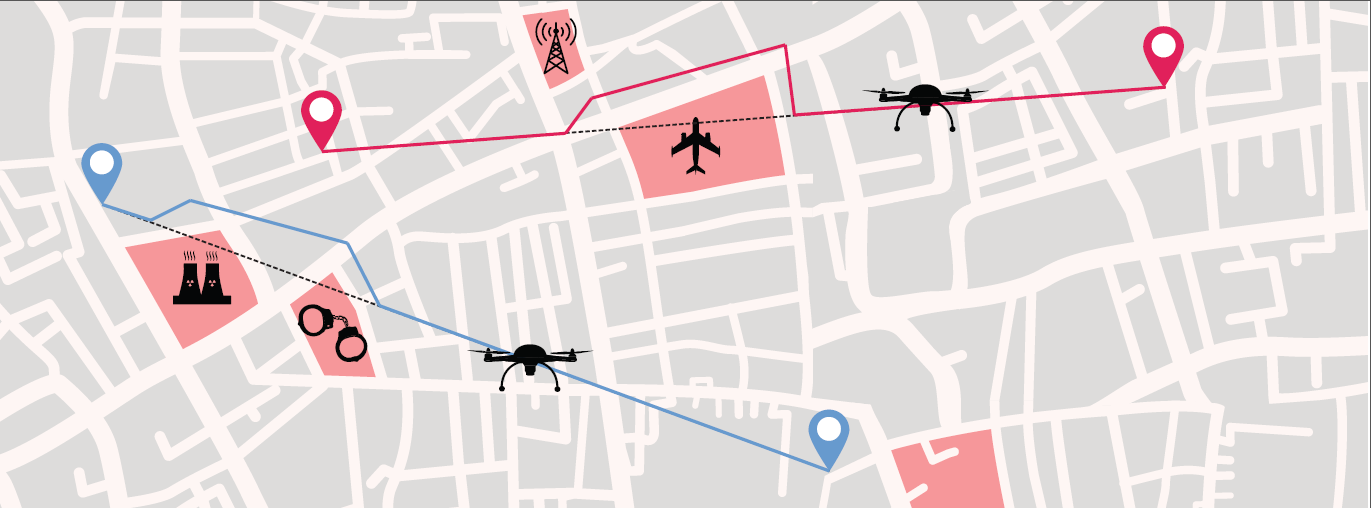
    Principle of geofencing system. (Image: SESAR)
    Principle of geofencing system. (Image: SESAR)

    Thales is leading the SESAR Joint Undertaking to research and develop new services for safe, efficient and secure access to airspace for drones.

    The SESAR Joint Undertaking (SESAR JU) supports the European Commission’s U-space initiative by researching and developing new services for safe, efficient and secure access to airspace for an expected increase in drone use.

    Logo: GeoSafeThe Geosafe project is part of the founding services for the development of drones operation. Thales will manage the project, supported by Aeromapper, AirMap, Atechsys, Airmarine and SPH Engineering.

    The 280 flight tests with 16 different drones will be conducted in France, Germany and Latvia. These tests will explore all possible situations that an automated drone will face in urban and rural areas.

    By securing the flight pattern of drones to avoid determined zones, geofencing solutions are key safety enablers. Geofencing ensures that drones don’t fly in protected perimeters around critical infrastructures, such as power plants or airports.

    The objectives of Geosafe are to establish state-of-the-art geofencing solutions regarding U-space regulation and to propose improvements and recommendations for future geofencing system definition.

    Geosafe will be based on a one-year-long flight-test campaign, assessing a number of commercially available geofencing solutions so that it can propose an improved geofencing system and technological improvements for automated drones.

    Thales designs systems ensuring high security and safety levels for future air mobility. As the leader of the project, Thales will organize all tests and provide recommendations for the European geofencing system.

    “Thales is playing a leading role in shaping the autonomous world,” said Christian Bardot, Thales VP in charge of Helicopter and UAV Avionics Business. “Together with SESAR JU and the Geosafe partners, we will strengthen the foundations of drones’ safe and secure operations, unleashing the potential of this tremendous market.”


  • Airbus and SSC join on Pléiades Neo for Earth observation

    Swedish Space Corporation (SSC) and Airbus have signed a contract for SSC ground segment support services to the new Pléiades Neo constellation of high resolution Earth Observation satellites.

    The contract marks an important step in the long-term partnership between SSC and Airbus, and extends the capabilities of both companies.

    The first two very high-resolution Pléiades Neo satellites will be launched in mid-2020, followed by a second pair in 2022. They will join the existing Airbus constellation of optical and radar satellites, and will offer enhanced performance, and the highest reactivity in the market.

    SSC will provide comprehensive ground segment support for the Launch and Early Orbit Phase (LEOP), as well as routine on-orbit support for Telemetry, Tracking and Control (TT&C) and data reception.

    Ground Network. The core SSC ground network for Pléiades Neo will consist of the unique dual polar ground station solution of Kiruna, Sweden, and Inuvik, Canada ­— often referred to as “Kinuvik” as it is operated as a virtual single polar station.

    The partnership also includes an option to provide potentially higher data volumes at a later stage, using the southern hemisphere station of Punta Arenas, Chile.

    The optimized and highly resilient SSC ground network provides effective tasking and downloading of large data volumes more than once every orbit, enabling rapid delivery of Pléiades Neo data from anywhere on Earth.

    The ground network has been designed by SSC and Airbus to complement Airbus’ Direct Receiving Stations (DRS) as well as the Airbus SpaceDataHighway relay satellite system, while being flexible to adapt to changing seasonal needs and to give critical network diversity.

    “The Pléiades Neo constellation will be adding two million km² per day at 30-cm resolution to Airbus’ imagery offering. As tasking and downloading will be possible in every orbit, up to 60 times a day for the constellation, we need to rely on very efficient commercial polar communication services,” said François Lombard, head of Intelligence Business at Airbus Defence and Space.

    “Pléiades Neo is a cutting edge very high resolution Earth Observation constellation, and this represents a huge milestone in the close cooperation between Airbus and SSC. We are proud to be able to support Airbus in providing such critical optical imagery for the global marketplace”, said Stefan Gardefjord, CEO at SSC.

  • Jackson Labs preps for GPS Week Rollover

    Jackson Labs preps for GPS Week Rollover

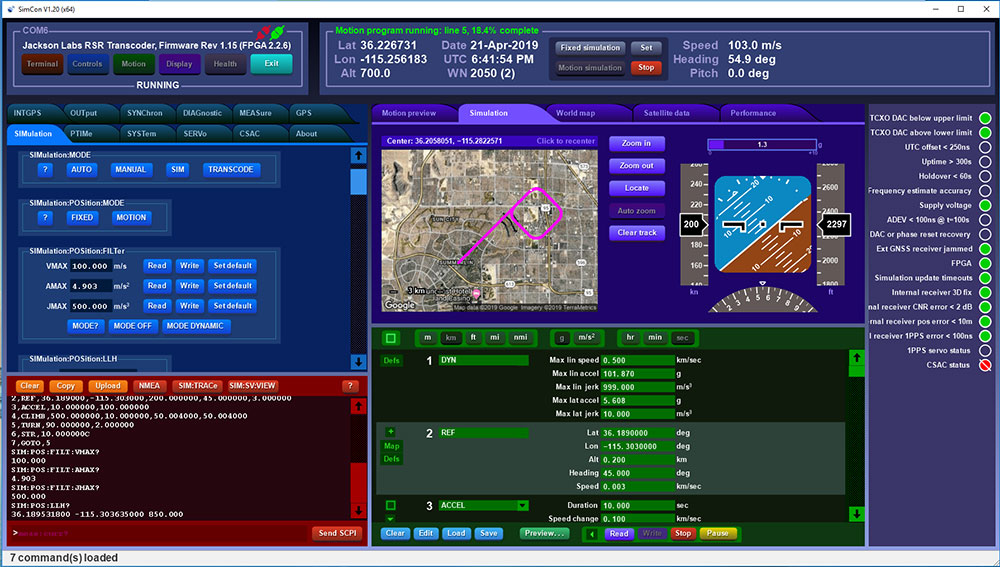
    Jackson Labs Technologies has released the latest upgrades to its GPS simulator and transcoder product line.

    Screenshot: Jackson Labs
    Screenshot: Jackson Labs

    The latest version of freeware application SimCon rev. 1.20 is now available. New features include:

    • Single-button GPS Week Number Rollover testing to test when GPS receivers will fail (hardly any will fail April 6; most older units will fail sometime between now and 2025).
    • Single-button GPS receiver leap second testing: Some GPS receivers might have an issue operating properly when the next leap second happens after the upcoming April 6 week number rollover, and SimCon makes that trivially easy to check.
    • Additional support for modern external GNSS receiver NMEA sentences for transcoding such as $GNGGA, $GLGGA, etc.
    • Improvements in GPS receiver switchover performance when switching from a fully GPS-denied area (running from INS) to GPS-available while transcoding in aircraft and vehicles.
    • This was fine-tuned based on extensive flight tests with the Navy/Air force.
    • Added support for the new Micro-Transcoder with its new Eval board.
    Photo: Jackson Labs
    Photo: Jackson Labs

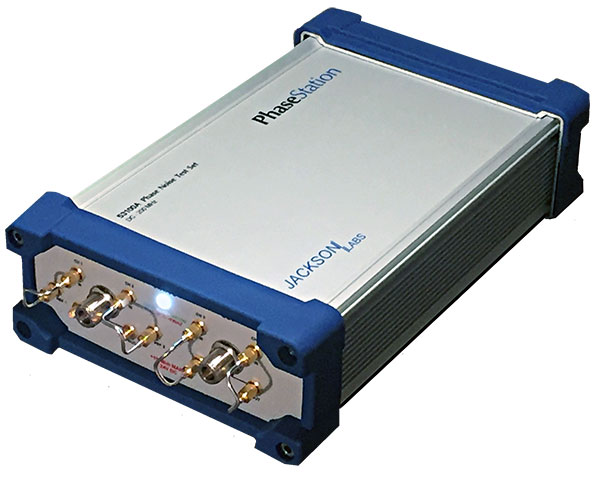
    Jackson Labs also announced a new product line, the PhaseStation ADEV Frequency Stability phase noise test system (signal source analyzer).

    The test system is:

    • useful in testing signal performance in a host of products such as GPS or GNSS disciplined oscillators.
    • useful to qualify and evaluate local oscillator (LO) performance for GNSS receiver design, including GPS TCXO evaluation and parametrization.
    • stability measurements of 1PPS and arbitrary frequency outputs from GNSS receivers
    • useful in optimization of GNSS receiver Kalman filter design via the GNSS receiver 1PPS output signals.
    • automatically synchronizes and syntonizes (calibrates) the internal dual oscillator DOCXO option to external GNSS receivers via 1PPS input.
  • Allystar launches tiny dual-band GNSS module

    Allystar launches tiny dual-band GNSS module

    TAU-0707 series GNSS module. (Photo: Allystar)
    TAU-0707 series GNSS module. (Photo: Allystar)

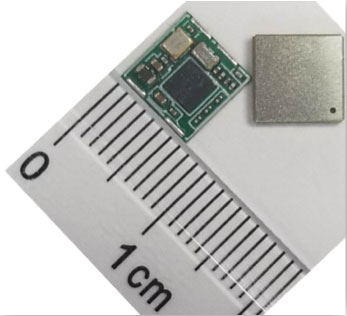
    Allystar Technology Co. Ltd. has launched its smallest multi-band multi-GNSS module, the TAU-0707. Within its 7.6 x 7.6 millimeter size, the TAU-0707 series module supports major GNSS constellations (GPS / Galileo / GLONASS / BeiDou / QZSS / IRNSS) and all civil bands (L1, L2, L5, L6).

    As the latest addition to Allystar’s GNSS portfolio, the TAU-0707 series module is a concurrent multi-band multi-GNSS receiver embedded with a cynosure III single-die standalone positioning chipset, which offers multi-frequency measurements to improve positioning accuracy and simplifies integration for third-party applications, said Shi Xian Yang, Allystar marketing manager.

    Moreover, Allystar also provides the built-in low-noise amplifier in the TAU-1010 series module, which offers the module with improved RF sensitivity and exceptional acquisition and tracking performance even in weak signal areas.

    With more and more satellites supporting L1/L5 signals, Allystar offers two modules to fully support all civil signals on the L5 band for the standalone market. The TAU1206-0707 and TAU1205-1010 are expected to be better in multipath mitigation mainly due to the higher chipping rate of L5 signals relative to L1 C/A code.

    L1/L5 band module for standalone market.
    L1/L5 band module for standalone market.

    For professional applications, module TAU1303-0707 comes with built-in support for standard RTCM protocol (MSM), supporting multi-band multi-system high-precision raw data output, including pseudorange, phase range, Doppler, SNR for any kind of third-party integration and application.

    Module with Raw data output for professional market.
    Module with Raw data output for professional market.

    Allystar TAU series module offers superior accuracy thanks to the onboard 26-MHz temperature compensated crystal oscillator and a reduced time to first fix relying on its dedicated 32-KHz real-time clock oscillator. Based on 40-nm manufacturing processes of the Cynosure III GNSS chipset, it comes with very low power consumption at less than 40 mA.

    According to the company, engineering samples and a reference design of the Allystar TAU-0707 and TAU-1010 series module will be available in April.

  • Golden Software Grapher 14 offers enhanced plotting functions

    Image: Golden Software
    Image: Golden Software

    Golden Software, a developer of software for data visualization and analysis, has released Version 14 of the Grapher scientific graphing package with new plotting and customizing functionality. Available today, Grapher 14 is downloadable by all users with active maintenance agreements.

    A preview version of Grapher 15 is now available, giving active users pre-release access to new fit curve and statistical plotting capabilities.

    “Grapher users will find we have focused overall on making the software easier to use in version 14 and the version 15 Preview,” said Leslie McWhirter, Grapher product manager. “New plotting functions were created as a direct result of feedback from users.”

    The Grapher software gives users deeper insights into their data by providing them with 80 flexible and easy-to-use 2D and 3D graphing tools for plotting, analyzing and displaying scientific data sets. The package is used extensively by scientists and engineers in oil & gas operations, hydrologic/geochemical studies, environmental consulting, mineral exploration and academic research.

    The most notable new or upgraded features in Grapher 14 include the following:

    • Enhanced Plotting – Ability to plot data in rows and columns, perform one-button Durov class plots, and easily generate multi-plot reports.
    • Improved Bar Charts – Bar charts are more versatile, offering variable bar widths and differentiated fill colors for negative and positive.

    With Grapher 14 now available, Golden Software developers have already begun creating the Preview version of Grapher 15. This allows customers to try new functions relatively early in the development process and provide feedback before the final version is released.

    “In Grapher 15 Preview, we are developing new features related to fit curve, axes and statistical functionality,” said McWhirter. “These will improve the ability of Grapher users to model, analyze and interpret their data.”

    Specifically, these Grapher 15 upgrades will include:

    • Fit Curve Improvements – At the request of geologists, geophysicists, mining and oil-and-gas professionals, it is now possible to add X=F(Y) fit curves to model borehole log data. Fit curves can now also be added to class plots to model all or individual classes.
    • Axes Upgrades – Break Axes are enhanced so users can customize the break mark and add a break distinguisher to the plot itself. Ternary plots have also been upgraded to enable users to rotate the axis direction, a useful option in geochemical analysis.
    • Statistical Enhancements – Grapher 15 Preview will give users greater control over how values in Box-Whisker plots are graphed. In addition, there will be new mathematical options to expand on the functionality of the summation plot.

    Other upgrades in Grapher 15 Preview will include the following:

    • Vary color fills above and below the intersection of two plots
    • Specify custom colors via RGB values to color scatter plot symbols
    • Assign colors from a gradient to scatter plot symbols based on numeric worksheet values

    Grapher exports integrate seamlessly with all Golden Software packages, including Surfer for data visualization and mapping, Voxler for 3D data rendering, and Strater for subsurface modeling.

    Details on Grapher 15 Preview may be accessed here: What is Grapher Preview.

  • Meinberg receivers ready for GPS Week Number Rollover

    Meinberg receivers ready for GPS Week Number Rollover

    Photo: Meinberg
    Photo: Meinberg

    On April 6, the GPS system used by many organizations for critical infrastructure will perform a rollover. The rollover is the result of a legacy GPS navigation message which gives a week number as a 10-bit parameter.

    As a result, the week number parameter in the GPS navigation message needs to reset to zero every 1024 weeks. That means from that date onwards, users are likely to start seeing rollover problems in GPS receivers that aren’t programmed to cope with the week number reset.

    Meinberg, a GNSS receiver maker based in Germany, has a different approach with its GPS receivers. Instead of a 10-bit parameter, Meinberg’s firmware uses a 16-bit week number, and it is incremented at the end of each week.

    This means that by the first rollover on Aug. 21, 1999, the week number sent by the satellites rolled from 1023 back to 0, while the internal (Meinberg) week number simply counted to 1024, then to 1025 and so forth. So, on April 6, the GPS week counter will reset to 0, but Meinberg’s internal one, which will have been reached the value of 2047 by that time, will continue to count in a consecutive order.

    More information about the GPS Week Number Rollover can be found on our Meinberg’s Knowledge Base.

  • Maxtena launches GNSS antenna for high-precision and autonomous applications

    Maxtena launches GNSS antenna for high-precision and autonomous applications

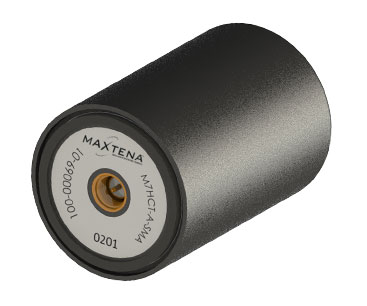
    Maxtena Inc. has introduced a patented GNSS antenna designed for high-precision and autonomous multi-frequency applications. The M7HCT-A-SMA antenna is a high-accuracy, multi-frequency active quadrifilar helix GNSS antenna.

    Photo: Maxtena
    Photo: Maxtena

    Maxtena is a U.S.-based antenna design and manufacturing company and inventor of the patented Dynamic Aperture Technology.

    The new design will offer concurrent GNSS reception on L1: GPS, GLONASS, Galileo, Beidou and L2: GPS L2C, Galileo E5B and GLONASS L3OC in a rugged, compact and ultra lightweight form factor.

    The antenna is designed for GIS, RTK and other high-accuracy GNSS applications such as the drone and automotive markets, where high performance and low weight are driving features in antenna selection.

    The M7HCT-A-SMA active helix design features Maxtena’s patented compact and lightweight Helicore technology. This technology provides exceptional pattern control, polarization purity and high efficiency in a very compact form factor.

    The antenna offers up to 30-dB gain for GNSS applications that utilize GPS, GLONASS, Galileo and Beidou, in one radome housing with a single SMA connector.

    The M7HCT-A-SMA will join Maxtena’s line of rugged GNSS helix antennas that are ultra lightweight, small, and precise. The M7HCT-A-SMA weighs 25 grams and is housed in automotive grade PCB plastic with automotive grade electronics and is rated IP67 when mounted.

    It is ground plane independent and offers extremely low power consumption and minimal phase-center variation over azimuth. The antenna offers superb axial ratio ensuring multipath error is mitigated.

    “Maxtena is very excited to be launching a game-changing antenna for the UAV, drone, and automotive markets, and really for any application requiring a high performance, lightweight antenna that can cover so many frequencies. It is the most robust antenna solution on the market,” said Maxtena Vice President of Sales and Marketing Vanja Maric.

  • Schriever Air Force Base releases GPS Week Number Rollover guidelines

    Schriever Air Force Base releases GPS Week Number Rollover guidelines

    CGSIC logo

    The 50th Space Wing Public Affairs office of Schriever Air Force Base has established and posted guidelines, known as Interface Specification GPS-200 (IS-GPS-200), for receiver manufacturers to ensure continued capability during the April 6 GPS Week Number Rollover on Coordinated Universal Time derived from GPS devices.

    According to the 50th Space Wing, users should be aware of the upcoming GPS Week Number Rollover as it may impact receivers that are not manufactured in compliance with IS-GPS-200 specifications.

    The GPS Week Number count began around midnight on Jan. 5, 1980. Since then, the count has been incremented by one each week and years later broadcast as part of the GPS message. One of the GPS week number fields in the legacy navigation message counts from zero to 1,023 weeks. At the completion of every 1,024 GPS weeks, the field rolls from 1,023 to zero and starts counting again.

    The first occurrence took place the evening of Aug. 21, 1999, and the message field rolled to zero at midnight GPS time.

    The next similar GPS Week Number Rollover is set to take place April 6.

    “We appreciate the four billion people around the world who use GPS signals on a daily basis, which is why we are transparent in providing detailed guidance on use for compatibility,” said Lt. Col. Stephen Toth, 2nd Space Operations Squadron commander.

    Civil GPS users are encouraged to submit reports of GPS problems to the Coast Guard Navigation Center; civil aviation users are encouraged to report GPS anomalies to the Federal Aviation Administration; and military users should contact the GPS Operations Center.


    >Read more: GPS Week Number Rollover coming April 6

  • Israel Aerospace Industries releases anti-jammer for ground GNSS systems

    Israel Aerospace Industries releases anti-jammer for ground GNSS systems

    Photo: Israel Aerospace Industries
    Photo: Israel Aerospace Industries

    Israel Aerospace Industries (IAI) has unveiled ADA-O, a new version of its ADA system that prevents GNSS signals from being jammed.

    ADA-O is designed for armored vehicles and other larger land and sea platforms. According to the company, it can be integrated with ease to protect navigation, telecommunications, command-and-control and other systems. The land platform can be readily integrated in a range of platforms, providing a unique operational response to helps telecom, navigation and C&C systems, the company added.

    “ADA and its new derivative ADA-O for land platforms is an important complement for every platform that uses GNSS receivers in general — and GPS in particular — and a vital tool for every modern army,” said Boaz Levy, general manager and executive Vice President of IAI’s Systems, Missiles & Space Group. “Understanding the unique operational needs of land systems allowed us to perform the required modifications on IAI’s airborne anti-jam system so as to provide an advanced technological solution to the operational challenges facing the forces in the different platforms.

    Israel Aerospace Industries delivers technologies and systems in for the air, space, land, naval, cyber, homeland security and ISR industries. IAI develops, produces and supports complete systems — from components, sensors and subsystems all the way to large-scale, fully-integrated systems of systems.

  • Blue Marble Geographics updates Global Mapper GIS software

    Global Mapper v.20.1 offers a new zoom tool in the path profile view. (Photo: Blue Marble Geographics)
    Global Mapper v.20.1 offers a new zoom tool in the path profile view. (Photo: Blue Marble Geographics)

    Blue Marble Geographics has released Global Mapper v.20.1, the latest version of its GIS software. According to the company, version 20.1 offers a wealth of new and updated geospatial tools, as well as performance improvements throughout the application.

    Enhancements to version 20.1 include a new zooming function in the path profile window, a digitizer tool for automatically closing gaps between features and, for lidar module users, a point proximity query function.

    Global Mapper’s path profile tool, which is used to create a cutaway view of a terrain layer or point cloud, now offers a simple way to zoom in the view for a close-in perspective of a specific area, the company said. It also now includes a new legend display that differentiates each individual layer when multiple overlapping surfaces are displayed.

    The software’s digitizer now includes a simple tool for eliminating slivers or overlapping areas from adjacent features, ensuring the topological integrity of the data. In addition, users can now use an added option that allows the establishment of a default projection, with every imported layer automatically reprojected to adhere to this system.


    Finally, version 20.1 release offers new and upgraded functionality in the lidar module. The module now features a proximity search function that highlights points of a particular classification within a certain distance of other point types or line features.

    “The release of version 20.1 of Global Mapper provides a perfect illustration of Blue Marble’s unique, user-focused development philosophy,” said Blue Marble’s President Patrick Cunningham. “Each of the major new features and functions, including the new Path Profile tools and lidar proximity querying, is directly attributable to specific requests from our customers. We encourage all Global Mapper users to continue this line of communication to ensure that the software is meeting everyone’s needs.”

  • FAA partners with Kittyhawk to improve drone app B4UFLY

    New app will improve the safety and reliability of drone flights across the United States.

    The Federal Aviation Administration (FAA) has partnered with Kittyhawk to redevelop B4UFLY to further its safety mission and create a new and improved mobile application to help recreational drone operators learn where they can and can’t fly.

    The project is being done at no cost to the FAA.

    Photo: FAA
    Photo: FAA

    The B4UFLY app will continue to be available to the public until the new app is deployed. The data will continue to be updated, but no new features will be added.

    “We want to provide drone pilots with the best tools possible so they fly safely and responsibly,” said Acting FAA Administrator Dan Elwell. “As drone sales increase and our nation’s airspace becomes busier and more complex, it’s vital that we work smarter and partner with the private sector to develop innovative products that advance safety.”

    The FAA and Kittyhawk’s Feb. 13  agreement will provide the public with a simple, easy-to-understand mobile application that provides situational awareness for recreational drone pilots. The FAA and Kittyhawk plan to launch the new app later this year.

    Kittyhawk is an enterprise drone operations software company and has been an FAA Low Altitude Authorization and Notification Capability (LAANC) UAS service supplier since October 2018.