Tag: autonomous vehicles

  • NovAtel Launches OEM617D Single-Card GNSS Receiver with RTK

    NovAtel Launches OEM617D Single-Card GNSS Receiver with RTK

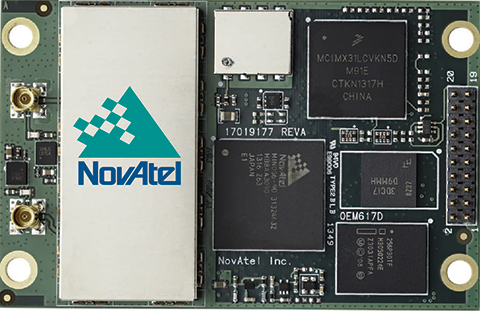
    NovAtel's OEM617D receiver.
    NovAtel’s OEM617D receiver.

    NovAtel Inc. has released the OEM617D receiver, a compact, dual-antenna, dual-frequency, single-card receiver with NovAtel’s ALIGN heading functionality and RT-2 Real Time Kinematic (RTK) GNSS positioning technology, in dynamic and static environments.

    NovAtel made the announcement at AUVSI’s Unmanned Systems 2014, being held this week in Orlando, Florida.

    The OEM617D offers complete dual-frequency operation with GPS, GLONASS, and BeiDou signals maximizing GNSS availability globally. It also tracks Galileo, SBAS, and QZSS. It is designed for rotary-wing aircraft, marine, autonomous ground vehicle, and other applications requiring precise position and heading accuracy.

    NovAtel’s advanced firmware and correction capabilities enhance the positioning performance of the OEM617D receiver, the company said. Firmware is field upgradable and scalable, depending on application needs. In addition to RTK centimeter-level real-time positioning, and ALIGN precise heading and relative positioning, the OEM617D offers GLIDE for decimeter-level pass-to-pass accuracy and RAIM for increased GNSS pseudorange integrity.

    “We continually listen to our customers to ensure we develop new innovations that address their performance requirements and ensure their competitive success in the marketplace,” said Cameron Henderson, NovAtel’s product manager, Core Cards. “With the release of OEM617D, we’ve delivered robust and accurate positioning on our smallest form factor, making it a great solution for the unmanned market.”

  • FlexPak-S GNSS Enclosure Delivers SAASM Positioning for Defense

    FlexPak-S GNSS Enclosure Delivers SAASM Positioning for Defense

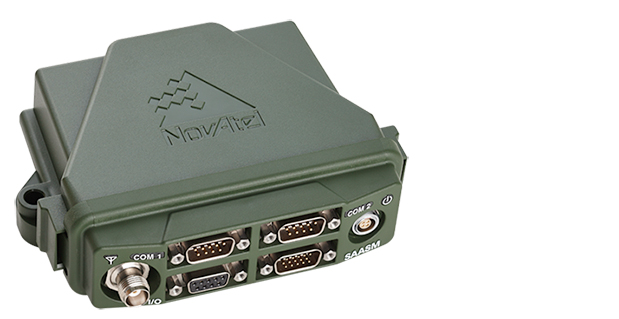
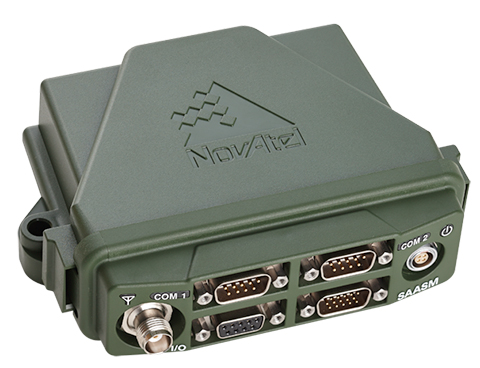
    NovAtel's FlexPak-S GNSS SAASM enclosure.
    NovAtel’s FlexPak-S GNSS SAASM enclosure.

    NovAtel has launched the FlexPak-S GNSS SAASM enclosure. The FlexPak-S contains a NovAtel dual-frequency OEM625S receiver card integrated with L-3’s XFACTOR Selective Availability Anti Spoofing Module (SAASM) onboard. The FlexPak-S is security-approved by the GPS Directorate for operational use.

    NovAtel made the announcement at AUVSI’s Unmanned Systems 2014, being held this week in Orlando, Florida.

    When keyed by authorized defense integrators, the FlexPak-S provides centimeter-level Real Time Kinematic (RTK) Precise Positioning Service (PPS) solution by taking the raw measurements from the XFACTOR SAASM and applying them to NovAtel’s Advanced RTK algorithms. The FlexPak-S can be handled as unclassified when keyed.

    In the Standard Positioning Service (SPS) fallback mode, the FlexPak-S continues to provide centimeter-level accuracy by utilizing NovAtel’s dual-frequency civil GNSS positioning engine. FlexPak-S’ fallback mode is configurable for GPS or GPS+GLONASS. Adding GLONASS tracking increases position performance in obstructed sky conditions, which is a benefit for unmanned ground vehicles.

    FlexPak-S was developed for size-constrained environments, so it’s compact and lightweight, NovAtel said. Despite its size, the rugged GNSS enclosure has been engineered to ensure reliability, even in harsh environments. The IP67 housing is water-resistant and operates in a wide temperature range. FlexPak-S also allows for easy integration with standardized hardware connections and NovAtel’s comprehensive set of software commands. The SAASM position is provided via a dedicated communication port, as well as through NovAtel’s software command protocol, allowing for maximum flexibility. FlexPak-S uses the same form factor as the FlexPak6 design.

    “FlexPak-S is a great option for customers looking for a reliable solution in environments where size is critical, like UAV and robotics applications,” said Shane McEwen, product manager for NovAtel Enclosures. “With standard software and hardware connections, integration is simplified so there is a quicker time to market.”

    The FlexPak-S is available to order immediately.


  • Applanix, American Aerospace Partner on Mapping for UAVs
    Applanix, American Aerospace Partner on Mapping for UAVs

    AAAI-Applanix-system
    photo: AAAI

    Applanix Corp. and American Aerospace Advisors, Inc. (AAAI), have agreed on an OEM supply agreement that will incorporate Applanix direct georeferencing technology into AAAI’s unmanned aerial platforms. The collaboration creates a commercially available professional-grade mapping UAV system for civilian applications such as pipeline monitoring, power line surveys and emergency-response mapping.

    The availability of the system follows a series of successful test flights of AAAI’s RS-16 Unmanned Aircraft System equipped with Applanix’ DMS-UAV aerial photogrammetry payload with commercially available inertial technology. Joint teams from Applanix and AAAI planned and flew a sequence of missions to evaluate the capabilities, including the ability to provide highly accurate, directly georeferenced and orthorectified aerial imagery without the need for ground control points or aerial triangulation calculations.

    The system — consisting of the airframe, its avionics, mobile ground control station, telemetry systems and the digital mapping payload — performed according to expectations and successfully produced high-quality imagery.

    The announcement was made at AUVSI’s Unmanned Systems 2014 Conference in Orlando Florida, where the most comprehensive collection of unmanned systems for every domain – air, ground and marine – are on display. A video of the system can be watched here.

    “The OEM supply agreement with Applanix formalizes our plans to transform the aerial mapping industry by creating an integrated, professional-grade mapping system for unmanned flight,” David Yoel, CEO of American Aerospace Advisors, said. “For civilian aerial survey projects, this can mean safer operations, lower costs and more efficient deployments while still delivering very high accuracy. We are very pleased to announce the availability of the RS-16 Direct Mapping Solution.”
    “We believe this is a ground-breaking development for the airborne imaging systems market,” Joe Hutton, Director of Inertial Technology and Airborne Products at Applanix, said. “There has been a lot of attention on developing a commercial, directly georeferenced mapping solution for UAVs, and now it is a reality.”

    The RS-16 with the Applanix DMS payload is available through American Aerospace Advisors directly, for sale to jurisdictions where it is permitted to fly civilian UAV systems.
  • Visual Intelligence Releases iOne STKA for UAV Mapping Apps

    Visual Intelligence has announced that its iOne Software Sensor Tool Kit Architecture (iOne STKA) is available for purchase or licensing by manufacturers of unmanned airborne vehicles (UAVs) who want to deliver an integrated UAV/geospatial imaging solution to customers.

    Capturing high-resolution imagery for applications in engineering, construction, urban planning, military missions and other uses is a significant emerging market for UAV manufacturers, and Visual Intelligence’s iOne STKA makes it possible to bring high-resolution geospatial sensors to UAVs, the company said. By purchasing or licensing Visual Intelligence’s geospatial imaging platform, UAV companies can meet emerging demand for geoimaging solutions that combine the benefits of UAVs with the imaging capabilities of a geoimaging platform.

    iOne STKA provides the technology foundation to configure a variety of multi-purpose sensors, including miniaturized 2D/3D applications, for the emerging UVS and mobile/handheld markets. The iOne STKA received the Geospatial Forum 2013 World Technology Innovation in Sensors Award, is the first to be considered for NEANY’s Arrow UAV, and is field-proven by the commercial large-format 2D/oblique/3D multipurpose metric mapping systems iOne IMS, iOne Stereo, and iOne n-Oblique.

    With the iOne STKA, the same UAS/UAV sensor system architecture can be used for agricultural and forestry mapping, pipeline or corridor monitoring, utility assessments, aerial surveys, research, persistence surveillance and other metric 2D/3D professional applications. The iOne STKA is a modular multipurpose sensor platform reconfigurable for UAVs of any size. With the iOne STKA, UAV manufacturers are no longer limited to offer monolithic, single purpose DSLR type cameras. Using the iOne STKA technology, UAV end users can economically collect high-quality color or infrared NADIR, oblique, or video imagery as well as co-mount and co-register e.g., LiDAR and thermal sensors using the same system architecture.

    “By providing UAV manufacturers and end-users with one reliable and performing end-to-end standard digital sensor system solution for MANY applications, we are empowering our customers with a more efficient and standard technology foundation and paradigm to grow their business, enhance their products, and maximize their return,” said Visual Intelligence President and CEO Dr. Armando Guevara.

    At the core of the iOne STKA is Visual Intelligence’s Patented Advanced Retinal Camera Array (ARCA). Developed using open systems and object-oriented software engineering principles, the ARCA is “encapsulated” with a rich set of advanced proprietary software methods that integrate camera components. The ARCA enables the collection of different types of imagery, fused in one pass, producing low-cost, extremely accurate, high-resolution products. It also enables unprecedented array-based collection and functional scalability sensor fusion. The arrays made of these varied imaging devices perform like a single camera, producing one single metric, radiometrically and geometrically correct image, or set of co-registered and fused images; such as a Virtual Frame, of higher accuracy, resolution and quality than DSLR-based monolithic cameras.

    Adds Guevara, “UAV manufacturers can take advantage and offer bundled with the iOne sensors Visual Intelligence’s advanced computing technology for fast cloud-based basic and advanced actionable information product generation. As a fully automated solution (from the sensor to the cloud), the iOne STKA includes processing software that uses streamlined workflows and processes imagery faster with multicore/multithreaded/GPU computing technology, making it easy to quickly produce and analyze products in a device-content eCosystem environment. This technology/business model is designed to provide UAV manufacturers and users recurrent ROI.”

    UAVs built using sensors based on the iOne STKA have the following features and advantages:

    • Strong digital obsolescence resilience, extending the useable life of the system while improving operational efficiencies and reducing operating costs for an even better ROI.
    • In the field:
      • Collection scalability
      • Functional scalability
      • Sensor reconfiguration, e.g. increase collection or functionality as needed or per mission requirements.
    • Large cross-track and FOV collection through smaller aperture (ARCA enabled).
    • Ability to collect different sources of metric imagery that can be fused in one pass.
    • Sensor fusion: Ability to co-mount and co-register in a “small and tight packaging” the EO capability with any other EO or active sensor such as LiDAR, Thermal, IR, etc.

    The iOne STKA software architecture is normative across all ARCA-based products; that is, the software is the same for different array configurations or sizes. This reusable component approach yields economies of scale in the manufacturing and use of multipurpose UAV/sensor configurations.

  • UAV Shipboard Landing with RTK

    plane_landing-O

    Carrier Phase Compensates for Wind and Wave Motion

    Limited landing area as well as interference due to wind disturbance and wave motion make shipboard landings of unmanned aerial vehicles (UAVs) extremely difficult. Use of UAVs at sea can enhance the efficiency of intelligence gathering and surveillance, and could also increase long-range air-strike capability. To successfully land aircraft in such a challenging environment requires a high-precision navigation system; this prototype applies RTK measurements.

    By Chiu-Jung Huang and Shau-Shiun Jan

    UAVs can perform functions such as surveying, imaging, detection, sensor work, rescue, and geographic information systems (GIS) data collection. The exploitation of UAVs with portable launching and recovery systems using an automatic guidance equipment can enhance their flexibility in many practical applications. In particular, UAVs can achieve great effectiveness from launch and recovery aboard ships at sea. However, the landing area is narrow on a ship, and interference related to the maritime environment due to wind disturbance and wave motions varies greatly, making maritime UAV landings quite difficult. Recovering these aircraft in such a rapid-dynamic environment requires a high-precision UAV navigation system.

    Generally, UAVs use a differential GPS (DGPS) aiding station to continuously transmit positioning correction information during landing approach; this method can provide about 0.7 to 1-meter accuracy. However, shipboard landings require more stringent accuracy. According the Joint Precision Approach and Landing System (JPALS), the requirements of shipboard landing include vertical accuracy on the order of 0.3 meters, and the requirement for the vertical protection level is 1.1 meters. To fulfill these accuracy requirements, we have chosen the real-time kinematic (RTK) technique. Recently, researchers have studied the use of RTK satellite navigation. The Boeing Unmanned Little Bird program has been examining shipboard launch and recovery using related navigation techniques.

    The accuracy of using RTK navigation is 1 centimeter + 1 part per million.

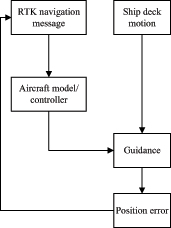
    Figure 1. Flow chart for software-in-the-loop.
    Figure 1. Flow chart for software-in-the-loop.

    Since development of shipboard landing is costly in terms of time and many resources, including human resources, this research is an attempt to evolve a software-in-the-loop (SIL) simulation system to analyze the accuracy of using RTK for landing navigation. The SIL system uses the MATLAB Simulink interface becasue of its helpfulgraphic user interface and block diagrams. A flowchart of the SIL system is shown in Figure 1.

    The simulated RTK message provides the navigational data used as the analysis results from the experiments. To ensure the stability of the landing process, the aircraft models were control by a linear quadratic Gaussian regulator (LQG), which is able to reject the environmental disturbances encountered in the landing process. The ship motions were simulated using the factors and the model formulated by the International Towing Tank Conference. A combined position error consisting of the aircraft controls and ship motions was calculated and then fed back to the RTK navigation message.

    RTK Performance

    RTK navigation provides high positioning performance in the range of a few centimeters; the technique can eliminate main errors, including ionospheric and tropospheric errors and satellite clock errors, among others. A base station and a rover station can cover a service area of about 10 to 20 square kilometers. The data transition should be in real time using a wireless VHF or Wi-Fi modem.

    Because data for shipboard landings are difficult to acquire, the navigation message in the SIL was simulated using experiments involving a variety of conditions. In this article, four kinds of experiments were included to help verify the availability and reliability of using RTK information as a navigational message.

    We started with a basic kinematic experiment, which was simply used to assess the RTK performance. Next, a relative positioning experiment was conducted to ensure the RTK relative positioning accuracy was adequate. After that, an antenna reversal experiment was designed in order to understand the ship’s swing effect in which aircraft altitude might cause a lack of common view satellites. Finally, an antenna forward flip experiment was conducted intended to show the different RTK positioning results for a variety of sea state effects.

    All of the experimental data were collected by a workshop computer through a program data file. The analyses of the results included the mean, standard deviations of positioning error, unavailable RTK percentages and the positioning accuracy when RTK was unavailable. All of the analysis results were imported to the SIL simulation using the Gaussian random variable model.

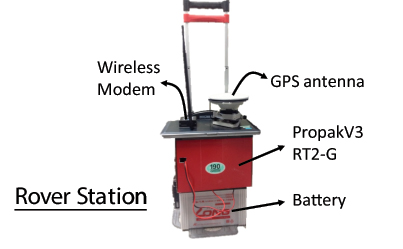
    Figure 2. Kinematic experimental setup.
    Figure 2. Kinematic experimental setup.

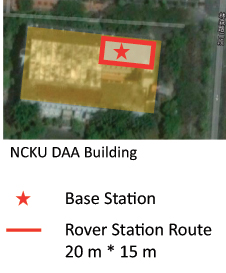
    Kinematic Experiment. The base station setup included an antenna, tripod, and receiver. The rover station setup included a portable vehicle with a battery, antenna, and receiver placed as shown in Figure 2. The data were transmitted and received using a wireless modem for which the transmitted rate was 115200 bps. The receiver was connected to a laptop used as a workshop to monitor satellite quality and collect the data. The region in which the experiment took place is shown in Figure 3: on the roof of the Aeronautics and Astronautics department building at National Cheng Kung University in Taiwan. The red star is the known position of the base station. The broken rectangular red line is 25 meters by 10 meters along which the moving rover station moved clockwise.

    Figure 3. Kinematic experimental region.
    Figure 3. Kinematic experimental region.

    However, it is difficult to show the true positions of the experiment. In this article, we tried to get the true position by using a linear regression method which used the time, t, as the explanatory variable and the position, y(t), as the dependent variable. The linear regression used the past five epoch positions as the dependent variables by which to obtain the linear polynomial, and the fifth position was put into the polynomial to get the position error. For example, in order to calculate an error at t=4, the position results from t=0 to t=4 must be taken into Equation (1) to form the second order polynomials with parameters P, Q, and R

    Eq-1 (1)

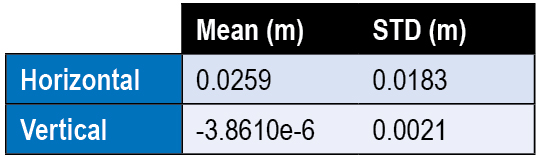
    The experimental results are shown in Figure 4, which is the ENU positioning error, and Table 1 shows the analysis error mean and standard deviations. The experimental results show that the horizontal positioning accuracy is 0.037 meters (95 percent).

    Figure 4. ENU error results for the kinematic experiment.
    Figure 4. ENU error results for the kinematic experiment.
    Table 1. Positioning results for the kinematic experiment.
    Table 1. Positioning results for the kinematic experiment.

    Relative Experiment. This experiment had one base station as before and included two rover stations which were placed on a T-bar, the relative distance being known, on a portable cart as shown in Figure 5. The region of the experiment is shown in Figure 6, where the star marks the location of the base station, with the rover station moving along the black arrow.

    Figure 5. Experimental setup.
    Figure 5. Experimental setup.
    Figure 6. Relative experimental region.
    Figure 6. Relative experimental region.

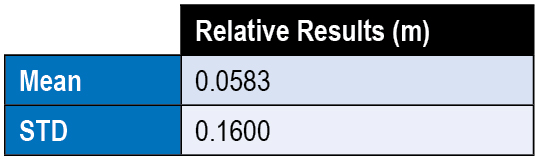
    The relative error was calculated using a known distance, 0.72 meters, to compare the two rover station positions. Figure 7 shows the relative results of the experiment for which the mean value and standard deviations were recorded in Table 2. In this experiment, only about 4.5 percent of the positioning results failed to meet the requirement of 0.3 meters.

    Figure 7. Relative error results.
    Figure 7. Relative error results.
    Table 2. Positioning results for the relative experiment.
    Table 2. Positioning results for the relative experiment.

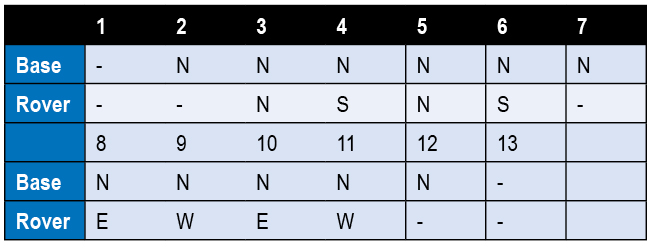
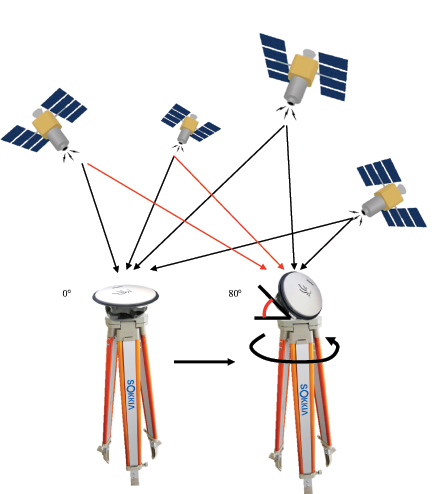
    Common-View Satellite Experiment. Aircraft landing altitude and the ship’s swing motion caused by the state of the sea might affect GNSS information received by the antenna. This experiment had one base station and one rover station at fixed positions as before, but we attempted to flip the antenna of the base station toward the north by 80 degrees, as shown in Figure 8, and the rover station changed direction according to Table 3. The antenna directional change of 80 degrees were chosen for the extreme case that the base station and rover station could experience completely different satellites in view.

    Table 3. Common view satellite experimental setup for antenna.
    Table 3. Common view satellite experimental setup for antenna.
    Figure 8. Common view satellite experimental setup.
    Figure 8. Common view satellite experimental setup.

    Results of the experiment are shown in Figure 9, in which the vertical lines indicate antenna directional changes. For this experiment, every change is 30 seconds. This experiment demonstrates that the position performance definitely varies. The position analysis is shown in Table 4, which shows a horizontal error of 0.116meters (95 percent).

    Figure 9. ENU results of the common view satellite experiment.
    Figure 9. ENU results of the common view satellite experiment.
    Table 4. Positioning results for the common view satellite experiment.
    Table 4. Positioning results for the common view satellite experiment.

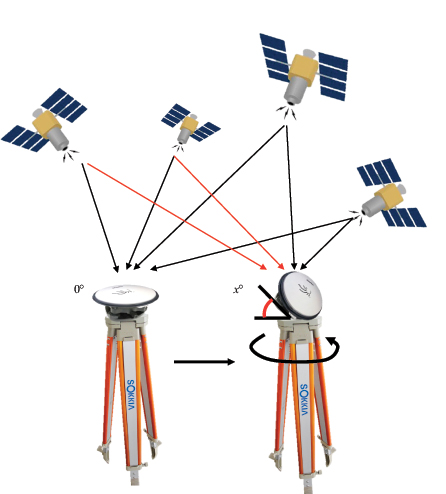
    Sea-State Experiment. In this experiment, one base station and one rover station were required in a fixed position, but the rover station changed the direction of the antenna, as shown in Figure 10, where the angle of x is decided according to the sea state in Table 5. On the other hand, the antenna changing toward a different direction simulated the swing motion of the boat.

    Figure 10. Swing experimental setup.
    Figure 10. Swing experimental setup.
    Table 5. Antenna angle in the swing experiment.
    Table 5. Antenna angle in the swing experiment.

    The experimental results shown in Table 6 are the mean values, and Table 7 shows the standard deviations. The simulation provides the analysis results in order to authenticate the integration simulations. The results show that the sea state slightly influences RTK positioning.

    UAV and Ship Motion Simulations

    During shipboard landing processing, many complicated conditions must be taken into account, including crosswinds, an air-wake model, wind gusts, and deck motion. The ship deck motion and crosswind effects are two key factors that further increase the difficulty of ship-borne operations.

    For this reason, the UAV controller must have anti- interference features. An LQG controller is able to reject the environmental disturbances encountered during landing in a lateral motion. For the ship deck motion, the chosen spectrum (the International Towing Tank Conference, or ITTC two-parameter spectrum) was used as the power spectrum of the sea waves to be simulated.

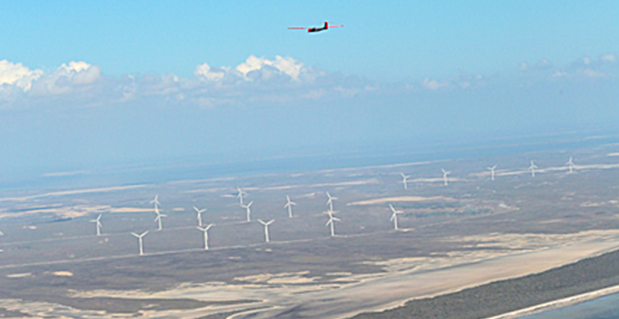
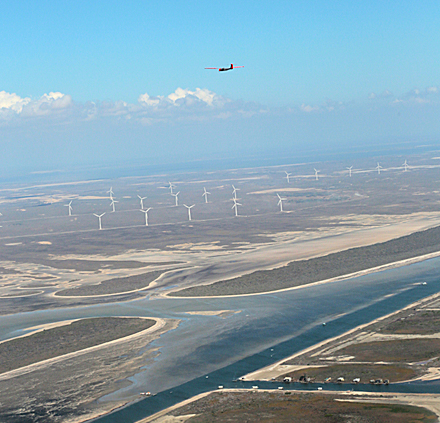
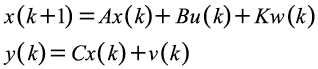
    Aircraft Simulation. The aircraft was in the simulation, the SP.X-6, was designed by the Remotely Piloted Vehicle and Microsatellite Research Laboratory of National Cheng Kung University (see opening photo and cover). For the longitudinal motion, a combination of a linear quadratic integral (LQI) controller and a Kalman filter in the inner-loop system was used to control the vertical velocity and height mainly using an elevator. For the lateral motion, the LQG autopilots were designed with guaranteed robustness properties that allowed quick return to the designed point.

    The SP.X-6 aircraft state functions are shown in Equation 2, in which the x, u, y, w, and v mean the system state vector, input, measurement, process error vector, and the measurement error, respectively. A, B, C, and K refer to the system state matrices, which can be evaluated by the system identifications that are derived by using the subspace identification to obtain an initial model. After that, the initial model will feed into the recursive prediction error method algorithm in order to arrive at further refined models.
    Eq-2 (2)

    Figure 11. Linear quadratic Gaussian regulator block diagram.
    Figure 11. Linear quadratic Gaussian regulator block diagram.

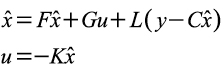
    After obtaining the aircraft’s model, the LQG controller is used, a block diagram for which is shown in Figure 11 and for which the close-loop dynamic is given by Equation 3. The Eq-x means the estimated states are feedback by which to form the optimal control law, u=−KEq-x. The y means the output command with the LQG variables F, G, K, and L.

    Eq-3 (3)

    The aircraft landing controls were divided into the longitudinal and lateral dynamics. For the longitudinal dynamics, the landing command was the vertical discrete height. In the case of the lateral dynamics, the stable condition was used when disturbances were encountered.

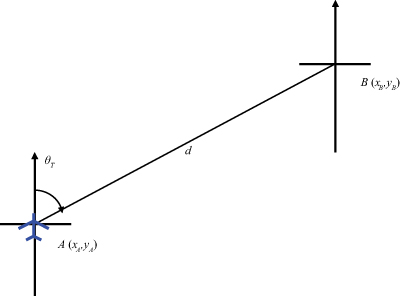
    Up till now, navigation of SP.X-6 relied solely on the GPS signal. Using RTK technique for the landing process will enhance navigation accuracy. The navigation method is the point-to-point guidance law illustrated in Figure 12.

    Figure 12. The point-to-point guidance law.
    Figure 12. The point-to-point guidance law.

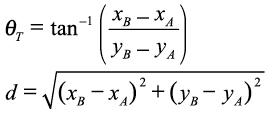
    The basic concept of the point-to-point guidance law can be derived from the aircraft initial position A and the target position B in two-dimensional coordinate frame at every epoch. Desired heading angle θT and the distance between two points d can computed at each control loop via Equation 4.

    Eq-4 (4)

    The navigation signal used in the simulation is of 20 Hz.

    Deck Motion Simulation. Variations in waves are formed by the wind, and waves do not propagate only in one direction; the other direction will also affect wave propagation. The wave always is set as a stationary random process for the purpose of processing. The Longuet-Higgins model assumes that random waves are composed of many different wavelengths and harmonic amplitude superposition. Assuming the wave travels in a fixed direction, the peaks and troughs of the wave lines are parallel to each other and perpendicular to the forward direction of the waves, which are called two irregular waves or crested waves. Crested waves cause greater ship motion. The crested wave model indicates that point a at t epoch on a random sea wave height can be expressed as Equation 5, where ai -th represents harmonic waves with ωi frequency and εi initial condition.

    Eq-5 (5)

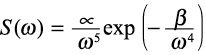
    It can be seen that the wave function can be expressed as a superposition of individual harmonics, so as long as waves establishing harmonic amplitudes and harmonic frequencies can be simulated in order to create the wave model. In this research, the amplitudes and the initial conditions are obtained from the sea wave spectrum of the ITTC model:

    Eq-6 (6)

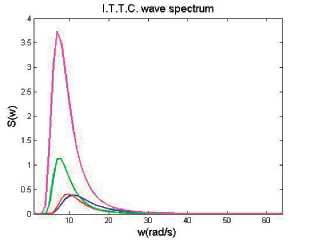
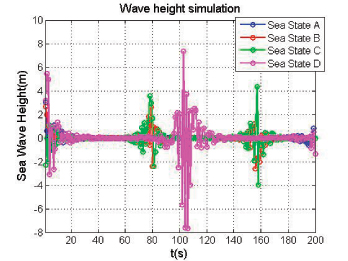
    Four different sea state conditions were designed, as shown in Table 8 in the integrated simulation. Using the parameters from the spectrum analysis and the frequency divide method, the sea wave simulation could be obtained. Figures 13 and 14 show the simulation results of sea state A. Figure 15 shows all four state spectrum simulations results, and Figure 16 shows the sea wave height.

    Figure 13. Sea State A spectrum.
    Figure 13. Sea State A spectrum.
    Figure 14. Sea State A wave height.
    Figure 14. Sea State A wave height.
    Figure 15. Wave spectrum simulation results.
    Figure 15. Wave spectrum simulation results.
    Figure 16. Wave height simulation results.
    Figure 16. Wave height simulation results.

    Integrated Simulations

    In the integrated simulation, first the health of the RTK information was examined, and then, according the environment parameter settings, sea wave simulations were conducted. Subsequently, the aircraft landing process errors were presented using the experimental positioning analysis.

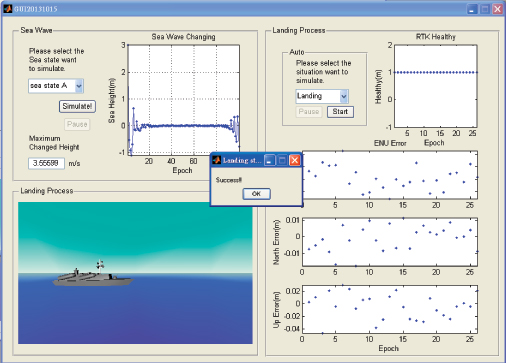
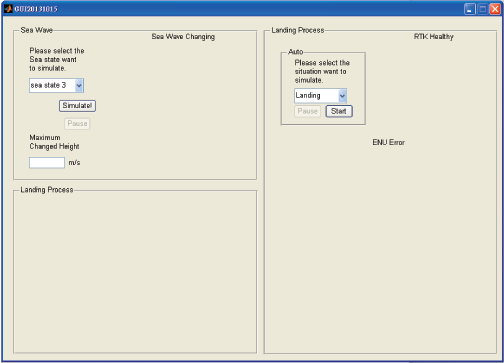
    The integrated simulation system is shown in Figure 17; it can be divided into three parts. The first part is the sea state options shown in the black line region, and the sea wave change is displayed and the maximum changing rate is calculated after the sea state option is selected. The second part is shown in the green line region that is the landing analysis which includes RTK health status, ENU error size. The last part is the landing animation which is enclosed in the red line region.

    Figure 17. Integrated simulations graphic user interface.
    Figure 17. Integrated simulations graphic user interface.

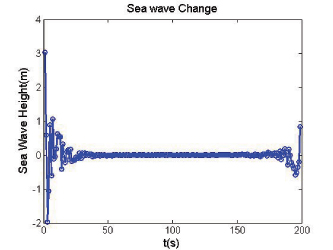
    Four sea-wave height simulation statuses can be selected, and the chosen sea state can be used to determine the corresponding landing environment, as shown in Figure 18, which illustrates the ship motion simulated by the wave height.

    Figure 18. Sea wave change.
    Figure 18. Sea wave change.

    RTK health information was simulated according to the experimental results in Table 9, in which the RTK information unavailability was 1.1 percent. A random Gaussian number was used to simulate the health of the RTK satellite information.

    After the sea-wave simulation and the RTK health simulation, the second concern was the landing process simulation. The landing process simulation has two conditions, namely the “normal landing” condition and the “landing with common-view satellite problem” condition. The normal landing process errors were presented using the Sea State Experiment results, while the landing with common-view satellite problem process errors was simulated by the result of Common View Satellite Experiment positioning analysis.

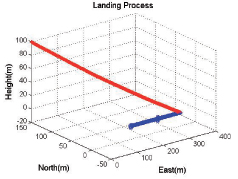
    For example, a ship was traveling at a velocity of 10 m/s in East, and an aircraft was cruising at a velocity of 20 m/s toward the East. The initial position of the ship was at (ES, NS, US) = (200, 0, 0) and the aircraft was at (EA, NA, UA) = (0,150,100). In the landing process, the desired heading angle and the distance to the waypoint were evaluated every epoch. The simulated landing process example is shown in Figure 19; the blue line is the ship’s trajectory and the red line indicates the aircraft’s trajectory.

    Figure 19. The simulated landing process example.
    Figure 19. The simulated landing process example.

    The guidance accuracy includes the control accuracy and the navigation sensor measurement accuracy. In the simulation result, the control accuracy (that is, controller error) was neglected. Therefore, the error for the landing process becomes only the navigation sensor measurement error which was the RTK error in this article. Users have the options to add different controllers as well as the controller error in the simulations.

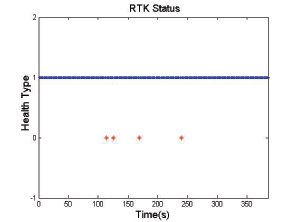
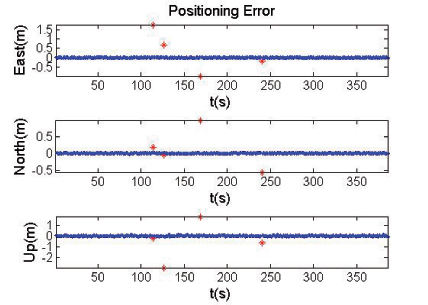
    The landing positioning error was simulated using the imported analysis results in the correspondence sea state included in the RTK status shown in Figure 20 and the landing ENU errors are shown in Figure 21.

    Figure 20. RTK state simulation results.
    Figure 20. RTK state simulation results.
    Figure 21. The ENU errors of the simulated landing process example.
    Figure 21. The ENU errors of the simulated landing process example.

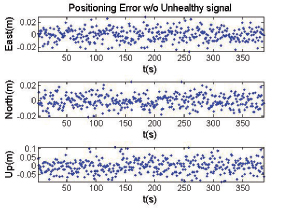
    Red stars in Figure 20 indicate the warning window when the simulated RTK statuses were unhealthy. For example, the 114th, 126th, 169th and 240th epochs in Figure 21 indicate that RTK data is unavailable during this time simulation. The unhealthy RTK signal might cause interruptions in navigation service in the landing process, as shown as the red stars in Figure 21. For the epochs with red stars, the simulated position results were exceeding the performance requirement for RTK shipboard landing. When this situation happened, the monitoring system might raise a flag to the aircraft’s guidance system not to use the RTK signal for landing at this period of time. Excluding these unhealthy RTK epochs, the simulated landing errors were well met the performance requirement for RTK shipboard landing, as shown in Figure 22.

    Figure 22. The ENU errors of the simulated landing process after excluding the unhealthy RTK results.
    Figure 22. The ENU errors of the simulated landing process after excluding the unhealthy RTK results.

    An overall simulation result is illustrated in Figure 23, when the successful landing message was shown in a pop-up window, the landing information of the whole landing process would be shown in the graphic user interface.

    Figure 23. Example simulation result.
    Figure 23. Example simulation result.

    Conclusions

    Experimental results showed that 99 percent of the horizontal positioning was in the range requirement of 0.3 meters. Using the common view satellite experiment and the sea state variation experiment conducted in this study, the limitations of RTK positioning can be understood. Monitoring the RTK status can provide high-quality accuracy with regard to guidance of the landing process. We hope that the results of this study will become a reference for building a shipboard landing system in Taiwan.

    Manufacturers

    All of the experimental data were collected by a workshop computer through a NovAtel (www.novatel.com) Connect program data file. The base station setup included a NovAtel GPS-703-GGG antenna with a Sokkia tripod and the NovAtel Propak-V3 RT2-G receiver. The rover station setup included a portable vehicle with a battery, a NovAtel GPS-703-GGG antenna and the NovAtel Propak-V3 RT2-G receiver.


    Chiu-Jung Huang received her B.S. degree from National Cheng Kung University (NCKU) in Taiwan. She is currently studying for her M.S. degree in aeronautics and astronautics at NCKU.

    Shau-Shiun Jan is an associate professor of aeronautics and astronautics at NCKU. He directs the NCKU Communication and Navigation Systems Laboratory (CNSL). His research focuses on GNSS augmentation system design, analysis, and application. He received his Ph.D. degree in aeronautics and astronautics from Stanford University.

  • On the Edge: Mapping from the Air with a UAV

    On the Edge: Mapping from the Air with a UAV

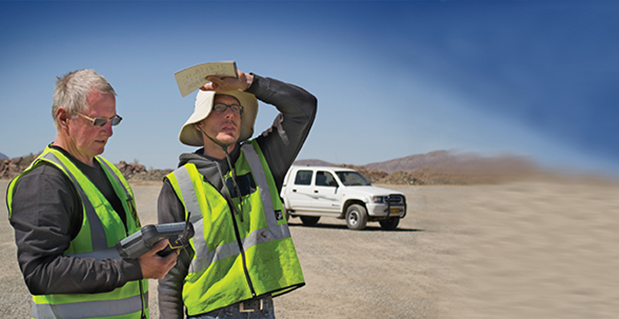
    Dave and Arnold Bansemer prepare the X100 for the survey.
    Dave and Arnold Bansemer prepare the X100 for the survey.

    Surveying an open-pit mine can be a hazardous undertaking. To obtain accurate volume measurements, it is necessary to pick up edges, known in the industry as “toes and crests,” as well as heaps. These are important features, since they provide a way to verify the current shape of a mine; but in light of increasingly stringent safety regulations and penalties, some companies refuse to let the surveyor get too close to such areas. Surveying the site from the air is an effective solution to this challenge.

    It’s also a cost-effective solution. Namibian Mining Survey Services (NMSS) estimates that using an unmanned aerial system (UAS) can save more than 95 percent in mobilization costs, that is, bringing in resources from outside the country to conduct a lidar/photogrammetric survey. Believing UAS to be an important part of the future of surveying, NMSS had been investigating the technology for some time, and a recent project provided the perfect opportunity to try it out.

    NMSS selected the Gatewing X100 for the job based on a demo at a platinum mine, where the results closely tracked those of a previous lidar survey.

    The Project

    The project was to survey a portion of Abenab Mine, a vanadium-lead mine owned by South West Africa Company and located just west of Tsumeb. The mine had been closed in the 1960s, but feasibility studies were underway to see if it would be viable to reopen the operation. Mine management needed to know volumes of all waste and tailings dumps, slimes, dams, and open-pit excavations. The main pit was roughly circular, about 60 meters deep and 120 meters across. Two smaller pits were covered in fairly thick vegetation but had enough ground showing to provide an accurate shape.

    The survey area was approximately 100 hectares. The flying height was set at 150 meters in order to provide a ground separation distance of 5 centimeters. Ground control points (GCPs) were constructed from 1-meter lengths of masonite cut into 10-centimeter-wide strips; painted bright red, the strips were designed to provide 20 x 2 pixel coverage on the images. A total of 10 GCPs were set out in strategic positions covering a wide range of elevations, with points on top of the dumps, on undisturbed ground level, and in the pits. The points were fixed from existing control on the UTM34S coordinate system, by fast static techniques.

    Launching the X100

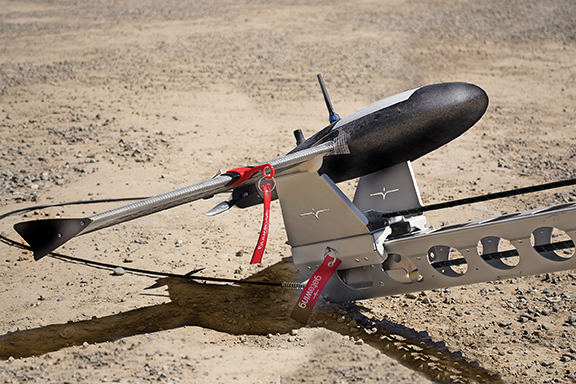
    The X100 prepares for flight.
    The X100 prepares for flight.

    Based on the Gatewing training received, basic photogrammetry principles and a few trials, NMSS determined that 9 a.m. to 3 p.m. was the best time to fly in order to avoid shadow. The flight area, including a previously surveyed area that would serve as a check, covered 140 hectares. Assuming favorable wind conditions, NMSS expected to cover the area on a single flight.

    Arriving on site at 7 a.m., Dave Bansemer of NMSS started setting out the GCPs while his colleague performed the fast static survey. By 10 a.m., all GCPs had been placed and fixed. Having identified a suitable take-off and landing spot (a farm road), they proceeded through the pre-flight and flight checklist, and then launched the X100 at 11 a.m.. After completing the flight in around 35 minutes, with some turbulence at the 150-meter flying altitude, the X100 landed safely, albeit short of the goal, in an open area.

    Once the data was downloaded, the team returned to Tsumeb to begin the processing. They started with the post-processing of the GCPs, and then moved to the coordinates obtained in the photo-control identification process. NMSS used Gatewing Stretchout Pro software for the photogrammetrical processing.

    After specifying the coordinate system and identifying the GCPs, number-crunching began; the processing ran for around seven hours before the final point cloud and orthomosaics were created. The mean horizontal error was 3 centimeters and the vertical error was 9 centimeters, well within the error budget.

    Results

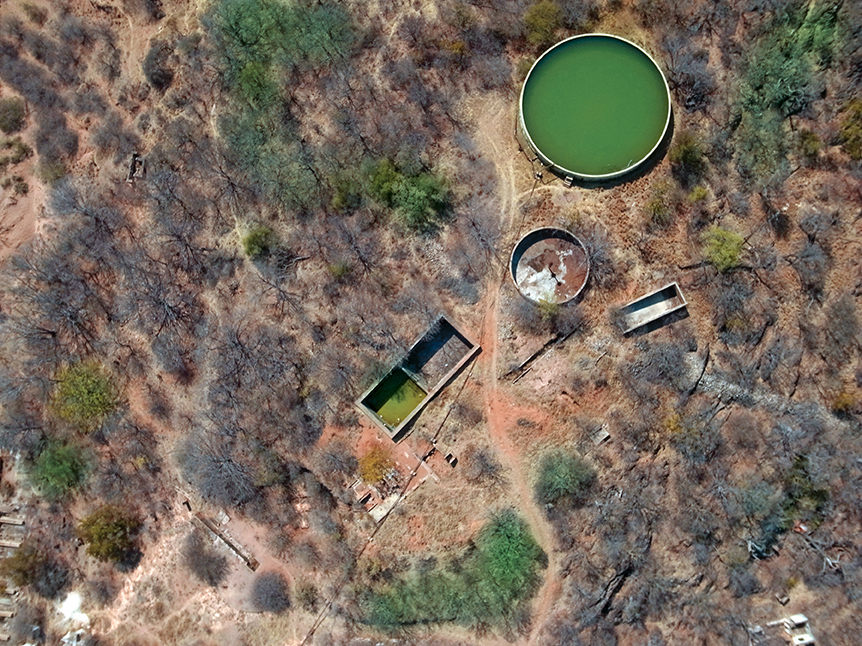
    Aerial image of the X100 survey.
    Aerial image of the X100 survey.

    The first check was to see if all areas had been covered. NMSS then checked the point cloud against the previous survey. The tie-in was perfect. Some gaps in the point cloud seemed to correspond with tree canopy areas; to ensure complete accuracy, the team resurveyed a few areas using a spatial station.

    NMSS learned some important lessons from using UAV technology for survey, which Bansemer lists for the benefit of future users:

    • Make sure you have enough control. It is sometimes difficult to place your control points exactly in the corners of your flight and one in the center, as the actual flight is influenced by wind direction and the shape of the flight may change accordingly. Put down more points than recommended.
    • Make sure that your ground control point size is relevant to your flying height. You will not be able to identify a 10-centimeter wide strip if you fly at 300 meters.
    • Check the completeness of the job before you leave the area.
    • Make sure there is sufficient area for a safe landing. Bansemer recommends at least a 300-meter strip, taking obstacles into account in the event of a short landing.)

    Manufacturers

    The fast static techniques described were carried out with Trimble R6 GPS systems. Re-survey was done with the Trimble VX spatial station. The Gateway X100 is manufactured by Trimble.

  • Expert Advice: The Range of UAVs Across Civil Applications

    Expert Advice: The Range of UAVs Across Civil Applications

    Peter Cosyn, Trimble
    Peter Cosyn, Trimble

    By Peter Cosyn, Trimble

    Unmanned aerial vehicles (UAVs), or as most civil aviation authorities now call them, unmanned aircraft systems (UASs), are attracting a lot of attention lately from geospatial professionals. Common questions in their minds are:

    • What applications can I use it in?
    • What benefits can it provide to my organization or my clients (or data users)?
    • How do I implement such a system in my organization?

    This article will cover the first two questions, while addressing some of the third as well.

    High-Level System

    Unmanned aircraft are either a fixed-wing (plane) or a multi-rotor (helicopter) design. Typical fixed-wing UAS available today are equipped with wide-angle cameras that fly about 100 meters, more or less, above the ground. Multi-rotors, with their ability to hover, move vertically — and even fly in reverse — may sometimes be operated at lower heights above ground. A greater diversity of sensors are being developed and offered specifically for small UAS platforms. Some of these include near-infrared cameras, miniaturized laser imaging detection and ranging (LiDAR) scanners, and even sensors that enable hyper-spectral or multi-spectral capabilities. The typical system runs on electrical power, and flights last between 30 and 60 minutes, often less for multi-rotors because of the greater amount of energy needed to achieve a mission. Depending on the endurance and speed of fixed-wing aircraft, typical coverage is around 1 to 1.5 square kilometers (100–150 hectares). For multi-rotors the area covered is much less; it could be as little as 10 percent to as much as 30 percent of what can be achieved with a fixed-wing UAS.

    UAS image-processing is usually done using close-range photogrammetric techniques adapted to exposures taken in flight. This allows accurate construction of photogrammetric models that approach the quality achievable with much more sophisticated manned aerial systems flying at much higher altitudes.

    With these technologies, photomosaic, orthophotographs, digital terrain models (DTMs), digital surface models (DSMs), and point clouds can be output. Without ground control, the models have decimeter-level internal consistency in X, Y, and Z. With much sparser ground control than is typically required for conventional photogrammetry, good-quality models with centimeter-level accuracy registered to the ground control can be rapidly generated at much lower costs than most other methods of achieving similar results. That, however, doesn’t make today’s UASs a solution for all aerial surveying and mapping situations; but where their application is appropriate, they bring benefits that are sometimes unique.

    Some of the more common applications of UAS-based mapping appear in the two-part table here, with a limited set of users and data consumers for each type, and special benefits that may be unique to UAS aerial imaging.


    Superior Adaptability. UAS aerial imaging can provide flexibility unsurpassed by other technologies. Portable equipment that can function in a wider variety of adverse weather means that mapping can be done closer to the time of need. Because mobilization and flight cycles are short, flights can be done hourly or more frequently in urgent situations such as floodwater or fire tracking. Cloud cover is rarely a problem as unmanned aircraft typically fly below the clouds.

    In fact, in some parts of the world it is being considered as the only mapping tool for aerial mapping as the weather, availability of aircraft, other equipment and trained personnel rarely coincide to allow opportunities for conventional aerial mapping. When focused areas need to be mapped with timely generation of data products under conditions — weather, hazard limitations, or closely spaced visitations — that test the capabilities of other tools, the selection and successful use of UAS in such situations is only limited by the solution-provider’s creativity.

    Regulatory Framework. Operational issues and working within a nation’s civil aviation regulatory framework must be examined in detail before an organization decides to acquire and fly UAS for geospatial applications. UAS flying is highly process-oriented. It involves much more planning and preparation than the typical use of ground-based technologies involves. Training of flight crews and data processing teams is more than just an up-front investment. It is necessary for flight crews to maintain current skill levels through non-revenue flights if the revenue flight schedule is widely spaced in time.

    The state of regulations vary from country to country, but fliers in any locality must also be aware of the restrictions on flying in the national airspace that may have been imposed by the civil aviation authority that covers sub-sections of the airspace or that restrict how or where an UAS may be flown. This includes restrictions on flights near airports and aircraft routes, flights over populated or urban areas and maximum and minimum flying heights over ground level. A common limitation is to restrict flights to areas that are within visible line-of-sight of the UAS pilot.
    UAS are not a panacea for all mapping problems. Satellites, high-altitude photogrammetry, fixed-ground, mobile terrestrial and manned aircraft LiDAR, and ground-based techniques all have their place, especially when large areas are to be mapped at widely spaced time intervals. But geospatial data managers will be surprised to see how nagging problems — as well as some they didn’t recognize as problems — can be solved with UAS-based mapping.


    Peter Cosyn is site manager and director of research and development of Gatewing, a Trimble company. He is a co-founder of Gatewing, which was launched in 2008. Cosyn earned a Ph.D. in electromechanical engineering from Ghent University. He has more than 10 years of experience in unmanned aircraft system design.
  • Leadership Talks: OEM Perspective on UAV Trends, Challenges
    Leadership Talks: OEM Perspective on UAV Trends, Challenges

    Interview with Graham Purves, Executive Vice President, NovAtel


    Graham Purves, NovAtel
    Graham Purves, NovAtel

    GPS World (GPSW): In the regulatory picture for unmanned autonomous vehicles (UAVs), what are the concerns for the GNSS research, design, and manufacturing community regarding air-space regulation?

    Graham Purves (GP): The main concern is the scope and impact of certification requirements for UAV navigation systems in the National Air Space. Certification places constraints on software complexity, so it is difficult to define solutions if the certification framework is unclear.

    In the context of current avionics for civil aviation, design standards and certification requirements are well defined. In the case of pilot-less aircraft, the navigation systems may make use of additional features and technologies that are not part of the current certification paradigm. Examples are tightly coupled inertial navigation systems (INS) for flight control and redundancy, and real-time kinematic (RTK) and differential GPS for landing and capture. Certification requirements and design assurance levels for these features will have a major impact on the definition and design process, and may even prevent some effective technical solutions from being used, due to the software complexity. Of course, communications and communication standards will also present a significant hurdle.

    GPSW: What are the concerns for the GNSS research, design, and manufacturing community regarding vehicle/road regulation for UGVs?

    GP: Similar answer. The software used in positioning and navigation systems is significantly more complex than the safety-critical software in current automotive systems. Regulation for UGVs may result in restrictive certification requirements that affect or prohibit the use of more complex software. Until we have a clear understanding of the certification framework, it is difficult to define technical solutions.

    GPSW: In looking forward to the Federal Aviation Administration tests at six sites for integrating unmanned aerial vehicles into the commercial airspace safely, what are some of the technical challenges that you (and presumably NovAtel’s partners) are facing?

    GP: We have proven some excellent technical solutions in the non-civil applications and believe the main barrier is not a technical but a regulatory challenge.

    GPSW: What other pieces/technologies do you have to pull into the UAV/UGV integration to make it work? Inertial, certainly. What else?

    GP: The UAV/UGV application is a very interesting arena for other positioning technologies that either augment or complement GNSS. Apart from navigation and auto-pilot functions, we believe the sense-and-avoid functions will require other sensing technologies, like scanning lasers. When you include the mission-related functions that require precise steering, pointing and measuring systems, the UAV/UGV is a very exciting category for companies like NovAtel.

    GPSW: Is UAV/UGV a game-changer for the GNSS industry? Similar to the cellphone/smartphone implementation of GNSS chips, which created a whole new sector?

    GP: It does have two elements that might be considered game-changers:

      1. The movement of GNSS and other positioning technologies into a safety-critical role. It seems inevitable that someday we will live in a world where autonomous vehicles are the norm, and the idea of having a human behind the wheel is both complex and unsafe.
      2. The UAV/UGV is an enabling technology and a platform for innovation. Similar to the wireless revolution, the killer applications may well be things we haven’t yet conceived of.

    Graham Purves has been active in the GNSS industry since 1990, starting in ASIC development and continuing with various technical and business positions within NovAtel over the last 26 years.

  • Why Data from Automated Vehicles Needs Serious Protection

    Concerns about data privacy aren’t going away and, in fact, are growing. Many retailers that have adopted in-store tracking technology to enhance shopping experiences and gather information on customer behavior have met with backlash. Increasingly, people are turning to a new crop of apps to safeguard how personal information is used in other apps. We have apps to guard other apps. The world is getting more confused and scary. The Heartbleed bug and other threats have heightened concern about an even more threatening vulnerability of our connected world. So how will drivers feel about increasingly automated vehicles that generate huge masses of data of an exceedingly personal nature? What happens when it is hacked?

    Automated vehicles require multiple types of sensors to obtain information about the vehicle, its movement, and the surrounding environment, which includes the roadway, other vehicles, obstacles and infrastructure. All sorts of ambient information may be captured. Perhaps activity outside of your house, or your kids on their way to school, or the licenses of cars in your driveway will be caught on camera.

    The massive amount of data collected needs to be crunched, and only some of it will be processed within the vehicle. Other captured data will be sent off-board to the cloud for handling, with results then returned to the vehicle. The amount of data that will be created by automated vehicles is uncertain, but I’ve seen estimates of 1 GB per second. Whatever it is, it will be immense.

    What’s collecting data in a driverless vehicle? Lidar, a laser technology that uses reflected light, is identifying everything around the vehicle with great precision. Cameras are taking pictures to detect phases of traffic lights, identify stop signs, and map road lane markings. GPS is tracking the location of the vehicles and helping with navigation. Sonar is detecting objects and measuring their distance, speed and direction. And each vehicle is exchanging positioning, braking, heading and speed data with other vehicles on the road to prevent collisions.

    The data generated is both of a critical and personal nature. And data that is moving in and out of the vehicle to be processed elsewhere or to communicate with other vehicles is particularly vulnerable. The consequences are far greater than a violation of privacy or a stolen identity. The operation of vehicles is at risk to be maliciously disrupted to disastrous outcome. This isn’t an issue we can put off until driverless vehicles are closer in reach. Vehicles today are increasingly equipped with safety and entertainment features that capture critical or sensitive data, any of which could present a threat in the wrong hands.


  • KVH Precision Sensors Chosen by Geodetics for Inertial Navigation Systems

    KVH Precision Sensors Chosen by Geodetics for Inertial Navigation Systems

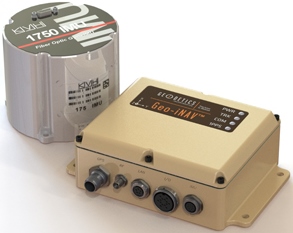
    The Geo-iNAV Advanced is a fully integrated GPS-aided inertial navigation system that utilizes KVH’s 1750 IMU to provide a high-performance navigation solution.
    The Geo-iNAV Advanced is a fully integrated GPS-aided inertial navigation system that utilizes KVH’s 1750 IMU to provide a high-performance navigation solution.

    KVH Industries, Inc., has entered into a strategic partnership with Geodetics Inc., developer of real-time, high-precision position and navigation solutions. The goal is to provide high-performance positioning and navigation products for commercial applications requiring high levels of precision, from unmanned platforms to terrestrial navigation.

    Geodetics is integrating the KVH 1750 inertial measurement unit (IMU) into two solutions: Geo-iNAV Advanced, a GPS-aided inertial navigation system; and Geo-RelNAV, a high-accuracy relative navigation, positioning, and orientation system. The KVH 1750 IMU provides highly accurate 6-degrees-of-freedom angular rate and acceleration data, contributing to the high performance of the Geodetics products while also providing a commercial off-the-shelf (COTS) solution. The COTS designation means the Geo-iNAV Advanced system is available for commercial applications such as manned and unmanned aircraft and control, security platforms on land, air and sea, surface or subsea unmanned vehicles, mobile mapping systems, and photogrammetry and terrestrial navigation.

    As reported April 9, NovAtel, Inc., has added the KVH 1750 as an inertial measurement unit (IMU) option in its SPAN GNSS/INS line of positioning products.

    “Geodetics evaluated a number of IMU technologies, and based on our desire to address the needs of the commercial marketplace worldwide without sacrificing performance, we chose the KVH 1750 IMU, says Dr. Jeffrey Fayman, vice president, planning and development for Geodetics Inc. “With the integration of the KVH 1750 IMU in Geo-iNAV Advanced, you have the best inertial navigation system Geodetics can provide worldwide.” The navigation, position, and orientation accuracy of the Geo-iNAV Advanced is centimeter level, according to Fayman, thanks in part to the high accuracy of the KVH 1750 IMU.

    “KVH is proud to have a strategic relationship with Geodetics,” says Jay Napoli, vice president, FOG/OEM sales at KVH. “The high performance of the 1750 IMU helps enable Geodetics’ systems to deliver ground-breaking accuracy while remaining available to the commercial marketplace.”

    For navigation challenges such as collision avoidance and vehicle-to-vehicle navigation and communication (V2V), the Geodetics Geo-RelNAV system offers a highly accurate, real-time relative positioning and orientation solution that utilizes single- or dual-frequency GPS receivers and the high performance KVH 1750 IMU. The Geo-RelNAV provides precise relative position and orientation between moving platforms such as manned or unmanned air, marine, and ground vehicles. This relative position data is used for such applications as autonomous aerial refueling, autonomous landing, and collision avoidance.

    KVH is one of the only fiber optic gyro manufacturers to control the entire production process, from creating its own specially designed polarization-maintaining optical fiber to packaging its gyros together in advanced systems for inertial measurement, inertial navigation, and attitude heading and reference systems. As a result, KVH’s inertial sensors and gyros offer outstanding accuracy and excellent durability at a lower cost than competing systems.

  • Topcon Releases Unmanned Aerial Positioning System

    Topcon Releases Unmanned Aerial Positioning System

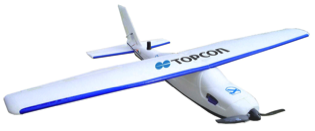
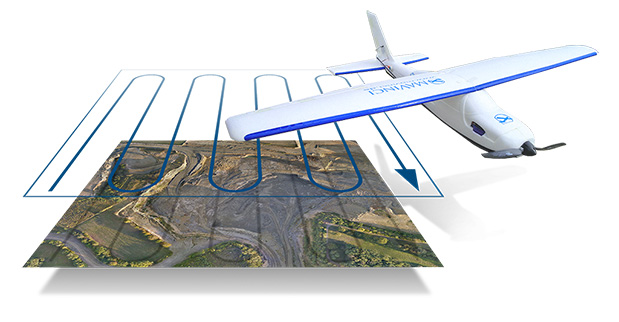
    Mavinci_Phase_1Topcon Positioning Group has released and made available in Europe the Topcon SIRIUS PRO powered by MAVinci, an Unmanned Aerial System (UAS) designed to produce the most accurate solutions for automated mapping of construction sites, pipelines, disaster areas, mines, quarries and myriad sites without regard to terrain.

    During October 2013, Topcon Europe Positioning (TEP) entered into a strategic partnership with UAS provider MAVinci GmbH. The result of that partnership is the release of the fixed-wing UAS Topcon SIRIUS PRO powered by MAVinci.

    “We are excited to announce our distribution agreement with Topcon. This partnership is the ideal expansion of our global distribution network,” Johanna Claussen, CEO at MAVinci GmbH said. “The simple operation of our UAS from flight planning to the final orthophoto and DEM (Digital Elevation Model), allows flexible use in highly demanding environments. Its flexible assisted auto-pilot landing mode enables navigation around any unforeseen obstacles.”

    Based in St. Leon Rot, Germany, MAVinci is a aerial surveying company specializing in the development of UAS technology.

    “By adding Topcon’s RTK solutions to the UAS and ground control station, the SIRIUS PRO is the first commercially available UAS that can reach 5-cm accuracy without the need for ground control points,” said Sander Jongeleen, mobile mapping product manager for Topcon Positioning Group. “This leads to an enormous reduction of operational cost and allows mapping of areas that are not easily accessible with high accuracy.”

    The SIRIUS PRO is a fixed-wing UAS capable of producing high quality and pre-positioned aerial photography without the need of extensive ground control that is required by competitive products. Key features include:

    • Work in mountain areas — Flight plan adapts to elevation model
    • Cover areas that require multiple flights — Flight plan automatically splits and rejoins for post processing
    • Simple hand launch
    • Land in areas where automatic landing is impossible with assisted auto-pilot mode
    • Fly in all weather conditions — wind up to 50 km/h, temperature range of -20º C to 45º C and rain.