Tag: autonomous vehicles

  • JAVAD GNSS, Inertial Labs partner to deliver advanced GNSS+INS navigation platform

    JAVAD GNSS, Inertial Labs partner to deliver advanced GNSS+INS navigation platform

    JAVAD GNSS, a global provider of high-precision GNSS solutions, and Inertial Labs, a VIAVI Solutions Company, have entered a strategic partnership to integrate Inertial Labs’ IMU-P modules with JAVAD’s advanced OEM GNSS receivers. This collaboration introduces a new GNSS+INS platform designed to deliver accuracy, stability and resilience, even in environments where GNSS signals are weak or unavailable.

    Central to this advancement is the JAVAD TR-3Si receiver, engineered for compatibility with professional IMU modules. Combined with the advanced IMU-P units, the system is positioned to offer high levels of precision and reliability, supporting mission-critical requirements in aerospace, defense, autonomous vehicles, UAVs, robotics, precision agriculture and other demanding sectors.

    Inertial Labs’ IMU-P modules can perform in dynamic settings, providing continuous orientation and acceleration data for sensor fusion. The integration of this inertial technology with JAVAD’s established GNSS systems enhances navigation accuracy and efficiency in both GNSS-accessible and GNSS-denied environments.

    JAVAD GNSS is expanding its support for IMU modules and is expected to release further updates on this initiative.

  • Anduril enters South Korean market, partners with Korean Air on UAS production

    Anduril enters South Korean market, partners with Korean Air on UAS production

    Anduril Industries is expanding into South Korea, opening a new office in Seoul. The company has also appointed a new local country leader and is forming partnerships with Korean companies to develop defense technologies for the region.

    The move coincides with a two-day visit to the Republic of Korea by company founder Palmer Luckey, who is meeting with government officials and industry leaders.

    The Seoul office is Anduril’s first in South Korea. John Kim has been appointed vice president and head of Anduril Korea. Kim previously led Boeing Korea’s defense business and served as the company’s interim president. He brings extensive experience working with the U.S. military and South Korea’s defense sector. The company plans to expand its local team and expects to double its headcount within 12 months.

    South Korea’s Ministry of Defense has prioritized artificial intelligence, autonomous systems, and networked weapons as part of a modernization effort coordinated by the Joint Chiefs of Staff. Military planners say current defense systems are insufficient to deter or prevail in future conflicts.

    As part of the expansion, Anduril will sign a contract with Korean Air’s Aerospace Business Division to co-develop unmanned aerial systems, license production of additional Anduril products for the Indo-Pacific market and explore the possibility of building a manufacturing and production facility in South Korea. The agreement is expected to establish a cooperative defense technology framework in the region.

    “Anduril is committed to helping the Republic of Korea in its mission to develop a technologically advanced, highly networked armed force with fewer but more precise platforms,” Kim said. “Our new office and team expansion is further demonstration of this ongoing commitment.”

    Founded in 2017, Anduril employs more than 6,000 people and is valued at over $30 billion. The company has delivered advanced defense capabilities to the U.S. Department of Defense, the Australian Defence Force and the U.K. Ministry of Defence. The new Seoul office will expand Anduril’s growing footprint in the Indo-Pacific.

  • Airwayz powers real-time drone tracking for safe, efficient BVLOS deliveries

    Airwayz powers real-time drone tracking for safe, efficient BVLOS deliveries

    The Federal Aviation Administration’s new Beyond Visual Line of Sight (BVLOS) framework, incorporating Part 108 and Part 146, establishes a regulatory pathway for safe and scalable drone operations. This framework is expected to accelerate the integration of both drone deliveries and air taxis into everyday transportation networks. What was once a conceptual vision has now become an actionable roadmap, supported by technology that enables safe and collaborative use of lower airspace.

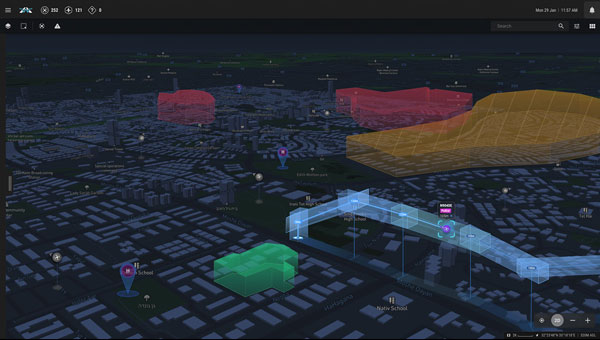
    Airwayz offers an artificial intelligence–driven unmanned traffic management (UTM) and U-Space Service Provider (USSP) system designed to coordinate multiple drone operators sharing the same airspace. Unlike static management systems, Airwayz’ platform provides fully dynamic airspace allocation and routing, allowing multiple fleets to operate simultaneously without interference. The system is capable of validating and approving flights, as well as suggesting updated routes, within approximately five seconds. This enables continuous, real-time decision-making in response to changing conditions.

    Autonomous Decision-Making and Human Oversight

    The Airwayz UTM constantly monitors the airspace for both manned and unmanned aircraft, dynamically adjusting flights to reduce the risk of collision. Using autonomous rerouting capabilities, the system can alter a drone’s course mid-flight if safety conditions change. Although much of the operation can occur without manual intervention, human operators retain the authority to override automated decisions, ensuring an added layer of accountability. This approach shortens approval times, avoids dedicating airspace to only one operator, and streamlines operations for complex missions.

    Central to the Airwayz UTM/USSP is a focus on safety. The system evaluates environmental and operational risks by monitoring nearby aerial activity, weather patterns, and other critical factors. When potential hazards are detected, it recommends the most effective course of action to avoid incidents. These recommendations can involve route changes while the drone is already in flight, ensuring that missions can be completed without compromising safety.

    By enabling fully dynamic and responsive airspace management, Airwayz UTM allows drones to travel between any two points at any time, provided flights are reported to and coordinated through the system. Continuous monitoring during both pre-flight and in-flight phases ensures that adjustments can be made immediately when risks emerge. This flexibility increases the commercial capacity of the airspace, while maintaining safety as the primary priority.

    Temporary U-Space for Specific Operations

    For short-term events or limited-duration needs, Airwayz employs a “temporary U-Space” approach. These temporary zones can be quickly established to manage high-priority or ad-hoc operations and are dismantled once no longer necessary. AI algorithms analyze and predict flight paths, assess the reliability of those predictions, and adjust the boundaries of the temporary U-Space according to risk levels. In low-risk scenarios, boundaries can be minimized to allow more concurrent aircraft, while higher-risk situations trigger expanded safety zones.

  • GöKHUN tactical UAS developed for missions on land, sea

    GöKHUN tactical UAS developed for missions on land, sea

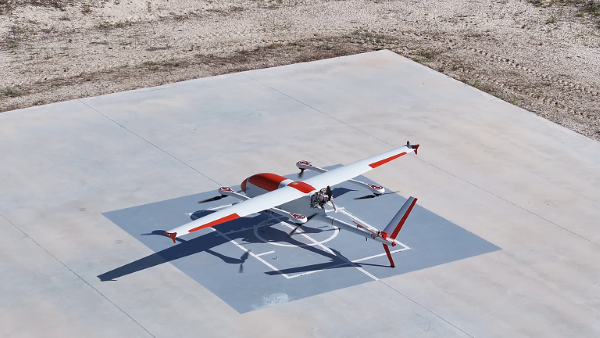
    The GöKHUN unmanned aerial system (UAS) from Turkish company ESEN is a tactical vertical take-off and landing (VTOL) drone system that does not require a runway, offering maximum flexibility in operational use.

    Developed for versatile missions on land or at sea, GöKHUN combines the compact mobility of a NATO Class I UAV with the performance data of a Class II tactical system. The GöKHUN UAS uses the modern SP 210 FI GS 2-stroke engine from Sky Power International.

    With a take-off weight of up to 110 kg and a maximum fuel and payload capacity of 26 kg, the GöKHUN can remain in the air for up to 16 hours with a minimum payload. Even with a demanding sensor load of 12 kg, it can achieve a flight duration of around nine hours, making it suitable for long-endurance reconnaissance and surveillance missions.

    The GöKHUN’s cruising speed is between 96 and 158 km/h. The maximum range with direct line-of-sight is over 150 km, with the system reaching a service ceiling of approximately 5,500 m.

    GöKHUN can take off and land in an area measuring 10 x 10 meters, regardless of topographical conditions and without any infrastructure. This also allows it to be deployed in remote or difficult-to-access regions and on ships.

    The GöKHUN was designed for complex intelligence, surveillance and reconnaissance (ISR) missions. In addition, the system is suitable for a wide range of other applications such as environmental monitoring, disaster relief, border surveillance, anti-smuggling operations and precision agriculture. With its integrated vision-based navigation system GöRDES, the drone is independent of GNSS signals and can be reliably controlled even in GPS-denied environments.

    All safety-relevant systems such as navigation, flight control, data transmission and power supply are designed with double or triple redundancy. If the connection to the ground station is lost, the UAV returns autonomously to its starting point. In addition, GNSS interference protection ensures robust operation even under electronic interference.

    The GöKHUN is also designed for mobility and speed. Two technicians can have the system up and run in around 15 minutes, and it can be transported in two standard vehicles. Thanks to its modular design, the system is easy to maintain and can also be easily adapted to different deployment scenarios. A particularly outstanding feature is its ability to operate two different payloads simultaneously, for example EO/IR sensors for day and night operation or different communication and reconnaissance systems. It is controlled via an integrated ground station with a data terminal, which can also be transferred to other carrier vehicles during an operation.

    The system’s high environmental resistance, with an operating temperature range of −30°C to +55°C, and its ability to fly stably at wind speeds of up to 40 knots underlines its robustness. With its ITAR-free design, GöKHUN meets international export requirements and complies with NATO standards AEP-83/84. The system can be easily integrated into existing tactical networks, making it attractive to international partners.

    Overall, GöKHUN combines tactical range, modular architecture, simple logistics and operational independence. With its high endurance, vertical take-off capability and safe mission execution in complex environments, the system is ideal for modern applications in security-critical but also in civil areas, whether for border surveillance, disaster relief or as an ISR platform at sea. Its independence from GNSS signals and flexible payload configuration make the GöKHUN UAS a state-of-the-art solution in the field of unmanned aerial reconnaissance.

  • STM unveils defense innovations BOYGA-B and TUNGA at IDEF 2025

    STM unveils defense innovations BOYGA-B and TUNGA at IDEF 2025

    STM unveiled two of its latest innovations at IDEF 2025: the BOYGA-B rotary-wing UAV, capable of carrying multiple munitions, and the TUNGA Smart Munition System. IDEF, the International Defense Industry Fair, is a globally recognized trade fair in the defense industry, ths year hosted by Türkiye in Istanbul July 22-27.

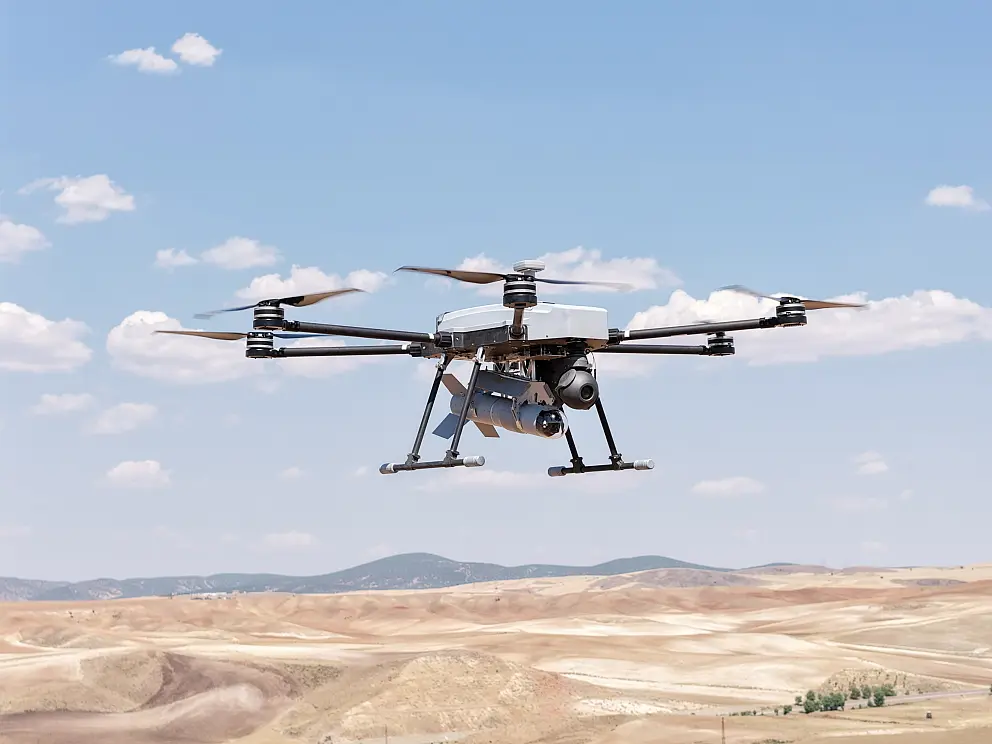
    The BOYGA-B Ammunition Drop UAV is engineered for tactical missions such as reconnaissance, surveillance, target detection and precision munition deployment. The system can carry smart munitions as well as two 81 mm UAV munitions.

    The TUNGA Smart Munition System, developed for anti-personnel missions, has a modular design, image-based or GNSS-based guidance, and proximity-fuze detonation capability. Both new systems are designed to meet the evolving needs of modern combat environments.

    BOYGA-B Ammunition Drop UAV

    BOYGA-B is a high-precision rotary-wing UAV designed for reconnaissance, surveillance, target engagement and precision munition deployment in tactical operations. It can operate in GNSS-denied or jammed environments with its CRPA antenna and KERKES integration. The system can carry up to 8 kg of munitions and precisely release them onto targets using its integrated drop mechanism.

    Key Features

    • GNSS-denied operation via CRPA and KERKES
    • Flight time: 35 minutes
    • Range: Minimum 5 km
    • Operable by a single soldier
    • Target detection and tracking
    • Real-time EO/IR image transmission
    • Autonomous munition release and mission abort

    Payload Options

    • 2× 81 mm UAV Munitions
    • 1× TUNGA Smart Munition
    • 1× Kargu FPV Drone

    TUNGA Smart Munition System

    TUNGA is a glide-type guided munition developed by STM for anti-personnel missions. Equipped with a 1750 g warhead, TUNGA can be precisely guided to its target using EO/thermal imaging and onboard image processing. It offers safe operation with self-destruct functions and can be deployed from BOYGA-B or other compatible platforms.

    Key Features:

    • GNSS or image-based guidance
    • Self-destruct options
    • Modular design for different mission profiles
    • Low visibility with EO/thermal imaging
    • Proximity-fuse detonation

    Technical Specifications

    • Length: 540 mm
    • Warhead: 1750 g
    • Endurance: 30 minutes
    • Operational altitude: 300–800 m
  • Exail to supply 100 navigation systems for US-based defense UUVs

    Exail to supply 100 navigation systems for US-based defense UUVs

    Exail has signed a contract to supply 100 Phins compact inertial navigation systems (INS) to a U.S.-based global defense company for use in unmanned underwater vehicles (UUVs). The Phins Compact INS is designed to provide precise navigation capabilities in challenging environments, remaining functional even when external signals are disrupted. The system’s compact design enables rapid integration into UUVs, allowing for flexible and efficient mission operations in dynamic maritime settings.

    According to the company, this contract strengthens Exail’s global leadership in subsea navigation, with its INS technology trusted by more than 50 navies and widely deployed on a broad range of subsea autonomous vehicles worldwide. It also represents a key milestone in the company’s expanding presence in the United States, supporting defense programs with proven, high-performance solutions.

  • MySky ECO and Airwayz to develop long-range UAV system

    MySky ECO and Airwayz to develop long-range UAV system

    Collaboration includes support from Space Florida and Israel Innovation Authority

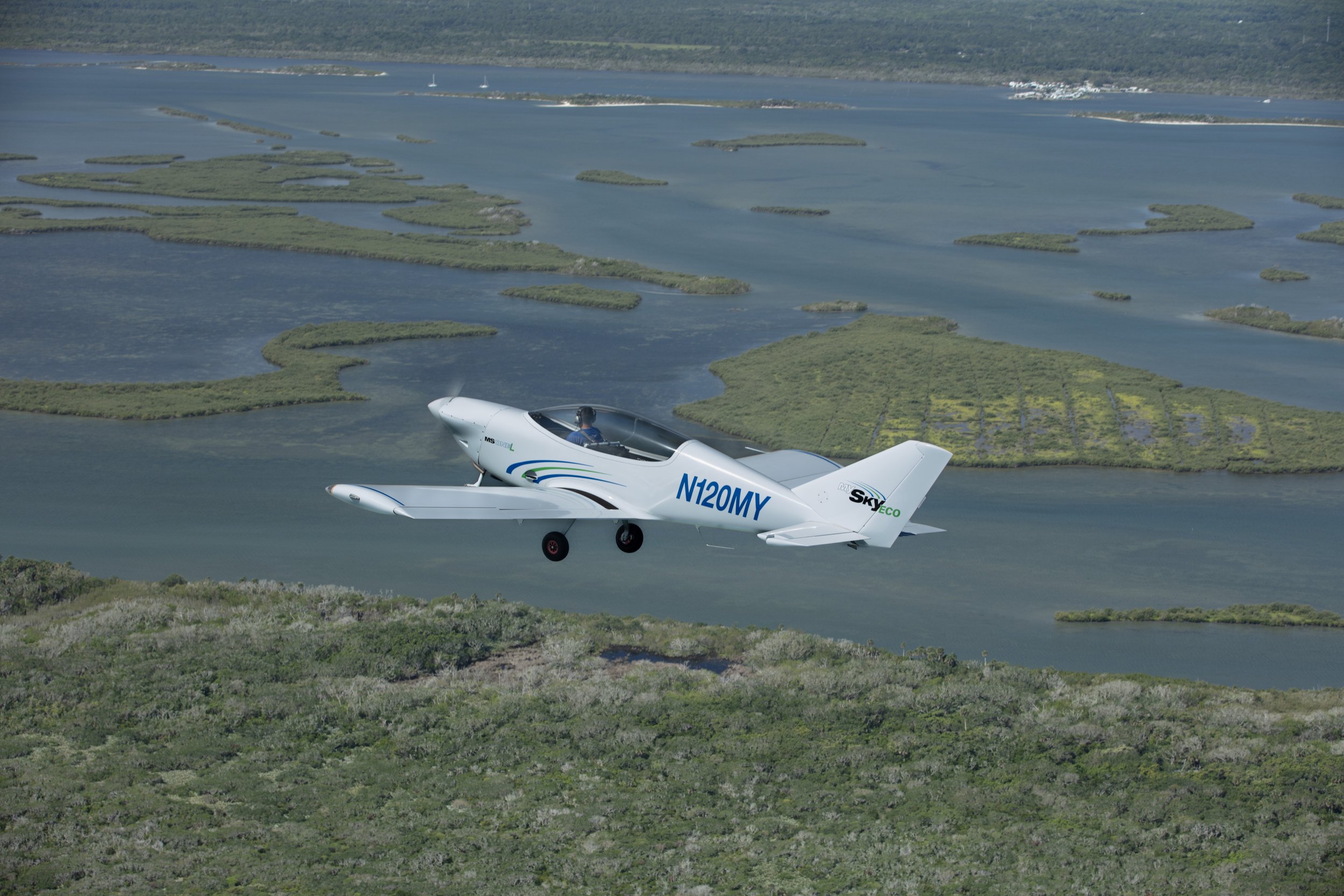
    MySky ECO, a U.S.-based leader in efficient aviation, and Airwayz, a global leader in Unmanned Traffic Management (UTM) technology, have launched a joint venture to develop a next-generation long-range UAV system.

    The project was selected for funding by the Space FloridaIsrael Innovation Partnership Program and is designed to demonstrate a fully autonomous drone platform capable of Beyond Visual Line of Sight (BVLOS) operations in regulated and complex airspaces across the United States.

    The companies share a common mission to prove that unmanned aircraft can operate safely and efficiently alongside traditional aviation in real-world, high-traffic environments.

    The system will integrate MySky’s MS-1D UAV platform, derived from its eco-efficient light aircraft technology, with Airwayz’ AI-based UTM software. The Airwayz platform enables real-time coordination of multiple drone fleets, dynamic airspace management, and safe coexistence with manned aircraft, enabled with strategic and tactical deconfliction capabilities.

    Development is already underway, with flight testing targeted at the end of the year. The system will be evaluated across multiple high-impact use cases — including medical and organ transport, emergency and package delivery, search and rescue, and border reconnaissance — requiring a long-range, high-speed drone capable of operating from short or unimproved runway environments.

  • Drones detect moss beds and changes to Antarctica climate

    Drones detect moss beds and changes to Antarctica climate

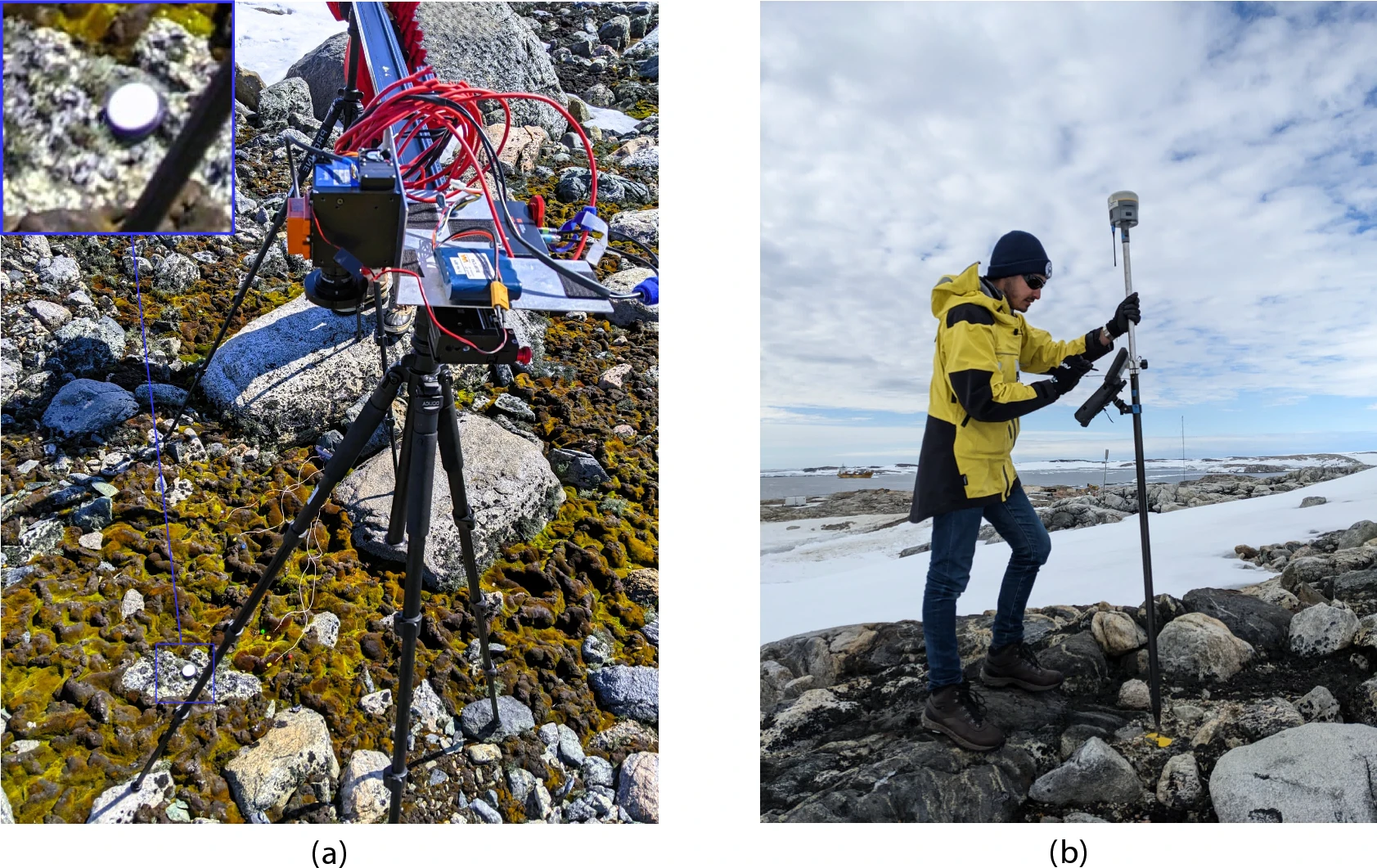
    GNSS and unmanned aerial vehicles (UAVs) have revolutionized precise mapping in polar regions. For a team from Queensland University of Technology (QUT), UAVs enabled a flexible platform for deploying hyperspectral imaging (HSI) sensors and collecting high-resolution data, enhanced by GNSS with real-time kinematic (RTK) to ensure accurate geolocation for reliable vegetation analysis.

    The team turned to UAVs to meet the unique challenges of monitoring Antarctic vegetation. Harsh conditions, remoteness, limited access and climate variability make traditional field surveys time-consuming and costly. Worse, they risk disturbing sensitive vegetation, explain the researchers.

    What Grows There. Antarctica’s terrestrial ecosystems are home to freeze-tolerant vegetation like mosses and lichens, which play a crucial role in biogeochemical cycles, soil insulation and supporting biodiversity. These organisms underpin the continent’s fragile ecosystems, increasingly threatened by climate change, extreme events, and human activitiees.

    While satellite imagery enables large-scale observations, its limited spectral and spatial resolution, alongside cloud interference, constrains fine-scale vegetation analysis. HSI captures a broad wavelength range, enabling discrimination of vegetation by their spectral signatures. Multispectral imaging (MSI) data, such as that from Sentinel-2, is also being explored.

    Each technology contributes uniquely:

    • GNSS RTK provides georeferencing
    • Machine-learning techniques enable precise segmentation
    • UAVs offer flexible spatial coverage and high-resolution datasets.

    However, unless these elements are integrated, mapping accuracy diminishes. Moreover, limited validation of spectral libraries and simulated imagery against field data restricts the reliability of remote sensing outcomes.

    The team’s study addresses current gaps by building on the UAV-based HSI workflow that incorporates ground-based HSI data and MSI. “We expand this approach by integrating UAV-captured HSI data to enhance remote sensing capabilities in polar environments,” researchers explain. The updated methodology combines UAVs, high-resolution red, green, blue (RGB) imagery, and ground and aerial HSI data with machine-learning-based semantic segmentation.

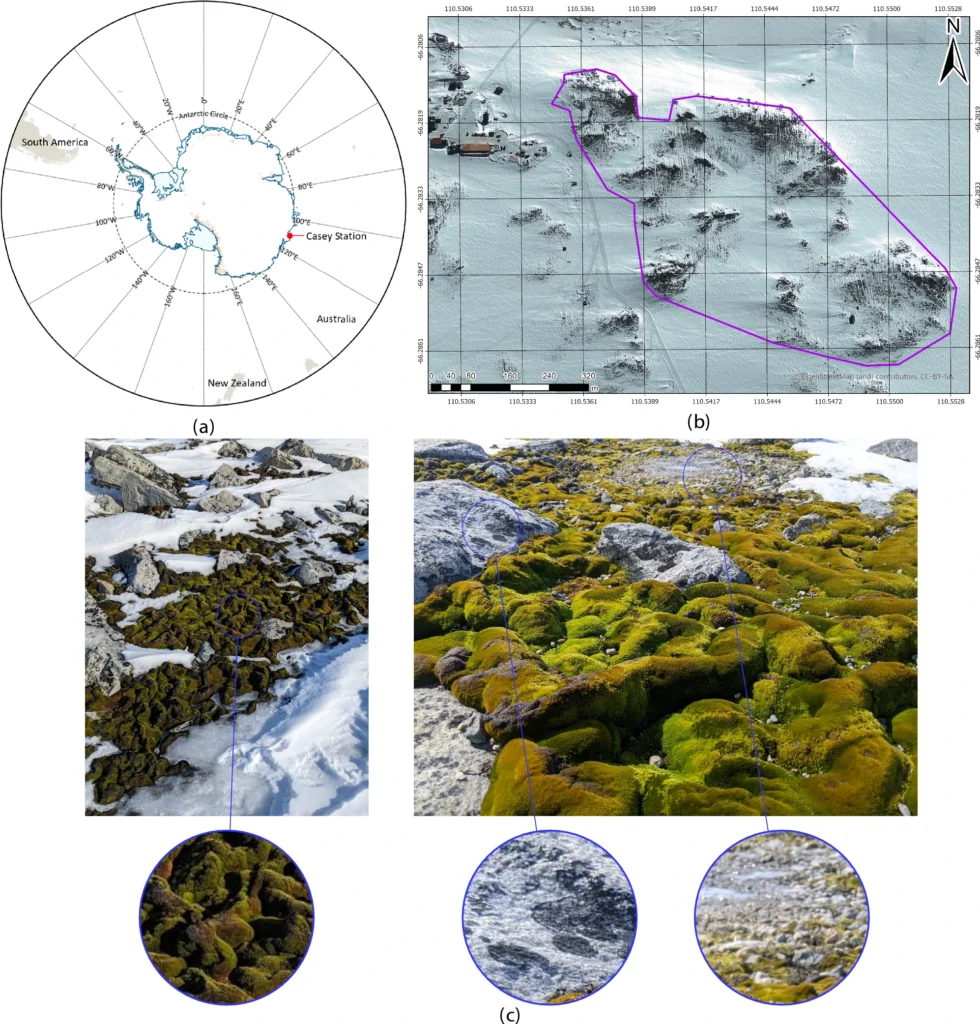
    The new workflow was evaluated in Antarctic specially protected area (ASPA) 135, Windmill Islands, East Antarctica, focusing on lichen detection and moss health mapping (Fig. 1).

    Photo:
    Location of ASPA 135 (6616’60” S, 11032’60” E) and studied vegetation. (a) Map of Antarctica showing Casey Station’s location using the Polar Stereographic Projection. (b) Map delineating ASPA 135 (purple) near Casey Station (top left). (c) Ground-level imagery of moss and lichen at ASPA 135, along with surrounding rock and ice formations. (Credit: QUT)

    Read the full study, “Drone hyperspectral imaging and artificial intelligence for monitoring moss and lichen in Antarctica,” on the Scientific Reports website.

  • Swift Navigation secures funding for its Skylark cm positioning service

    Swift Navigation secures funding for its Skylark cm positioning service

    Swift Navigation has completed another funding round to fuel its centimeter-level precision service. The Skylark Precise Positioning Service is a cloud-based service that corrects errors in GNSS signals, improving accuracy to centimeter level and enabling mass-market adoption of applications in autonomous driving, robotics, precision logistics, and V2X communication.

    Skylark is a real-time, cloud-based service that meets ISO 26262:2018 functional safety standards for road vehicles. Unlike ASIL-certified positioning solutions that rely on costly physical data centers, Skylark operates entirely in the cloud.

    Skylark powers more than 10 million ADAS-enabled and autonomous vehicles worldwide and supports global programs for 20+ automotive OEMs and Tier 1 suppliers, top robotics companies, and a large commercial fleet operator.

    This latest financing reflects strong market demand for Swift’s approach to precise positioning. Unlike traditional precise positioning technologies, Skylark leverages advanced atmospheric modeling, cloud-based architecture and carrier-grade networks to deliver unmatched reliability, safety and cost efficiency at scale.

    The $50 million Series E financing round was led by Crosslink Capital. The round saw strong participation from existing investors New Enterprise Associates (NEA), Eclipse Ventures, EPIQ Capital Group, First Round Capital, TELUS Global Ventures, and Potentum Partners alongside new investors Niterra Ventures, AlTi Tiedemann Global, GRIDS Capital, Essentia Ventures, Shea Ventures, and EnerTech Capital. This funding brings Swift Navigation’s total capital raised to over $250 million.

  • Advancing earthquake prediction with a UAV

    Advancing earthquake prediction with a UAV

    Researchers demonstrate a seaplane-type UAV using GNSS-A can precisely measure seafloor deformation

    Megathrust earthquakes are large earthquakes that occur on faults found along the boundaries between tectonic plates. The Nankai Trough is a megathrust earthquake zone lying off the southwestern coast of Japan, and experts estimate that this zone could generate a potentially devastating (magnitude 8 or 9) large earthquake sometime in the next 30 years. A seismic event of this magnitude could trigger cascading hazards such as destructive tsunamis.

    Developing the technologies for efficient and reliable seafloor monitoring is paramount when considering the potential for socioeconomic harm represented by megathrust earthquakes. Traditionally, seafloor measurements have been obtained using transponder stations on the seafloor that communicate with satellites via buoys or ocean-going vessels to produce accurate positional information. However, data collection using such systems has problems such as low efficiency and speed.

    In a study published in Earth and Space Science, researchers at Institute of Industrial Science, the University of Tokyo, addressed the challenge of acquiring reliable, high-precision, real-time seafloor measurements by constructing a seaplane-type unmanned aerial vehicle (UAV) that can withstand ocean currents and wind. This vehicle is intended for use with the GNSS–Acoustic (GNSS-A) ― a system that uses satellites to determine locations on Earth ― to provide a communication link with seafloor transponder stations.

    “We conducted initial experiments in a water tank,” explains lead author of the study Yuto Yoshizumi, “and found that the proposed system can detect distances to an accuracy within 2.1 cm.”

    To further evaluate the system, at-sea trial tests were performed by landing the UAV on the sea surface off the coast of Japan under optimal sea conditions. “The results were hugely encouraging,” said senior author Yusuke Yokota. “These seafloor positioning measurements are the first ever achieved using a UAV, and we attained a horizontal root mean square error of approximately 1–2 cm, which is easily comparable to that of existing vessel-based systems.”

    The rapid real-time acquisition of seafloor information using the UAV system developed by the research team at Institute of Industrial Science, the University of Tokyo, is expected to provide the foundation for advanced research into earthquake disaster prevention. Such data are urgently needed given the speed and frequency of occurrence of megathrust earthquakes on the Nankai Trough.

    Full paper, DOI: 10.1029/2025EA004237.

  • AI maps: The digital infrastructure driving  autonomous systems

    AI maps: The digital infrastructure driving autonomous systems

    Each day, millions of transportation decisions are made without a driver manually choosing a route or reacting to road signs. Trucks are rerouted around traffic hours before a jam appears. A vehicle slows down in a school zone, even without seeing a sign. A delivery service dynamically dispatches drivers based on weather and wait times.

    These are not just conveniences; they are outcomes of location intelligence working behind the scenes, powered by artificial intelligence (AI) and real-time mapping.

    At the heart of these systems lies a fundamental shift: maps are no longer static guides for humans. AI is unlocking a new era of computing and autonomous systems that will drive industry innovation and reinvention for years to come. Maps have become live, machine-readable software that enables automation at scale. Accenture’s Technology Vision 2025 report found large-language models (LLMs) are giving machines and robots more autonomy in the physical world, allowing them to better understand the physics of their environments, have spatial awareness, interact with people and understand complex instructions. This evolving autonomy is critical for autonomous vehicles, smart logistics and other systems that rely on real-time, AI-powered mapping to sense, decide and act.

    Whether it’s advanced driver assistance systems (ADAS), predictive logistics, EV range optimization or smart city operations, AI-powered mapping is fast becoming the connective tissue between sensing, decision-making, and action. It all begins with location data that is collected, interpreted and delivered in real time.

    From Navigation to Infrastructure: The Evolution of the Map

    Throughout the past two decades, digital maps have evolved from a novelty to a necessity. The early wave of turn-by-turn GPS tools was designed for humans — to get us from one point to another using the shortest or fastest route.

    Today, we are witnessing a new paradigm. As autonomy becomes embedded in vehicles, delivery operations, and mobile robotics, we need a new kind of map — one built for machines.

    These maps must be able to see, react and even predict. They must be continuously updated with real-time inputs, capable of interpreting events and structured in a way that allows for automation logic. In other words, they must be intelligent; and that intelligence comes from AI.

    AI-Powered Maps: What Makes Them Different?

    A live, AI-powered map is far more than a digital representation of roads and intersections. It begins with a foundational base layer — detailed information about road geometry, lanes, speed limits, signage and more. However, what sets these maps apart is how they evolve in real-time to reflect the dynamic nature of the world around us.

    They incorporate constantly changing inputs like traffic flow, construction activity, road closures and weather conditions — data streams that traditional static maps cannot accommodate. Beyond reacting to real-time events, AI maps also understand context. They may recognize nuances such as school zones that change by time of day, hazardous intersections, low-clearance bridges, and the availability or compatibility of EV chargers at nearby locations.

    Crucially, AI-powered maps don’t just describe what’s happening – they anticipate what might happen next. Fueled by billions of data points collected from vehicles, sensors, satellite imagery and crowdsourced sources, these systems use predictive modeling to foresee traffic build-ups, potential hazards or shifts in road accessibility.

    The result is a map that doesn’t merely guide but thinks — a constantly updating model of the world designed not for human eyes alone, but for machines that need to make decisions in real-time.

    AI fuses these elements, constantly recalculating and enriching the map to reflect what’s happening now and what might happen next.

    For this to work, mapping platforms must ingest the billions of data inputs. AI models then validate, filter and extract insight from this data — turning raw input into actionable intelligence and guidance.

    Why AI Maps Matter in the Vehicle

    Modern vehicles are increasingly defined by software, and that software needs a constant, reliable connection to the outside world.

    ADAS features, such as intelligent speed assistance (ISA), lane keeping and predictive cruise control, depend not only on sensors like cameras or radar, but also on high-quality map data to anticipate what’s ahead.

    For example, speed limit detection based solely on onboard vision can fail in poor weather or when signs are obscured. But when paired with verified, map-based data, continuously updated by AI, vehicles can make safer, more consistent decisions. As regulators in the EU and beyond mandate ISA systems in new vehicles, AI-enhanced maps are becoming a tool for regulatory compliance, not just convenience.

    As OEMs continue their shift toward software-defined vehicles (SDVs), they increasingly treat maps as a core software module, critical to the operation of the vehicle itself, not just a navigation layer.

    In the era of SDVs, maps are evolving into a foundational software service used not just to get somewhere, but to determine how and when it is safe to drive.

    How AI Maps Support the EV Transition

    One of the most significant barriers to widespread EV adoption is range anxiety: the fear that a driver won’t reach a charger in time, or that the charger will be in use or out of order. AI-powered maps help directly address this.

    By combining real-time charger availability, plug compatibility, dynamic traffic conditions, topography, and vehicle battery status, intelligent routing systems can not only suggest optimal charging points, but also reroute on the fly as conditions change.

    This level of intelligence is essential for EV fleet operators, especially those in logistics, ride-hailing or municipal transit.

    AI-powered maps also leverage charger usage patterns, traffic flows and gaps in the network to help cities plan where to place new charging infrastructure.

    In this way, location intelligence doesn’t just support EVs on the road but helps accelerate adoption.

    Why AI Maps Matter in the Supply Chain

    A HERE Technologies ‘On the Move’ survey found only 25% of transportation and logistics professionals are leveraging AI in supply chain management. Yet, the use cases for AI-powered mapping are plentiful.

    Fleet operators face daily challenges: delays, emissions targets, labor shortages and delivery windows that shift by the hour. They’re actively seeking technology-based solutions. McKinsey projects the autonomous heavy-duty trucking market could reach an aggregated $616 billion in 2035 in China, the United States and Europe.

    AI-powered maps help address many of these challenges. By combining real-time traffic information, road restrictions (e.g., weight limits, low bridges), and predictive analytics, intelligent maps help logistics operators optimize every mile.

    For example, dynamic routing can avoid areas of congestion hours before they peak, based on machine learning models trained on historical and live data. AI can prioritize delivery orders based on customer availability, time-of-day restrictions or weather disruptions.

    Beyond routing, maps also assist in asset tracking and risk management. Telematics systems that combine GNSS positioning with AI-based location intelligence can detect anomalies in driving behavior, flag out-of-route events and improve operational safety.

    The results are evident and tangible: lower fuel consumption, reduced delivery times and higher fleet utilization.

    GNSS and Geospatial Foundations

    It’s important to underscore that these intelligent maps still depend on foundational technologies like GNSS. Without reliable satellite-based positioning, none of these applications (ADAS, EV routing or predictive logistics) would be possible.

    But GNSS alone isn’t enough. Real-time location must be contextualized. An accurate lat/long fix is powerful, but the system needs to know: What road is that on? What’s the speed limit? Are there known hazards? What time of day is it? Is it raining?

    This is where geospatial data, fused with AI and layered into live maps, becomes transformational. The future isn’t about replacing GNSS — it’s about expanding what’s possible when GNSS is augmented with AI, context and prediction.

    Looking Ahead: Mapping as Mission-Critical Infrastructure

    As autonomy increases across industries — from fully autonomous vehicles to self-driving delivery trucks to smart city systems — AI-powered maps will underpin critical operations.

    AI-powered maps will be essential to the flow of goods, the safety of passengers and the predictability of city infrastructure. These systems must be continuously updated, machine-readable, context-aware, predictive and scalable. They also must be built with privacy, security and compatibility in mind. Governments, automotive manufacturers, technology providers and mapping platforms will need to collaborate — not just on data collection, but on standards, governance and interoperability.

    Quiet Engine of Autonomy

    We often focus on the visible outputs of automation: the driverless shuttle, the drone delivery, the smart traffic signal. However, none of these can function without a live map underneath, enabling every decision, in every moment.

    Digital maps have become the quiet engine of autonomy. With the power of AI, they’re becoming smarter, faster and more essential every day.

    For professionals in GNSS, geospatial intelligence, and positioning systems, this shift opens new territory where location isn’t just about where things are, but also about what’s happeningwhy it matters and what should happen next.

    In this world, AI-powered maps are no longer a tool. They’re infrastructure.

  • SandboxAQ and Acubed advance magnetic navigation 

    SandboxAQ and Acubed advance magnetic navigation 

    As GNSS denial, jamming and spoofing threaten aviation safety, SandboxAQ and Acubed, the Silicon Valley innovation center for Airbus, have released real-world test results from a five-month, nationwide project designed to test the accuracy of AQNav.

    AQNav is an artificial intelligence-driven magnetic navigation (MagNav) system. AQNav uses advanced quantum magnometers to read Earth’s crustal magnetic anomalies, like a geoohysical fingerprint, then employs large quantitative models (LQMs) to filter out electromagnetic interference and precisely determine an aircraft’s position without relying on satellite signals.

    These new results come from a nationwide initiative with Acubed’s Flight Lab to test the navigational accuracy of AQNav. Meeting the aviation industry’s Required Navigation Performance (RNP) standards is necessary for deploying the system on military, commercial and civilian aircraft.

    AQNav’s performance was tested under various opertional scenarios and demonstrated advanced precision, accoding to SandboxAQ. The goal was to determine whether magnetic anomaly-aided navigation could broadly meet navigation requirements for commercial aircraft. AQNav’s capabilities exceeded the accuracy required for en route travel between airports — even on the program’s longest flight.

      Accuracy

      RNP StandardRequired Accuracy (meters)% of Flight Time Met
      RNP 0.355064%
      RNP 11,85295%
      RNP 23,704100%

      To demonstrate how the real-time capable system would operate in real-world conditions, flight data was collected, reprocessed, and streamed in real time to produce statistical insights, offering representative capability data for joint team evaluation. 

      Real-World Impact

      SandboxAQ and Acubed focused on designing tests to mirror authentic, real-world aviation scenarios. For example: 

      • Standard aircraft platform: AQNav was tested using publicly available magnetic maps aboard a standard Beechcraft Baron 58 – rather than a compensated geosurvey platform. This aircraft was modified only to accommodate the additional AQNav instrumentation – no extensive electromagnetic shielding or specialized noise isolation were used. All sensors were positioned inside the aircraft, powered by AQNav’s software to deliver a clean magnetic signal. 
      • Use of a publicly available map. For all flights, AQNav researchers used the publicly available North American Magnetic Anomaly Map (NAMAM), which covers the U.S., Canada, parts of Mexico and surrounding oceanic regions. 
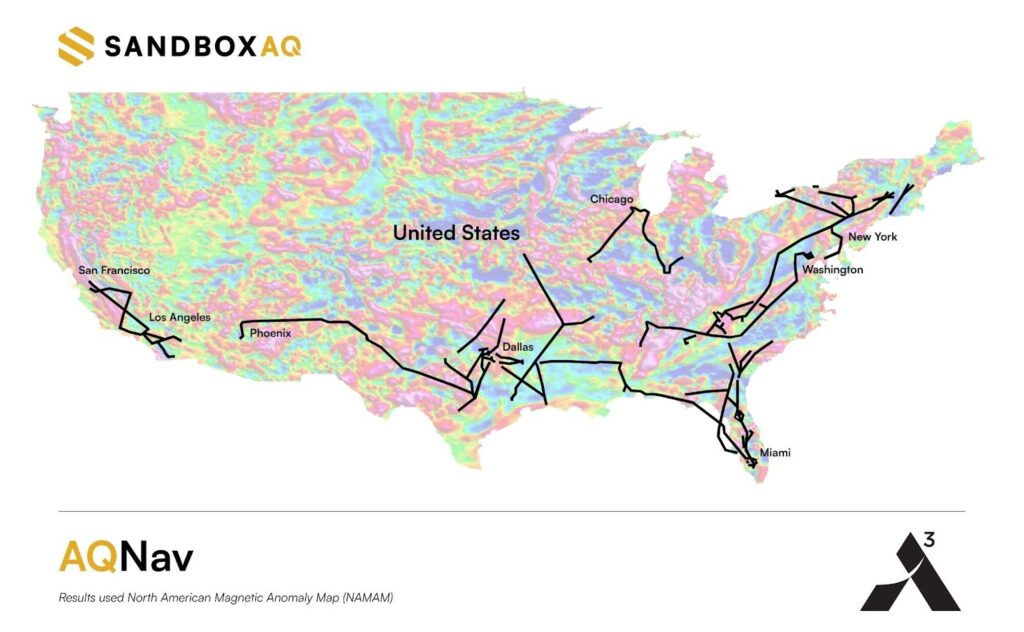
      • Unfiltered flight paths: Flight operations spanned diverse, operationally relevant routes between 200 airports across the entire continental U.S. (Fig. 1), without filtering based on magnetic anomaly strength, magnetic map quality, or favorable geomagnetic gradients. More than 150 hours of flight data was collected.
      • Diverse geophysical environments: Data was collected over a full range of conditions, from magnetically-rich mountains to sparsely featured plains, reflecting real-world geographies where aircraft might operate without GNSS. 
      • True operational noise: Onboard, AQNav successfully filtered out the real-world interference generated by the aircraft, including electromagnetic, vibrational and other airframe-induced noise. 
      Fig. 1: Acubed Flights with AQNav (Credit: AQNav
      Fig. 1: Acubed Flights with AQNav (Credit: AQNav

      Elijha Williams, AQNav’s technical engagement manager, said: “Our campaign was not about demonstrating proof of concept performance under ideal conditions, it was about proving AQNav’s viability under the noisy, messy, and unpredictable environments real pilots face every day.” 

      During test flights exceeding two hours, AQNav outperformed the Inertial Navigation System (INS) without GNSS 100% of the time. During a one-hour flight over the challenging mountainous and forested terrain of California, AQNav achieved its best-observed accuracy of less than 74 meters, or roughly two-thirds the length of an American football field. 

      Precision, Scale and Autonomy for the Future 

      This campaign marks a significant step toward widespread adoption of AQNav in aviation. By consistently maintaining accuracy in an uncontrolled, national testbed, SandboxAQ demonstrated AQNav’s operational robustness under real-world conditions.

      Andrew Sosa Sosanya, a quantum navigation machine learning engineer at SandboxAQ, highlighted the impact of the data collected: “Thanks to Acubed, the U.S. Air Force, and other partners, we’ve accumulated a highly relevant MagNav dataset. This creates a flywheel effect—the more data we gather, the faster we can improve model accuracy across diverse mission profiles.”

      AQNav is also undergoing testing with Boeing, a U.S.-allied air force, and as part of NATO’s 2025 DIANA cohort.