Tag: autonomous vehicles

  • Drone payloads to become vital in supplying medicines, test results in COVID-19 pandemic

    Drone payloads to become vital in supplying medicines, test results in COVID-19 pandemic

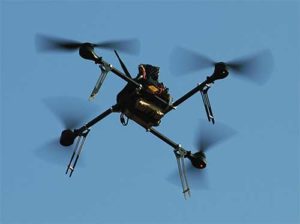
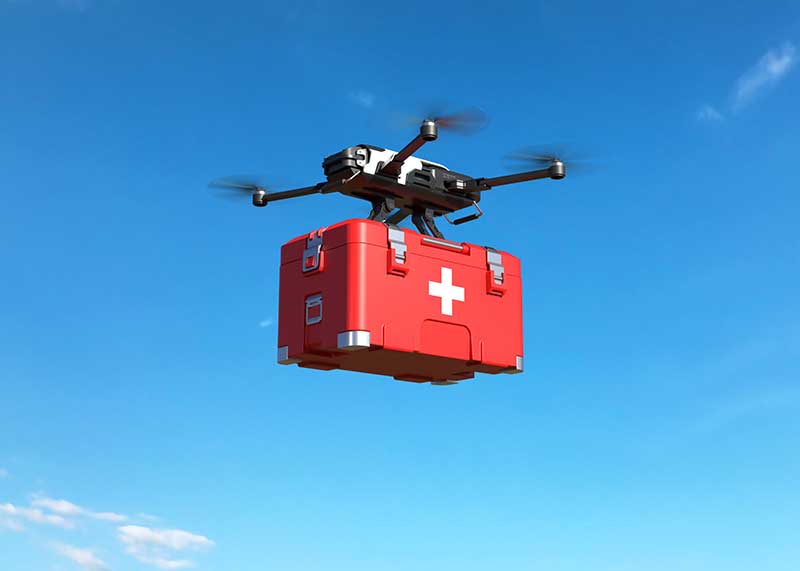
    As the world goes in quarantine and social-distancing has become a necessity with COVID-19 pandemic, various measures have been taken to fulfill basic needs of humans. The medical sector is facing a lot of troubles as the number of cases has been increasing day by day and keeping up with the enough supply of necessary equipment and medicines is becoming difficult. Among various measures taken by hospitals and government, utilizing drone payloads for supplying medicines, transferring tests and specimens, and spreading disinfectants has become a new way to facilitate operations. From India to Canada and the U.S., the governments and tech firms have been developing drones that can carry loads and travel up to certain distance to speed up medical and healthcare processes. The market for drone payload is gaining momentum. According to the report published by Allied Market Research, the global drone payload market is expected to generate $7.01 billion by 2022. Following are some of the activities taking place across the world.

    On the verge of COVID-19 outbreak, various measures have been taken by governments to control the spread and eliminate completely. Among the measures taken by various governments is disinfecting the cities. Bengaluru, a city from Karnataka, India has been disinfected with the help of drones. Six hexacopter drones have been deployed. They are equipped with 15 liters of disinfectants for various localities of the city. These drones have been developed by startups Alpha drones and Multiplex. It has five kilometer range and has ability to fly for 25–30 minutes based on the payload. The pre-set speed of drones is at 6 meters per second. Nearly 10–15 meters of area is covered based on the altitude. The cetrifuger automiser pump technology is utilized for spreading the disinfectant in air and on lands. Highly crowded areas such as markets, bus stops, railway stations, and others will be covered and drones will be operated for 6–7 hours each day.

    Along with spreading disinfectants, there have been another medical uses. Urban drone stations have been utilized for logistic medical payload exchange in hospitals. The Matternet Station at Mountain View, California, is a structure that can be mounted on ground or rooftops. It is three meters in height and offers personal safety. Hospitals can utilize the stations for transferring pathology specimens, blood diagnostics, and medicines to other facilities and suppliers. It also offers fast, secure, and predictable aerial delivery.

    Each Station is equipped with its own automated aerial deconfliction system for management of drone traffic at the Station. The Station enables Matternet M2 drones to carry out a precision landing. Then the drone is locked in the particular place and executes swapping of payload and battery. There is a Matternet Cloud that directs flight directors an ability to control and track operations. Moreover, an integrated authentication system enables only authorized personnel to insert or take out payload through scanning of hospital identification badge. Then there is a tracking of payload at each touch point for maintenance of strong custody. Ideally, it can hold four boxes of payloads that are held at the controlled temperature for maintaining integrity of specimen. Andreas Raptopoulos, CEO of Matternet, outlined that the technology platform will be utilized for rapid, point-to-point, and urban medical deliveries. This way, hospital systems are able to reduce patient waiting times and carry out savings of millions of dollars each year.

    Another company has taken measures to contribute to countering the outbreak of COVID-19. Drone Delivery Canada (DDC) would bring its own drone delivery system by the mid April for delivery of blood test, blood samples, and medicines. Michael Zahra, president and CEO of DDC, outlined that it is a necessity to bring an automated and unmanned delivery system of drones to supply medical necessities to the right people at rapid pace. The company possesses the drone that can take off from the starting point, reach destination, drop the cargo and return.

    Zahra have been encouraging hospitals, communities, pharmacies, healthcare centers, and others to build a case for the support from government. He added that logistics differ in each scenario, however, the basic setup can be achieved. There is a minimum required infrastructure available at the starting point. On the other hand, there is no infrastructure at the destination point.

    Its Sparrow drone can carry nearly 10 pounds of payload in a single trip and can travel up to 30 kilometers. The company has a portfolio of two drones. First is Robin, which carries the payload of 25 pounds with a travelling distance capability of 35 kilometers. Another is Condor, which have capability to carry 400 pounds and go up to 200 kilometers. With the Special Flight Operations Certificate, the company’s drones can navigate throughout Canada without the need to outline flight plans regarding routes prior to trips. Once it obtains the permission and support from government to implement drones for medical purposes, it would implement its model and accelerate the supply in this grave situation the world has been facing.


    Get detailed COVID-19 impact analysis on the drone payload industry here.


    Pratik Kirve holds a bachelor’s degree in Electronics and Telecommunication Engineering. He is currently a senior specialist — content writer at Allied Analytics LLP. He has avid interest in writing news articles across different verticals.


    Feature photo: sarawuth702/iStock / Getty Images Plus/Getty Images
  • Benefits of commercial drones and upcoming major trends

    Benefits of commercial drones and upcoming major trends

    In many ways, 2020 would be another big year for commercial drones. The market has witnessed slow and steady growth over the years, and according to Allied Market Research, the global commercial drone market is expected to reach $10.73 million by 2022, growing at a CAGR of 26.2% from 2016 to 2022. This exponential growth is due to the high demand for cost-effective, energy-saving and eco-friendly OLED lighting coupled with growth in display and large screen backlit market. On the other hand, the outbreak of COVID-19 has reshaped every other industry and business function in the world and the commercial drone industry is no exception.

    Use of commercial drones during COVID-19 pandemic

    Even though complete ramifications of COVID-19 are not clear, some impacts of the standstill of the global economy beginning to be felt. Needless to say, the drastic changes in the drone industry are imminent and the market players would feel them over the coming years.

    Search & rescue mission

    Initially, several countries used commercial drones for search and rescue missions. Moreover, some countries used them spanning deserts and high population areas. As drones have the potential to visualize and communicate with complicated areas, the demand for them increased to supervise the dense and urban areas during the initial stages of the COVID-19 outbreak when panic was taking its root. Thanks to drone technology, officers could easily scan an area and broadcast necessary instruction if the area is infected while maintaining the safety of the officials.

    Delivery of essentials

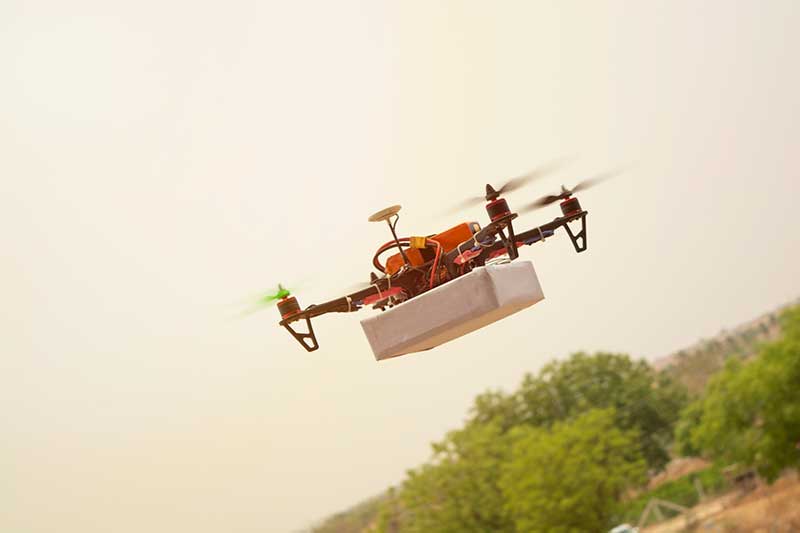
    Since the declaration of a pandemic, the local governments have asked citizens to maintain a safe distance and limit the exposure to the virus. This greatly affected the food and package delivery systems, as it may be a potential factor of contamination. Although drone package deliveries are not used across the globe, few tests in the U.S. and the Dominican Republic have proven to effective. The use of commercial drones is encouraging as most of the commercial drones can be modified with payload drop mechanism and used for package deliveries without risking both parties. The package delivery system by drones is particularly important in areas where the presence of the virus is imminent such as hospitals that actively treat the virus.

    Disinfection of public areas

    The use of commercial drones is effective in disinfecting area. Even though more information about the virus is being discovered, the officials have declared that it can survive on hard surfaces such as chairs and buses. Thus, public places pose a huge risk of infection. To prevent further spread and disinfect public areas, some countries have deployed agriculture spraying drones filled with disinfectant instead of pesticides.

    Apart from this, the entire country of China has implemented commercial drones to perform simple temperature check processes before admitting visitors into the building. As the major symptom of the virus is fever, the use of commercial drones to spot potential patients without compromising the safety of anyone.

    Major trends in the commercial drone industry

    The increase in counter-drone solutions has almost doubled in the past year and its market is expected to grow rapidly in 2020. Urban air mobility has been a buzzword since the rise of the commercial drone market. In addition, drone deliveries have already started in the U.S., Ghana and Australia. Developing countries such as China and India have actively used drones for drugs and food delivery. In the future, the development of passenger drones will demand more funding to get certified, boosting the passenger drone market.

    The increased popularity of drones would press the government to review regulations regarding unmanned vehicles. In the next five years, commercial drones would enter in unmanned traffic management and remote identification.

    In the coming years, the adoption of aerial drones and commercial drones are likely to enter various market apart from healthcare, agriculture, and entertainment. Instead, it will grow in industries such as insurance, public safety and first responders, and mining.

    Apart from this, the advancements in imaging sensors and aerial imaging software are expected to improve artificial capabilities. Currently, the majority of the technologies applied in commercial drones include cloud-based machine learning and AI-based drones are still in the development stage. The increased adoption of drones and advancements in sensor technology and automation will open new opportunities in the coming years.

    Thanks to the early hype about commercial drones and how they hold the potential to transform industries, there will be a huge investment in the market to make such forecasts in reality. Due to the COVID-19 pandemic, the adoption of commercial drones has increased. Over the last few years, there was public distrust in the technology. However, the benefits of use of drones during pandemic have reduced some concerns about commercial drones. In addition, new governmental regulations regarding the use of unmanned vehicles clear the misunderstandings and concerns about drones with safety and privacy. However, one thing is sure, despite the tragic start of the new decade, the COVID-19 pandemic has been favorable for the commercial drone market and is expected to bring opportunities in the future.

    Get detailed COVID-19 impact analysis on the commercial drone market here.


    Swamini Kulkarni holds a medical bachelor’s degree from Pune University, and works as a content writer exploring the impact of technology on human life.


    Feature image: lakshmiprasad S/iStock / Getty Images Plus/Getty Images

  • AUVSI Xponential 2020 goes virtual

    AUVSI Xponential 2020 goes virtual

    AUVSI Xponential 2020 logo

    The Association for Unmanned Vehicle Systems International (AUVSI) has decided to convert AUVSI Xponential 2020 to a virtual event. It will still take place Oct. 5-8.

    “For decades, the unmanned systems industry has reshaped critical missions and business operations by meeting challenges head-on with innovation and resolve,” said Brian Wynne, president and CEO of AUVSI. “Our commitment to supporting the unmanned systems community remains unwavering, so amidst the current global health crisis we, too, must adapt to fulfill that mission.”

    Xponential 2020 was originally scheduled to take place May 4-7 at the Boston Convention and Exhibition Center. It was then rescheduled to take place Oct. 5-8 at the Kay Bailey Hutchison Convention Center in Dallas.

    “While we are disappointed to not be convening in person this year, the health and safety of Xponential exhibitors and attendees is our utmost priority,” Wynne said. “It may not look like the Xponential we are used to, but we look forward to offering attendees the opportunity to virtually network, learn from and collaborate with one another just as they have in years past.”

    According to AUVSI, those who have already registered for Xponential will receive an email in the coming weeks to confirm options for participation in the virtual event.


    Check out other trade shows that have been canceled, gone virtual or have been rescheduled because of COVID-19.

  • MyGalileoDrone competition seeks UAV innovations

    MyGalileoDrone competition seeks UAV innovations

    The European GNSS Agency (GSA) has launched the MyGalileoDrone competition.

    The contest targets the design and development of drone-based applications or services, using a Galileo-enabled receiver, to address the European Union’s (EU’s) key priorities such as the Green Deal, and support the EU Recovery Plan for Europe.

    Initial ideas should be submitted by Aug. 31. Wide participation from all EU Member States is expected.

    According to ESA, the MyGalileoDrone competition seeks to tap into the EU’s innovative spirit to deliver applications and services to boost Europe’s competitiveness, resilience and sustainability. Applications should leverage and demonstrate Galileo’s added value, such as increased accuracy, availability and robustness of position, as well as integrity for a solution based on drone operations.

    Drones applications

    Photo: © GSA
    Photo: ©GSA

    The market related to drone applications and services is growing rapidly, and European drone service revenues are expected to reach EUR 250 million by 2025. The European demand is estimated to reach EUR 10 billion annually, in nominal terms, to 2035 and over EUR 15 billion annually to 2050, creating more than 100,000 jobs.

    With GNSS receivers implemented on almost all new commercial drones, Galileo’s and EGNOS’ added value is pivotal for the development and growth of drone services and applications.
    In addition to designing and developing the application, contestants should prepare their drone- based application or service for commercial launch.

    The solution should leverage Galileo to provide a position fix. The use of EGNSS is understood in the broad sense, and Galileo can be integrated in the flying platform, the ground control station, or in other devices supporting the operation, such as a smartphone or even in the frame of U-Space services.

    “GNSS is a key enabling technology in this segment, ensuring robust navigation and reliability for a wide range of applications. The MyGalileoDrone competition aims to bring oxygen to European SMEs and entrepreneurs driving innovation. It will create jobs and growth in this promising market,” said Pascal Claudel, acting executive director at the GSA.

    Focus on EU priorities

    In times of post-COVID recovery focus, submissions should target applications and services that support key EU priorities, but the sky’s the limit. The GSA is looking for trailblazing ideas in applications such as smart mobility, sustainable agriculture or environmental protection, or solutions that exploit synergies between 5G and space data, or support the internet of things, or whatever might be the next big thing.

    Deadlines and Prizes

    The first prize in the MyGalileoDrone competition amounts to EUR 100,000, with EUR 60,000 for second, EUR 40,000 for third, and a fourth prize of EUR 30,000.

    After Aug. 31, projects selected to advance to the development phase of the contest will be announced on Sept. 15. Participants will  have until Nov. 30 to develop a demo version of their proposed application or service.

    In the finals, the selected teams will perform a live demonstration and pitch their ideas to investors. During the development process, the applicants will receive mentoring and coaching from recognized experts in the drone market. These experts will accompany them as they build their application, develop tests and get ready from the business perspective to attract investors and move to market.

    To register or for more information, visit the competition page on the GSA website.

  • Hitec Commercial Solutions expands with aerial services

    Hitec Commercial Solutions expands with aerial services

    Hitec-drone-services logoHitec Commercial Solutions has opened an aerial service division, named Hitec Commercial Drone Services.

    Hitec Commercial Drone Services expects to provide training, precision aerial missions and comprehensive data collection to a variety of industries, including
    agriculture, construction, excavation, mining and aggregates, oil and gas, engineering and surveying, public safety and many other vertical sectors. Hitec maintains a fleet of unmanned vehicles. It offers proprietary mission-control software and data and photogrammetry collection techniques with its comprehensive unmanned aviation experience.

    The new division’s field services director is Jim Bonnardel, an innovative entrepreneur with a history steeped in unmanned flight. Bonnardel established his own successful business in 1982, providing aerial services to business-to-business entities. His inventive nature and extensive flying prowess led him to become a certified and insured UAS service pilot and instructor.

    Bonnardel has logged more than 1,750 precision mapping missions, inspected 2,000 utility structures, and flown more than 2,500 commercial and residential property shoots, as well as dozens of missions for creative projects involving both television and music videos.

    He is also an instructor at Grossmont College in El Cajon, California. He has provided 850 hours of commercial instruction, as well as 550 hours of instructional field training and vetting for utility inspection crews. As a result of his training experience, Jim has issued 150 sUAS Utility Training Certificates.

  • UAV Navigation launches compact autopilot VECTOR-400

    UAV Navigation launches compact autopilot VECTOR-400

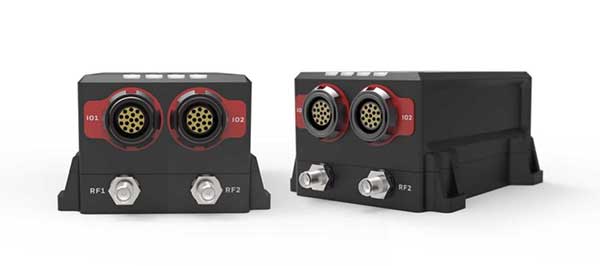
    Photo: UAV Navigation
    Photo: UAV Navigation

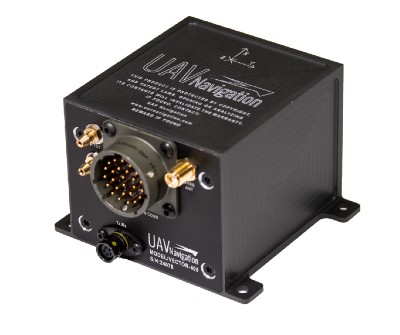
    UAV Navigation has launched the VECTOR-400, a compact autopilot designed specifically for unmanned aerial targets (UAT). It features a robust enclosure and a military-grade connector designed to withstand the harshest environments, in accordance with MIL-STD 810 and MIL-STD 461.

    “We wanted to develop a solution specifically for manufacturers of aerial targets,” said Tobias Webster, managing director of UAV Navigation. “That is why it was important for the autopilot to have the features required by this kind of UAV, such as sea-skimming (extremely low-level flight) or the capability to navigate without a GNSS signal.”

    Thanks to its physical and logical redundancy, the VECTOR-400 is able to continue a mission in case of individual sensor failure and even when subject to jamming, maintaining accurate estimations of attitude and position. It features advanced algorithms for stall prevention and the ability to carry out an efficient gliding maneuver in case of engine failure.

    The VECTOR-400 uses an air data attitude and heading reference system (ADAHRS) and inertial navigation system (INS) developed by UAV Navigation, which provides high precision attitude information and which allows reliable navigation even under the most demanding circumstances.

    The ADAHRS gives the VECTOR-400 the capability to operate in GNSS-denied environments (less than 30 m/min drift) and also to execute highly dynamic maneuvers.

    “The VECTOR-400 is not a product in isolation, rather it forms part of our global strategy. Some of its main features, such as the execution of completely automatic functions or its compact and easy to integrate software, which also allow it to be operated in case of data-link failure, are already used in other products in our autopilot family, such as the VECTOR-600” explained Webster.

    In addition to its advanced technology, the VECTOR-400 benefits from the same stringent quality standards that UAV Navigation insists upon for all of its products. The company carries out rigorous calibration processes and acceptance testing on every single unit before it ships, together with its individual certificate of conformity.

    UAV Navigation has designed the VECTOR-400 to meet MIL-STD 810 and MIL-STD 461 standards. The design and development of its software and hardware has been carried out in accordance with DO-178C, DO-254 and also ASTM F3201-16 — a certification available for unmanned aerial systems.

    “Not all autopilots are able to control highly dynamic platforms; even fewer are able to carry out advanced, high-speed maneuvers and low-level flight such as sea-skimming,” Webster said. “That is why we are extremely pleased with this new product, which we believe meets a requirement in the market that had yet to be covered.”

  • GE’s AiRXOS launches UAS for energy industry

    GE’s AiRXOS launches UAS for energy industry

    GE Aviation’s all-in-one solution enables comprehensive operational oversight for safe, scalable, repeatable commercial UAS operations.

    Photo:Photo: aerogondo/iStock/Getty Images Plus.Getty Images
    Photo: aerogondo/iStock/Getty Images Plus/Getty Images

    AiRXOS, a provider of unmanned traffic management (UTM) solutions, is providing a comprehensive unmanned aircraft systems (UAS) solution for energy organizations to plan, schedule, operate and monitor all facets of their UAS operations from a single platform.

    AiRXOS’ new Enterprise Energy Solution provides digital compliance, full Situational Awareness of airspace and assets, inspection, emergency response/disaster recovery capabilities, analytics, and asset performance tools all in one, connected platform. The Enterprise Energy Solution runs on AiRXOS’ Air Mobility Platform – a secure, cloud-based, extensible platform that enables easy integration of an energy organization’s current applications and other UAS Service Suppliers (USS), as well as supports the full lifecycle of UAS Energy operations.

    “Infrastructure inspections with traditional manned aircraft are dangerous, inefficient, and expensive,“ said Mark Lanphear, AiRXOS’ Senior Vice President of Global Sales and Business Development. “Now more than ever energy organizations are looking for solutions to help them deliver safe, scalable, and repeatable operations for greater economic viability. To achieve scale, they need a centralized and standardized view of all operations, manned and unmanned.  It’s why we developed the Enterprise Energy Solution – to deliver energy organizations a truly comprehensive platform that brings all UAS lifecycle operations into one view — from enterprise wide infrastructure inspection and surveillance, to asset and crew management, Situational Awareness and emergency operations after a natural disaster — all on one platform.”

    AiRXOS’ Enterprise Solution allows energy organizations to combine and integrate all critical inspection needs in one connected ecosystem with automated and feature-rich technology with capabilities including: Automated Waiver, Exemption and Certificate of Authorization (COAs) for safer, faster flying, partner-enabled mission-ready kits with sensors, drones, and pilots as a service, emergency response and disaster recovery application with mass alerts, digital SGI and complete situational awareness, compliance and crew management for reliability and transparency, asset management and security to optimize assets, analytics and insights for near real time actionable intelligence, and program design services to help energy companies launch and grow programs.

  • UAVOS joins HAPS for high-altitude unmanned platforms

    UAVOS joins HAPS for high-altitude unmanned platforms

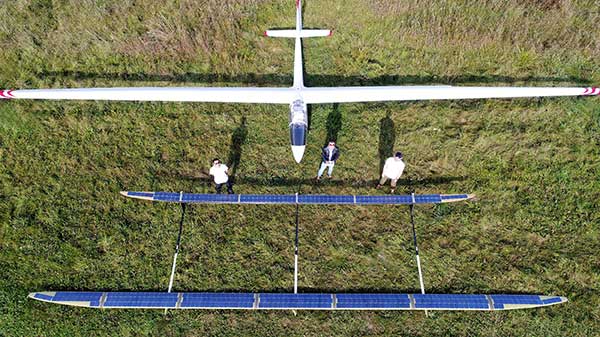
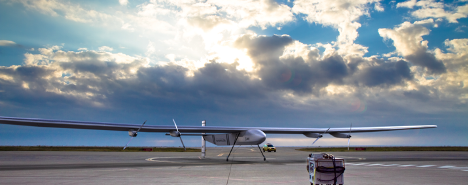
    The ApusDuo project is the second generation of UAVOS' HAPS solar airplane. (Photo: UAVOS)
    The ApusDuo project is the second generation of UAVOS’ HAPS solar airplane. (Photo: UAVOS)

    UAVOS has joined the High Altitude Platform Station (HAPS) Alliance to promote the use of high-altitude solar-powered autonomous aircraft for facilitating global research missions, communication, connectivity, intelligence, surveillance and reconnaissance from the stratosphere.

    UAVOS joined HAPS to collaborate with member companies towards accelerating the development and adoption of HAPS technology into the evolution of the high-altitude unmanned platforms market.

    UAVOS’s HAPS knowledge is based on test flights for more than 1,000 hours of flight tests at altitudes of up to 66,000 feet (20,000 meters). The ApusDuo project is the second generation of UAVOS’ HAPS solar airplane.

    HAPS platforms are autonomous, high-altitude, ultra-long endurance aircraft powered by solar energy. They are designed to boost internet connectivity worldwide, provide a long continuous monitoring of the Earth’s surface, create a network of autonomous repeaters and high-speed data signals. High-altitude unmanned platforms operate in the stratosphere, above ground infrastructure but below satellites, allowing for near ubiquitous coverage, which avoids ground clutter and significant latency issues.

    The HAPS Alliance, originally an initiative from HAPSMobile and Loon, has members from the companies across the aerospace, technology and telecom industries.

  • Substitute satellites, a better Reaper and drone deliveries top UAV news

    Substitute satellites, a better Reaper and drone deliveries top UAV news

    UAV developments are taking flight across the globe.

    In one development, older technology might enable new capabilities for a pseudo-satellite UAV. Meanwhile, new technology adds significant landing capability to an Air Force drone. Finally, further trials are expected to help develop drone operational procedures and regulations in India.

    Spain’s Skydweller moves to Oklahoma

    An unmanned aircraft builder from Spain — Skydweller — is setting up operations in Oklahoma. This latest outfit to relocate is establishing its headquarters in Oklahoma City to develop a pseudo-satellite vehicle with a large payload capability.

    For anyone who has kept tabs on the Airbus Zephyr, the UAVOS ApusDuo, The Aurora/Boeing Odysseus, or the Softbank/AeroVironment Hawk30 high-flying drone programs, you might have noticed that the stratospheric pseudo-satellite business is not easy. None have yet made it to true operational status — loitering for months at +60,000 feet and living off only sunlight, while carrying significant payloads to provide communications services. That said, some trials to date have apparently been quite successful.

    All those existing UAVs are huge, flimsy, flex-wing aircraft that take an inordinate amount of care to handle in the difficult phases of take-off and landing. Airbus’ second prototype crashed in Australia in October 2019, and several other companies’ earlier prototypes have crumpled somewhat when they inadvertently contacted the ground.

    Now enter Skydweller. Skydweller is designed to carry a relatively large payload and fly persistently in the stratosphere.

    Photo: Skydweller
    Skydweller prototype pseudosatellite UAV. (Photo: Skydweller)

    The payload includes one or more communications relays: 4G/5G cellular, day/night full-motion video, satellite communication, and imaging radar. This looks like it could be one capable vehicle. The makers hope to capture business in commercial and government telecommunication, geospatial, meteorological and emergency operations. Skydweller has apparently been around since 2017 and has a lot of capability, so let’s see how they do with their new venture in Oklahoma.

    If you were wondering where this technology came from, it is today’s carry-over of the famous around-the-world flight by the Solar Impulse aircraft from 2016, which circled the globe without fuel, using electrical power generated by solar cells on its wings.

    GA Makes Improvements with Reaper

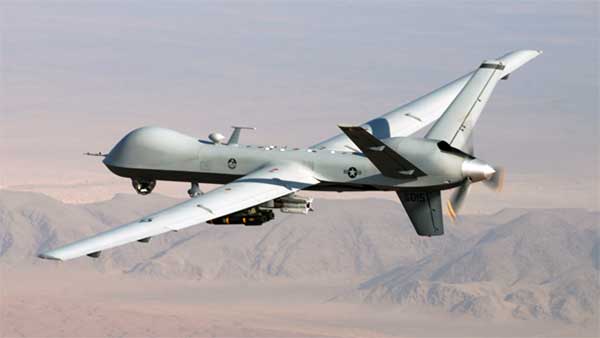
    In another life, I was quite attuned to what it took to “automatically” land a passenger jet, so a recent release from General Atomics (GA) about improving the auto-landing system on Reapers (new-generation Predators) caught my eye. GA has a U.S. Air Force contract to update these unmanned reconnaissance/attack drones with the latest and greatest, so making a working system better is one of those improvements.

    Actually, GA made three changes. The first enables the drone to divert to an alternate landing zone if the planned landing area is compromised — another word to express the possibility that hostile action or weather forced home base to send the vehicle elsewhere. Quite clever, in that the alternate site might not have a ground control station, along with someone who can fly the aircraft.

    MQ-9A Reaper drone, (Photo: USAF)
    MQ-9A Reaper drone, (Photo: USAF)

    The ground pilot at home base has to either enter coordinates for the new alternate landing zone and the aircraft flies there and lands itself, or he needs to overfly the landing zone so that the Reaper can collect its own waypoint with which it can automatically align and land.

    The second improvement has increased the speed limit of the cross wind in which the drone can land

    The third enhancement allows the drone to land heavier than previously — both essential elements of being able to divert in an emergency, when weather may be poor and the aircraft could be carrying unused ordnance and fuel.

    All this is a far cry from landing civilian air transports with GPS-based guidance, which is much more restrictive and with a whole mess of mathematical probabilities of the unlikeliness/likeliness of failure. Not so much for a Reaper drone on a mission during a “time of unrest.”

    Home Deliveries in India

    For those of you eagerly waiting for Amazon to start speedy deliveries of your online orders by drone, or Grubhub to drop in with an order of curry in a package dangling from a friendly unmanned air vehicle in your yard, there may be hope… especially if you live in India.

    Following our earlier report of anticipated food deliveries by drone in India, more trials are leading to regulations and control systems. Altitude Angel from the United Kingdom has teamed with Indian Sagar Defence Engineering for a series of beyond-visual-line-of-sight (BVLOS) drone trials.

    Altitude Angel’s GuardianUTM platform will be used to monitor and control these flights through real-life scenarios. Scenarios include medical and cargo transport, surveillance operations, survey and mapping, and search-and-rescue operations. Sagar will operate the cargo carrying drones; feedback from the GuardianUTM system will enable the BVLOS flights.

    While the Indian government has begun to grant permission for some commercial UAV undertakings, the intent is apparently to use the output from the Sagar/Altitude Angel BVLOS trials, taking place August through October, to help develop regulations for safe operation of drones over increasingly longer distances in Indian airspace.

    To sum up, intellectual property from an around-the-world photo-voltaic airplane may become a substitute for low-cost satellite TV and Wi-Fi, while auto-land is old hat for a Predator cousin and the Air Force has gained even greater landing flexibility for a principle recon/attack drone.

    Finally, we can expect at least one continent to get to regulations that allow drone deliveries to become a reality at last. As usual, there is a lot cooking in drone-land….

  • Connected car design must prioritize security

    Connected car design must prioritize security

    By Alexander Meisel, automotive cybersecurity engineer at intive

    Alexander Meisel
    Alexander Meisel

    When it comes to connected cars, automakers are innovating fast. Consumers are experiencing increasing amounts of futuristic features, be they passenger connectivity, automated speed regulation, or autonomous driving capabilities.

    However, these innovations and their integration with cloud connectivity come with a heightened risk for cyber attacks. A recent study conducted by U.K. self-driving hub organization, Zenzic, found that becoming cyber-resilient will be the biggest technical obstacle to successfully deploy self-driving cars on roads by 2030. This mountain will be a big one to surmount, and it’s only growing in size: The auto industry has seen a 94% year-over-year increase in hacks since 2016.

    So, how can automakers prioritize security while keeping up with the demand for innovation in today’s connected cars?

    Carmakers must consider security from day one

    To make sure that security is built into the very foundations of a car, automakers must make it a priority from the first day of design. This focus is lacking amongst carmakers at the moment. In fact, 19% respondents to one survey said they don’t do enough security testing in the design phase, and only 28% said that they do a lot of the testing during the design stage.

    Automakers can use design principles to build in security from the outset. For example, the principle of complete mediation allows for enhanced security as it ensures that a software stem “requires access checks to an object each time a subject requests access.” This means that attackers are only invited to exploit a system on one single occasion due to checks on subjects’ permissions.

    Carmakers can also ensure that they are not sacrificing security by considering its importance when purchasing components from separate suppliers. These components must be specific enough to enable security in the system, but generic enough to allow for innovation.

    Here, companies can leverage the software engineering principle of interface segregation. This means that a shrunken, clear interface should be supplied by the vendor, so that the customer only uses the methods that are of interest to them. In turn, this allows systems to remain decoupled and thus easier to then build a rich interface on top of. However, carmakers will have to stay on top of the security of the part in the development phase, and ensure that dormant functions are not abused by at least logging their execution once somebody tries to call them out of context.

    Developers and cybersecurity experts must become a core part of the team

    Software development is relatively new territory for carmakers. Now, cybersecurity is a key component of building connected cars, and automakers need to embrace developers that have expertise in this area and make them part of the core team.

    This cultural change must be championed by the business leaders to allow car security to advance alongside the innovative features that the industry is building. This can be done by implementing DevSecOps ideology into the team, in order to “build the mindset that everyone is responsible for security.”

    Car development teams will likely need a group of cybersecurity experts who can educate the rest of the developers and are willing to participate in the development process in order to check and implement safe and secure functions. If a company doesn’t have this kind of expertise in-house, they can partner with an expert third-party to help them along this journey.

    Innovation and security can complement each other

    Cybersecurity doesn’t mean sacrificing feature innovation: developments are being made in the field of security too, such as biometric technologies that can be integrated into car design.

    For example, Blackberry’s QNX technology “has built in concepts for hardware and software trust validation, hypervisor to maintain a separation between the safety critical and infotainment systems, and a core operating system which passes all the functional safety standards,” according to the company’s senior VP SVP, head of QNX, John Wall. Innovation need not suffer at the hands of security, and vice-versa.

    In addition, the world’s leading electric vehicle provider, Tesla, ensures security in its cutting-edge, connected cars by sending security updates to cars’ operating systems overnight, and even providing awards for hackers that manage to hack its cars.

    Looking ahead to the possibilities of autonomous vehicles (AV) that can drive passengers without needing to have their owner inside, innovation in GPS will be necessary to ensure security and accountability of the car. Potential AV thieves would first look to use GPS data to disable or falsify a car’s GPS system, making it untraceable.

    However, carmakers can make this impossible for hackers by not just logging the data in its raw form, but also combining it with other car data using cryptographic algorithms. This ensures that the GPS data remains traceable even after the hardware has been taken apart and sold on the auto-parts black market. In this way, the signature of the original data combined with the GPS position adds an additional layer of security.

    Integrating security into connected car design is no simple feat, but it’s a necessary one for carmakers that want to ensure the safety of their passengers while on the roads. By using design principles, diversifying expertise within development teams, and understanding that security and innovation need not be a trade-off, they can do just that.


    Alexander Meisel is an automotive cybersecurity engineer at intive. Alexander has a Computer Networking diploma from Hochschule Furtwangen University, and he has developed as a CTO and Development Team Director in previous companies. He has experience with venture capital, successful M&As, product and technical marketing strategies. Meisel is also a public speaker at technical conferences and trade shows.

  • Honeywell introduces small, light GNSS/INS HGuide n380

    Honeywell introduces small, light GNSS/INS HGuide n380

    Latest inertial navigation system serves new customer requirements in autonomous vehicles, mobile mapping, surveying and more

    Photo: Honeywell
    Photo: Honeywell

    Honeywell is introducing the HGuide n380, an inertial navigation system (INS) that communicates position, orientation and velocity of an object — such as an autonomous vehicle or unmanned aerial vehicle (UAV) — even when global navigation satellite signals are unavailable.

    Smaller, lighter and lower priced than previous Honeywell inertial navigation systems, the HGuide n380 is built using Honeywell’s rigorous design standards to withstand harsh environments in the air, on land or at sea.

    “We recognized a need for a small, high-performance inertial navigation system in areas like 3D mapping, surveying and other applications where space is at a premium and performance cannot be compromised,” said Chris Lund, offering management senior director, Navigation and Sensors, Honeywell Aerospace. “We responded by developing the HGuide n380 inertial navigation system, which provides our customers with proven, cost effective inertial sensor technology, created for aerospace applications, but that can be integrated into almost any architecture.”

    The new inertial navigation system is composed of Honeywell’s HGuide i300 inertial measurement unit (IMU), a GNSS receiver and Honeywell’s proprietary sensor-fusion software, which is based on the algorithms used for navigation on millions of aircraft every day.

    Inputs from these components are fused together to determine position, orientation and velocity to deliver critical navigation information even in areas where a satellite signal is degraded or altogether unavailable, such as canyons, bridges, tunnels, mountains, parking garages or dense forests.

    “As the industry evolves, Honeywell’s HGuide suite of IMUs and navigators will be a key enabler of emerging segments like autonomous vehicles, mobile mapping, precision agriculture, robotics and surveying,” Lund said.

    During its development, the new product was placed in extreme environments to test ruggedness and was exposed to extensive factory calibration and compensation procedures that help ensure measurement accuracy and performance.

    Honeywell has extensive experience in designing and building high-end inertial sensor and navigation systems and has used that expertise to develop a lower-cost portfolio of HGuide offerings to serve new markets and customer requirements.

    To date, Honeywell has delivered more than half a million high-performance inertial sensors to serve as navigation aids on an extensive list of manned and unmanned vehicles, which include many air and spacecraft in use today.

  • Altitude Angel powers BVLOS flights in India with Sagar Defence

    Altitude Angel powers BVLOS flights in India with Sagar Defence

    The Sagar Defence Spectre UAV. (Photo: Sagar Defence Engineering)
    The Sagar Defence Spectre UAV. (Photo: Sagar Defence Engineering)

    Altitude Angel, an unmanned traffic management (UTM) technology provider, is partnering with Mumbai-based Sagar Defence Engineering Ltd. in BVLOS trials supported by India’s Directorate General of Civil Aviation (DGCA).

    Together, Altitude Angel and Sagar Defence have been selected by India’s DGCA to carry out beyond-visual-line-of-sight (BVLOS) drone operations. The results of the trials will help define India’s regulatory framework for unmanned aerial vehicles (UAVs) in routine UAV deployment.

    Altitude Angel’s GuardianUTM platform will enable BVLOS drone flights around a multitude of real-life scenarios including medical and cargo delivery, surveillance operations, survey & mapping, and search & rescue operations.

    The Union Government has recently begun the process of granting regulatory permissions to the operation of drones for commercial purposes.

    On participating in the BVLOS trials Richard Ellis, Altitude Angel’s chief business officer, said, “The potential for UAV use in India is immense so we’re excited to be partnering with Sagar Defence on these BVLOS trials. The ability to fly safely and securely BVLOS will unlock the potential of drones not just in India, but across the world. With Sagar, we’re very much looking forward to showcasing our proven technology to demonstrate the amazing use-cases of drones.”

    Mridul Babbar, Sagar Defence’s  business development head added, “Sagar Defence Engineering and Altitude Angel, two highly skilled teams, coming together for the BVLOS trials is a very strong partnership and one we’re thrilled to be part of. The combination of our UAVs and Altitude Angel’s world leading UTM platform will undoubtedly help advance the prospects of BVLOS flight across India and beyond.”

    The BVLOS trials are scheduled to take place from August through to October 2020.

    The trials will further build on trials Altitude Angel has been involved in this year. The company served as the lead and umbrella UTM for the Lake Kivu Challenge, part of the African Drone Forum, which took place on the shores of Lake Kivu, Rwanda, in January.