Tag: Ukraine

  • When GNSS does not work

    When GNSS does not work

    Image: Just_Super/iStock/Getty Images Plus/Getty Images
    Image: Just_Super/iStock/Getty Images Plus/Getty Images

    GNSS is like opium. Highly addictive, pleasing to the user, but laced with peril when you’re hooked. GPS World readers are well aware of the vulnerabilities, and probably aware of the serious concerns governmental bodies have about our reliance upon it. Here, we consider not so much how it can fail as what the impact of failure is on society, and what mitigations exist to minimize those impacts.

    Impact on society
    The most commonly cited causes of GNSS failure are jamming (unintentional and intentional) and spoofing. Less well appreciated are solar weather, satellite system errors, receiver system errors and, most importantly, cybersecurity-related errors. Any of these can cause a significant disruption to how society functions today.

    The U.S. Department of Homeland Security identified that 15 out of the 18 Critical National Infrastructure sectors were vulnerable to GNSS failure: communications, emergency services, information technology, banking and finance, healthcare and public health, energy (electric, oil and gas), nuclear, dams, chemical, critical manufacturing, defense industrial base, postal and shipping, transportation, government facilities, and commercial facilities.
    The threat is real and present. Conflicted areas are routinely jammed and spoofed. Even in peace, GNSS is fragile. In the past year, GNSS interference led to a runway at DFW airport being closed, a 33-hour GNSS outage in the Denver metro area, and even a recent Melbourne Formula One race had to be stopped for 40 minutes due to GNSS data problems.

    Mitigations
    In most cases, no alternate references are in place, and without them, it is difficult to know that the GNSS data being received is wrong. The ship Stena Impero, for example, was seized by Iran for being in its territorial waters. It is thought to have been victim to spoofing that led it there, but proving it is difficult.
    Alternate references exist at low cost, but they generally divide “PNT” into “PN” and “T”, and whether on land, at sea or in the air. On land, most requirements are related to “T” because most applications, such as broadcast facilities and data centers, don’t move, and even when they do, there are enough landmarks available to at least make a sanity check. At sea and in the air, by contrast, motion is the reason we are there, there are few landmarks to confirm location, hence “PN” dominates.

    For “T”, armageddon clocks can provide holdover for brief interruptions. However, they must be sufficiently tested to ensure that they succeed. In the Denver incident, radio systems had rubidium clocks for backup, but they drifted too far during the outage to be useable, whereas cellular networks, with alternate terrestrial timing sources, continued to work. Terrestrial time distribution systems over existing IP infrastructure, which Hoptroff supplies, work well globally, but are restricted to land-based time synchronization applications.

    For “PN” and “T”, in air, sea and land, low-Earth orbit satellite services such as Satelles, Starlink and OneWeb provide global solutions. Their signals are much stronger than GNSS and therefore are much harder to jam or spoof, but they remain susceptible to interferences such as space weather, which destroyed 40 Starlink satellites on launch last year. However, as the Denver incident shows, until you test the solution, you never really know what might go wrong. eLoran terrestrial wireless solutions are very effective but limited in reach to within a few thousand miles of terrestrial transmitters. Such systems are being installed in South Korea and Saudi Arabia due to their proximity to hostile neighbors. They are likely to be installed in North America and Europe within the next decade.

    What all these solutions have in common is that, while they are not expensive, they are not free, and are only available under license. Sovereign GNSS providers have, to date, provided PNT signals at no cost to the consumer. It must be accepted in the new landscape, not just that PNT is no longer free, but also that the supplier can choose its customers. Sovereign GNSS access could be restricted at the whim of a president. Private services are already selective — Starlink chose to provide the Ukraine with service during the current conflict, but it has no obligation to continue to do so.

    Get on with the risk register
    One of the biggest problems with preparing alternatives to GNSS is that the risk is ignored until it has started to have an impact on business and society. This can be addressed by ensuring that resilient PNT is on corporate and institutional risk registers. It is starting to happen now that governments have started to raise concerns. However, we have a way to go before inclusion on risk registers is a foregone conclusion.

  • First fix: Overlapping technologies

    First fix: Overlapping technologies

    Photo: lakshmiprasad S/iStock / Getty Images Plus/Getty Images
    Image: lakshmiprasad S/iStock / Getty Images Plus/Getty Images

    The natural sciences overlap — hence such fields as geophysics, astrobiology and biochemistry. So do the social sciences and humanities — hence such fields as political economy, political philosophy and social economics. Our very individual identities consist of multiple, intersecting factors — including gender, race, ethnicity, class, and sexuality.

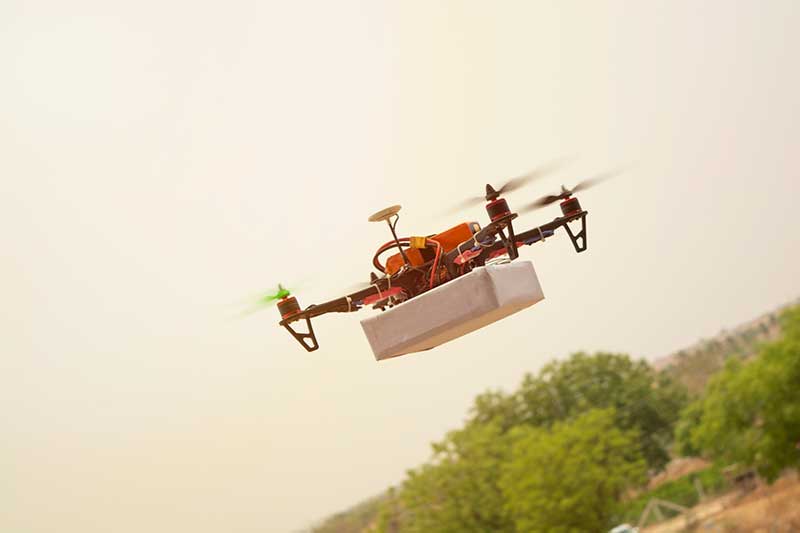
    Analogously, this magazine covers overlapping technologies. While we focus on global navigation satellite systems (GNSS) and other positioning, navigation and timing (PNT) technologies such as inertial systems, these technologies are often embedded in larger systems that also include sensors (such as lidar, radar and cameras) and, increasingly, artificial intelligence (AI).

    That is why we so often cover unmanned aerial vehicles (UAV) — which use GNSS for positioning navigation, geofencing and stabilization; use sensors to collect data; and will soon use AI for mission planning and execution — and autonomous vehicles — which use GNSS and sensors for positioning and navigation and already use AI to make driving decisions in complex environments.

    Of course, UAVs are also much in the news these days:

    • Since the start of the Russian invasion of Ukraine, both sides have been using several hundred UAVs every day. According to the Royal United Services Institute, a British think tank, the Ukrainians are losing some 10,000 UAVs a month on the battlefield. (By way of comparison, the French army currently has a little more than 3,000 UAVs in its arsenal.)
    • In the United States, the number of companies granted waivers by the Federal Aviation Administration to conduct beyond visual line of sight (BVLOS) operations keeps growing, enabling them to conduct much more efficient monitoring, inspections and mapping of infrastructure.
    • Following a recent increase in encounters between swimmers and sharks along beaches on Long Island, New York, in July UAVs began sweeping the ocean three times a day to detect danger. On July 14, the state’s governor, Kathy Hochul, announced the allocation of $1 million to purchase 60 new shark-monitoring UAVs.
    • Also in July, 350 UAVs were lost during a practice light display show in Melbourne, Australia, ahead of a scheduled performance for the opening of the women’s World Cup. The UAVs appeared to stop mid-show and plummet into the Yarra River, most likely due to interference with GPS signals.
    • On August 30, researchers in Switzerland unveiled a small AI-powered quadcopter UAV that can outfly some of the best human competitors in the world. It whipped its way around an indoor racecourse in a matter of seconds and was able to beat its human rival in 15 out of 25 races, according to the journal Nature.

    From mapping coastal areas with airborne lidar bathymetry to delivering medicines, from locating lost hikers to mapping fires, from enhancing the situational awareness of first responders to monitoring invasive plant species, UAVs are quickly becoming ubiquitous and essential.

    Meanwhile, in San Francisco, where autonomous vehicles are already ubiquitous, but not everyone considers them essential, an anonymous group of protesters is surreptitiously placing orange traffic cones on some of them, confusing their sensors and rendering them inoperable.

    Matteo Luccio | Editor-in-Chief
    [email protected]

  • Trimble, Kyivstar partner to provide GNSS correction services in Ukraine

    Trimble, Kyivstar partner to provide GNSS correction services in Ukraine

    Image: Kyivstar/Trimble
    Image: Kyivstar/Trimble

    Trimble and Kyivstar, Ukraine’s largest telecommunications company, have partnered to install a new Continuously Operating Reference Station (CORS) network to provide GNSS correction services across the country.

    Available to users as an annual subscription service, the new network will be built using Trimble’s hardware and software positioning technology. This technology provides users with reliable high-accuracy real time or post-processed GNSS corrections data for agriculture, construction, geospatial, Internet of Things (IoT) and other commercial operations.

    The network will be installed on Kyivstar’s communication towers and will use Trimble Alloy reference receivers and Trimble Zephyr model 3 antennas.

    Trimble Alloy offers current and near-future constellation GNSS tracking and absolute positioning capabilities. The Zephyr 3 antenna’s capabilities provide optimal functionality in permanent installations. The network will also leverage the Trimble Pivot Platform software, a solution that manages CORS stations and generates accurate GNSS corrections to provide the network operator and end users with a reliable, seamless and efficient workflow.

    The first phase of the installation will include 41 communication towers and is expected to be completed by the end of 2023. The second phase will consist of 150 additional towers and is expected to be completed in 2024. Subscriptions to the service will be available through Kyivstar.

  • Allies send new UAVs to Ukraine

    Allies send new UAVs to Ukraine

    Image: sandsun/iStock / Getty Images Plus/Getty Images
    Image: sandsun/iStock / Getty Images Plus/Getty Images

    Ukraine’s allies in Europe are sending the country new UAVs and counter-UAV equipment, reported The Defense Post.

    German weapons provider Rheinmetall is preparing to send its LUNA NG (next generation) unmanned reconnaissance UAV to Kyiv, the company announced August 14. The system should be delivered by the end of the year, according to Rheinmetall.

    The LUNA NG is part of a sizable military aid package for Ukraine initiated by the German government in July. Per Rheinmetall, the package includes a ground control station and several UAVs, as well as a launch catapult, an optional net equipment for catching landing UAVs and equipment for rapid repair. The system is mounted on a Rheinmetall HX truck with a swap body system.

    The UAV is designed for a range of mission-specific payloads — including LTE network and electronic warfare support measures such as detection, classification and analysis of electromagnetic radiation for threat detection.

    UAV can remain aloft for more than 12 hours and maintain a datalink range of up to 100 kilometers normally, and up to 300 kilometers when fitted with optional satellite communication equipment, according to Rheinmetall.

    The Bundeswehr (the German military) has operated LUNA UAV systems since the early 2000s. Those were originally developed by German manufacturer EMT Penzberg, which was acquired by Rheinmetall in 2021.

    Berlin has already delivered several reconnaissance UAVs to Ukraine, including 88 Vector UAVs from Quantum Systems, 20 RQ-35 Heidrun systems Sky-Watch, and 32 unspecified reconnaissance UAVs, as of August 9.

    Ukraine will also soon receive a series of Cortex Typhon counter-UAV systems made by Norway’s Kongsberg, after the company signed an agreement via the International Fund for Ukraine.

    The delivery consists of several Cortex Typhon systems — developed to counter a wide spectrum of UAVs with solutions to either physically harm or disable an aerial threat, Kongsberg said.


  • More Ukraine/Russia war UAV attacks

    More Ukraine/Russia war UAV attacks

    Image: JARAMA/iStock/Getty Images Plus/Getty Images
    Image: JARAMA/iStock/Getty Images Plus/Getty Images

    Russia released a large number of attack UAVs targeting Kyiv, Ukraine, in the early morning of June 20, reported the New York Times. The UAV attack on Kyiv was the first in several weeks after Russian forces repeatedly targeted the city throughout May.

    The air-raid alert started in Kyiv around 3 a.m. local time and lasted for more than three hours, as UAVs came in waves from all directions. According to the New York Times, Ukraine’s Air Force said Russian forces had launched 35 Iranian-made UAVs around Kyiv.

    Ukraine air defenses shot down 32 of the UAVs, which included more than a dozen near the capital.

    On June 21, Reuters reported that Russian air defense had downed three UAVs in the Moscow region in what they believe to have been a Ukrainian attack. The Defence Ministry stated that Russian forces had used electronic jamming, which caused the UAVs to lose control and crash.

    Reuters could not independently verify details of this incident or who had launched the UAV attack.

  • Paris Air Show and kamikaze UAVs

    Paris Air Show and kamikaze UAVs

    Air Mobility Event Illustration. (Image: Paris Air Show)
    Air Mobility Event Illustration. (Image: Paris Air Show)

    The Paris Air Show

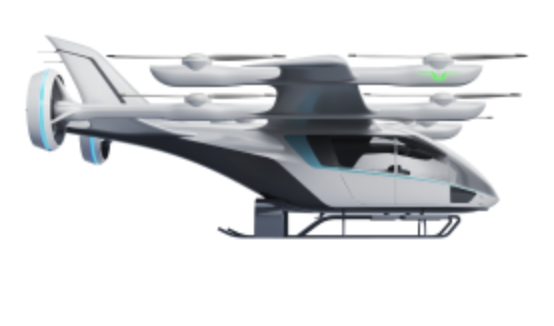
    The Paris Air Show rolls out this week, accompanied this year by several urban air mobility (UAM) companies, including Eve Air Mobility with a cabin mock-up of its eVTOL, and demonstrations of its UAM software.

    Eve also announced ahead of the show that United Airlines, its major partner, is moving forward with route and infrastructure planning in San Francisco — where such factors as the size of the city and high traffic volume cry out for mobility alternatives.

    Eve UAM. (Image: Eve press release)
    Eve UAM. (Image: Eve press release)

    Emerging as a start-up from within the Brazilian aircraft company Embraer, Eve was eventually floated in 2022 through an initial public offering on the New York Stock Exchange. Given the relationship with Embraer, Eve (in particular, United and other Eve customers) stand to gain access to the worldwide maintenance, support, parts and repair organization that Embraer has developed to support its own passenger fleet of thousands of aircraft. An enviable solution for any current or future purchaser of Eve vehicles — this probably has something to do with their huge order backlog for 2,770 vehicles. All that is required now is the full-scale assembly, ground and flight test, verification and certification of the Eve air mobility aircraft — currently forecast to enable a 2026 entry into service.

    Additionally, other UAM companies will be present in a special show exhibit, the “Air Mobility Event,” in Hall 5 in Paris.

    Is Ukraine winning the UAV war with Russia?

    This is not at all clear, as both sides throw at each other many different UAVs in various configurations with different missions. We tend to only see the Ukraine side of the picture, given that Russia does not generally document its successes in the media.

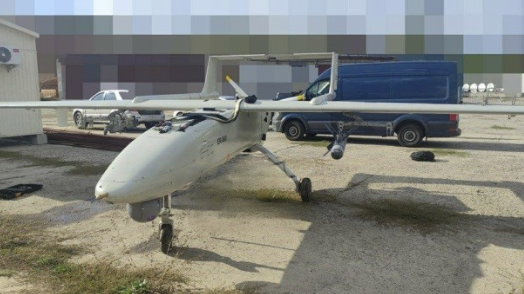
    However, recent news indicates that Moscow is importing Iranian UAV technology to bare in its war with Ukraine. It seems that Iran has been supplying complete kamikaze attack UAVs and may also be assisting with materials to set up an assembly plant near Moscow. Potential one-way attack UAVs include the HESA Shahed 136/Geran-2, the new MERAJ-523 which can carry a 50 kg warhead, and the Mohajer-6 reconnaissance/attack drone.

    Last week, Russia unleashed a volley of about 44 UAVs on the capital Kyiv, thought to be Shahed 136 kamikaze UAVs. Ukrainian defenses brought down the majority, but there were still a number of casualties. These attacks on the center of Kyiv are said to have intensified during the last two months — the UAVs are cheap, long range, and carry significant ordinance.

    Mohajer-6. (Image: courtesy of the Ministry of Defense of Ukraine)
    Mohajer-6. (Image: courtesy of the Ministry of Defense of Ukraine)

    The UK is reported to have called Iran’s actions in support of Russia contrary to the nuclear agreements reached between Iran and the European Union in October 2022, which prohibit the supply of any military aid to Russia by Iran.

    Not to be left behind, India has brought its own kamikaze UAV online

    The ALS-50 loitering munition, built by the Mumbai Tata group, was recently inducted into the Indian Air Force (IAF) for use against targets on the ground (i.e., missile batteries) and on the sea (i.e., ships).

    With an apparent range of 1,000 km (62 miles) and a payload of 25 kg (55 lb), the Indian-produced UAV will replace more expensive UAVs, which India has imported from Poland and elsewhere.

    With the war in Ukraine on the mind of all countries near the conflict, it is clear that many may take on defense strategies similar to those that have been used by both Russia and Ukraine.

    UAV news summed up

    So, as the International Paris Air Show, previously a major military exhibition and air show, begins to welcome and feature the coming age of UAM, it is good to see that there are several independent programs that plan to show their wares. Air-taxi services are still some way off from being a reality, as there are still heavy, lengthy investments to be made in building and qualifying these unmanned/manned aircraft for passenger use. Hopefully, however, several of the contenders will make it to the finish line and fulfill the promises made for UAM.

    Meanwhile, as the war in Ukraine plods along, taking lives and destroying property, it is good that both sides have decided that UAVs should be the way to proceed. UAVs, after all, are relatively small and the degree of destruction they can cause is limited. Still, this is not very comforting for people on both sides as they run from the sound of two-stroke and four-stroke engines descending from on high, carrying explosive charges that will kill and maim. Additionally, as the West arms Ukraine with defensive materials, it’s not surprising that Russia is seeking weapons from allies, wherever it can find them.

  • Russia blames Ukraine for overnight UAV attack on the Kremlin

    Russia blames Ukraine for overnight UAV attack on the Kremlin

    Image: Screenshot of video posted by Reuters
    Image: Screenshot of video posted by Reuters

    On May 3, Russia claimed Ukraine had launched an overnight UAV attack on the Kremlin in an effort to assassinate President Vladimir Putin, reported multiple news sources including NBC News and Reuters. President Volodymyr Zelenskiy quickly denied any Ukrainian involvement.

    A video taken of the incident posted on social media shows two UAVs aimed at the Kremlin that were promptly shot down.

    A Ukrainian official stated the incident suggested Moscow was preparing a major terrorist provocation, reported Reuters. Putin’s office said Russia reserved the right to retaliate and that it regards the incident as a planned act of terrorism and an attempt on the president’s life.

    A Russian agency also stated Putin was not at the Kremlin at the time of the incident.

  • UAV and AI update

    UAV and AI update

    A couple of stories about unmanned air vehicles in the war in Ukraine and a response to the recent Open Letter by the “Future of Life Institute” with more than 200,000 signatures on advanced AI, which urged a six-month moratorium to allow the development of seemingly much needed AI regulations.


    The war in Ukraine

    It has been reported that Ukrainian forces were operating the commercially available Chinese Mugin 5 UAV, presumably for surveillance of Russian forces inside Russian-occupied territory. The Mugin 5 can be bought commercially for $10-15,000 and is manufactured by Mugin, which is based in the port city of Xiamen, on China’s eastern coast. In a previous statement posted on the company’s website on March 2, Mugin Limited said that it “condemns” the use of its products during warfare and that it ceased selling products to Russia or Ukraine at the start of the war. However, Russian forces claimed in January 2023 that it had actually shot down one of these Chinese-made UAVs being flown by Ukrainian forces over their territory.

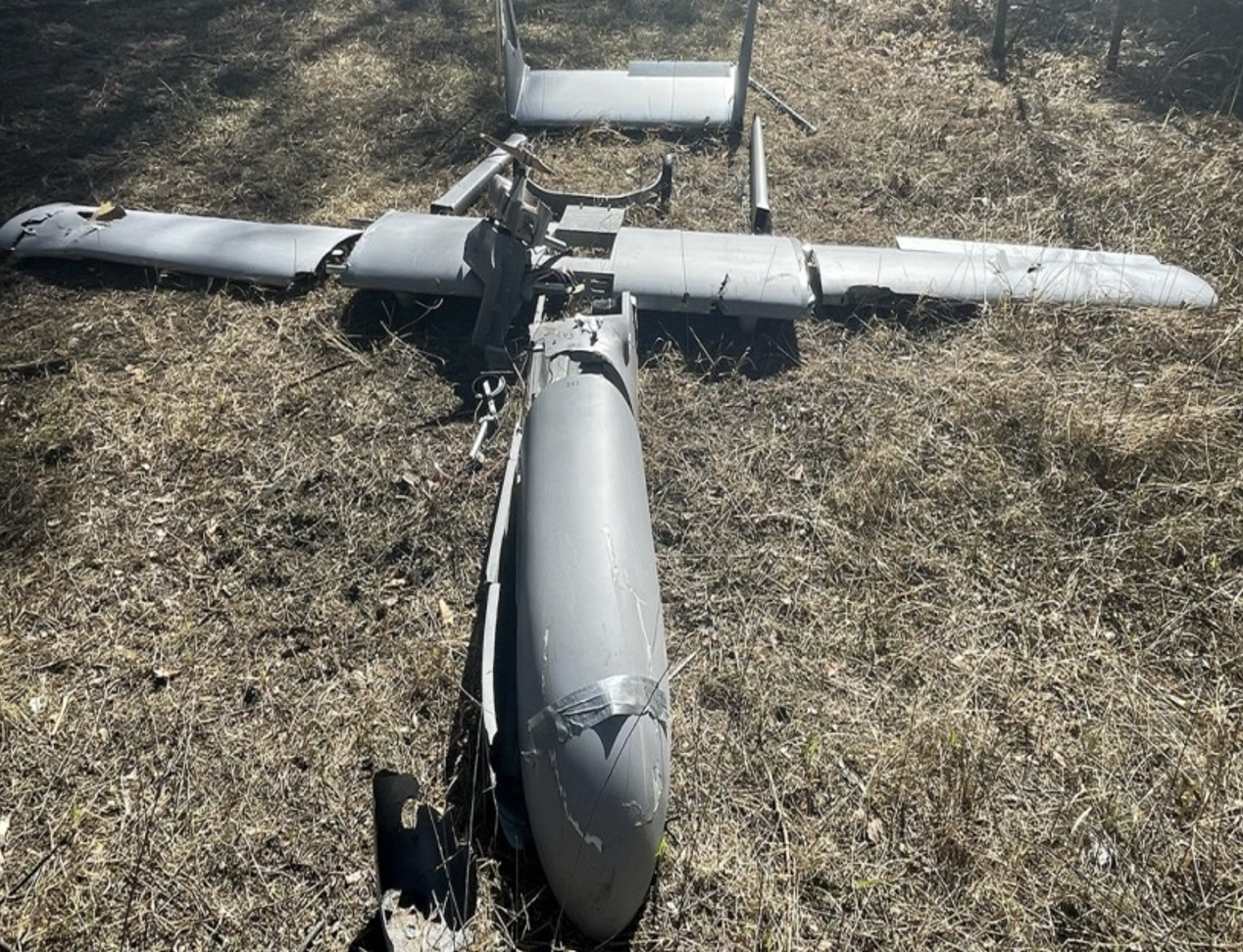
    Then, just this week, Ukrainian forces apparently were able to track a low level, slow-moving air vehicle coming at them from Russian occupied territory. After some time, they were able to intercept the UAV, which carried a flashing navigation light, from the ground, and were able to bring it down using small arms. The remains of the crashed UAV were found in a clearing in the forest; a single 44 lb bomb was removed from the wreckage and safely exploded by the Ukrainian team.

    Weaponized Mugin 5 following crash in Ukraine forest. (Image: Screenshot from video from Kanal13 Youtube)
    Weaponized Mugin 5 following crash in Ukraine forest. (Image: Screenshot from video from Kanal13 Youtube)

    Somewhat worse for wear, the Mugin 5 UAV appears to have been held together in places by duct tape and other patches. Is it possible that having shot down a Ukrainian surveillance UAV the Russians recovered these remains and crudely restored the unit to flying and navigating capability, then sent it back to Ukraine owners carrying a bomb? Anything is possible in this conflict.

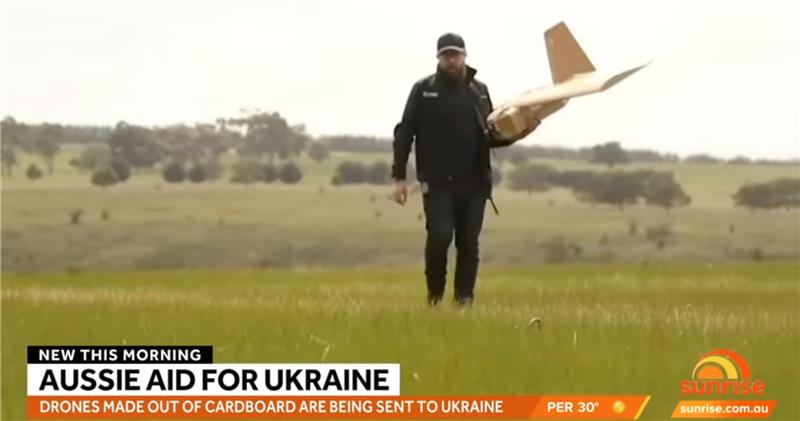
    Staying with this conflict and the use of UAVs by both sides, its seems that Australia has come up with a low-cost surveillance UAV that is virtually undetectable and it’s proving quite popular with the Ukrainians. Most defensive detection involves some form of radar scanning, which relies on radar returns bouncing off a flying target. The Australian company SYPAC in Melbourne has developed the Corvo Precision Payload Delivery System (PPDS). It is a wax-coated cardboard UAV, held together with elastic bands and glue, but carrying sophisticated guidance and control electronics.

    Image: Screenshot of video posted by 7 News Australia 
    (Image: Screenshot of video posted by 7 News Australia)

    SYPAQ has developed the CORVO UAV under an AU $1.1 m government contract with the objective of creating a low-cost, disposable UAV to deliver urgent needs — such as medical supplies or to resupply small arms ammunition to the Australian military. CORVO is autonomous once launched, using GNSS guidance, or dead reckoning if GNSS signal is lost or jammed. Apparently, hundreds of these disposable UAVs have already been shipped to Ukraine.

    While a surveillance role was originally envisaged in Ukraine, it is reported that, “They have been very good at inflicting lots of damage on the enemy,” according to Ukraine’s ambassador to Australia. So, CORVO UAVs may well have already been weaponized.

    Open Letter on AI development

    Following a recent open letter supported by Elon Musk and Steve Wozniak that proposes a six-month halt on advanced AI development, I was recently approached on behalf of Professor Ioannis Pitas, director of the Artificial Intelligence and Information Analysis (AIIA) lab at the Aristotle University of Thessaloniki (AUTH) and management board chair of the AI Doctoral Academy (AIDA) with somewhat different views.

    In order to further the on-going discussion, I thought it would be appropriate to give some space to an alternate view on AI development. So here are some paraphrased comments approved by Pitas:

    Could AI research be stopped even for a short time? It is doubtful. Further AI progress is necessary for us to transition from an information society to a knowledge society.

    Maybe we have reached the limits of AI research carried out primarily by Big Tech, which appears to treat powerful AI systems as black boxes whose functionality may be poorly understood.

    It seems that the open letter reflects welcome and genuine concerns on social and financial risk management. Are expensive lawsuits in an unregulated and unlegislated environment inevitable as a consequence of ill-advised AI pronouncements?

    However, it is doubtful whether the proposal for a six-month ban on large-scale experiments is the solution. It’s impractical for competitive commercial and geopolitical reasons, with very few benefits.

    Of course, AI research can and should become more open, democratic and scientific.

    Here are a number of suggested options:

    • Should elected parliaments and governments make the important decisions on AI rather than corporations or individual scientists?
    • Every effort should be made to facilitate the positive aspects of AI social and financial progress and to minimize any negative aspects.
    • The positive impact of AI systems can greatly outweigh their negative aspects if proper regulatory measures are taken.
    • It is possible that the biggest threat is that AI systems could deceive too many people who have little related knowledge. This can be extremely dangerous.
    • We should counter the big threat coming from the use of AI in illegal activities — cheating on university exams is a rather benign use — while the possibility of criminal exploitation may be very much worse.
    • The impact of AI on labor and markets will be very positive in the medium to long term.
    • AI systems should be required by international law to be a) registered in an ‘AI global register’, and b) users should be notified when they converse with or use the results of an AI system.
    • As AI systems have a huge impact on society, and in order to maximize their benefit and socio-economic progress, it is recommended that:
      o advanced key AI system technologies should become mostly open
      o AI-related data should be at least partially open.
    • However, strong financial compensation schemes should be established now for AI technology developers to compensate them for any component that becomes open source.

    Well, this is a bit of a departure from our nominal UAV/AI report, but there does seem to be a growing number of voices calling for some form of AI regulation and more extensive discussion might well help this movement come to a conclusion. And it would seem that the U.S. administration is listening, as the U.S. Commerce Department has announced that it is seeking inputs from interested parties for methods to test the safety of AI systems — to ensure that they are “legal, effective, ethical, safe and otherwise trustworthy.” In order to enforce these standards, the department is investigating whether audits and inspections to certify AI systems should be required before their release on the unsuspecting public.

    The U.S. Commerce Department is apparently not alone in these concerns, as China is also looking to ensure that systems such as Alibaba Cloud’s Tongyi Qianwen, a competitor to OpenAI’s ChatGPT, are socially beneficial. Meanwhile, following the release of ChatGPT and similar products from Microsoft and Google, awareness has grown of the capabilities of the latest AI tools that generate human-like text passages, and even new images and video. The UK Department for Science, Innovation and Technology and the Office for Artificial Intelligence on the other hand, seem to be looking for an approach to regulation that will not restrict AI innovation.

  • GPS technology helps communities across the globe

    GPS technology helps communities across the globe

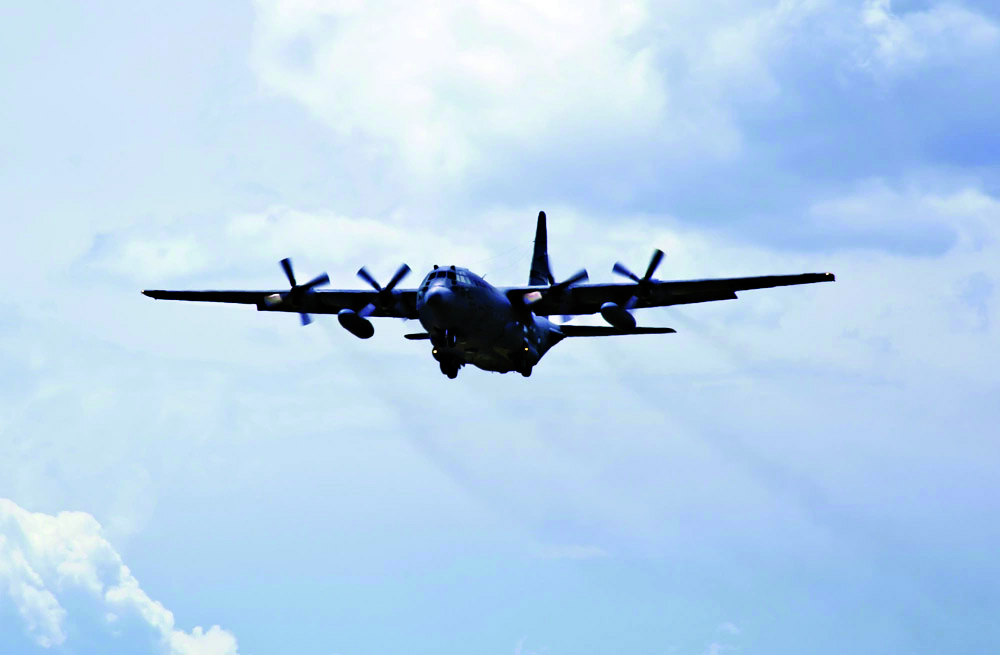
    The C-130 Hercules aircraft is used to rapidly drop cargo to provide relief after disasters or troops into battle zones. (Image: USAF Devin Doskey- 341st Missile Wing Public Affairs)
    The C-130 Hercules aircraft is used to rapidly drop cargo to provide relief after disasters or troops into battle zones. (Image: USAF Devin Doskey- 341st Missile Wing Public Affairs)

    GPS Innovation Alliance (GPSIA) member companies are leaders in technology, transforming the digital and physical world around us. With countless essential applications, GPSIA members improve the industries that feed, build, move and connect communities across the globe. In times of need, the GPS industry is proud to rise to the occasion, whether through agriculture technologies, surveying equipment, navigation systems, essential communications tools, or humanitarian relief efforts. Simply put, GPSIA members are continually investing in lifesaving services at home and abroad.

    Take, for example, the urgent need for humanitarian relief created by the ongoing war in Ukraine. Trimble has stood united to support the many affected and displaced Ukrainians; in addition to contributing through the Trimble Foundation to relief efforts in Ukraine and neighboring countries, Trimble also has provided GPS signal corrections to Ukrainian farmers at no cost, supplied 3D scanners for surveying damaged buildings, and worked closely with The HALO Trust to support demining activities in Ukraine by providing funding and commercial surveying systems to assist in precision mapping of landmines and unexploded ordnances.

    Lockheed Martin’s C-130 Hercules aircraft has assisted essential humanitarian relief across the globe. Since its inaugural flight in 1954, this aircraft has enabled aid delivery, natural disaster relief, medevac services, search and rescue and more. Now equipped with GPS technology, the C-130 fleet has provided aid across the globe for decades — with L3Harris’ missionization solutions often at work to maximize the C-130’s utility. Similarly, Collins Aerospace’s state-of-the-art navigational technology has provided essential support to U.S. Coast Guard helicopters, with avionics upgrades that help pilots save time in emergencies and enhance situational awareness.

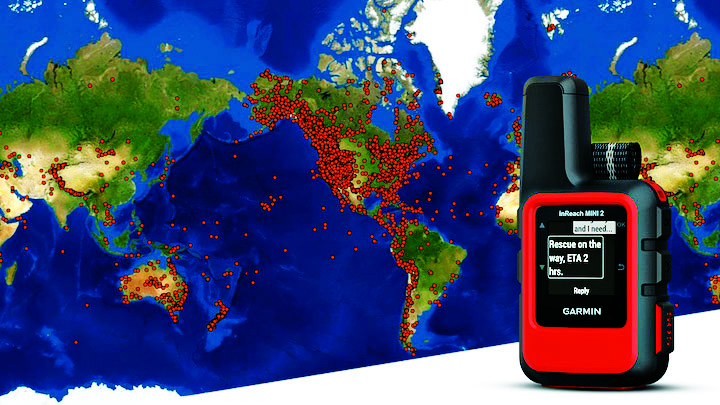
    Garmin inReach devices can send and receive messages, navigate routes, track and share journeys and can trigger an SOS if needed. (Image: Garmin)
    Garmin inReach devices can send and receive
    messages, navigate routes, track and share journeys and can trigger an SOS if needed. (Image: Garmin)

    More broadly, Garmin inReach satellite communication devices have helped more than 10,000 individuals access emergency services, providing critical communications in natural disasters and humanitarian emergencies. In 2022, a powerful underwater volcanic eruption and tsunami devastated the island nation of Tonga, severing traditional communications channels for several weeks. Roy Neyman, a sailor equipped with this Garmin device, set up a communication center at a local restaurant to allow other residents to reach family and friends. Over two weeks, Tonga residents sent about 1,600 messages to loved ones around the world, offering peace of mind in the face of unthinkable destruction. Similarly, Apple recently launched an “Emergency SOS” service, which led to one of the first successful rescue efforts of two people who had driven off a highway in the Angeles National Forest.

    CalAmp’s Fusion routers enable lifesaving emergency services to more than 400,000 residents in Oakland, California. Equipped with GPS, LTE and WiFi technology, these routers help Oakland Fire first responders quickly locate emergencies and access additional resources, such as building layouts or fire records, to provide the best possible emergency response. CalAmp’s technology provides an essential service to residents of Oakland and can be adapted to meet the changing needs of the community.

    As the world of agriculture has come to depend on GPS technology, John Deere’s GPS-based agricultural services have helped farmers become more efficient. In turn, this has allowed farmers to harvest more crops for the masses and meet the ever-growing demand for food. With the annual growth in food demand estimated to be 1.4% over the next decade, John Deere’s critical investment in food banks in Mexico and training for farmers in Africa will help to ensure that all communities are able to access the food they need.

    Across industries and government, GPS technology makes for a safer, more connected world. GPSIA is proud of its members’ dedication to global humanitarian efforts as well as critical services close to home. By constantly innovating, GPSIA member companies are creating technologies that provide critical services for everyday emergencies, natural disasters, and humanitarian crises across the globe.

  • Seen & Heard: Can GPS forecast rain?

    Seen & Heard: Can GPS forecast rain?

    “Seen & Heard” is a monthly feature of GPS World, traveling the world to capture interesting and unusual news stories involving the GNSS/PNT industry.


    Image: Licence plate, Reviver
    Image: Reviver

    Digital license plates gone wrong

    A security research team has gained administrative access to Reviver, the only company in California that sells digital license plates, which has allowed them to track the physical location of all of Reviver’s customers. With this vulnerability, anyone could remotely update, track and delete someone’s Reviver plate. The access also enabled the researchers to change a section of the text at the bottom of the plate, designed for personalized messages, to anything they want, according to Vice.com. California launched the option to buy a digital license plate in October 2022, and Reviver has since addressed the license plates’ security vulnerability.


    AirTag. (Image: David Peperkamp/iStock / Getty Images Plus/ Getty Images)
    Image: David Peperkamp/iStock / Getty Images Plus/ Getty Images)

    Bill makes secret tracking illegal

    Indiana state legislators have filed a bill that would make tracking someone with a GPS-based device without their knowledge a crime, reported WTHR of Indianapolis. The bill is in response to the growing number of criminal cases involving Apple AirTags and other GPS-based tracking devices. Tracking someone secretly is not currently a crime in Indiana; however, laws vary from state to state. Under the proposed bill, the penalty would be increased from a Class C misdemeanor to a Class A misdemeanor if the person tracked is under a protective order. The penalty could be enhanced for someone convicted of using a tracking device when committing a felony. Similar incidents are on the rise around the United States involving the use of AirTags and other tracking devices for criminal purposes.


    Image: big-dan/ iStock / Getty Images Plus/ Getty Images
    Image: big-dan/ iStock / Getty Images Plus/ Getty Images

    Cellphones cause demise

    On New Year’s Day, six rockets were launched from a United States-made Himars rocket system at a vocational college in Ukraine, killing at least 89 Russian soldiers. Russia is blaming this on illegal cellphone usage by Russian soldiers, defying a ban. Ukrainian officials say 400 Russian soldiers were killed and another 300 were wounded, contradicting Russia’s report. However, this is the largest number of deaths Russia has acknowledged during the war. Russia says that the obvious cause of the attack was the use of mobile phones, as the enemy was able to locate and determine the troops’ coordinates for the strike. Two of the rockets were shot down before reaching Makiivka in the occupied Donetsk area of Ukraine. 


    Image: Angelo F-/ iStock / Getty Images Plus/Getty Image
    Image: Angelo F-/ iStock / Getty Images Plus/Getty Image

    Can GPS forecast rain?

    Researchers at the Department of Marine Geology and Geophysics at the Cochin University of Science and Technology in Kochi, India, say that heavy rainfall can be detected more than six hours in advance using GPS signals, reported The Hindu. During rainy seasons, as GPS signals pass through the atmosphere, how much they are delayed depends on the amount of water vapor present. By using continuous GPS signals and rainfall data collected in Thiruvananthapuram, the study showed that any heavy rainfall could be detected using this delay. 

  • UAVs doing the dirty work in war and nuclear inspections

    UAVs doing the dirty work in war and nuclear inspections

    Now that balloon-season appears to be ending, unmanned aerial vehicles (UAV) are seeing more use in the war in Ukraine. With the delivery of an updated fast transport craft to the U.S. Navy, autonomous ship operations are expected to be tested extensively. In addition, use of collision-protected UAV is demonstrating high returns for nuclear facility inspections.

    UAVs used in Russia-Ukraine war

    UAV attacks on Moscow seem to be escalating. A Ukrainian UJ-22 UAV allegedly crashed March 2 near the village of Gubastovo, about 60 miles from Moscow. It’s not clear what the intended target was, or whether the UAV was armed, but an undamaged Gazprom gas plant is close to where the UAV crashed.

    The UJ-22 UAV has a maximum range of about 500 miles. Therefore, to maximize its range, it’s unlikely that a big payload was onboard. It may have been just an attempt to assess how far the UAV could penetrate Russian airspace and which targets are in range from Ukraine’s border.

    In an earlier apparent UAV attack, the Krasnodar oil facility about 500 miles from the Ukraine border was damaged. A group of Belarusian partisans announced that it attacked and damaged a Beriev A-50 Airborne Warning and Control aircraft (called Mainstay by NATO) using UAVs at the Machulishchy airfield near Minsk, escaping back into Belarus without incident.

    The peaceful use of UAVs for the good of humanity seems to be taking a backseat in the escalating Russian-Ukraine conflict, where armed UAVs are enabling previously unheard-of incursions. Russia will likely respond, hopefully limiting action to legitimate military targets as Ukraine has done. However, the existing Russian stock of Iranian-made Shahed 136 “loitering munition” and the Mohajer-6 reconnaissance UAV might be running low. Ukraine has shot down at least 24 Shahed 136 UAVs through January and February and Russia has recently reduced its UAV attacks on Ukraine.

    US Navy relies on autonomous capabilities

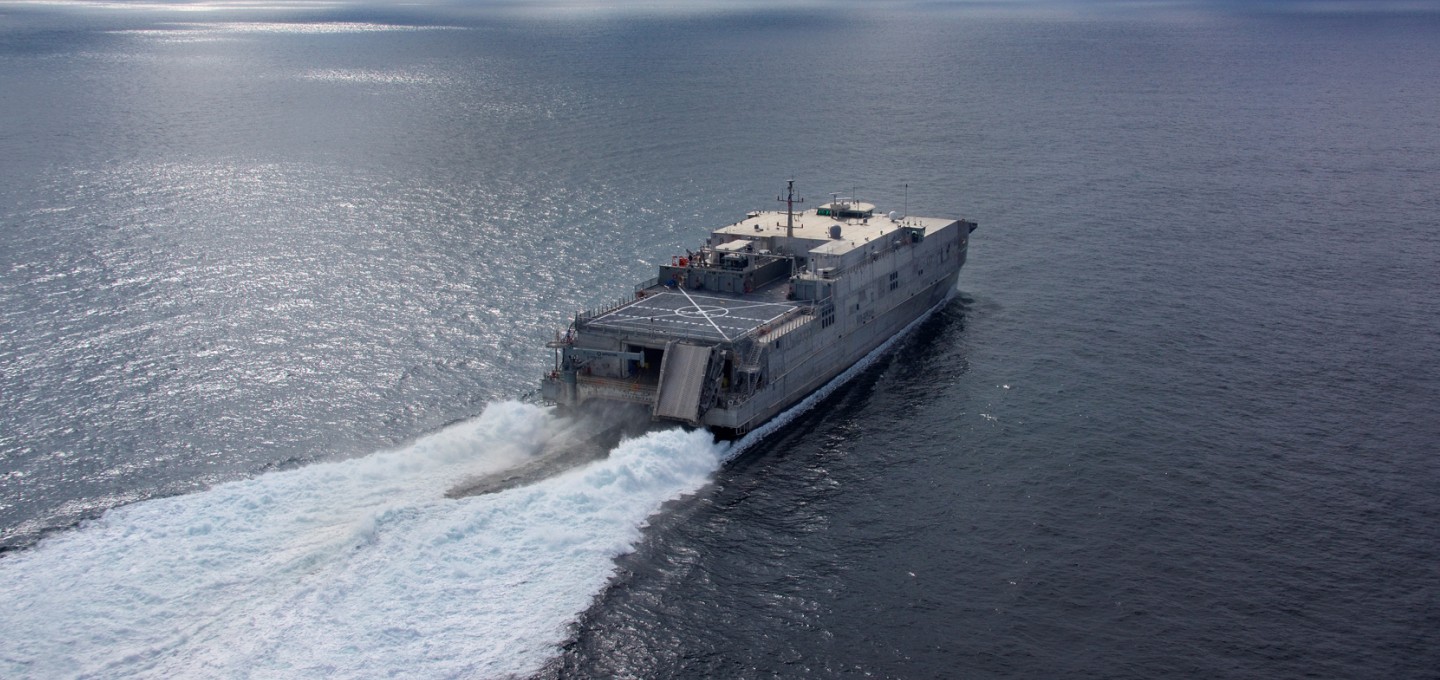
    The U.S. Navy is making great strides in its efforts to incorporate ships with autonomous capability into its fleet. Several developments initiated in 2008 have led to the creation of a fleet of 12 Spearhead EPF Expeditionary Fast Transport ships built by Austal USA. The latest ship, the USNS Apalachicola EPF-13, has been outfitted during build with complete autonomy and has just joined the fleet. The EPF fleet is designed for the rapid deployment of troops, tanks/armaments and heavy equipment. The latest EPF-13 — built by Austal USA, L3Harris and General Dynamics Mission Systems — has a range of 1,200 miles, can accommodate the V-22 Osprey tilt-rotor aircraft, and clocks in at a maximum speed of 40 knots.

    Image: Austal USA
    Image: Austal USA

    The earlier ships incorporated automation of hull, electrical and mechanical/power systems, which are all now accessible on the bridge. The latest EPF-13 has added automated maintenance, health monitoring and mission readiness. The EPF 13 Apalachicola comes with the ability to run independent unmannered operations for up to 30 days. At 337 feet long and displacing 362 tons, the EPF can carry up to 600 tons of weapons and equipment, while running a draft of less than 15 ft. Alternatively, EPFs have sufficient capacity to transport 312 soldiers over short distances, plus a crew of 41 when fully manned.

    Inspecting nuclear facilities with UAVs

    Clean-up operations at nuclear waste facilities are continuing to use UAVs for inspection and assessment of locations that are difficult to access and potentially contaminated. Flyability intends to add a Miron RDS-32 radiation sensor to its Elios-3 UAV family to gather in-situ radiation measurements while inspecting complex confined spaces at nuclear sites.

    In recent activity at a nuclear plant, an annual inspection of three tank rooms and collection of detailed visual video of a suspected leaking valve were readily accomplished in two UAV inspection sessions of a few minutes each.

    The previous manual inspection process required the plant output to be reduced to 20% of normal capacity over a six-hour cooldown. When radiation levels became low enough, two inspectors dressed in protective gear climbed down into the first tank room where radiation levels exposed each person to around 250 millirem (2,500 µSv or about 10% of the allowed annual exposure). They took a few still pictures and measured radiation levels, then exited each hot area before repeating the process for the other two tank rooms. The whole time, the productive output of the plant was significantly reduced. Another six hours was required afterwards to restore the plant back to full output, never mind that personnel were exposed to a bunch of radiation.

    Flyability’s solution is to fly an Elios UAV down into each tank room, take high-resolution video of the entire area in 1-2 minutes and repeat the process for each of the other tank rooms, without reducing plant output power. For detailed inspection of the suspected valve, the UAV was flown deeper into the reaction vessel. Detailed video was collected and the UAV was extracted — all within about 10 minutes.

    The bottom line is that generation of around 4.8 GW of power, worth maybe $456,000, was saved using the Elios UAV inspection approach. No one was exposed to the higher radiation levels inside the facility, and significant time was saved for both the annual and suspected valve inspections. Incidentally, the valve in questions was cleared of any potential leaks.

    Conclusion

    In summary, developments in autonomy include use in the Ukraine-Russian war, more ship automation for the U.S. Navy, and more efficient inspection of nuclear facilities.

  • DOD to provide Ukraine with aerial defense package

    DOD to provide Ukraine with aerial defense package

    Image: U.S. Department of Defense
    Image: U.S. Department of Defense

    The United States Department of Defense (DOD) will provide a new package of security assistance for Ukraine to aid with ongoing Russian aerial attacks. The package includes defense tools such as GPS-guided rockets and counter-UAV equipment.

    The presidential drawdown package includes:

    • additional ammunition for High Mobility Artillery Rocket Systems
    • additional 155 mm artillery rounds
    • additional 120 mm mortar rounds
    • 190 heavy machine guns with thermal imagery sights and associated ammunition to counter unmanned aerial systems
    • 181 Mine Resistant Ambush Protected vehicles
    • 250 Javelin anti-armor systems
    • 2,000 anti-armor rockets
    • Claymore anti-personnel munitions
    • demolitions munitions
    • cold weather gear, helmets and other field equipment.

    Under the Ukraine Security Assistance Initiative (USAI), DOD will provide Ukraine with:

    • two HAWK air defense firing units
    • anti-aircraft guns and ammunition
    • equipment to integrate Western air defense launchers, missiles and radars with Ukraine’s air defense systems
    • equipment to sustain Ukraine’s existing air defense capabilities
    • air defense generators
    • counter-unmanned aerial systems
    • four air surveillance radars
    • 20 counter-mortar radars
    • spare parts for counter-artillery radars
    • Puma unmanned aerial systems
    • precision-guided rockets
    • secure communications equipment
    • medical supplies
    • funding for training, maintenance and sustainment.

    Ukraine has been able to intercept Russian UAVs and missiles; however, having additional air defense will help combat efforts.