Category: Space & Earth

  • Xona satellite begins tests for commercial LEO navigation

    Xona satellite begins tests for commercial LEO navigation

    Xona Space Systems’ Pulsar-0 satellite, the company’s first production-class asset for a commercial navigation constellation, is now operational and undergoing in-orbit testing. Launched in March 2024 on SpaceX’s Transporter-10 mission, Pulsar-0 is designed to assess the performance of Xona’s Pulsar architecture, which aims to provide high-accuracy, resilient positioning, navigation and timing (PNT) services from low-Earth orbit (LEO).

    According to Xona, Pulsar-0 is transmitting LEO-based PNT signals using a payload built to support signal authentication and increased resilience against interference — capabilities that have become more important as concerns about vulnerabilities in traditional GNSS systems grow. The system’s encrypted and authenticated signals are intended to mitigate risks from jamming and spoofing, and deliver stronger, more reliable service in environments where legacy GPS may be degraded.

    Xona’s Pulsar constellation is being developed as a commercial complement to GNSS, offering centimeter-level accuracy and greater resistance to interference through modernized signal design and LEO deployment. The company reports that its initial signal waveforms are already being used by select government and commercial partners for prototyping and validation.

    Pulsar-0’s technical objectives include:

    • High-precision GNSS corrections: Real-time correction data from LEO, targeting position accuracy within 10 cm.
    • Signal authentication: Cryptographically verifiable signals to reduce the risk of spoofing.
    • Jamming resistance: A signal strength up to 100 times greater than GPS, enhancing reliability in contested or congested radio frequency environments.
    • Stronger signals: Stronger signals designed to perform in obstructed locations, such as indoors or in dense urban areas.

    The Pulsar-0 mission is primarily focused on validating Xona’s core technology and enabling live sky testing with early partners, paving the way for future launches and eventual commercial operations. The company aims to launch a constellation of hundreds of satellites to provide persistent, redundant PNT coverage for sectors including defense, logistics, mining and autonomous systems.

    Further details on Pulsar-0’s performance are expected as data collection and testing continue throughout the year.


  • BKZS: Türkiye’s regional GNSS system takes shape

    BKZS: Türkiye’s regional GNSS system takes shape

    Türkiye is laying the groundwork for its own satellite navigation system, the Bölgesel Konumlama ve Zamanlama Sistemi (BKZS), or Regional Positioning and Timing System. As a key pillar of Türkiye’s 2030 Industry and Technology Strategy, BKZS reflects the country’s ambition to gain strategic autonomy in satellite-based positioning, navigation and timing (PNT), moving away from dependence on foreign systems such as GPS.

    Strategic imperatives and security concerns

    BKZS was established as one of the ten flagship goals of Türkiye’s National Space Program, introduced in 2021. It directly addresses growing national security concerns: in times of geopolitical conflict, GNSS signals can be jammed or disabled — leaving nations vulnerable if reliant on foreign services. President Erdoğan’s 2030 roadmap emphasizes preparing for “a new era of challenges,” where technological independence is seen as vital to national sovereignty.

    Building the foundation: Atomic clocks and CubeSats

    At the core of BKZS development is innovative timing technology. The TUBITAK National Metrology Institute has designed Türkiye’s first domestically produced rubidium-based atomic clock for use in positioning satellites. Developed in collaboration with the Turkish Space Agency, the prototype is undergoing qualification testing. Considering that atomic clocks are among the most expensive and sensitive components of a GNSS system, their in-house development not only reduces reliance on foreign suppliers but also delivers significant cost savings and strengthens national expertise. The strategic plan involves an initial technology demonstration phase using a 6U CubeSat, a miniaturized satellite based on the CubeSat standard. This satellite — currently in production — will test the atomic clock in orbit and gather critical performance data, helping to validate system components and gain operational experience ahead of full deployment.

    Regional scope with global ambitions

    BKZS is being designed as a regional system focused on Türkiye and its surrounding geography. Preliminary architecture envisions an eight-satellite constellation with an estimated cost of $2.8 billion. While this figure underscores the program’s scale, it also reflects the strategic priority attached to securing sovereign PNT capabilities. Military users stand to gain the most immediate benefits, with access to secure, independent timing and positioning data. However, the system is also intended for broad civilian use, including smart transportation systems, precision agriculture, emergency response and disaster management.

    Integrated into a broader space strategy

    BKZS is not being developed in isolation. It is part of Türkiye’s wider National Space Program, which includes lunar exploration and autonomous launch capabilities. The Turkish Space Agency oversees coordination, while the Presidency of Defense Industries provides funding and logistical support. This ecosystem approach is designed to foster technological self-reliance across the entire space value chain. Notably, the private sector is also playing a role. Baykar’s space subsidiary, Fergani, is developing a complementary Turkish GNSS constellation with an ambitious plan to launch 100 satellites. Two of these satellites have already been built, with the first scheduled for launch in 2024, demonstrating multiple pathways toward achieving full domestic capability.

    Economic impact and industrial development

    BKZS also supports Türkiye’s economic goals. The 2030 Strategy includes a target to triple high-tech exports to $30 billion. Space technology is expected to contribute significantly to this goal by generating new opportunities for Turkish firms in satellite design, navigation electronics and advanced manufacturing.

    By fostering domestic expertise, BKZS strengthens the foundation for a sustainable, self-sufficient aerospace sector, one capable of supporting both defense and commercial applications.

    Aligning with a global trend

    Türkiye’s efforts echo a growing global trend: building regional or national GNSS systems to reduce reliance on global services. Reflecting this shift, India’s NavIC is a fully operational regional GNSS; Japan’s QZSS, also operational, functions primarily as a GPS augmentation system over the Asia-Pacific; South Korea’s KPS is currently under development to provide independent PNT services across the Korean Peninsula. China’s BeiDou system also began as a regional constellation focused on the Asia-Pacific before expanding to become a global navigation system. Türkiye’s geographic position — at the crossroads of Europe, Asia and the Middle East — positions it uniquely as a potential regional hub for satellite navigation services. While the project is rooted in national objectives, it also opens the door to international cooperation. Italy has emerged as a prospective partner, particularly in advancing space-qualified technologies, offering mutual benefits for both countries.

    Looking ahead

    Beyond 2030, TTürkiye envisions BKZS as a stepping stone toward a broader space infrastructure. This initiative signifies a strategic commitment to establishing a sustained and autonomous presence in space.

    Of course, the success of BKZS will depend on more than ambition. Sustained political commitment, reliable funding, and continued advances in core technologies like atomic clocks and satellite systems will be essential. If these conditions are met, BKZS has the potential not only to enhance Türkiye’s strategic autonomy but also to establish the country as a key contributor to regional — and potentially global — GNSS capability.

  • Rocket Lab to launch ESA’s first LEO-PNT navigation satellites

    Rocket Lab to launch ESA’s first LEO-PNT navigation satellites

    The European Space Agency (ESA) has selected Rocket Lab Corporation to launch a dedicated Electron mission, marking the first time the company will deploy satellites for ESA’s next-generation navigation constellation, low-Earth orbit positioning, navigation and timing (LEO-PNT). Thales Alenia Space and GMV, two European satellite prime contractors, are providing the “Pathfinder A” spacecraft for the mission. Rocket Lab plans to launch the satellites from Launch Complex 1 no earlier than December 2025.

    The mission will place the two satellites in a 510 km LEO to test a new method of delivering location, direction and timing services from satellites in low orbit, known as LEO-PNT. ESA will use this demonstration to evaluate how a low Earth orbit satellite fleet can work with the Galileo and EGNOS constellations, which provide Europe’s global navigation system from higher orbits.

    This contract highlights Rocket Lab’s growing role as a launch provider for European constellation operators and demonstrates the Electron rocket’s strong reputation. Earlier this year, Rocket Lab deployed a full constellation of IoT satellites for French operator Kinéis and launched a global wildfire detection mission for Germany-based OroraTech. Since 2021, Rocket Lab has supported European satellite operators with Electron missions

  • TrustPoint launches third low-Earth orbit satellite

    TrustPoint launches third low-Earth orbit satellite

    TrustPoint, a company specializing in next-generation space-based positioning and navigation solutions, launched and made initial contact with its third free-flying satellite, Time Flies. The satellite was launched June 23 aboard a rideshare mission from Vandenberg Space Force Base. This achievement marks another step forward in TrustPoint’s efforts to provide positioning, navigation and timing (PNT) services from low-Earth orbit (LEO).

    Time Flies is TrustPoint’s third satellite launch in two years and incorporates significant technological improvements, including increased power and autonomy. These advancements enhance the company’s compact C-band payload, which is designed to support demonstrations and further field testing of TrustPoint-enabled receivers. These receivers are currently being developed in collaboration with the company’s expanding group of product partners.

    “With the successful launch and first contact of Time Flies, TrustPoint continues to prove that a commercial GPS alternative from LEO is not only possible, it’s here,” said Patrick Shannon, founder and CEO of TrustPoint. “As global demand for alternative and complementary PNT systems accelerates, TrustPoint is uniquely positioned to unlock significant market potential.”

    The Time Flies mission builds on the company’s previous launches, It’s About Time and Time We’ll Tell, and highlights TrustPoint’s continued focus on performance and autonomy to meet both commercial and national security requirements. The mission is supported by an all-U.S. team, reflecting the collaboration and expertise behind TrustPoint’s ongoing initiatives.

  • SmallSat Conference heads to Salt Lake City

    SmallSat Conference heads to Salt Lake City

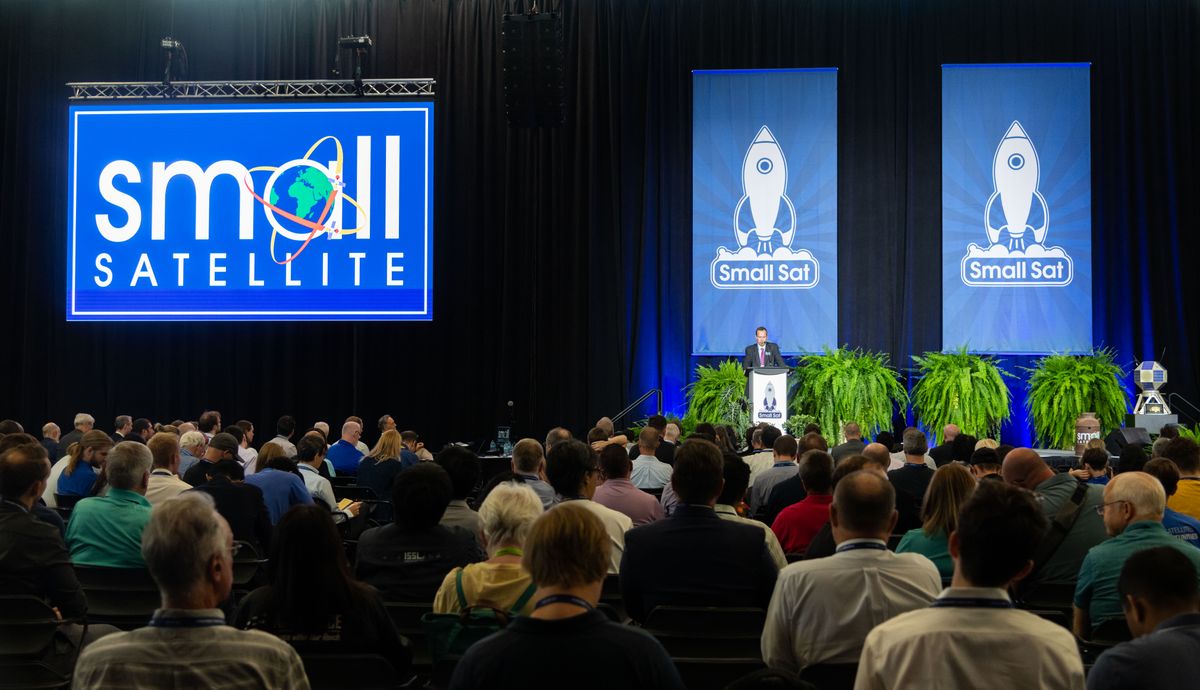
    The 39th Annual Small Satellite Conference (colloquially referred to as SmallSat) takes place Aug. 10-13, 2025, at the Salt Palace Convention Center in Salt Lake City.

    SmallSat will bring together 4,000 participants from 1,300 organizations and 45 countries, along with 400 exhibitions, to explore all aspects of small satellites — from breakthrough missions and capabilities to launch services and student research. It is the world’s largest gathering devoted to small satellite innovation, exploration and impact.

    Keynote speaker Nicola “Nicky” Fox, NASA’s Associate Administrator for the Science Mission Directorate, will speak on Monday, Aug. 10, at 10 a.m. in the Grand Ballroom of the Salt Palace.

    Explore the full program at https://www.smallsat.org.

  • ESA moves forward with Moon mapping study

    ESA moves forward with Moon mapping study

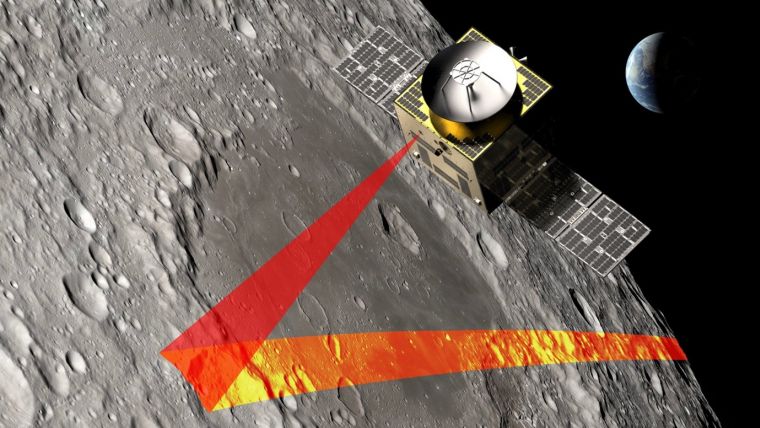
    SFL Missions joins a team led by NUVIEW GmbH, which the European Space Agency has contracted to conduct a Pre-Phase A study for the Moonraker lunar mapping mission. This study launches under a new initiative for Small Exploration Missions. The Moonraker satellite will carry a laser scanner to create a detailed elevation map of the Moon’s surface.

    The Moonraker mission will deploy a single orbiter in a low-altitude polar orbit around the Moon. The orbiter will host a lidar payload to capture highly accurate elevation points of the terrain. The team will use these data points to generate three-dimensional elevation models, which will guide the assessment and selection of future lunar landing sites.

    Moonraker’s lidar data also seeks to advance broader scientific research. The mission will scan permanently shadowed regions to search for water ice and provide new insights into the Moon’s geology and internal composition. The Moonaker lidar will operate in two modes: one for broad-area scanning of the lunar polar regions and another for high-resolution surveys of specific areas of interest.

    SFL Missions shared in a statement that Mission analysts are evaluating potential launch options and trajectories to efficiently enter lunar orbit. They are also studying how operational orbit parameters affect spacecraft design and payload data collection. The system design team focuses on accommodating the payload, configuring the spacecraft layout, and sizing subsystem components. They are designing the propulsion system to carry enough fuel for the transit phase and to maintain the operational orbit, compensating for disturbances from the Moon’s irregular gravity field. The team is developing detailed mission and system requirements to guide future design phases.

    NUVIEW GmbH, based in Berlin, leads the Pre-Phase A study team, which includes several partners alongside SFL Missions. NUVIEW GmbH, a wholly owned subsidiary of NUVIEW Inc., is developing the world’s first commercial space-based LiDAR constellation for three-dimensional mapping of Earth.

  • Solar Storm may impact GPS

    Solar Storm may impact GPS

    A geomagnetic storm expected today and tomorrow has been upgraded to G4 (severe) by the National Oceanic and Atmospheric Administration (NOAA). Solar storms can disrupt GPS and GNSS signals before they arrive on Earth.

    According to NOAA, a powerful coronal mass ejection (CME) erupted from the Sun the evening of May 30. Confidence in an Earth-directed component is good, but the CME arrival timing is more uncertain due to the current state of the solar wind. It could arrive as early as late morning EDT, to as late as Sunday evening EDT June 1.

    Conditions will likely intensify as CME progression continues and G4 levels remain possible on Monday, June 2.

    The center of the bulk CME material is anticipated to be just north of Earth. However, Earth will still likely undergo passage of much of the CME material. Arrival will likely lead to immediate geomagnetic disturbances with the potential for G4.

    Conditions will likely intensify as CME progression continues and G4 levels remain possible on Monday, June 2.

    Geomagnetic storm levels will likely begin subsiding by Tuesday with G1-G2 (Minor-Moderate) still possible.

    Visit the NOAA website for the latest information and updates.

  • GNSS receivers show how earthquake sound waves move

    GNSS receivers show how earthquake sound waves move

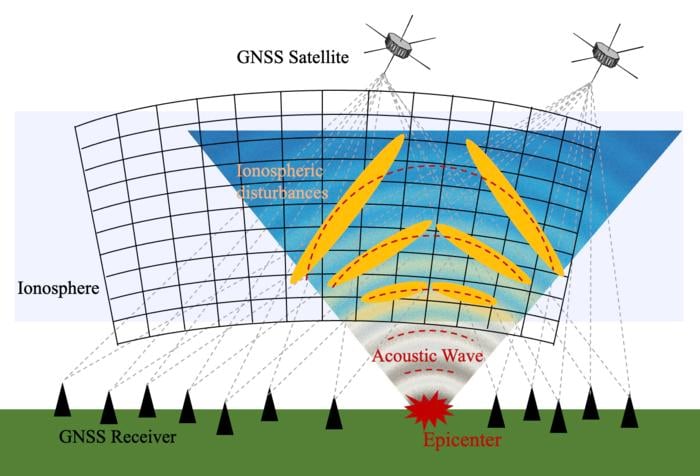
    Scientists at Japan’s Nagoya University have used Japan’s extensive network of GNSS receivers to create the first 3D images of atmospheric disturbances caused by the 2024 Noto Peninsula Earthquake. Their results show sound wave disturbance patterns in unique 3D detail and provide new insights into how earthquakes generate these waves.

    The team published the results in the journal Earth, Planets and Space (May 29, DOI 10.1186/s40623-025-02211-y).

    Japan has one of the densest GNSS networks in the world, with more than 4,500 receivers spread across the country. The network helps with precise location tracking and can also detect changes in the ionosphere.

    A research team led by Dr. Weizheng Fu and Professor Yuichi Otsuka from Nagoya University’s Institute for Space-Earth Environmental Research (ISEE) has captured the detailed 3D structure of electron density changes in the ionosphere after the 7.5 magnitude Noto Peninsula Earthquake that occurred on January 1, 2024, in Ishikawa Prefecture, Japan. 

    When satellite signals travel through the ionosphere, they slow down because the radio waves interact with electrically charged particles. By measuring how much the signals slow down, scientists can calculate how many electrons are in the signals’ path and map the total electron content. Mapping these electrons allows them to effectively probe and monitor the state of the ionosphere. 

    About 10 minutes after the earthquake, the sound waves it generated traveled upward through the atmosphere and reached the ionosphere (60-1000 km above Earth). This created ripple disturbances similar to throwing a stone in a pond. 

    To build a 3D model of wave patterns, the researchers used a technique called “tomography” — similar to how CT scans create 3D images of the human body. They collected data on electron numbers from thousands of receivers tracking signals from satellites at different angles. By tracking their 3D models at different times after the earthquake, they created a time series of how electron density changed.  

    Sound waves generated from entire fault lines, not single points 

    South of the epicenter, the researchers observed a tilted sound wave pattern that gradually became more vertical over time. When an earthquake creates sound waves that travel upward through the atmosphere, the upper parts of the waves move faster than the lower parts. This makes the wave front lean or tilt as it moves. Over time, the tilted pattern gradually straightens into a more vertical alignment.  

    The researchers produced the first detailed 3D visualization of how the tilt angle changes over time during a seismic event. They tracked how the tilted wave patterns gradually straightened in unprecedented detail.

    Earthquakes do not create atmospheric waves from just one spot, but rather from multiple points along the entire fault as different sections rupture over time. This explains why the atmospheric disturbances observed, such as tilted waves, were more complex than previous simpler models had predicted. 

    Previous models assumed all sound waves came from a single point at the earthquake’s center. While this matched some of their observations, it could not explain the complex, uneven wave patterns they saw in their 3D images.  

    To understand this, they included data from multiple wave sources along the fault line in their model, assuming that some parts of the fault generated waves about 30 seconds after the initial rupture. The results better matched their real-world observations and showed that earthquakes do not create atmospheric waves from just one spot, but rather from multiple points along the entire fault as different sections rupture over time. This explains why the atmospheric disturbances observed, such as tilted waves, were more complex than previous simpler models had predicted. 

    “By including multiple distributed sources and time delays, our improved modeling provides a more accurate representation of how these waves propagate through the upper atmosphere,” Professor Otsuka said. 

    “Disturbances in the ionosphere can interfere with satellite communications and location accuracy. If we understand these patterns better, we could improve our ability to protect sensitive technologies during and after earthquakes and enhance early warning systems for similar natural events,” lead author Weizheng Fu added. 

    Moving forward, the researchers are working on applying their model to other natural events such as volcanic eruptions, tsunamis, and severe weather events.

  • Advanced Navigation develops laser-aided inertial intelligence

    Advanced Navigation develops laser-aided inertial intelligence

    Advanced Navigation has successfully demonstrated a hybrid solution — AdNav OS Fusion — for long endurance GNSS-denied navigation, a software-fused inertial-centered architecture that can be updated or modified for harsh environments and mission requirements, including on the moon.

    This advancement is achieved by integrating a strategic-grade fiber-optic gyroscope (FOG) inertial navigation system (INS) with a new class of navigation aid: a laser velocity sensor (LVS). The result is a fused hybrid architecture that delivers precision and reliability in even the most challenging environments.

    Advanced Navigation’s FOG INS, which is sensitive enough to detect the Earth’s rotation, provides that foundation by delivering precise attitude. Complementing this, the company’s LVS uses infrared lasers to measure a vehicle’s ground-relative 3D velocity with exceptional accuracy and long-term stability. Unlike conventional sensors, LVS performs reliably on both ground and airborne platforms, as long as it maintains a clear line of sight to the ground or a stationary surface.

    Beyond its role as a velocity aid, LVS also enhances navigation resilience by detecting GNSS spoofing. By comparing its independent velocity measurements against GNSS-derived velocity, LVS adds an extra layer of security to assured positioning, navigation, and timing (APNT) strategies.

    AdNav OS Fusion draws on sophisticated algorithms to interpret and filter sensor data. The software is designed to dynamically weigh the input from each sensor, adjusting in real time based on reliability scores, environmental conditions and operational context. This ensures continuous, high-confidence state estimation even when signals are lost, degraded or distorted.

    Demonstration with real-world data

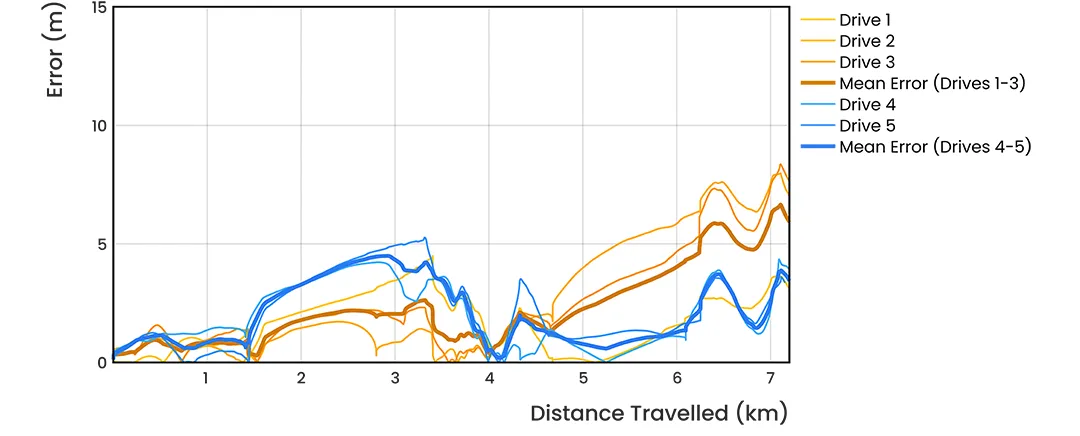
    Advanced Navigation conducted a series of rigorous real-world driving tests. Across five trials, the system delivered exceptional performance with an average error per distance traveled of 0.053% compared to a GNSS reference. 

    At the starting point, GNSS on the INS was disabled in the state estimation process, forcing the system into dead-reckoning mode. RTK GNSS was logged separately as a reference. This approach allows for a direct comparison between the computed dead-reckoning solution and a trusted position reference.

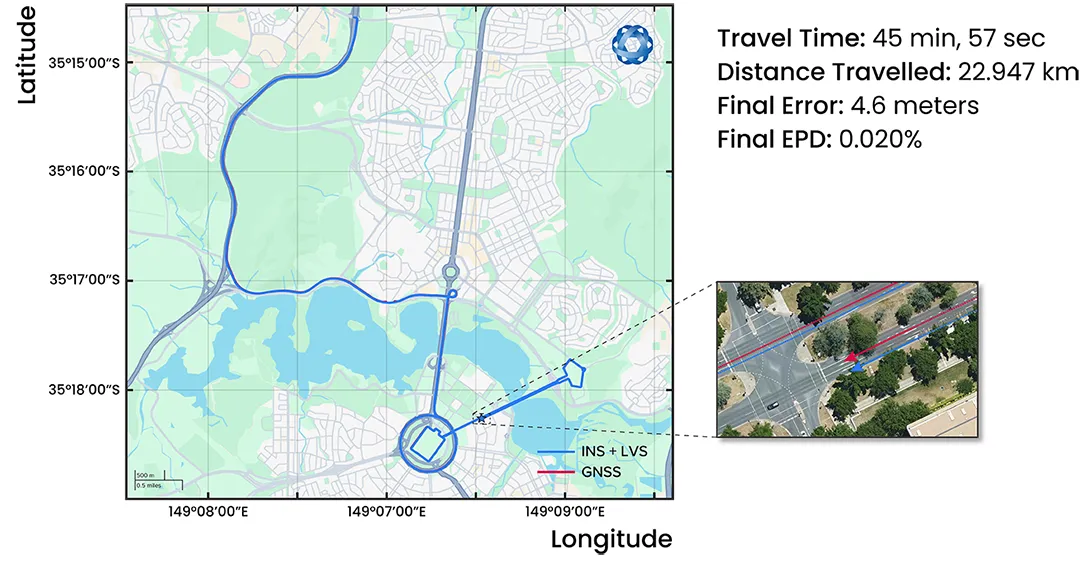
    The below data shows dead-reckoning results from a 23 km drive around Canberra, Australia. GNSS was not used at any point in the drive for heading or position. RTK GNSS is shown as the red line, while the hybrid system’s result is shown in blue.

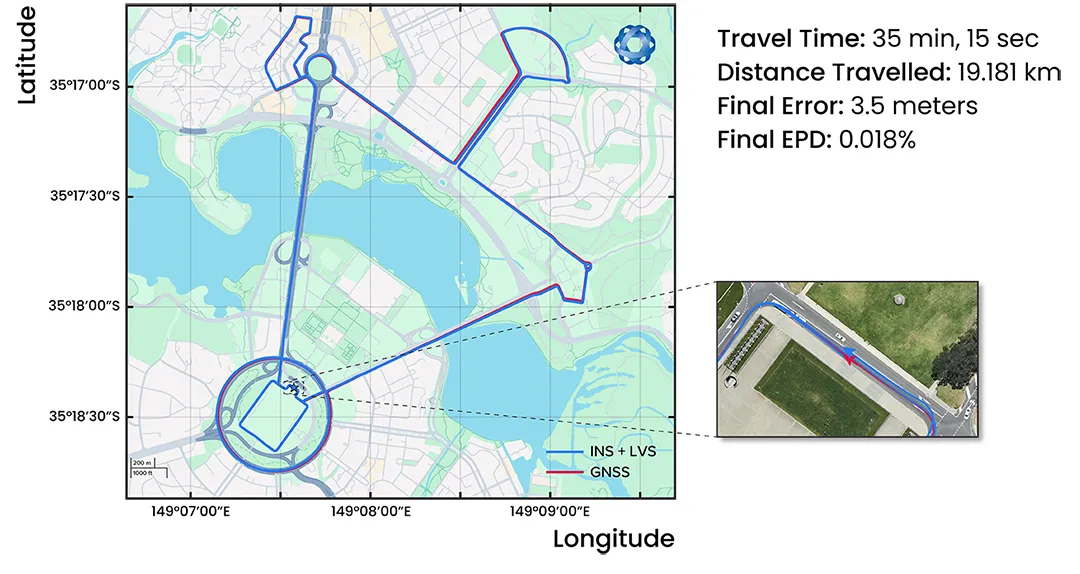
    The below results are from a 19.2 km drive around the Parliamentary Triangle in Canberra, Australia. GNSS was not used at any point in the drive for heading or position. RTK GNSS is shown as the red line, while the Hybrid system’s result is shown in blue.

    The below results are from a 19.2 km drive around the Parliamentary Triangle in Canberra. GNSS was not used at any point in the drive for heading or position. RTK GNSS is shown as the red line, while the hybrid system’s result is shown in blue.

    Image showing Boreas INS and LVS data.

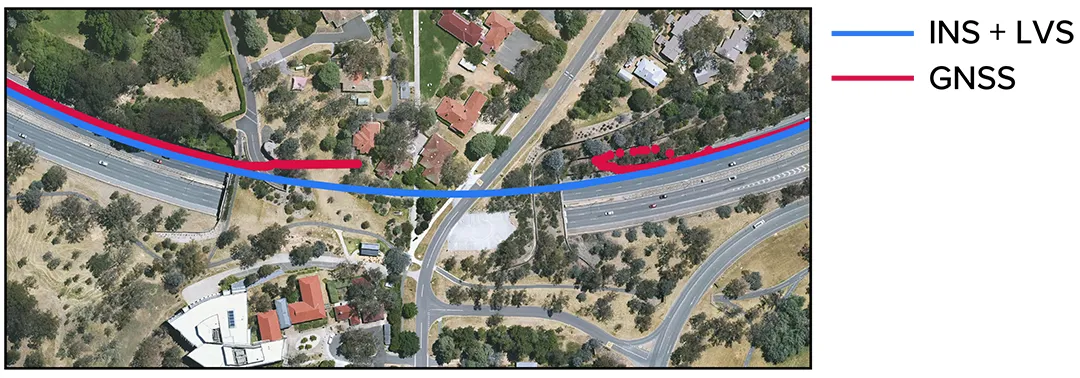
    The figure below is a zoomed section from the first test drive, showing GNSS (red) drop out as the test vehicle drove through a tunnel, which completely denied the GNSS reference measurement. The hybrid system’s result can be seen in blue, showing it did not suffer from this error.

    Image showing Hybrid solution and GNSS route comparison

    These drives were done repeatedly, demonstrating consistent and reliable results each time.

    Test drive results of LVS and INS

    The hybrid system was also tested on a fixed-wing aircraft combined with a tactical-grade INS, demonstrating a final error per distance traveled of 0.045% over the course of a low-altitude flight over 545 km. These results demonstrate the system’s impressive ability to improve navigation performance of the INS in GNSS-denied or contested scenarios. For a more in-depth look into the technology, read the white paper here.

    Commercializing space to Earth

    LVS is a terrestrial adaptation of LUNA (Laser Unit for Navigation Aid), a space-grade navigation technology developed for autonomous lunar landings. LUNA enables reliable navigation in the harsh environment of space by providing precise three-dimensional velocity and altitude information relative to the Moon’s surface. The result of several years of research and development, LUNA is set to be demonstrated aboard Intuitive Machines’ Nova-C lander as part of NASA’s Commercial Lunar Payload Services (CLPS) program.

    By leveraging the engineering insights gained from LUNA, LVS adapts space technology into an Earth-ready solution for terrestrial GNSS-denied navigation.

  • SpaceX details Starlink’s role in enhancing US PNT resilience amid FCC inquiry

    SpaceX details Starlink’s role in enhancing US PNT resilience amid FCC inquiry

    SpaceX has submitted reply comments to the Federal Communications Commission (FCC) detailing how its Starlink low-Earth orbit (LEO) satellite system currently provides, and could further support, positioning, navigation, and timing (PNT) services. The filing is part of the FCC’s ongoing Notice of Inquiry (WT Docket No. 25-110), which seeks to promote resilient and diverse PNT capabilities across the United States in response to vulnerabilities associated with the nation’s reliance on GPS, such as the risks of jamming and spoofing.

    The FCC’s initiative, titled “Promoting the Development of Positioning, Navigation and Timing Technologies and Solutions,” aims to explore both space-based and terrestrial alternatives to ensure the continuity of critical PNT functions for national security, public safety, and economic stability. The agency is soliciting input from stakeholders on technologies that could complement or serve as alternatives to GPS, with a focus on robustness, geographic coverage and resilience to interference.

    In response, SpaceX noted in its comments: “One opportunity stands out as a particularly ripe, low-hanging fruit: facilitating the rapid deployment of next-generation LEO satellite constellations that can deliver PNT as a service alongside high-speed, low-latency broadband and ubiquitous mobile connectivity.”

    SpaceX also states that it has already been working on a PNT system for its cellular Starlink service, which is currently in public beta and is set to launch through T-Mobile in July. SpaceX outlines several technical features of the Starlink system that they argue are relevant to PNT applications.

    Starlink Architecture and Features  

    SpaceX also noted that Starlink terminals can already provide nanosecond-level timing accuracy and meter-level positioning by using time-of-arrival measurements from its satellites. These capabilities allow the network to support precise timing applications, such as cellular network synchronization, without relying on external GPS sources. Timing signals are derived from the LEO constellation and synchronized through Starlink’s broadband infrastructure.

    The filing highlights the Starlink system’s architecture, which includes thousands of satellites in low Earth orbit for global coverage and short signal travel times. SpaceX points to its phased-array user terminals, which use directional antennas to enhance signal integrity and mitigate interference. The company also notes that Starlink employs end-to-end encryption, making its timing and positioning information less susceptible to spoofing or tampering. According to SpaceX, Starlink is already in commercial use by a variety of customers and has been tested by U.S. military and civilian users in environments where traditional GNSS signals are degraded. The company emphasizes that these capabilities have been demonstrated under real-world conditions, not just in theory.

    A Layered Approach to PNT

    Addressing the FCC’s interest in a “layered” approach to national PNT resilience, SpaceX positions Starlink as one of several complementary solutions to enhance national PNT resilience. The company argues that using diverse, independently operated systems — both satellite and terrestrial — can provide redundancy and reduce dependence on any single technology or spectrum band.

    SpaceX also responds to concerns from other stakeholders about whether Starlink qualifies as a PNT system, reiterating that the system was developed independently of government funding and can scale rapidly due to SpaceX’s vertically integrated manufacturing and launch model.

    SpaceX confirms that Starlink operates in Ku- and Ka-band spectrum allocated for broadband services and is not proposing new spectrum allocations for PNT-specific use. It asserts that PNT functionality can be delivered within existing allocation.

  • ESA selects SpacePNT GNSS receiver for Genesis Mission

    ESA selects SpacePNT GNSS receiver for Genesis Mission

    SpacePNT has joined the European Space Agency’s Genesis mission, a navigation satellite project that will be the first to carry all four space-based geodetic techniques on board: GNSS, Satellite Laser Ranging (SLR), Very Large Baseline Interferometry (VLBI) and Doppler Orbitography and Radio-positioning Integrated by Satellite (DORIS).

    SpacePNT’s NaviLEO spaceborne GNSS receiver technology was selected for the mission’s critical satellite navigation ranging instrument. Although NaviLEO has flight heritage in low-Earth orbit, it will be adapted for Genesis to operate in medium-Earth orbit at 6,000 km. The system will use a dual-antenna configuration to receive GNSS satellite signals from both zenith- and nadir-looking antennas.

    The Genesis mission aims to update the International Terrestrial Reference Frame (ITRF), a global Earth model, targeting an accuracy of 1 mm and long-term stability of 0.1 mm per year. This will provide a precise coordinate system for advanced navigation applications.

  • GMV shares LUPIN lunar navigation test results

    GMV shares LUPIN lunar navigation test results

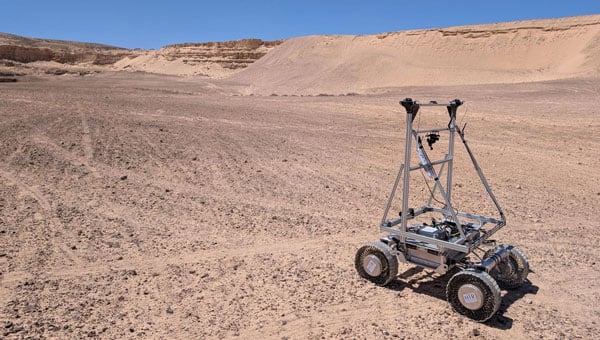
    GMV has presented the latest results from its Enabling High-Performance PNT in the Lunar Environment (LUPIN) project, following a series of field tests conducted from April 27 to May 8 in La Oliva, on the Spanish island of Fuerteventura. The LUPIN initiative, developed in collaboration with the European Space Agency (ESA), aims to create a prototype navigation system that simulates the signals lunar surface rovers are expected to receive in the future. The goal is to establish a navigation system for the Moon similar to GPS on Earth, enabling more precise and reliable positioning for lunar missions.

    As renewed interest in lunar exploration grows, the need for advanced technologies to support rovers, landers and potential human activities on the Moon has become a strategic priority for the space sector. ESA is pursuing this project under its Navigation Innovation and Support Program (NAVISP), seeking to test new positioning, navigation and timing (PNT) technologies. These technologies will integrate current planetary navigation approaches with distance measurement signals from the future Lunar Communication Navigation System (LCNS), a network of satellites orbiting the Moon that will provide GPS-like signals to the lunar surface. The system is being designed to serve specific lunar regions, including the south pole, the far side and permanently shadowed areas.

    Navigation on the Moon currently faces significant challenges. Unlike Earth, the Moon lacks a satellite infrastructure like GPS, forcing spacecraft and rovers to rely on internal calculations and data relayed from Earth, which limits real-time location accuracy. The LUPIN prototype aims to address these limitations by reducing dependence on complex onboard algorithms and optimizing the performance of lunar exploration vehicles. Over the next decade, this technology is expected to transform how astronauts and vehicles operate on the lunar surface, enabling faster and more efficient route planning and reducing the computational burden required for navigation. This advancement means rover speeds will be limited only by lunar surface conditions, not technical constraints, potentially ushering in a new era of automated lunar exploration.

    During the recent test campaign in Fuerteventura, the LUPIN system’s real-time navigation capabilities were successfully verified and validated. The tests simulated the LCNS positioning signals that future lunar rovers will use to determine their exact location. Steven Kay, GMV’s manager for the LUPIN project, explained the field tests performed and the corresponding details.

    “We were able to successfully compile data over the course of 7 km of travel, and at various speeds, from the conventional 0.2 m per second, up to much faster speeds of 1.0 meters per second, which are the speeds of the future. In addition, we were able to simulate a whole range of lunar conditions and types of environments. This included tests performed at night, using a combination of simulated sunlight to emulate the illumination conditions found on the Moon, as well as tests performed in total darkness, using only the rover’s onboard lighting system to navigate,” Kay said.

    The LUPIN project is part of broader efforts by ESA and its partners to develop lunar communication and navigation services, which are seen as essential for future scientific, commercial and human activities on the Moon