Tag: autonomous vehicles

  • Southern Company granted FAA waiver for autonomous BVLOS operations

    Southern Company granted FAA waiver for autonomous BVLOS operations

    Southern Company — an energy provider — in partnership with Skydio, has been granted a Federal Aviation Administration (FAA) conditions-based waiver enabling remote-based, autonomous beyond visual line of sight (BVLOS) dock operations across its system.

    The BVLOS waiver allows the Southern Company system to conduct remote-based infrastructure monitoring and inspection at plant sites, substations, and other fixed site locations, which enables more efficient inspections, mapping and monitoring.

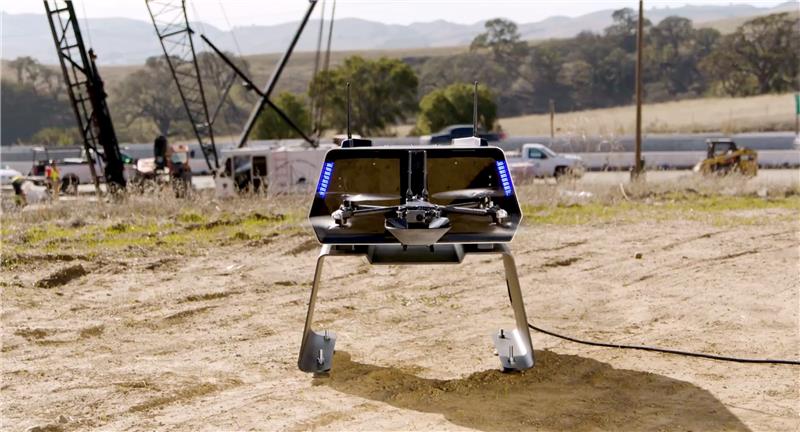
    The Southern Company system will conduct these BVLOS operations using Skydio X2 and Skydio Dock. Skydio’s artificial intelligence technology enables operators to safely inspect infrastructure in close proximity to structures and in complex environments.

    The Southern Company system was previously granted a waiver in November 2022, that allowed for advanced BVLOS operations using UAVs to map and inspect stacks, transmission lines and basins at Plant Barry in Bucks, Alabama. This waiver granted the company the ability to conduct recurring inspections of its system’s critical infrastructure.

  • UAVs and machine learning fight invasive species in WV/PA

    UAVs and machine learning fight invasive species in WV/PA

    Image: Donn Bartram
    Image: Donn Bartram

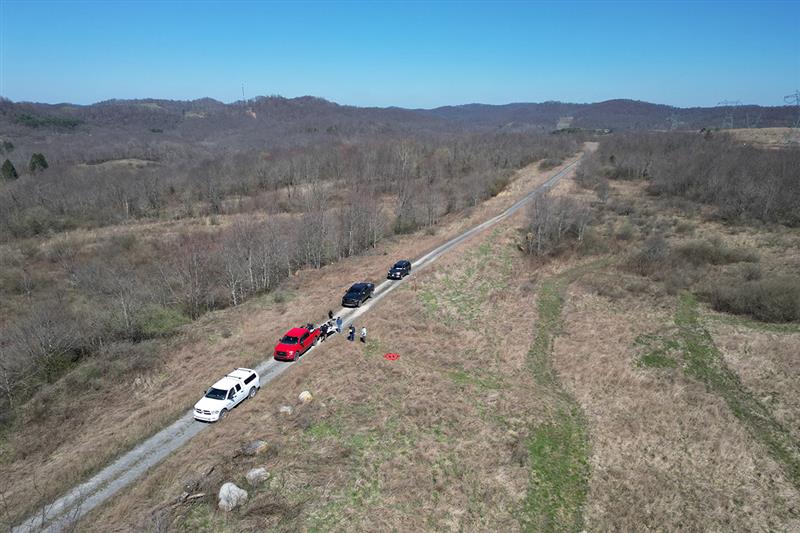
    Researchers at the West Virginia University Davis College of Agriculture, Natural Resources and Design are using UAVs to develop tools to detect, map, treat and monitor invasive plant species with a $175,000 grant from the Richard King Mellon Foundation.

    Multiflora rose is an invasive shrub that threatens native plants in more than 40 states, including West Virginia and Pennsylvania. This project aims to equip UAVs with sensors to collect environmental data in a designated area of southwestern Pennsylvania over multiple seasons. The research team will use that data, combined with machine learning technology, to develop software that can identify multiflora rose and, eventually, other invasive species. The software could then be used for targeted delivery of herbicides via UAVs.

    WVU is collaborating with two partners to help facilitate the project, including CNX — a natural gas company headquartered in Canonsburg, Pennsylvania that is offering the use of reclaimed mine land — and Resource Environmental Solutions — an ecological restoration company that is providing technical assistance with herbicide selection and deployment.

    This project builds upon ongoing UAV-based research conducted by the National Resource Analysis Center (NRAC) with the U.S. Office of Surface Mine Reclamation and Enforcement. The current study focuses on autumn olive, which is one of the most common invasive brush species in West Virginia.

    Most of the data collection and analysis focused on multiflora rose will begin in the 2024 spring growing season, but NRAC’s team of researchers is already using autumn olive data to see what information can be gathered about multiflora rose.

  • uAvionix receives FCC/FAA approval for C-band BVLOS operations

    uAvionix receives FCC/FAA approval for C-band BVLOS operations


    Image: uAvionix
    Image: uAvionix

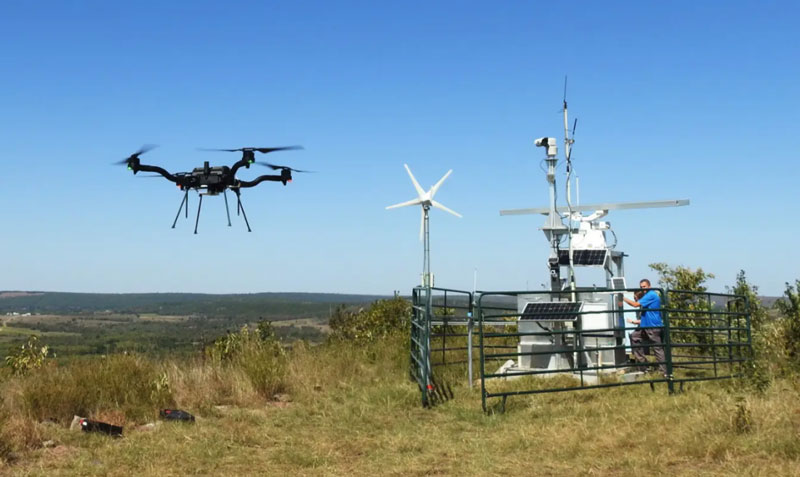
    uAvionix has received Federal Communications Commission (FCC) approval, coordinated with the Federal Aviation Administration (FAA), to operate its SkyLink C-band command and control (C2) radios for beyond visual line of sight (BVLOS) operations at the Choctaw Nation of Oklahoma Emerging Technology test site.

    The radios — operating on aviation-protected C-band frequencies — will be controlled by uAvionix’s SkyLine cloud-based C2 network solution that supports fleet management, network health monitoring, detect and avoid, and roaming between multiple radio networks and ground stations.

    According to uAvionix, with the BVLOS Waiver, businesses looking to use aviation-protected C-band and other radio networks for assured control and non-payload communications can now develop, test and implement solutions for business initiatives such as package delivery and medical resupply.

    With over 200,000 tribal members and more than 11,000 employees, the Choctaw Nation is the third largest Indian nation in the United States. It is developing an aviation test facility in southeastern Oklahoma that utilizes more than 44,600 acres of remote land it tribally owns to support the innovative research, development, test and evaluation of emerging manned and unmanned aerial system technologies in a safe and low-risk environment.

    Interested businesses should contact the Choctaw Nation and uAvionix to support implementation and scaling of uncrewed aerial system operations with multiple C2 links including aviation protected C-band.

  • RIEGL, Schiebel team up for UAV-based airborne scanning

    RIEGL, Schiebel team up for UAV-based airborne scanning


    Image: RIEGL
    Image: RIEGL

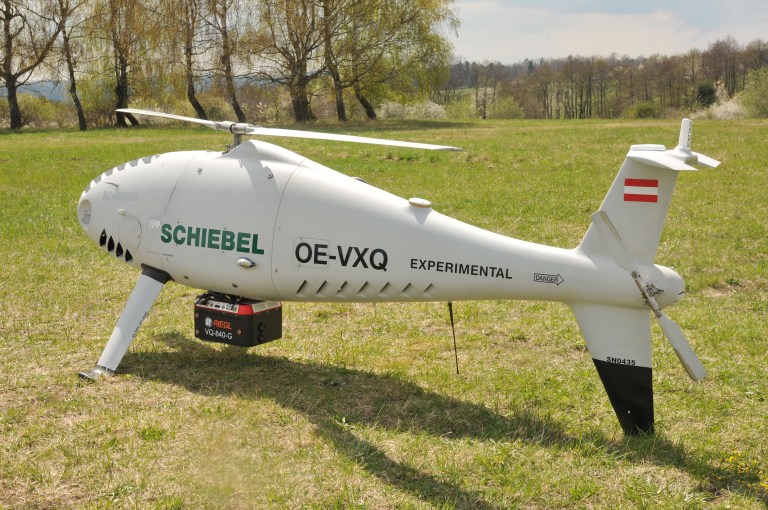
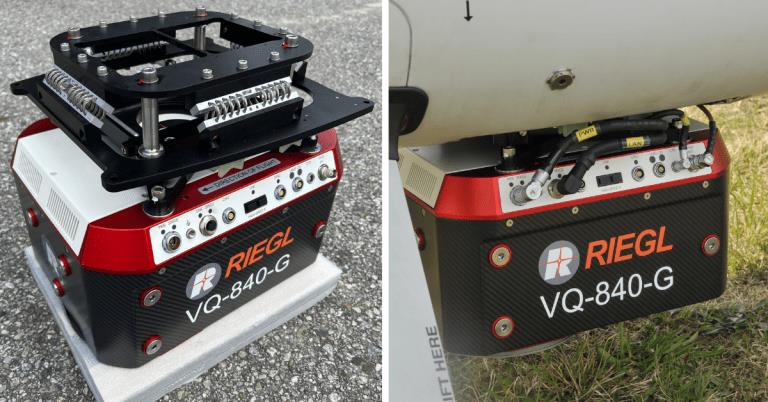
    RIEGL Laser Measurement Systems GmbH and Schiebel have successfully completed the integration of a laser scanning system, the RIEGL VQ-840-G topo-bathymetric lidar sensor, on the Schiebel CAMCOPTER S-100 UAS. The RIEGL VQ-840-G, combined with the technical specifications and performance of the CAMCOPTER S-100 UAS, enables an efficient and secure way for surveying shallow waters, where monitoring from boats becomes a challenge.

    The applications of airborne lidar bathymetry include the mapping of coastlines and riverbanks, as well as the monitoring of natural habitats, water reservoirs and hydraulic engineering applications.

    In a single data acquisition mission, data below and above the water surface are covered.

    Photo:
    Image: RIEGL

    Additionally, the topographic laser scanners RIEGL VUX-1UAV/-LR and VUX-12023 can be integrated in the front payload bay of the CAMCOPTER S-100.

    The VQ-840-G topo-bathymetric laser scanner is designed for use in a variety of maritime and hydrographic environments. The lidar sensor payload system is controlled remotely via a data link, which was crucial for the integration into the S-100 system.

    The scanner is controlled by using the onboard software RiACQUIRE-Embedded via the available data link; data acquisition and laser safety are also monitored. Once the survey is completed, the raw data seamlessly integrates into the RIEGL data processing workflow.

  • What positioning technology is right for your UAV – GCPs, GPS, GNSS, PPK or RTK?

    What positioning technology is right for your UAV – GCPs, GPS, GNSS, PPK or RTK?

    What positioning technology is right for your UAV?

    One of the things to evaluate is accuracy. Accuracy is important for two reasons: you want your UAV to be where it’s supposed to be, and you want to be able to accurately georeference the data you’re gathering with your payload. But (as you will no doubt have already discovered), accuracy isn’t as simple as looking for a number. You’ll have spotted various abbreviations accompanying those numbers — GPS, PPK, RTK, and GCP most commonly, but you may also see GNSS thrown into the mix. In this article, OxTS will explain what these abbreviations mean, and what they mean for your UAV project.

    What are GCPs?

    GCPs stands for ground control points, and they are the most inexpensive method of ensuring your data is accurately georeferenced. They are physical targets that you place on the ground, and for which you know the coordinates. Once your UAV has finished its survey, those points can be used to reference the position of your UAV in the global frame.

    Image: OxTS

    The biggest drawback with GCPs is that they don’t help your UAV know its own position. GCPs only help provide your UAV with a general position reference. So, GCPs aren’t any use if you want your UAV to fly pre-programmed flight plans. For that, you’ll need a solution such as an inertial navigation system (INS) paired with a GNSS receiver. GCPs can also be time consuming to use and cause additional difficulties at the post-processing stage.

    What is GNSS?

    GNSS stands for global navigation satellite system, which are systems that use satellite-based radio navigation to provide positioning, navigation and timing anywhere on Earth. The U.S. GPS is one of four GNSS constellations; the other three are the Russian GLONASS, the Chinese BeiDou, and the European Galileo. There are also two regional satellite navigation systems — the Indian NavIC and the Japanese QZSS.

    Many UAVs will have a GNSS receiver built in — it’s what enables them to know where they are on the planet, after all. Using GNSS only, most UAVs can get accuracy of 3 m to 5 m. This level of accuracy isn’t too bad for some applications, but not accurate enough if you’re trying to use the position data for mapping activities.

    What is PPK?

    Most UAVs advertise their ability to perform PPK — which stands for post-processed kinematics. It’s a method of squeezing extra accuracy out of your GNSS signal. OxTS has a blog post here that describes how it works.

    The main thing to note about PPK is that you can’t use it in real time. UAVs with PPK capabilities can provide data that’s centimeter-level accurate in optimum conditions, but that accuracy can’t be used for navigating the drone itself. It also means that for activities that require centimetre-level accuracy in real time, PPK doesn’t deliver.

    What is RTK?

    RTK is the best you can get when it comes to position accuracy. RTK stands for real-time kinematic, and just like PPK it can use it to obtain centimeter-level accuracy — but, in real time, rather than in post-processing.

    For most mobile mapping activities RTK accuracy is the goal, particularly if you’re using a lidar sensor to create georeferenced pointclouds.
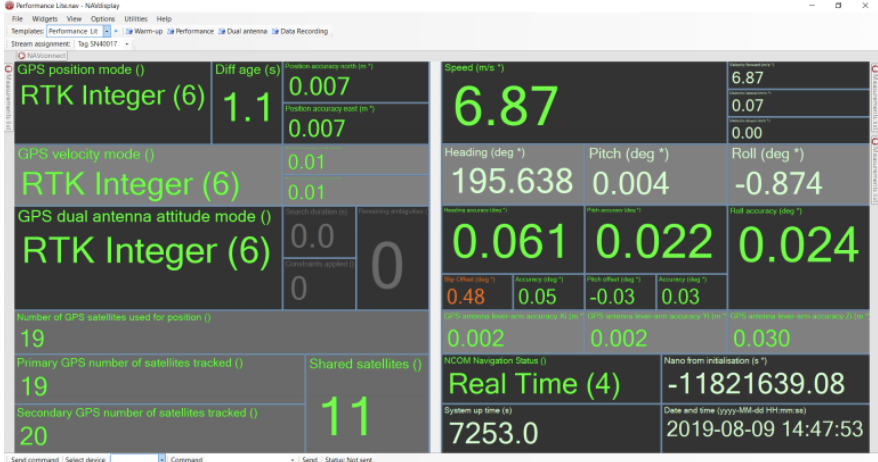
    Without RTK accuracy for the duration of your lidar survey, your point cloud may be unusable. The additional accuracy RTK offers could be used to tackle more challenging environments — providing that you have the tools to remain with RTK accuracy for as long as possible in the absence of GNSS.

    Most off-the shelf UAVs won’t have RTK capabilities built in; however, to get this level of accuracy, it’s likely that you’ll either need to purchase a top-of-the-range UAV or invest in a custom UAV (either built by you, or by a professional company).

    What’s right for me?

    If you’re involved in mobile mapping activities, then at the very least you will need PPK capabilities. Without those, you won’t be able to georeference your data with enough accuracy to be of use to anyone.

    When considering the difference between PPK and RTK, you need to consider:

    In what environment is your UAV operating? Do you need more accuracy than just a GNSS signal (remembering that PPK can only be applied after the survey takes place)?

    Is range of no particular importance – or is the payload on your drone sufficiently large that you need to calculate range very carefully? If so, RTK will give your UAV additional accuracy and, therefore, fuel efficiency.

    The final word in accuracy: gx/ix PPK and RTK from OxTS

    If you read the blog post mentioned above, you’ll know that RTK (and PPK) rely on having an optimal number of satellites visible. If those satellites are lost, then so is RTK lock. That is, unless you use an OxTS INS with gx/ix tight coupling technology. Gx/ix allows our INS devices to maintain RTK and PPK level accuracy even if the number of visible satellites starts to drop. Essentially, it protects the accuracy of your scan for longer — and it is available on the OxTS xNAV650, our UAV-mountable INS.

    The OxTS xNAV650 INS combines a best-in-class inertial measurement unit, with a survey-grade GNSS receiver to output highly accurate navigation data (position, heading, pitch and roll). The xNAV650 is used across the world for applications where reliability and accuracy are critical.
  • Septentrio and Point One Navigation partner to expand portfolio across Europe

    Septentrio and Point One Navigation partner to expand portfolio across Europe


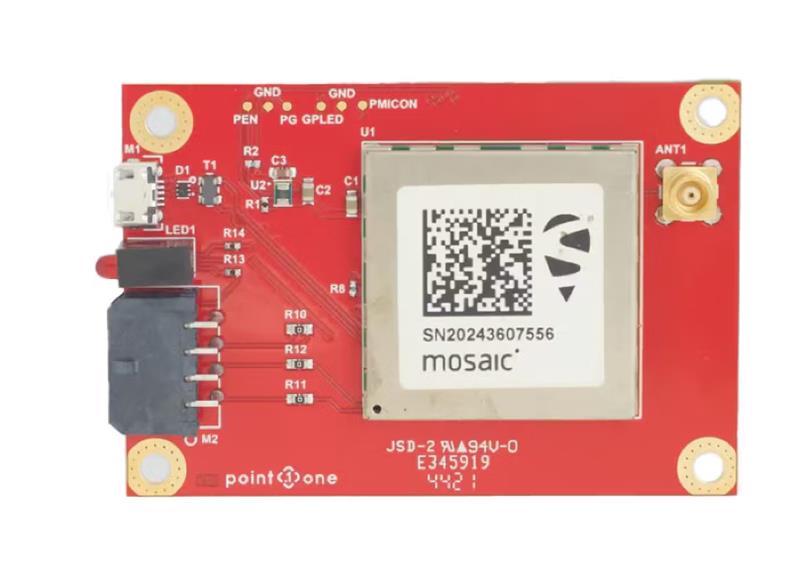
    GNSS interface board – mosaic. (Image: Point One Navigation)
    GNSS interface board – mosaic. (Image: Point One Navigation)

    Point One Navigation and Septentrio have partnered to expand upon the companies’ precision location solutions throughout Western Europe. The new developer compatibility is suitable for demanding applications, including industrial autonomy, precision agriculture, logistics and delivery, robots and autonomous vehicles.

    Point One’s Polaris is a correction network that enables high-precision GPS and computer vision-based localization. Polaris has recently extended coverage to now include Western Europe, further expanding the reach of the network. This solution is powered by Septentrio’s GNSS receivers, including the mosaic compact multi-constellation GNSS receiver.

    The mosaic module — a multi-band, multi-constellation receiver in a low-power surface-mount module with a wide array of interfaces — is designed for mass market applications such as robotic and autonomous vehicle guidance systems. The module integrates GNSS and RF ASIC technology, as well as the robust positioning engine from Septentrio.

    Septentrio real-time kinematic (RTK) receivers can be used directly with Polaris to provide centimeter-level accuracy in seconds.

    This technology is complemented by Point One’s FusionEngine software, which further integrates cameras and additional sensors to achieve the desired level of precision — even in the complete absence of satellite signals.

    FusionEngine has the accuracy and the resilience to inclement weather required by Level 2 applications, such as highway lane keeping and V2X, while offering the robustness necessary for mission-critical Level 4 and Level 5 robotaxi and full autonomy applications.

  • CHCNAV releases C5 and C30 survey cameras

    CHCNAV releases C5 and C30 survey cameras


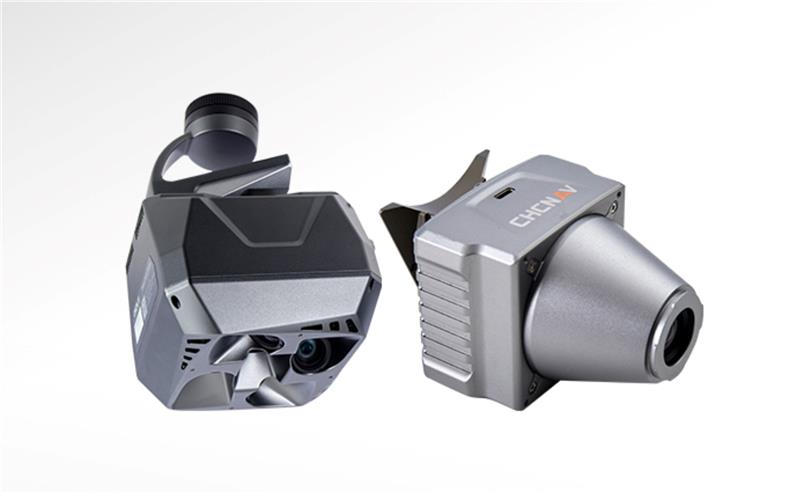
    C5 and C30. (Image: CHC Navigation)
    C5 and C30. (Image: CHC Navigation)

    CHC Navigation has released the C5 and C30 orthographic and oblique cameras for aerial surveys. The systems are designed to provide high-quality imaging solutions for photogrammetric applications and to complement lidar survey data.

    The C5 camera is an efficient and lightweight system for aerial surveys, weighing 290 g for increased flight endurance. Its compact size of 75 mm x 63.5 mm x 102.5 mm allows easy integration into UAVs. The C30 camera’s weight is 600 g with a size of 110mm x 108 mm x 85 mm. The C30 is also designed for aerial surveying.

    The C5 and C30 cameras’ universal installation design makes them compatible with a wide range of fixed-wing and rotor UAV platforms. Both cameras are supported by the CHCNAV’s BB4 Mini and P330 Pro UAVs as well as the DJI’s M300 RTK.

    The Alphaport (the A-type hardware interface) enables the C5 and C30 to be easily mounted into various UAVs and converted into the DJI Skyport connector for extended compatibility.

    The C5 and C30 cameras give maximum flexibility for photogrammetric applications. They can be used independently on real-time kinematic-enabled UAVs to capture high-resolution imagery or installed directly on the CHCNAV’s lidar series to colorize point cloud data. This feature allows seamless imagery and lidar data integration for a more complete view of the surveyed area.

  • Skydio gets BVLOS approval for UAV operations in Japan

    Skydio gets BVLOS approval for UAV operations in Japan

    Image: Screenshot of Skydio product video
    Image: Screenshot of Skydio product video

    The Japan Civil Aviation Bureau (JCAB) has granted Skydio nationwide approval to remotely fly UAVs beyond visual line of sight (BVLOS). The approval enables streamlined BVLOS operations using Skydio Dock and Remote Ops.

    Skydio’s artificial intelligence and autonomous technology enables UAVs to safely fly missions near structures in a way that would be difficult or impossible with manually-operated UAVs — even when operated remotely without a pilot on-site.

    Under the JCAB approval, there is no requirement to use additional crew members, such as visual observers, or technology to detect crewed aircraft — eliminating some of the challenges faced by UAV operators. The BVLOS approval applies across Japan.

    Notification of the flight area is required prior to takeoff using JCAB’s web portal. Operators can now remotely inspect critical infrastructure — buildings, roads, power plants and the scenes of natural disasters — safely and quickly without placing people at risk.

  • Autonomous trucks begin testing on Japanese expressway

    Autonomous trucks begin testing on Japanese expressway

    Image: TuSimple Holdings
    Image: TuSimple Holdings

    TuSimple Holdings, a global autonomous driving technology company, has started Level 4 autonomous test runs on the freight corridor that connects the major cities of Tokyo, Nagoya and Osaka.

    In 2021, TuSimple Japan, a subsidiary of TuSimple, completed a series of safety validation and testing work of its autonomous driving system with a truck provided by a Japanese OEM. In January, TuSimple Japan commenced regular testing on the Tomei Expressway.

    It has been reported that the Japanese government is planning to launch a self-driving lane on some sections of the new Tomei Expressway by 2024 and will allow commercial operation of SAE Level 4 fully autonomous trucks in 2026.

    TuSimple is developing a commercial-ready, fully autonomous (SAE Level 4) driving solution for long-haul, heavy-duty trucks. As of March 2023, TuSimple trucks have recorded more than 10 million cumulative miles through testing, research, and freight delivery.

  • UAVOS, Bayanat partner to supply autonomous helicopters

    UAVOS, Bayanat partner to supply autonomous helicopters

    Photo:
    Image: UAVOS

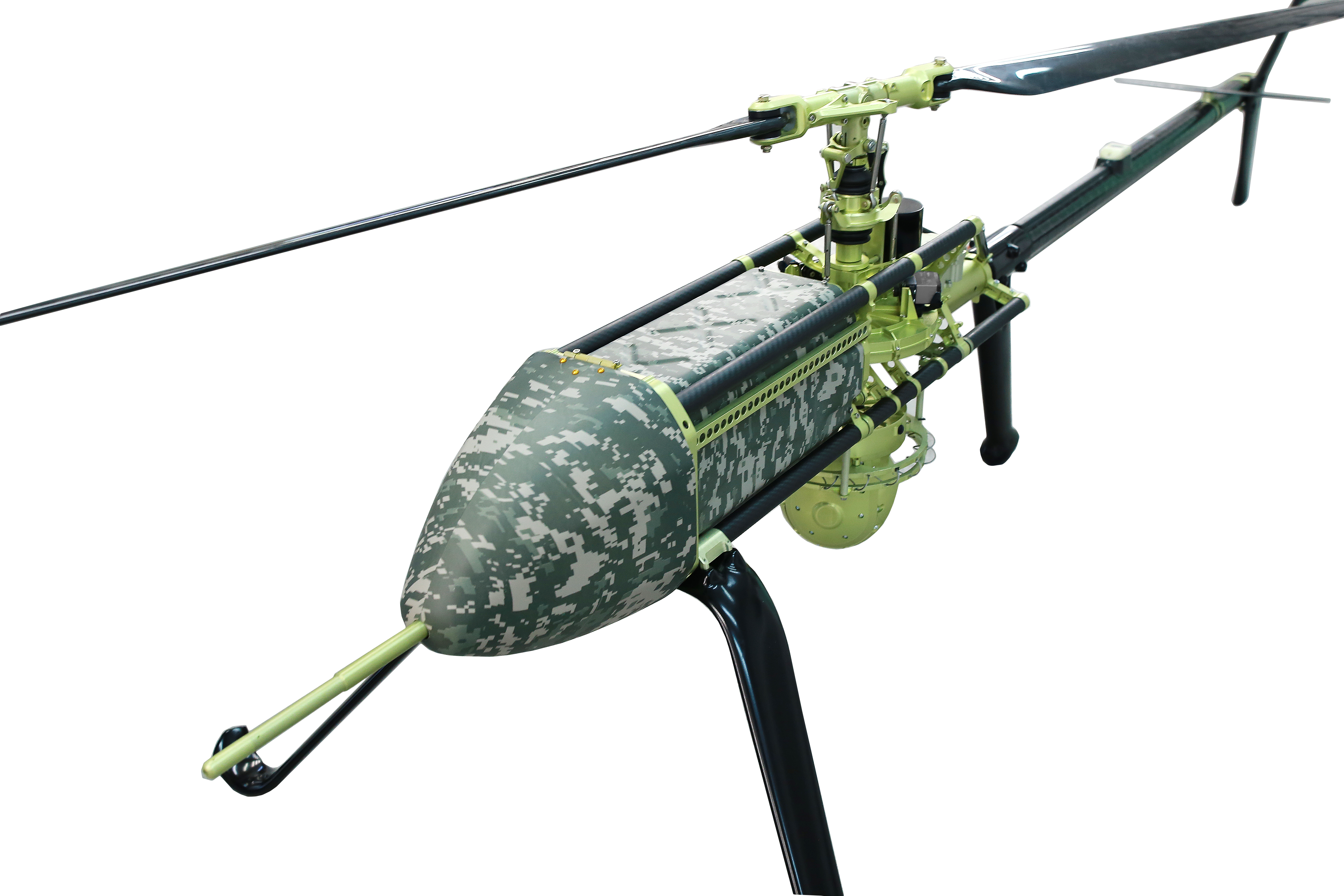
    UAVOS has been selected by Bayanat, a provider of artificial intelligence-powered geospatial solutions, to deliver its unmanned aircraft system (UAS) for a variety of applications, including aerial photography and perimeter control. The UAS consists of two UVH 25EL unmanned autonomous helicopters powered by electric motors, a ground control station, and various sensor payloads — including a multispectral camera, lidar, and digital and thermal cameras.

    The autonomous helicopter’s advanced capabilities of long endurance — up to 1.5-hours — along with its camera capabilities, enable the UVH 25EL to carry out accurate mapping within a radius of 67 km.

    The UVH 25EL has a practical load weight of 5 kg. These capabilities enable high performance as well as maximum operational flexibility for applications such as coastal security, search and rescue, and advanced aerial photography missions.

    UAVOS also provides full operational support, including training, and a fundamental review of the UAS’s possible uses.

  • Airbus tests UAS at sea in full operational configuration

    Airbus Helicopters and the French Armament General Directorate (DGA) tested the unmanned aerial system (UAS) VSR700 for the first time in an operational configuration from a ship at sea.

    The VSR700 performed 80 fully autonomous take-offs and landings from a civil vessel off the coast of Brittany in the west of France at the beginning of May.

    In 2022, the autonomous take-off and landing capabilities of the VSR700 were tested from the same vessel using an optionally piloted vehicle based on a modified Guimbal Cabri G2 equipped with the autonomous take-off and landing (ATOL) system, developed for the VSR700. This time the test campaign took place with the SDAM demonstrator and fully validated the capabilities of the system as part of the Système de Drone Aérien pour la Marine study that was awarded to Airbus Helicopters and Naval Group in 2017.

    Autonomous take-off and landing capabilities are a key asset of the VSR700 and are made possible with the use of the Airbus DeckFinder system. This enables autonomous launch and recovery of UAVs with an accuracy of 10cm-20cm during challenging operations in harsh environmental conditions, independently of GNSS/GPS and regardless of degraded visual conditions.

    This test campaign follows two series of trials that were conducted with the DGA in late 2022 and early 2023, from the Levant Island test center located in the south of France. During these trials, the SDAM prototype demonstrated its ability to operate in a maritime environment.

    The handling qualities of the aircraft were tested as well as the capabilities of the sensors (a maritime surveillance radar, an electro optical sensor, and an AIS receiver) alongside the mission system developed by Naval Group.

    The next development steps will see the second VSR700 prototype perform its maiden flight ahead of flight testing onboard a French Navy FREMM during the second semester of this year.

  • Frontier Precision announces upgraded UAV platform

    Frontier Precision announces upgraded UAV platform

    Photo:
    Image: Frontier Precision

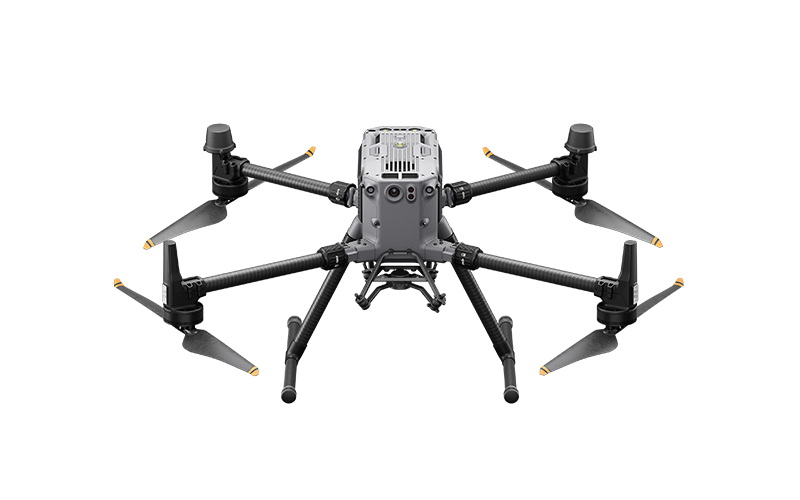
    Frontier Precision has announced the availability of an upgraded flagship UAV platform, the Matrice 350 RTK.

    This UAV platform features a new video transmission system and control experience, an efficient battery system, and more comprehensive safety features. It also offers robust payload and expansion capabilities.

    The Matrice 350 RTK has a 55-minute max flight time and an IP55 rating. It features six-directional sensing and positioning, as well as a night-vision FPV camera, and 400 battery cycles.

    Click here for more product information.