Tag: NextNav

  • NextNav to begin operating 5G-powered PNT network

    NextNav to begin operating 5G-powered PNT network

    The 5G PNT network in Santa Clara County will mark the first real-world demonstration of a 5G-powered backup to GPS

    NextNav Inc., a leader in next-generation terrestrial positioning, navigation, and timing (PNT) and 3D geolocation solutions, will commence operations of a 5G PNT network in Santa Clara County, California, as early as Dec. 11.

    Network operations of positioning, navigation and timing applications represent the next milestone toward commercial readiness and the mission to deliver a resilient complement to GPS.

    The 5G PNT network will consist of multiple fixed base station locations using a standards-compliant 5G signal with a positioning reference signal (PRS) enabled, a standalone 5G core, and NextNav’s 3D PNT architecture. The network’s authorized technical parameters will align with those in NextNav’s proposal to optimize the lower 900 MHz band to enable a terrestrial, widescale backup to GPS that is broadly available to critical infrastructure, public safety and American consumers.

    “We’re incredibly pleased to continue demonstrating our technology in a real-world operational environment,” said Mariam Sorond, CEO of NextNav. “Activating this network is a critical step in our commercialization process, proving that robust 5G broadband service and high-integrity PNT can be delivered together, at scale, using standard 5G equipment.”

    The 5G PNT network will validate NextNav’s 5G PRS-based PNT end-to-end architecture under real-world conditions.

    “This is the first public demonstration of a full-scale and operational 5G-based PNT in live deployment, delivering both resilient PNT and broadband service simultaneously,” said Arun Raghupathy, NextNav Co-Founder and CTO. “Through this commercialization deployment, we’re validating our 5G-based network can deliver accurate 3D location, improved timing synchronization, and enhanced resilience. This real-world deployment is critical to establishing U.S. leadership in next-generation PNT technologies.”

    The 5G PNT network will support the broader adoption of 5G-based terrestrial PNT with 5G broadband capabilities for operators, enterprises and ecosystem partners. This deployment will also prove that NextNav’s software solution is ready to scale and deliver commercial PNT while serving the critical national security and public safety needs of the United States.

  • Opinion: The truth about NextNav’s 5G-powered 3D PNT

    Opinion: The truth about NextNav’s 5G-powered 3D PNT

    On Nov. 11, the chair of the Z-Wave Alliance, Avi Rosenthal, published an opinion piece in GPS World, urging a delay in addressing one of America’s most pressing national security and economic vulnerabilities. I am talking about the need for a terrestrial complement to GPS. By ignoring both the urgency of the threat and the strength of the engineering analysis supporting near-term solutions like 5G-powered 3D PNT, Mr. Rosenthal argues the U.S. can afford to wait. At NextNav, we strongly disagree.

    Around the world, GPS disruptions are no longer hypothetical. As this publication has documented, incidents of GPS jamming and spoofing have become routine in places like the Middle East and the Baltic states. And the increasing severity of these disruptions is spilling over into civilian life, putting us all at risk. We’ve seen the consequences here at home, too. Major airports have experienced manmade GPS disruptions of unknown origin, and farmers have seen how even temporary GPS loss can upend precision agriculture.

    Whether caused by jamming, spoofing or natural disasters, the vulnerabilities are real and growing.

    These threats are why the Federal Communications Commission (FCC) made it a priority to advance additional technologies and solutions as part of a whole-of-government approach to strengthen PNT resiliency. At NextNav, we are doing the hard work necessary to help enable a system-of-systems capable of delivering greater PNT resilience into America’s critical infrastructure, while Mr. Rosenthal and his allies continue to rely on flawed studies and broad mischaracterizations of our proposal. They preach delay rather than moving to the logical next step of the FCC process, specifically designed to allow the commission to fully evaluate competing technical claims.

    We have filed multiple comprehensive engineering studies demonstrating that 5G operations in the lower 900 MHz band will not cause unacceptable interference to unlicensed devices. Those studies specifically examined five different unlicensed technologies, including the Z-Wave technology. To ensure this discussion is fact-based, we’d like to set the record straight.

    The SIA-sponsored paper that Mr. Rosenthal cited for his unrealistic claims of interference does not hold up under scrutiny and contains a number of fundamental technical errors. As we’ve outlined in detail, NextNav’s detailed technical analysis has identified significant flaws in the Pericle paper, pointing out fundamental errors in the paper’s assumptions and methodology.

    For instance, Pericle’s predicted 5G emission levels exceed levels found in theoretical free-space conditions — an impossibility that undermines the entire paper. The Pericle paper also seems to ignore how 5G positioning signals work, failing to mention comb patterns and muting that are core to the technology, and thereby further inflating perceived 5G emission levels. Attempts to reproduce Pericle’s simulations with Pericle’s stated methods and parameters yield dramatically different results, which serve as clear evidence of computational errors or faulty execution of the depicted scenario.

    Perhaps most remarkably, no credible analysis could replicate Pericle’s conclusion that 5G interference would occur more than 50 percent of the time when the ostensibly interfering transmitter operates only 50 percent of the time.

    The most glaring issue with the paper that Rosenthal cites is that it never directly analyzes the very devices that the security industry states are predominant in home and business security systems today. Specifically, it fails to analyze Z-Wave, the technology that, according to the Z-Wave Alliance, is utilized by more than 90% of professionally monitored security systems in North America. In fact, Z-Wave operates primarily on frequencies that are outside of the frequencies which NextNav’s proposes to use for 5G.

    It is a fact that unlicensed lower 900 MHz devices today successfully coexist with a wide range of unlicensed users that operate without coordination or interference protection. Pericle never accounts for the resilience mechanisms Part 15 devices use every day, including frequency hopping, bursty transmissions, adaptive modulation, redundant paths (meshing), self-healing and other features.

    Lastly, Mr. Rosenthal’s characterization of the Department of Transportation’s action also fails to mention that the DOT has already evaluated NextNav’s technology, ranking NextNav first in every category of its 2021 evaluation. In 2024, DOT awarded NextNav the largest grant, $1.8M, for Rapid Phase I field testing of PNT technologies. NextNav supports DOT’s ongoing work to advance complements to GPS, but its testing should not stand in the way of swiftly advancing solutions that are ripe for action now.

    Waiting for DOT to conclude its testing of multiple additional PNT technologies before the commission acts within its authority to take the next step towards enabling one or more potential solutions not only runs contrary to a Presidential Executive Order for agencies to remove barriers to private sector investment, but also risks the same analysis paralysis that slowed deployment of resilient PNT in the previous administration.

    At NextNav, we are serious about solving an urgent national security problem, and we will continue to do the hard work necessary to support the FCC’s engineering-driven decision making. The FCC is the expert authority on commercial spectrum issues, and we believe it has all of the information it needs to take the next step in this process by issuing a Notice of Proposed Rulemaking (NPRM). Issuing an NPRM would also give the FCC the opportunity to ask any remaining technical or economic questions that it may deem necessary to complete its evaluation.

    It’s time to roll up our sleeves and do the hard work necessary to enable a system-of-systems approach to building great PNT resilience. The longer we delay, the more vulnerable we become.

    Renee Gregory is the vice president of regulatory affairs at NextNav.

  • NextNav moves toward commercializing its 5G cellular PNT solution

    NextNav moves toward commercializing its 5G cellular PNT solution

    NextNav Inc. has successfully advanced its NextGen PNT solution commercialization path operating on standard 5G network equipment. The development represents a major milestone toward a widescale commercial 5G-powered 3D PNT solution. The company is showcasing its solution this week at Mobile World Congress in Las Vegas, booth #96.

    “This latest achievement highlights the seamless integration of NextNav’s technology and 5G, reinforcing the scalability and practicality of a resilient terrestrial complement to GPS,” said Sidd Chenumolu, chief business development officer. “We have proven the technology with standard 5G equipment and look forward to the opportunity to completing the final steps to commercialization.”

    NextNav completed demonstrations using Lekha Wireless Solutions 5G base stations with positioning reference signals (PRS) enabled. The partnership with Lekha Wireless Solutions, a commercial 5G infrastructure equipment supplier, brings PNT capabilities in the NextNav spectrum band.

    The demonstration delivered accurate timing and positioning information via PRS transmissions while simultaneously delivering both downlink and uplink data transmissions. These capabilities align tightly with NextNav’s broader solution of utilizing standards-based 5G PRS in lower 900 MHz band spectrum for terrestrial PNT and combining it with barometric pressure sensors for vertical accuracy.

    “Demonstrating these capabilities on commercial 5G equipment is a critical step towards integrating this solution into networks, a hallmark of NextNav’s 3D PNT architecture,” said NextNav Co-Founder and CTO Arun Raghupathy. “It shows that our PNT solution can be deployed efficiently using existing 5G equipment, delivering accurate timing and positioning information along with simultaneous 5G data.”

    At MWC Las Vegas, NextNav will showcase these developments as well as an interactive demonstration of the company’s Pinnacle technology, highlighting how vertical location transforms government, public safety, and commercial applications.

  • NextNav, Oscilloquartz partner to bolster 5G-based timing solutions for critical infrastructure

    NextNav, Oscilloquartz partner to bolster 5G-based timing solutions for critical infrastructure

    New collaboration to demonstrate how terrestrial 5G-based timing can provide scalable solutions to complement and backup GPS.

    NextNav and Oscilloquartz, a division of Adtran, have partnered to demonstrate how 5G-powered terrestrial positioning, navigation, and timing (PNT) technology combined with Oscilloquartz’s established synchronization systems can serve as a scalable complement and backup to GPS. The initiative aims to maintain the operation of critical infrastructure, such as data centers, utilities, and emergency services, during GPS outages by distributing precise, coordinated universal time (UTC) over existing 5G networks for both indoor and outdoor environments.

    The collaboration integrates Oscilloquartz’s synchronization technology with NextNav’s terrestrial 5G PNT platforms to introduce an additional timing source, thereby reducing end-user dependence on GPS alone. This effort addresses increasing demand for secure and redundant timing solutions in light of threats to GPS reliability. The companies are aligning their technologies with ongoing Federal Communications Commission initiatives to encourage complementary PNT solutions.

    According to the companies, this approach responds to national security and public safety concerns by prioritizing the development of resilient infrastructure. The demonstration of these integrated terrestrial timing capabilities is intended to provide a practical example of how industry can build more robust timing networks and reduce the risks associated with relying solely on GPS.

  • Capitol Hill event spotlights urgent need for GPS backup systems

    Capitol Hill event spotlights urgent need for GPS backup systems

    Government, industry and public safety leaders call for action on PNT resiliency as threats escalate.

    GPS is the invisible backbone of modern life, supporting America’s national and economic security in ways both recognized and overlooked. While other countries have developed competing systems, GPS remains far ahead of its rivals. Yet that dominance is also a vulnerability. GPS is a single point of failure, and the U.S. lacks complementary positioning, navigation and timing (PNT) solutions. A successful disruption could cost the U.S. economy $1.6 billion per day and impact everything from first responders to our energy grids.

    As threats to GPS reliability mount, policymakers and industry leaders gathered on Capitol Hill to underscore the urgent need for backup systems to protect America’s PNT infrastructure.

    Last month, I hosted an event on Capitol Hill called: “The Race to GPS Resiliency: What the US Can Do Today to Strengthen National Security.” It brought together senior officials from the Department of Defense (DOD), the Federal Communications Commission (FCC), Congress and industry to make the case for a layered approach to PNT resiliency. These experts examined the technical vulnerabilities of GPS, the increasing frequency of jamming and spoofing incidents, and the policy measures required to expedite the deployment of complementary technologies.

    GPS: Foundational and Fragile

    The first panel focused on how federal agencies are addressing growing vulnerabilities in GPS. Thomas Rondeau, Ph.D., principal director for FutureG at DOD, shared some eye-opening insights, including how a DARPA project demonstrated that, for less than $300 in parts from Amazon, one could “create a very bad day for the American military.” He called GPS disruption one of the easiest threats to develop and warned that adversaries are already exploiting this vulnerability as part of modern conflict.

    From left to right: Diego Areas Munhoz, Reporter, Punchbowl; Dr. Thomas Rondeau, Principal Director for FutureG, U.S. Department of Defense; Arpan Sura, Senior Counsel, Chief AI Officer, FCC.
    From left to right: Diego Areas Munhoz, reporter, Punchbowl; Thomas Rondeau, Ph.D., principal director for FutureG, DOD; Arpan Sura, senior counsel, chief AI officer, FCC.

    Rondeau shared how GPS disruption is now a feature of modern warfare, as he witnessed firsthand during his time at DARPA: “We were seeing massive loss of capabilities, and ordnance, because they were dependent on GPS. And as soon as they flew there, the tent turns on, capability goes away, we lose… assets.”

    Arpan Sura, senior counsel and chief AI officer at the FCC, walked through the FCC’s process for evaluating GPS alternatives and discussed how the agency is considering complementary PNT technologies.

    “National security is one of his (Chairman Carr’s) top priorities. And we recognize, as Tom mentioned, that GPS remains vulnerable to jamming and spoofing. But also, non-national security threats like solar flares, environmental risks like orbital debris. And there is heavy reliance on it in the U.S. economy,” Mr. Sura said.

    Lives on the Line

    From left to right: Mariam Sorond, Board Chair & CEO, NextNav; Adam Eldert, Director of Public Safety for Fairfax County, Virginia.
    From left to right: Mariam Sorond, board chair and CEO, NextNav; Adam Eldert, director of public safety for Fairfax County, Virginia.

    During the second panel, the conversation shifted from global conflict zones to local communities. Adam Eldert, director of public safety for Fairfax County, Virginia, emphasized the life-saving value of resilient PNT technologies in emergency response.

    “Technology should be carrying us forward, allowing us to make better decisions with the information we have to affect life-saving measures faster, get to places quicker and avoid any sort of potential problems,” said Eldert.

    Mariam Sorond, CEO and president of NextNav, pointed out that GPS limitations can delay locating 911 callers and responding to active threats like a mass shooting situation she and Eldert had previously discussed. “It’s not just to save somebody’s life, but it’s also about preventing disasters.”

    She then highlighted the company’s 5G-powered 3D terrestrial PNT solution, which is currently being considered by the FCC’s ongoing Notice of Inquiry on PNT and in a separate Petition for Rulemaking specific to NextNav. She explained that the company is working to address a national security challenge with a near-term, future-proof solution that delivers a widescale terrestrial PNT solution without relying on taxpayer funding.

    Congressional Support

    The closing panel featured Rep. Richard Hudson (R-NC), Chairman of the House Energy & Commerce Subcommittee on Communications and Technology, and former Rep. Greg Walden (R-OR), who previously chaired the full committee.

    Both Hudson and Walden warned that the United States is lagging behind adversaries such as China and Russia in deploying terrestrial backup systems to GPS.

    Chairman Hudson reflected on how the issue hits close to home: “I represent Fort Bragg, the largest army base in the world. We call it the epicenter of the universe. Our special forces and airborne troops that deploy out of Fort Bragg rely on GPS for almost everything they do. So, real-life scenarios with them keep me awake at night.”

    Chairman Walden spoke about another high-profile case in San Diego. “[T]here was a naval exercise between two ships, and they jammed GPS… which caused some issues, ” said Walden. “It also speaks to the problem we have, in America, where, unlike China and Russia, two of our adversaries, they have terrestrial-based systems for GPS backup.”

    What Comes Next

    The event made clear that action is needed — and possible. Mr. Sura told the crowd that he believes the FCC’s Notice of Inquiry will help drive a conversation about a holistic approach to PNT resiliency, exploring the economics of how these systems will work, and how to foster competition in a way that will yield multiple outcomes. When asked about next steps, Mr. Sura encouraged the group to “stay tuned.”

    Speakers throughout the event called for continued public-private collaboration to accelerate development of a more resilient PNT system — one that combines space-based and terrestrial technologies to safeguard national security, critical infrastructure, and public safety.

    Congressman Hudson closed with a note of urgency and optimism: “It’s clear the FCC understands the urgency, and they’re conducting thorough reviews right now.”

    Full event details and videos are available here.


    Diane Rinaldo of Peake Advisors, which sponsored the event, is one of the country’s leading authorities on 5G, telecommunications supply chain security and privacy. She served as Acting Administrator of the National Telecommunications and Information Administration and Acting Assistant Secretary of Commerce for Communications and Information in the first Trump Administration.

  • NextNav proposes a GPS complement and backup in the lower 900 MHz band

    NextNav proposes a GPS complement and backup in the lower 900 MHz band

    A year after NextNav shared a new vision for the Lower 900 MHz band, the Federal Communications Commission (FCC) collected additional comments seeking to bolster positioning, navigation and timing (PNT) resilience by exploring terrestrial and space-based technologies, including NextNav’s, that could complement and back up GPS. The FCC’s PNT Notice of Inquiry (NOI) is a level set on PNT issues, and seeks to engage stakeholders across government and industry to advance a “whole-of-government approach” to building resiliency to safeguard America’s critical infrastructure, national security and public safety.

    We caught up with NextNav’s Vice President of Regulatory Affairs, Renee Gregory, to hear more about how the company is thinking about a terrestrial complement and backup to GPS. Its technology is one of the solutions being discussed within the FCC and the broader industry.

    Why is it important to create a complement and backup to GPS? 

    Renee Gregory: GPS is an incredible technology that underpins national security, public safety and American commerce. However, GPS signals have physical limitations indoors and in urban canyons (i.e. big cities), plus the signals are vulnerable to intentional spoofing, jamming and unintentional interference. With GPS contributing more than $1 trillion to the U.S. economy since its inception, and a potential outage costing $1.6 billion per day, relying on a single system leaves us exposed. As Rear Admiral USN (ret.) David Simpson recently wrote, “If GPS goes down, critical infrastructure fails and our nation plunges into chaos.”

    What is the Federal Government doing about the problem?

    Gregory: Leaders, from President Donald Trump to Chairman Ted Cruz and Senator Ed Markey, have all advocated for the government to take action to ensure that a resilient PNT system of systems is in place. During President Trump’s first term, he signed an Executive Order establishing a comprehensive national policy to promote the responsible use of PNT services to strengthen critical infrastructure resilience. Earlier this year, the FCC adopted a NOI to promote the development of PNT technologies and solutions. It marked an important acknowledgment by the FCC of the seriousness of GPS vulnerabilities and limitations. It also reinforced the need for a system-of-systems approach that includes terrestrial PNT.

    What should our readers know about the NOI?

    Gregory: NextNav fully supports the FCC’s focus on resilient PNT. The FCC’s stated goal in the NOI is to build a record on specific actions the FCC can take to incentivize and support industry efforts to develop resilient and secure PNT technologies and solutions. The FCC intends to focus its efforts on utilizing its authority over non-Federal use of spectrum to rapidly support PNT solutions that could serve as complements or backups to GPS. NextNav has urged the FCC to enable at least one future-proof option that relies on market forces to deliver a terrestrial, wide-scale PNT solution that is broadly available to critical infrastructure, public safety, and consumers, and has a clear path to incorporation in consumer devices, like the smartphones we all use every day.

    What is the solution NextNav is proposing?

    Gregory: NextNav has a proven track record of providing accurate, reliable vertical location information to support first responders. Building on that legacy, NextNav’s next-generation 5G-based 3D PNT solution will leverage preexisting 5G networks and network capabilities, as well as the established and vibrant 5G device ecosystem, to enable a broadly available, widescale terrestrial complement and backup to GPS in partnership with one or more mobile network operators with experience in deploying newly-available spectrum and services within a relatively short period of time. This partnership model will rely on market forces and not taxpayer funding. NextNav brings not only its expertise in PNT technology but also its extensive spectrum licenses in the Lower 900 MHz band to address the critical need for resilient PNT.

    What are other technologies under consideration in the NOI?

    Gregory: The FCC is considering a range of terrestrial and space-based technologies as part of a system-of-systems approach to resilient PNT. Because different technologies and deployment models bring different strengths — and different weaknesses — truly resilient PNT requires multiple layers of redundancy and both space and terrestrial-based technologies. There is no single solution. We need an all-of-the-above approach.

    Is NextNav trying to replace GPS? 

    Gregory: No. NextNav’s efforts to develop a complement and backup to GPS will not diminish the role of GPS, which will remain vital to national and economic security.

    Is NextNav asking for new spectrum to enable its terrestrial PNT solution?

    Gregory: Some opponents have suggested that NextNav is asking the FCC to give it 15 megahertz of spectrum, but that’s simply not true. After acquiring extensive spectrum licenses at auction and in the secondary market, NextNav is the largest licensee in the lower 900 MHz band and is one of only two active geographic license holders in that band, which is today dedicated to terrestrial positioning services. In 2024, NextNav reached a commercial agreement to acquire the remainder of the licenses from the only other active geographic licensee in the band.

    NextNav is suggesting a reconfiguration of the existing licensing scheme to ensure that the lower 900 MHz band can support next-generation 5G-based 3D PNT solutions that require multiple 5 MHz blocks of spectrum, for a total of one more megahertz than the amount of spectrum currently dedicated for geographically-licensed terrestrial positioning services. To enable this band configuration, and the availability of a terrestrial PNT complement and backup, NextNav has proposed a “swap” in which NextNav will return all its current and pending license holdings in exchange for a 15 MHz nationwide license, consistent with the technical characteristics of 5G networks.

    How much does this plan cost?

    Gregory: The market-based NextNav solution will not require any taxpayer funding or legislation.

    What about those opposed to NextNav’s proposal? 

    Gregory: NextNav is focused on solving an urgent national security problem by enabling a complement and backup to GPS to advance resilient PNT. While some parties have raised objections based on claims of interference to current uses of the Lower 900 MHz band, they have not provided detailed technical analyses to support their claims that NextNav would interfere with their operations, or offered solutions beyond suggesting that the FCC reject NextNav’s proposal. Simply opposing one proposal without offering credible, fact-based solutions undermines the FCC’s goal of building a resilient, system-of-systems approach. 

    As a leader in PNT innovation, NextNav is looking forward to working closely with the Chairman, Commissioners and broader stakeholder community to accelerate the deployment of resilient PNT, building important redundancies into a system we rely on every day. 

  • Flawed spectrum proposal could cause disruption and risks to public safety

    Flawed spectrum proposal could cause disruption and risks to public safety

    On March 27, 2025, the Federal Communications Commission (FCC) launched a proceeding on commercial technologies that would complement GPS. “Although GPS is indispensable to America’s economic and national security, it represents a single point of failure that can be vulnerable to disruption or manipulation by our adversaries,” said the FCC’s announcement, highlighting the federal government’s bipartisan call to develop complementary systems that provide positioning, navigation and timing (PNT) data to to better achieve PNT resilience nationwide and protect America’s economic and national security.

    The Security Industry Association (SIA) commends the FCC’s commitment to protecting America’s economic and national security and exploring available PNT options. We believe the docket will show that there is a wide array of PNT technologies that can complement to GPS, and we look forward to providing information to the Commission about tradeoffs among these emerging PNT offerings and encouraging the Commission to avoid taking action that could disproportionately disrupt valuable public safety technologies.

    One company, the for-profit entity NextNav, has petitioned the FCC to reconfigure the 902-928 MHz band (the Lower 900 MHz frequency) and grant it a nationwide license for 15 MHz of spectrum so it can establish a 5G terrestrial-based PNT network. NextNav also seeks the removal of the current requirement that it not cause unacceptable levels of interference to Part 15 devices. These devices include low-power, radio frequency (RF) devices ranging from consumer electronics and appliances to wireless alarm systems, smart home equipment, electronic access control devices and a wide range of devices used to increase economic productivity and efficiency, bolster safety, deliver innovation and provide other important benefits to consumers. This proposal has a dangerous likelihood of causing significant interference in the band that would be adverse to the public interest and threaten public safety.

    The Lower 900 MHz band is vital for millions of security cameras, including popular models used in homes and small businesses. These devices are essential for protecting homes, preventing package theft and home intrusions, ensuring children’s safety and aiding law enforcement by capturing criminal activity. The changes proposed by NextNav would likely force these incumbent users into a shared portion of spectrum that is almost 60% smaller than the current Lower 900 MHz band — crowding that will cause many devices to stop operating reliably, compromising Americans’ safety and the security of our facilities and communities, and will be exacerbated by the growing concentration of devices using new technologies that require more spectrum bandwidth.

    Another important service likely to be disrupted by the proposed band restructuring would be Z-Wave technologies. Z-Wave technology enables comprehensive home automation and security solutions —such as smart locks, thermostats and security systems — to integrate seamlessly with various smart home devices, while preserving advanced security features such as encrypted communication and secure inclusion. Z-Wave devices are not designed to withstand interference from fixed and/or mobile devices operating at commercial macro power limits and out-of-band emission limits, such as those in NextNav’s proposed high-power operations.

    Additionally, millions of electronic access control and other wireless connected devices that are now in use in residential, institutional, commercial and government buildings across the United States would be impacted. The interference generated from NextNav’s higher-power communications would significantly impact the reliability of these important safety and security products and ecosystems, effectively making them unusable in the same spectrum.

    In addition to these public safety and security uses, more critical systems that could be disrupted include:

    • Municipal infrastructure, including such systems as traffic control, street lighting, weather monitors and flood warning systems that are deployed in this band to make communities safer and more energy efficient.
    • Critical infrastructure, including utilities’ use of the band for remote monitoring and management of power, gas and water distribution networks.
    • Railroad operations and safety, including the Automatic Equipment Identification network that enables tracking of rail cars and equipment, as well as essential traffic control, sensors and other devices necessary for operational safety and efficiency.
    • Highway infrastructure and tolling, including the operation of electronic tolling systems, such as E-ZPass and other similar toll collection systems.
    • Retail, manufacturing and supply chain operations, including building control systems, tank and leak monitoring system and inventory control systems.
    • Agriculture solutions used for connecting modern farms’ Internet of Things devices and equipment to keep our farms connected.

    As other concerned parties have pointed out, there are a number of existing backup GPS options available to establish a terrestrial PNT without any reallocation of spectrum.   While a backup GPS system is ultimately necessary, the other solutions that would be much less disruptive. The tradeoffs required by implementing the NextNav proposal are simply not worth the risk to our nation’s security and safety.

  • FCC seeks public input to strengthen alternative PNT

    FCC seeks public input to strengthen alternative PNT

    The Federal Communications Commission (FCC) has issued a Notice of Inquiry (NOI) seeking public input on positioning, navigation and timing (PNT) systems and policies. While GPS is crucial for the United States’ economic and national security, its dependency as a single point of failure renders it vulnerable to disruption or manipulation by adversaries. Recognizing this vulnerability, leaders such as President Trump, Chairman Cruz, and Senator Markey have advocated for developing alternative systems to ensure resilient PNT capabilities.

    PNT data is integral to countless military, public safety, agricultural, and commercial activities. Given the dependence of the American economy and national security on GPS as the sole PNT source, the agency states that the U.S. government is prioritizing efforts to create robust backup systems that can safeguard essential functions in the event of GPS signal disruptions.

    The FCC’s NOI examines how the agency can foster the development of alternative and complementary PNT. It seeks feedback on various emerging PNT technologies being developed by broadcasters, wireless operators, satellite constellations and startups utilizing FCC-licensed spectrum. The inquiry also addresses tradeoffs among these technologies based on performance, scalability, geographic coverage, durability, cost and commercialization potential.

    The Commission aims to establish a comprehensive record to guide its actions in enhancing GPS resilience and promoting alternative PNT solutions. Potential measures include regulatory changes, public-private partnerships, testbeds, Innovation Zones and other initiatives.

    Two PNT-related petitions are currently under FCC consideration. NextNav has proposed allocating approximately $5 billion worth of spectrum to collaborate with telecom providers in establishing a PNT network. Meanwhile, the National Association of Broadcasters (NAB) has suggested adopting a new TV signal format capable of transmitting PNT information without requesting additional spectrum allocation. Insights from the NOI will help inform decisions on these proposals.

    The FCC’s inquiry reflects growing concerns about reliance on GPS as a single system for PNT data. By fostering alternatives like terrestrial networks or broadcast-based solutions such as NAB’s Broadcast Positioning System, the Commission seeks to strengthen national resilience against potential disruptions to critical infrastructure and services.

  • FCC searching for public comments on NextNav petition

    FCC searching for public comments on NextNav petition

    Photo: NextNav
    Photo: NextNav

    The Federal Communications Commission (FCC) has issued a public notice seeking comment on NextNav’s filing to reconfigure the Lower 900 MHz band (902 to 928 MHz band).

    This action comes in response to NextNav’s April 2024 filing, which proposes a comprehensive restructuring of the band to enable the deployment of a 5G terrestrial positioning, navigation, and timing (PNT) network.

    NextNav’s proposal aims to create a 5 MHz uplink in the 902-907 MHz band paired with a 10 MHz downlink in the 918-928 MHz segment. This reconfiguration is designed to complement and serve as a backup to GPS while also freeing up spectrum for 5G broadband services.

    NextNav CEO Mariam Sorond said the spectrum band reconfiguration complements GPS to continue location mapping and tracking services and national security needs. “Our plan creates abundance from scarcity in this band by unleashing much-needed spectrum for wireless technology. These common-sense solutions can benefit consumers and our national interests at no cost to taxpayers,” Sorond said.

    However, the FCC’s public notice raises several questions regarding the protection of incumbent users, including federal radiolocation systems, industrial, scientific, and medical (ISM) equipment, and unlicensed Part 15 devices. The Commission seeks input on how these existing operations would be safeguarded under NextNav’s proposal.

    Comments are due Sept. 5, 2024. Following this comment period, the Commission will review the feedback to develop proposed rules for the potential reconfiguration of the Lower 900 MHz band.

  • NextNav petitions FCC for new spectrum band

    NextNav petitions FCC for new spectrum band

    NextNav has petitioned the Federal Communications Commission (FCC) to add a new spectrum solution in the Lower 900 MHz band (902-928 MHz band) to complement and backup GPS. The Lower 900 MHz band plan aims to give access to 15 MHz of low-band spectrum for 5G services.

    The company filed a rulemaking petition to the FCC, proposing to rearrange the band to facilitate a terrestrial positioning, navigation and timing (PNT) network and broadband. The petition specifically asks the FCC to reconfigure the band plan and adopt new rules, including enabling a high-quality terrestrial complement and backup to GPS for essential PNT services and providing 15 MHz of low-band spectrum for use by mobile broadband networks.

    The proposal, according to the filing, “enables high-quality terrestrial PNT, with the potential for widespread and inexpensive adoption in many use cases because it will use the 5G standard.” Because the company’s NextGen PNT solution uses a small amount of capacity in the 10 MHz downlink, mobile network providers can use most downlink capacity for broadband, “making the spectrum appealing for integration into existing networks and thereby accelerating the availability of terrestrial PNT services.”

    According to the filing, “The 15-megahertz band plan is necessary for this broadband deployment, which enables an at-scale PNT network to be deployed efficiently, providing a unique path to resolving the coverage, cost, and user device issues that have prevented broad terrestrial PNT usage to date.”

    NextNav recently signed an agreement to acquire spectrum licenses covering an additional 4 MHz in the lower 900 MHz band from Telesaurus Holdings GB and Skybridge Spectrum Foundation. In March 2024, the Superior Court of the State of California, County of Alameda, issued an Order approving the Receiver’s request to sell all of its Lower 900 MHz spectrum holdings to NextNav, allowing the parties to move forward with obtaining FCC approval.

    The company plans to partner with mobile network operators or others interested in commercial deployment in the band for 5G and will ensure incumbent operations are protected. According to the company, it has used its existing licenses to develop PNT expertise and products, but, because of a legacy band plan and rules that limit the use of the spectrum for 5G, much of this band is underused.

    The NextGen PNT technology and network are designed to use 5G and offer a 3D positioning solution with single-digit accuracy. The positioning solution is available indoors and outdoors and in urban corridors. It also seeks to provide wireless distribution of precise, resilient timing.

    The current Lower 900 MHz Band is “not conducive for either terrestrial PNT or mobile broadband,” according to the filing, with shortcomings that include fragmented geographic licensing arrangements, outdated command-and-control requirements and other restrictions. Consolidating the geographically licensed spectrum blocks into a 15MHz nationwide configuration for both PNT and 5G broadband changes. This allows the band to support better use cases and serve as a high-performing complement and backup to GPS.

  • NextNav enhances positioning and timing capabilities

    NextNav enhances positioning and timing capabilities

    Image: NextNav
    Image: NextNav

    NextNav has entered an agreement to acquire additional spectrum licenses in the lower 900 MHz band (902 MHz to 928 MHz) from Telesaurus Holdings and Skybridge Spectrum Foundation. This acquisition, valued at up to $50 million, significantly expands NextNav’s spectrum portfolio by an additional 4 MHz.

    With the completion of this transaction, NextNav’s total spectrum assets will surge to 3.5 billion MHz-PoPs, which marks a significant leap in the company’s capacity to offer reliable and precise positioning and timing solutions.

    The transaction involves an initial cash payment of $2.5 million due within 30 days following the court’s authorization to proceed. The balance will be settled in NextNav common stock, contingent upon reaching specific milestones, the final transfer of licenses and obtaining necessary regulatory approvals. The successful closure of this deal is subject to Court and regulatory clearances, including approval from the Federal Communications Commission (FCC).

    NextNav aims to deliver PNT solutions that use 3D geolocation and PNT technology, facilitated by its ownership of low-band licensed spectrum. The company’s technologies are designed to ensure accurate, reliable and resilient 3D PNT solutions across a broad spectrum of applications, ranging from critical infrastructure and GPS resiliency to various commercial use cases.

  • Launchpad: New receivers, GIS platform and delivery UAV

    Launchpad: New receivers, GIS platform and delivery UAV

    A roundup of recent products in the GNSS and inertial positioning industry from the September 2023 issue of GPS World magazine.


    MOBILE
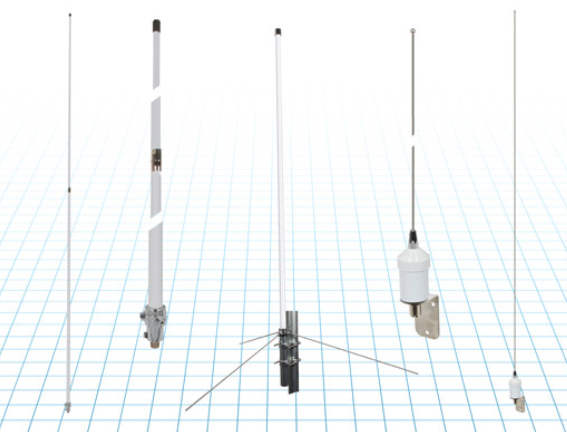
    Image: Fairview Microwave

    Commercial RF antennas
    Marine grade for ships/boats

    The Fairview commercial RF antennas provide accurate positioning with L1 band and multiband capabilities and offer a 28 dBi gain for reliable positioning. The antennas offer full-spectrum connectivity and operate within the universal marine frequency range of 156 MHz to 163 MHz and CB-27 MHz, 10m-HAM, ensuring unbroken connections at sea. The antennas are also weatherproof, rated IP67 for water ingress. They are offered with three types of mounts, making it easier to integrate into any vessel. All antennas are crafted from robust stainless steel or fiberglass for durability and reliable performance. Various antenna lengths are available for users to select based on their signal performance needs..
    Fairview Microwave, fairviewmicrowave.com


    SURVEYING & MAPPING
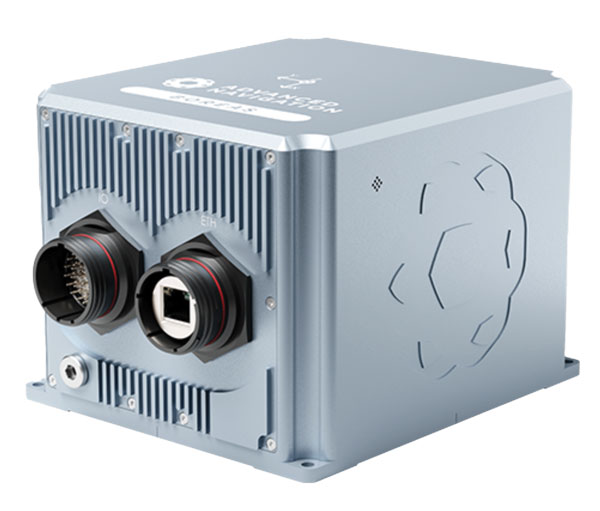
    Image: Advanced Navigation

    Inertial Measurement Units
    Features ultra-high accuracy DFOG range and more

    The Boreas A90 and A70 are strategic-grade inertial measurement units (IMU) that deliver acceleration and orientation with accuracy, stability and reliability under all conditions with no reliance on GNSS. They also feature automatic gyrocompassing. The IMUs contain ultra-high accuracy digital fiber-optic gyroscope (DFOG) range and high performance closed-loop accelerometers. The Boreas A90 and A70 are both suitable for surveying, mapping and navigation across subsea, marine, land and air applications. The Boreas A90 and A70 also offer an optional license to add inertial navigation system capabilities and enable integration with external GNSS receivers using Advanced Navigation’s range of interfaces and communication protocols.
    Advanced Navigation, advancednavigation.com
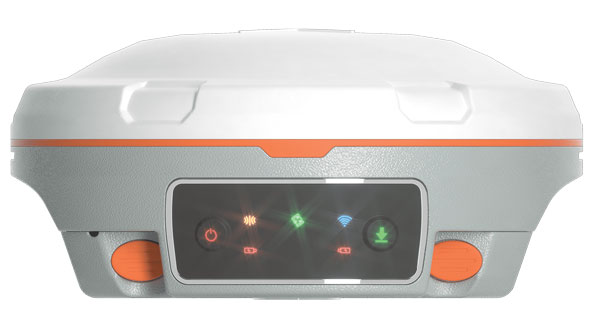
    Photo: ComNav Technology

    GNSS Receiver
    Suitable for surveying, mapping, and geographic information system applications

    The Mars Laser RTK features a datalink modem that transmits and receives across the full frequency range from 410 MHz to 470 MHz. With adjustable transmit power of 0.5 w to 2 w and a maximum distance of 15 km, it meets the measurement demands of complex environments. It can also switch roles between a rover and a base, enabling more flexibility in demanding applications. The Mars Laser RTK is equipped with a Wi-Fi/4G modem and Bluetooth capabilities, facilitating reliable communication across various platforms. The Mars Laser RTK also features five LEDs on the front panel for satellite tracking, RTK corrections data and more. Powered by the SinoGNSS K8 high precision module, the device supports full-constellation and multi-frequency tracking, including GPS, GLONASS, BDS, QZSS, IRNSS, and Galileo, and supports precise-point positioning service. Additionally, the device tracks more than 60 satellites and has 1,590 channels. The Mars Laser RTK’s third-generation inertial measurement unit (IMU) supports 60° tilt with 2.5 cm accuracy. The IMU can be set to both traditional mode with range pole and to laser mode.
    ComNav Technology, comnavtech.com
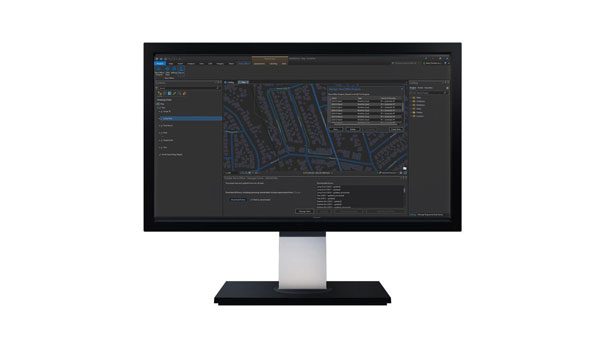
    Image: Trimble Geospatial

    Desktop Solution
    An Esri ArcGIS Pro add-in for field data collection software

    With a streamlined user interface, the Terra Office add-in for ArcGIS Pro enables users to connect TerraFlex workflows directly to the ArcGIS platform from within ArcGIS Pro — Esri’s desktop GIS application. ArcGIS Pro users can now create and manage TerraFlex geospatial data collection projects without leaving ArcGIS. Organizations that collect data in TerraFlex and bring it into ArcGIS through the add-in can also use the Trimble Offline GNSS Corrections service for situations where real-time correction services are intermittent or unavailable. With this service, all data from the field is automatically processed in the cloud without user intervention, and the most accurate real-time or post-processed position is stored for each feature and made available for download through the Terra Office add-in for ArcGIS Pro.
    Trimble Geospatial, geospatial.trimble.com

    Image: 1Spatial

    Data Capture App
    A customizable mobile application for GIS data collection

    1Capture is a mobile GIS editing application that is multi-use and configurable. It provides accurate and reliable data collection and editing in the field for a multitude of asset, job, and survey types. Customizable rules and actions work to improve data quality at the point of capture. This ensures that good quality data is captured at the source, minimizing re-surveys. The built-in rules engine automatically validates and corrects the GIS and non-GIS data collected, whether working online or offline. 1Capture connects with a variety of GIS environments, including Esri ArcGIS and open-source technologies such as PostGIS and Geoserver.
    1Spatial, 1spatial.com/us/


    AUTONOMOUS
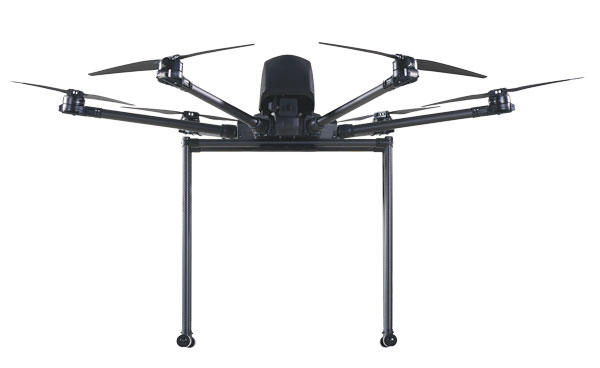
    Heavy-Lift Delivery UAV
    An off-the-shelf, ready-to-fly delivery aircraft for last mile delivery

    The RDST Longtail features a RDS2 drone winch, enabling payloads to be deposited safely from altitude so that spinning rotors are kept far from people and property. The UAV can deliver or retrieve payloads up to 5 kg and over a distance of 11 km, making it suitable for various applications such as local parcel or food delivery, emergency medical deliveries, water sampling programs, offshore logistics, search and rescue operations and more. The UAV can also auto-release packages without the need for a recipient to be present at the delivery location. This is made possible by the all-new bag auto-release mechanism, allowing for easy pickups and auto-releasing of bags during deliveries. Designed to meet FAA regulations, the RDST Longtail is remote ID compliant with a factory-integrated remote ID beacon. The Premium edition of the drone can fly in inclement weather and features a quick-release battery system for minimal downtime.
    A2Z Drone Delivery, a2zdronedelivery.com
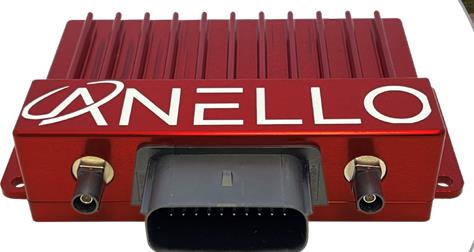
    Image: Anello Photonics

    GNSS INS
    Suitable for multiple applications

    The ANELLO GNSS inertial navigation system (INS) is designed for reliable long-term GPS-denied navigation and localization. Powered by optical gyroscope technology and artificial intelligence-based sensor fusion engine, the ANELLO GNSS INS delivers robust, high-accuracy positioning and orientation for applications such as agriculture, construction, trucking, and autonomous vehicles. It comes equipped with unaided heading drift of less than 0.5°/hr, dual multi-band real-time kinematic-capable GNSS engines, ASIL-D-ready automotive qualified CPU, automotive 2-wire Ethernet, and dual high-speed CAN FD interfaces. It also features dual RS-232 interfaces, hardware precision time protocol, IEEE 802.1AS. The ANELLO GNSS INS is IP68 waterproof, as well as resistant to dust, salt spray and chemicals.
    ANELLO Photonics, anellophotonics.com

    Image: Turf Tank

    GPS-Guided Robot
    Designed specifically for painting athletic fields

    The Turf Tank Two features dual motor drives for enhanced torque and optimized wheels for traction. On its own and controlled through a tablet, the Turf Tank Two can paint a regulation soccer field for two teams of 11 players each in less than 24 minutes, a baseball or softball field in less than 11 minutes, a lacrosse field in less than 26 minutes, and a full 100-yard football field in less than 3.5 hours. It can also paint logos and numbers. The Turf Tank Two is 43 in x 33 in x 22.5 in. It weighs 123 lbs, without paint or the battery installed, and it can hold 5.5 gallons of paint. Enhanced features of the Turf Tank Two also include a revamped sprayer module and advanced control features — including a redesigned front panel that has convenient pause/resume options with LED indicators displaying the robot’s status and a start/stop sprayer button. An LED indicator also comes on the battery. Its batteries are rechargeable. Because of the robot’s precision and accuracy, it uses significantly less paint and eliminates the overspray that is common with either painting by hand or using many of the older paint machines and sprayers on the market. The GNSS-guided Turf Tank Two uses a base station to enhance its accuracy, while its onboard GNSS receiver acts as a rover.
    Turf Tank, turftank.com


    DEFENSE

    Photo: BAE Systems

    Solar-Electric HAPS UAS
    Provides an alternative to conventional sensing and communications systems

    PHASA-35 is an ultra-light weight, solar-electric high altitude pseudo satellite (HAPS) unmanned aerial system (UAS) designed as an alternative to conventional systems such as satellites or conventionally powered aircraft for cost-effective imagery and communications. PHASA-35 uses photo-voltaic arrays to provide energy during the day, which is stored in rechargeable cells to maintain flight overnight. The UAS is designed to provide a persistent, stable platform for monitoring, surveillance, communications, and security applications. When connected to other solutions, it provides military and commercial customers with capabilities that are not currently available from existing air and space platforms. PHASA-35 can also be used to deliver communications networks including 5G, as well as provide other services, such as disaster relief and border protection. The UAS also has a flexible payload design that enables a large and varied range of sensor capabilities to be carried and updated. The PHASA-35 is suitable for military communications, military surveillance, commercial communications, maritime surveillance, border security, agricultural monitoring, and environmental monitoring.
    BAE Systems, baesystems.com
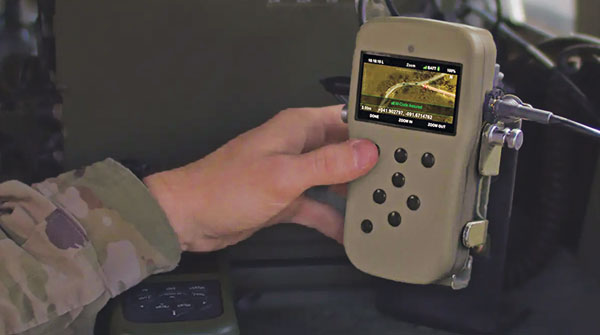
    Photo:

    GPS Receiver
    A-PNT device featuring M-code GPS technology

    NavGuide is a field-installable replacement to the defense advanced GPS receiver (DAGR), designed for quick integration into current DAGR mounts and accessories without mission interruption. NavGuide features a 3 in, full-color, graphical user interface for dismounted soldiers, and easily integrates with existing mounted platforms and systems. The device leverages the advanced M-code GPS signal with enhanced jamming and spoofing protection. NavGuide is portable, versatile, and precise, and enables vehicular, handheld, sensor, and gun laying applications that enable the military to defeat adversaries in a variety of challenging threat environments.
    BAE Systems, baesystems.com


    OEM
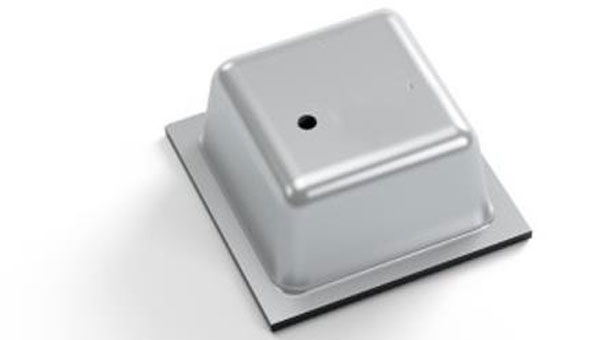
    Image: NextNav

    Vertical Location Device
    For a variety of applications that rely on precise PNT

    Pinnacle delivers precise, floor-level, vertical positioning for geolocation applications. It offers altitude measurements that meet the Federal Communications Commission mandate of 3 m accuracy. Pinnacle works with existing barometric pressure sensors in devices to improve quality and accuracy. Pinnacle technology provides z-axis data and has been demonstrated in independent testing to deliver 94% accuracy. Pinnacle data is derived from a proprietary network built for public safety, operated and maintained by NextNav, for wide availability. SDK, API, and Unity plug-in options make it easy to integrate 3D geolocation technology into existing applications.
    The device also offers consistent vertical location abilities available throughout large urban areas. Pinnacle is available across the United States, is currently being deployed across Japan, and is being tested in France for local emergency repsonse agencies.
    NextNav, nextnav.com

    Image: u-blox

    LTE-M/NB-IoT Module
    For small asset trackers

    The LEXI-R4 module is customized for size-constrained application requirements. The device is suitable for small asset trackers, such as pet and personal trackers, micro-mobility devices, and luggage tags. The LEXI-R4 module supports all LTE-M and NB-internet of things (IoT) bands, with an RF output power of 23 dBm. It is natively designed to support GNSS AT commands, and its dedicated port enables easy integration with any u-blox M10-based GNSS module, such as the MIA-M10. Additionally, the module can connect to additional positioning services, such as AssistNow and CellLocate. The compact size of the module, measuring 16 mm x 16 mm, results from a 40% footprint reduction in dimensions compared to the previous u-blox SARA-R4. Due to its small size, it leaves room for larger antennas, which can improve RF performance, or for larger batteries. Another feature of the LEXI-R4 is its 2G fallback capability. Whenever LTE-M/NB-IoT coverage conditions are not optimal, it continues to function by falling back onto a 2G network. The company said this feature could be helpful in countries where LTE-M/NB-IoT networks have yet to be fully deployed.
    u-blox, u-blox.com