Category: Applications

  • Iridium expands Satellite Time and Location service to Europe and Asia Pacific

    Iridium expands Satellite Time and Location service to Europe and Asia Pacific

    Image: Iridium
    Image: Iridium

    Iridium Communications has expanded the commercial availability of its Satellite Time and Location (STL) service to parts of Europe and the Asia Pacific. This expansion is driven by increasing demand and aims to provide an alternative positioning, navigation and timing (PNT) solution to protect critical infrastructure against GPS and Galileo spoofing and jamming. 

     The Iridium STL service, capable of operating globally, is designed to ensure the fidelity of timing systems with a signal 1,000 times more powerful than GPS. This makes it particularly suited for indoor use without the need for rooftop antennas, offering a secure and cost-effective solution for sectors such as transportation, energy grids, data centers, telecommunications networks and financial services. 

     The expansion follows a significant rise in GPS jamming and spoofing activities in Europe and parts of Asia, posing serious threats to critical infrastructure. The newly available STL service is designed to help safeguard essential systems and improve operational security and efficiency. 

     The STL solutions are designed to be small, cost-effective and easy to install. These solutions can be integrated into existing GNSS-reliant systems or used as stand-alone units. 

     With the expanded authorization, Iridium STL can now be purchased by companies in North America, parts of Europe and the Asia Pacific region. The company plans to continue scaling and training sales and support staff to further extend the service’s global reach. 

  • Per Vices launches new SDR

    Per Vices launches new SDR

    Photo: Per Vices
    Photo: Per Vices

    Per Vices has released Calamine, its widest tuning range software-defined radio (SDR). Calamine can be integrated into mission-critical systems for the defense, GNSS, communications and test and measurement markets.  

     The SDR builds on the Per Vices existing IP to offer a tuning range from near DC to 40 GHz with four independent receiver radio chains, each offering 300 MSPS sampling bandwidth. 

     The release will offer capabilities extending other SDR systems for government, defense and intelligence communities and civil users with direct applications for radar systems, signals intelligence, spectrum monitoring and satellite communications systems.  

     Per Vices products aim to provide hardware and software solutions to address the growing need for high channel count, wide tuning range and high bandwidth SDRs. The company’s SDRs support various applications within the defense, civil, aerospace, medical, telecommunications, low latency networks, GNSS, radar, test and measurement, spectrum monitoring and broadcasting and wireless management industries.  

  • DOT awards contracts for CPNT Action Plan

    DOT awards contracts for CPNT Action Plan

    Image: DOT
    Image: DOT

    The U.S. Department of Transportation (DOT) awarded nine contracts for its Complementary Positioning, Navigation and Timing (CPNT) Action Plan.   

     The DOT’s CPNT Action Plan was issued in September 2023. The Action Plan aims to promote the use of CPNT services in the nation’s transportation systems and other critical infrastructure sectors. It provides a comprehensive roadmap to ensure the safety, security and efficiency of critical infrastructure through the adoption of CPNT technologies. 

     Also, in February 2024, the DOT, through the Volpe National Transportation Systems Center, issued a solicitation for proposals for the testing, evaluation and performance monitoring of positioning, navigation and timing (PNT) safety systems and critical infrastructure sectors. 

     According to SAM.gov, the companies granted contracts are: 

    •  Carahsoft Technology  
    • Locata  
    • Hoptroff  
    • Microsemi Frequency and Time 
    • NAL Research  
    • NextNav 
    • Parsons Government Services 
    • Safran Trusted 4D 
    • Tern AI 

     Through these contracts, the DOT aims to identify and support CPNT technologies that can ensure the reliability and security of critical PNT services, mitigating the risk of disruption and enhancing national resilience. The proposals demonstrate technological readiness and effectiveness. They also contribute to a collaborative effort to safeguard essential infrastructure against emerging threats to PNT services. 

  • EAB Q&A: GPS use in US infrastructure, PNT services

    EAB Q&A: GPS use in US infrastructure, PNT services

    GPS vulnerabilities have been widely reported in the press. What steps have been taken to back up GPS use in U.S. critical infrastructure?


    Jules McNeff
    Jules McNeff

    “President Biden on April 30 issued a National Security Memorandum on Critical Infrastructure Security and Resilience. GPS plays a vital role in the operation of critical infrastructure, and some sectors are considering their own backups. Other than conducting studies and meetings to admire the problem, the federal government has done virtually nothing to provide a comprehensive answer. In fact, the government is now dismantling the Loran system, though enhanced Loran (eLoran) is a viable and affordable GPS backup, specifically recommended for use by prior U.S. Department of Defense and U.S. Department of Homeland Security Deputy Secretaries. Given the vital role PNT and GPS play, it’s a mystery why such a viable solution is simply ignored.”

    — Jules McNeff
    Overlook System Technologies


    Will GPS remain the Gold Standard of space-based PNT services for the foreseeable future?


    “GPS led the emergence and growth of a global space-based PNT service enterprise and has been the Gold Standard since its inception. The U.S. Department of Defense and Air Force (now Space Force) have maintained that standard through stable, transparent, and consistent policies and continuous performance improvements for the services it provides to all users. Now, in the face of foreign competition, hostile threats, budgetary pressures, reorganizations and management fragmentation, dilution of corporate memory, and inconsistent leadership support, those policy and performance foundations are in danger of eroding. The outcome for GPS and its future in the global PNT Enterprise is purely in the hands of our federal leadership today.”

    — Jules McNeff
    Overlook System Technologies

  • Wingtra releases mapping software

    Wingtra releases mapping software

    Photo: Wingtra
    Photo: Wingtra

    Wingtra has released its WingtraCLOUD software, designed to simplify data collection and streamline the onboarding of surveyors and pilots.

    WingtraCLOUD offers a user-friendly flight planning experience, plus time-saving features including site-based file organization, advanced 3D planning, coordinate system by sites and improved connectivity via cloud syncing in a single environment.

    It aims to simplify and streamline site setup and team collaboration. WingtraCLOUD’s features simplify and accelerate planning and introduce a new level of transparency among stakeholders with enhanced wireless functionality. Users can now provide insights to regional and global site managers across projects.

    WingtraCLOUD allows users to maximize Wingtra aerial data and services, offering UAV program scaling and business advantages across a variety of industries.

  • Spirent accepting orders for Xona PULSAR simulator

    Spirent accepting orders for Xona PULSAR simulator

    Photo: Xona Space Systems
    Photo: Xona Space Systems

    Spirent has implemented Xona Space Systems’ PULSAR production signals for seamless integration into the existing SimXona product line. The PULSAR X1 production signal implementation has passed a diligent Xona certification and the PULSAR X5 signal verification process is currently underway. It is expected to pass certification during the summer of 2024. Spirent is now accepting orders for SimXona with production signals capability.

    Xona is developing PULSAR, a high-performance positioning, navigation and timing (PNT) service built on a backbone of low-Earth orbit (LEO) small satellites. Xona’s smallsat signals will improve PNT resilience and accuracy by augmenting GNSS while operating with an independent navigation and timing system architecture. Xona is fully funded to launch its production class satellite, the In-Orbit Validation mission, in 2025.

    Spirent is the leading provider of PNT test solutions and recently launched a sixth-generation simulation system, PNT X. Designed for navigation warfare (NAVWAR) testing, PNT X is an all-in-one solution with a native implementation of SimXona.

  • Adtran launches atomic clocks

    Adtran launches atomic clocks

    Photo: Adtran
    Photo: Adtran

    Adtran has released two optical cesium atomic clocks, the OSA 3300 Super High-Performance (OSA 3300 SHP) and the OSA 3350 Super Enhanced Primary Reference Clock+ (OSA 3350 SePRC+). The devices use optical pumping technology to meet evolving demands across applications from scientific research to critical positioning, navigation and timing (PNT) infrastructure.

    The OSA 3300 SHP offers stability and accuracy, making it a valuable tool for metrology institutes and scientific research facilities. The OSA 3350 SePRC+ is specifically designed to enhance holdover capabilities for PNT services. It maintains 100 days of 100-nanosecond precision, providing continuous and accurate timing even in environments where GNSS is compromised or unavailable. This makes it a crucial component for ensuring the integrity of mission-critical networks and supporting vital infrastructure and defense operations with reliable backup timing.

    “In an era marked by rising global tensions and heightened risks of state-sponsored interference in satellite communications, our latest innovation has arrived at a pivotal moment. It will greatly enhance our capacity to address the demand for secure and reliable network timing around the world,” said Gil Biran, GM of Oscilloquartz, Adtran.

  • Point One Navigation launches new features for Polaris Network

    Point One Navigation launches new features for Polaris Network

    Photo: Point One Navigation
    Photo: Point One Navigation

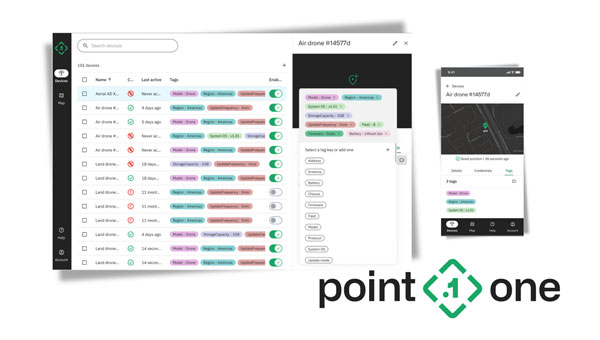
    Point One Navigation has released a new “Tags” feature for its precise positioning Polaris network.

    The Tagging feature aims to simplify building and using positioning networks and systems for a wide range of applications including surveying, construction, fleet management, AgTech, robotic devices, UAVs and autonomous vehicles.

    With this upgrade, users can access streamlined searchability, precisely defined analytics and the ability to control devices at scale. According to Mark Wilkerson, Point One Navigation’s Product Manager, “The most powerful aspect of our tagging system is that it fundamentally changes the way customers can integrate their systems with ours.”

    Users can now work with P1’s API as if it were one of their native applications. The tagging features allow users to query data in the system using their native IDs, model numbers, regions and more.

    It now supports real-time operations with Point One’s GraphQL subscriptions API and features a device search UI in the web app. This allows users to filter and query their devices by tags, connection status or attributes. By using the new search feature, support teams can quickly pull up all active devices and display them on a map in real time. Changes made in either the web app or the API update in real-time.

  • Launchpad: Upgraded surveying software, application suite, GPS integrity module

    Launchpad: Upgraded surveying software, application suite, GPS integrity module

    A roundup of recent products in the GNSS and inertial positioning industry from the June 2024 issue of GPS World magazine.


    SURVEYING & MAPPING

    Photo:


    Upgraded surveying software
    With an improved CAD engine

    Survey Master 3.5.0 includes an enhanced CAD engine. A measurement grade has been added to the CAD to improve the software’s utility in design and planning projects. Additionally, the latest version features expanded CAD drawing and survey functions to offer users a comprehensive toolset — including point, line, polyline, curve, arc, square, rectangle, polygon, circle and text. Survey Master 3.5.0 features CAD capture mode from any point and allows users to easily display or hide point icons.

    The system added the Dominican predefined coordinate system, SBAS configuration, PPP and RTK PPP fusion, updated satellite frequencies and an external datalink CDL7 configuration. Existing software users can update directly in Survey Master.
    Comnav Technologies, comnavtech.com
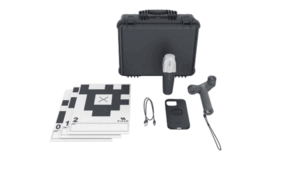
    Photo:

    Scanning kit
    Combines photogrammetry with RTK precision

    The Pix4D & Emlid Scanning kit combines advanced photogrammetry with real-time kinematics (RTK) precision for quick data capture when documenting trenches and as-builts, performing volumetric measurements and enhancing aerial data with terrestrial scans. It includes the PIX4Dcatch app and the Emlid Reach RX RTK rover.

    The PIX4Dcatch app allows precise scanning for both photogrammetry and lidar projects. The hardware features the Emlid Reach RX RTK rover, which comes with an ergonomic handle and accessories. It is integrated with PIX4Dcatch and provides real-time positioning through NTRIP.

    The kit works with any correction network or GNSS base station broadcasting RTCM3. The rover gets a fix in less than five seconds, offering centimeter-accurate positioning in challenging conditions. It can also be used with the survey pole as an RTK rover for data collection and stakeout.

    Designed for urban surveying, the Reach RX rover is lightweight, rated IP68, sealed and protected from water and dust.

    The PIX4Dcatch mobile app allows users to use a smartphone for scanning, access RTK precision data through integration with Reach RX and generate a digital model within minutes. Users can also store, annotate, measure and share data online in PIX4Dcloud as well as verify geolocated positions and visualize the project in AR. It extracts insights from both terrestrial and aerial data and features online and offline processing, advanced photogrammetry capabilities, team collaboration and AR for CAD overlays.
    Emlid, emlid.com
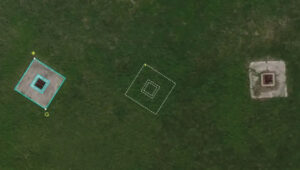
    Photo:

    UAV surveying software
    Now with planimetric survey capabilities

    Virtual Surveyor version 9.5 is a smart UAV surveying program featuring new planimetric survey capabilities. Users can survey 2D features from UAV orthophotos and add them to a 3D topographic model generated from the same data set.

    The integrated Terrain Creator app photogrammetrically processes UAV photos to build survey-grade digital surface models (DSMs) and orthomosaics. These transfer seamlessly to the traditional Virtual Surveyor app where users can generate CAD models, create cut-and-fill maps and gather other 3D topographic information.

    No third-party software is needed to create surveys from UAV data. The system is ideal for users in construction, surface mining and excavation projects.
    Virtual Surveyor, virtual-surveyor.com
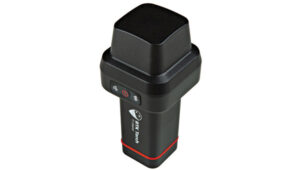
    Photo:

    RTK technology
    For GIS needs

    RTK Torch is designed for high-precision geolocation and GIS needs. It has tri-band reception and tilt compensation.

    The RTK Torch can provide millimeter-grade measurements. Users can connect a phone to the device over Bluetooth and receive the NMEA output and work with most GIS software.

    The RTK Torch features Zero-Touch RTK technology, which gives connected devices WiFi credentials for a hotspot or other WiFi network. The device will begin receiving corrections without any further setup, with no NTRIP credentials required. These corrections are obtained over WiFi from u-blox PointPerfect and are available in the United States, Europe and various parts of Australia, Canada, Brazil and Korea.

    The RTK Torch includes a one-month free subscription to PointPerfect. Additional subscriptions can be purchased if desired. If PointPerfect coverage is not available in the area, corrections from a local base station or service can be provided to the device over NTRIP, delivered via Bluetooth or WiFi.

    It is housed in an IP67-rated enclosure. It is waterproof when submerged up to 1 m for up to 30 minutes when the USB cover is closed. Under the hood of the SparkFun RTK Torch is an ESP32, a UM980 L1/L2/L5 high precision GNSS receiver from Unicore, and an IM-19 for tilt compensation. The addition of the L5 reception makes this portable GNSS device ideal for densely canopied areas where normal L1/L2 reception may have problems.
    SparkFun, sparkfun.com

    Photo:

    3D laser scanner
    For indoor and outdoor mapping

    The VZ-600i terrestrial laser scanner offers a broad range capability from 0.5 m up to 1,000 m and is suitable for indoor and outdoor 3D mapping applications. It features 3D position accuracy of 3 mm, less than 30 sec scan time for high-resolution scans with 6 mm point spacing at 10 m, weight less than 6 kg (13 lbs), 2.2 MHZ PRR, three internal cameras and is GNSS integrated.

    Designed for mobile mapping applications, the system is suitable for architecture, engineering and construction (AEC), building information modeling (BIM), as-built surveying, forensic and crash scene investigation, archeology, forestry and more.
    RIEGL, riegl.com


    OEM

    Photo:

    Application suite
    Featuring GRIT Technology

    The NovAtel Application Suite Version 2.0 now includes GNSS Resilience and Integrity Technology (GRIT). The GRIT Monitor application allows users to observe radio frequency (RF) interference through a comprehensive dashboard to make informed decisions to maintain robust positioning.

    GRIT is RF interference detection and mitigation technology available on all OEM7 GNSS receiver products, including individual cards and enclosures such as smart antennas, PwrPak and MarinePak.
    It includes positioning and device status overviews to serve as a mitigation assistant that indicates whether interference is detected. It features an interactive spectrum viewer, which shows all constellations and frequency bands (spectrum and waterfall), and a signal matrix indicating the signal quality and interference status by frequency band and constellation.

    The updated suite also introduces firmware compatibility and improvements to the user interface and extends support to include MarinePak, among other enhancements. The Manage application, previously known as Setup and Monitor, now supports satellite tracking for L-Band and SBAS and offers a global map view of connected receivers.

    Version 2.0 of the NovAtel Application Suite is designed to assist users in maintaining accurate GNSS positioning by quickly identifying and responding to RF interference. This update is targeted to industries that require precise location data, such as aerial mapping, agriculture and autonomous vehicle navigation.
    NovAtel, novatel.com


    DEFENSE

     

    Photo:

    Upgraded UAS
    With silent VTOL capabilities

    The VXE30 Stalker unmanned aerial system (UAS) features the new “Havoc” configuration, designed to double the system’s flight endurance and payload capacity.

    With the Havoc upgrades, the VXE30 can now support the complex demands of both small tactical units and larger brigade-level operations without extensive reconfiguration. The upgrades are designed to make the UAS more versatile across various military applications.

    The VXE30 Stalker UAS has silent, vertical take-off and landing (VTOL) capabilities and is payload agnostic with the Havoc configuration. It supports easy integration of third-party payloads and subsystems through a Modular Open Systems Approach (MOSA), requiring no additional training for current operators.
    Edge Autonomy, edgeautonomy.io
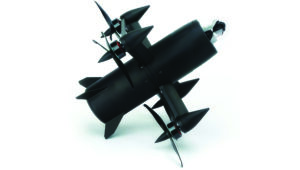
    Photo:

    CUAS technology
    Adheres to NDAA standards

    This counter-unmanned aircraft system (CUAS) is a high-speed kinetic interceptor UAS that utilizes advanced autopilot algorithms for calculating and tracking precise target trajectories, neutralizing Group 1 and 2 aerial threats with pinpoint accuracy.

    The system is manufactured in accordance with the National Defense Authorization Act (NDAA) to ensure it meets the federal requirements necessary for immediate deployment in both military and industrial settings in the United States.
    Nearthlab, nearthlab.com

    Photo:

    GPS integrity module
    Seamlessly integrates with existing platforms

    The Shift5 GPS integrity module is a platform-agnostic solution for military, aviation, rail, maritime and space applications.
    With real-time access and analysis of onboard data, the module assesses changes in navigational position through multi-faceted anomaly detection methods, which alert operators to GPS spoofing attacks as they happen.

    Using data collected from onboard systems, the module uses algorithmic position analysis to identify significant position deviations and GPS data validation to verify GPS information accuracy. Discrepancies or deviations that indicate tampering trigger an immediate notification, allowing operators to initiate standard operating procedures (SOPs) rapidly and accurately.

    The module is designed for cross-platform deployment, across commercial and military planes, locomotives, vessels and aircraft, as well as on other critical systems such as radar, unmanned aircraft systems (UAS) and weapon guidance systems. It seamlessly integrates with existing platforms and can deploy directly to onboard hardware.

    It offers multi-faceted detection and alerts for GPS spoofing attempts, designed to improve the safety and reliability of navigation systems. It uses physics-based spoofing detection to determine whether reported changes in position are physically possible to provide an effective method for initial spoofing detection. The system analyzes data from all sources to detect subtle, sophisticated spoofing attempts, which is essential for identifying more complex spoofing strategies that may evade traditional spoofing detection techniques.

    Shift5 alerts can be integrated into existing SOPs to help preempt contamination of other positioning and navigation data, such as inertial navigation calibration against false GPS data. Metadata about the time, location, duration and estimated position of the attack can be passed for inclusion in threat mapping and other geospatial systems for future route avoidance.
    Shift5, shift5.io

    Photo:

    VTOL UAS
    Designed for military forces

    The Rogue 1 loitering munition UAS is designed to provide military forces with enhanced versatility, survivability and lethality in modern combat environments.

    The Rogue 1 is an optionally lethal, vertical takeoff and landing (VTOL) capable of engaging both moving and stationary targets, including armored vehicles and dismounted threats. It features a unique mechanical interrupt fuzing system that allows for the drone to be safely recovered and reused if the mission is aborted or targets are disengaged.

    Equipped with advanced electro-optical and FLIR Boson 640+ thermal cameras, Rogue 1 offers day and night long-range reconnaissance and surveillance capabilities. The system’s gimballed payload allows for precise targeting, facilitated by a novel coupling between sensors and warhead. Operators can customize the munition with various modular, mission-specific payloads to effectively engage different types of enemy targets.

    It has a flight time of 30 minutes, can reach burst speeds exceeding 70 mph and has an operational range of over six miles, making it suitable for missions in harsh battlefield conditions, including communication- and GPS-denied environments.
    Teledyne FLIR Defense, flir.com


    UAV

    Photo:

    Delivery winch
    Improves safety and operational capabilities

    A2Z Drone Delivery has released new safety features and hardware upgrades for its RDS2 commercial UAV delivery winch, including a weatherproof cover and an auto-releasing bag hook. This aims to improve safety and operational capabilities as well as aid in regulatory compliance for beyond-visual-line-of-sight (BVLOS) operations.

    The system features entanglement auto-detection, which autonomously detects tether entanglements and allows the system to safely abandon the tether to prevent damage to the UAV. This feature can be customized to recognize different types of obstructions, whether at altitude or during the landing phase, enhancing safety across a variety of operational scenarios.

    Additionally, the overweight payload rejection feature ensures that the payload weight does not exceed the 5 kg limit. This is useful when picking up payloads from third parties, as it automatically confirms that the weights are within safe flying limits before proceeding with the mission. The RDS2 now includes Tether Lifecycle Alerts, which notify operators when the winch’s tether, rated for up to 800 deliveries, requires replacement.
    A2Z Drone Delivery, a2zdronedelivery.com

    Photo:

    Integration platform
    For fully autonomous operations

    Flinks is designed for one-click integrations with third-party applications and devices. The platform aims to streamline the coordination of various systems involved in UAV operations, creating end-to-end automated workflows for fully autonomous systems.

    It allows users to connect the FlytBase platform with critical business systems such as alarm systems, video management, data processing and more. By eliminating the need for complex, time-consuming manual interventions, Flinks is designed for users to seamlessly incorporate autonomous drones into their existing operations.

    By joining the Flinks Partner Program, organizations can access FlytBase’s global network of UAV service providers, system integrators and enterprise customers.
    FlytBase, flytbase.com


    MACHINE CONTROL

    Photo:

    Antenna
    Integrates with heavy construction equipment

    The iCON 120 machine smart antenna offers scalable and flexible machine control solutions for construction professionals.

    The iCON 120 is a GNSS antenna intended for integration within the existing Leica MC1 platform. Using the iCON 120, operators can benefit from a tailor-made, Leica MC1-based machine control, allowing for more streamlined operations and consistent workflows with a variety of heavy construction equipment and application requirements.

    Leica iCON 120 users can start with a single GNSS solution using a satellite-based augmentation system (SBAS), such as WAAS or EGNOS, or a HxGN SmartNet service. The HxGN SmartNet family offers network real-time kinematics (RTK) with RTK bridging and precise point positioning (PPP) services that work exclusively with Leica Geosystems GS sensors. The new smart antenna can be easily switched, with quick mounting and dismounting, between Leica MC1-prepared machines.

    Users can optionally upgrade their basic-level machine-control solution with the Leica CR50 communication unit to receive RTK correction data via radio or modem. The CR50 features a web interface, automotive ethernet communication, worldwide cellular modem and integrated dual-frequency UHF radio.
    Leica Geosystems, leica-geosystems.com

    Photo:

    GNSS smart antenna
    For construction Site Positioning

    The R780 GNSS Smart Antenna is designed for construction site positioning. It features a dual-band radio (450/900 MHz) that connects to diverse base stations and job sites without additional external radios. The dual Trimble Maxwell 7 GNSS ASIC chip allows the system to perform in challenging GNSS environments such as a blocked sky, multi-path or degraded signal.

    An activated and ready-to-use Trimble CenterPoint RTX subscription is included for the first 12 months. CenterPoint RTX is point positioning technology that provides real-time, centimeter-level corrections via satellite or cellular/IP.

    Using the R780 with Trimble FieldLink software supports underground and long-distance layout projects as well as QA/QC and field positioning tasks. The R780 can serve as a GNSS rover or as a base station for other GNSS operations including machine control.
    Trimble Civil Construction, heavyindustry.trimble.com

  • First fix: Trouble in orbit

    First fix: Trouble in orbit

    The solar storm in May that produced a beautiful aurora borealis as far south as Mallorca, Spain, also stopped GNSS-based precision agriculture for a couple of days. The same month, articles in major U.S. newspapers detailed aspects of a growing confrontation between the United States, Russia and China —vying for dominance in near-Earth space, now part of the military fighting domain — that could lead to far greater disruption. Nearly all satellites are highly vulnerable to cyberattacks, ground- or space-based lasers, high-powered microwaves, the debris field from a destroyed satellite and the radiation produced by a nuclear explosion in space. The last one would disable by far the greatest number of satellites because of its range and because commercial satellites, which constitute more than 90 percent of all satellites in orbit, are not hardened against such radiation.

    Matteo Luccio
    Luccio

    A May 16 article in The Wall Street Journal titled “Russia Launched Research Spacecraft for Antisatellite Nuclear Weapon Two Years Ago, U.S. Officials Say,” reported that in February 2022, shortly before it invaded Ukraine, Russia launched Cosmos-2553, “designed to test components for a potential antisatellite weapon that would carry a nuclear device.” It linked the launch to a continuing Russian nuclear antisatellite program and said that, if deployed, the weapon “would give Moscow the ability to destroy hundreds of satellites in low-Earth orbit (LEO) with a nuclear blast.”

    “The Pentagon,” the article pointed out, “has become increasingly reliant on commercial satellites.” In LEO, it reported, there are almost 6,700 U.S. satellites, while China has 780 and Russia only 149. Therefore, the Russians would have a lot less to lose should they choose to explode a nuclear weapon in LEO.

    A May 17 article in The New York Times was titled “New Star Wars Plan: Pentagon Rushes to Counter Threats in Orbit.” The subhead read: “Citing rapid advances by China and Russia, the United States is building an extensive capacity to fight battles in space.” It said that, in a major shift in military operations, the Defense Department “is looking to acquire a new generation of ground- and space-based tools that will allow it to defend its satellite network from attack and, if necessary, to disrupt or disable enemy spacecraft in orbit.” Meanwhile, “both Russia and China have already tested or deployed systems such as ground-based high-energy lasers, antisatellite missiles or maneuverable satellites that could be used to disrupt [U.S.] space assets.”

    The decision to strengthen U.S. warfighting capacity in space, it said, is driven mostly by China’s expanding fleet of military tools in space, which threatens to prevent U.S. Navy operations in the Western Pacific. “The Pentagon is separately working to launch a new generation of military satellites that can maneuver, be refueled while in space or have robotic arms that could reach out and grab — and potentially disrupt — an enemy satellite.”

    These are all reasons to quickly develop and deploy a wide mix of complementary PNT solutions that would lessen reliance on GNSS satellites and, therefore, make them less of a target.

  • Seeds of change: Ernst Seeds uses data-driven approach to restore habitats

    Seeds of change: Ernst Seeds uses data-driven approach to restore habitats

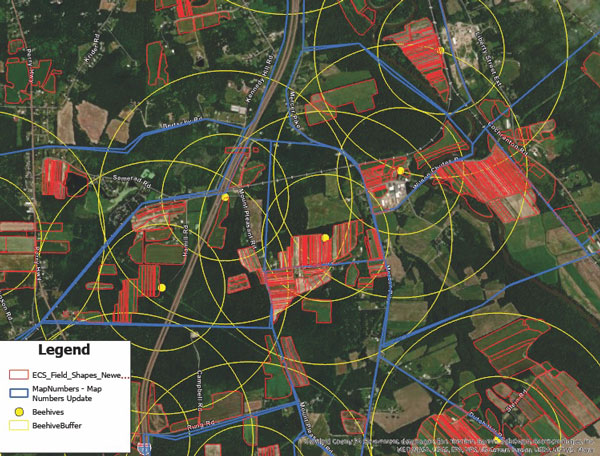
    Ernst's own seed production relies on pollinators. Beehives are mapped and placed strategically across the fields to provide full coverage of seed crops. (Photo: Courtesy of Ernst Seeds)
    Ernst’s seed production relies on pollinators. Beehives are mapped and placed strategically across the fields to provide full coverage of seed crops. (Image courtesy of Ernst Seeds)

    Every Monday and Wednesday, the team at Ernst Conservation Seeds gathers around maps to discuss which fields to harvest, which fields need treatments, and where to plant new crops.

    On this 10,000-acre farm near the small town of Meadville, Pennsylvania, the company pioneered the propagation of 180 species of native wildflowers, grasses, and wetland plants to revive degraded land and provide wildlife habitat.

    Now, the plants Ernst Seeds propagates are in high demand. Pollinator planting has become a trend worldwide, with the growing realization that flying bugs and birds are key to the survival of three-quarters of the world’s plants, including many we eat. Native plants are also being valued for nature-based solutions to protect soils from erosion and filter pollutants from stormwater.

    Across its operation, Ernst Seeds embraces the science of agronomy and the use of geographic information system (GIS) technology to understand native plant species and grow them better, faster, and less expensively.

    There’s a lot of experimentation that goes into growing native seeds and designing the right mix for each restoration project. “What we’re doing is going out and looking at existing plant communities to see what species grow together and how they’re doing it,” said Andy Ernst, vice president of Ernst Seeds. “Then there are lessons from our farming failures and successes. We make a lot of discoveries in our fields when we map yield data and the treatments we applied.”

    Improving plant propagation

    Typically, large farms focus on commodity crops like corn, soybeans, wheat, or cotton. At Ernst Seeds, the growing cycles of 180 species are tracked across 1,300 fields and 15 square miles.

    “I realized a long time ago that with the complexity of our farm, we needed software to track it,” Ernst said. His early forays into traditional farm management software products were frustrating as most could not support so many crops. The software lacked the data management and analysis capabilities needed to discern best practices for seed crops no one else was growing.

    Then in 2015, Ernst Seeds started using GIS. For operations, the ability to see fertilizer and spray assignments on smart maps helped the company identify places that required more or less treatment.

    “There are a lot of accidental experiments when a row is skipped, there’s overlap, or a different chemistry is used,” Ernst said. “When we go out in the field, we can see areas that thrive and other areas that do poorly. With GIS, we can answer why.”

    Katy Flaherty, an agronomy expert and the GIS manager at Ernst Seeds, developed a GIS-powered work order management system that guides each phase of production, from planting and fertilizing to applying pesticides and harvesting. The system uses a combination of ArcGIS Survey123ArcGIS Field Maps, and ArcGIS Dashboards to record data and visualize trends. Flaherty also uses ArcGIS Pro to analyze data from the field, layering it with historical crop records and real-time soil and weather data to uncover correlations.

    “When we plan our fields across four counties, there are significant differences in what crops do well from north to south,” Flaherty said. “It’s very spatial aware farming, and that knowledge transfers to recommendations for customers.”

    In one instance, this detailed level of monitoring led to a decision to stop using a product that harmed some plants. In another case, improvements in propagation for a species proved so fruitful that smaller plots would meet the demand.

    Smart maps guide the company’s planting locations, irrigation system maintenance, and harvesting schedule. Staff use smart maps to track plant maturity and time seed harvests. Unlike corn and soybeans, which can sit in fields for months, some native seeds have only three days of viable harvest. Knowing when and where to harvest is crucial. Ernst Seeds sells 70% of the seeds it harvests every year, putting the rest in the ground for the next crop cycle.

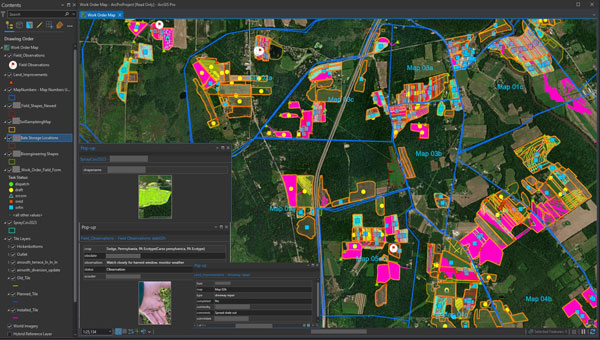
    In ArcGIS Pro, administrators and agronomists view short term plans and historical information. The map views allows them to analyze passes over fields, coverage of treatments, quantities of materials, water drainage, and other variables to inform treatment decisions. (Photo: Courtesy of Ernst Seeds)
    In ArcGIS Pro, administrators and agronomists view short-term plans and historical information. The map views allows them to analyze passes over fields, coverage of treatments, quantities of materials, water drainage, and other variables to inform treatment decisions. (Image courtesy of Ernst Seeds)

    Filling gaps and expanding geographic reach

    Calvin Ernst, Andy’s father, started the thriving conservation seeds business in 1964 with a Pennsylvania Department of Transportation contract to supply seeds to revegetate highway rights-of-way. Over the next 50 years, the company made wild seed collecting forays across the US to add plants to its offerings. As species count and seed supply grew, so did work with a broader list of customers, including state and federal agencies.

    The company has developed seed mixes tailored to specific regions, such as Maryland, northern Virginia, and coastal North Carolina. These seeds are adapted to thrive in the local weather and soil. By choosing native seeds, restoration project managers ensure plants are well-suited to the ecosystem and more resilient to changing climate conditions.

    “A simple philosophy is to avoid plants in your seed mixes that would be planted at the southern edge of their historical range,” Ernst said, speaking to the growing need for heat-adapted plants.

    This commitment to innovation comes at a cost—it takes time to establish every new species. But insights from GIS can accelerate that timeline.

    “It can take seven to 10 years to figure out how to grow something,” Ernst said. “If our observations cut that time down to five years, that’s a major win for us.”

    Building native seeds capacity

    One of the main challenges with native seed farming, according to Ernst agronomists, is the lack of knowledge of native seed production when compared to conventional row crops.

    While the company has typically filled knowledge gaps itself, there have been times when an academic partnership has proved beneficial. For example, Ernst Seeds collaborated with researchers at the Center for Pollinator Research at Pennsylvania State University to identify the mix of flowering plants that could maximize pollinator food and breeding opportunities. The seed mixes developed through this partnership are now used across solar energy farms for revegetation.

    The work on developing the right seed mix for solar farms made Ernst Seeds an ideal partner for the Virginia Solar Pollinator Program. Originally, Ernst Seeds was employed on the project by the Virginia Department of Conservation and Recreation to guide a mix of native seeds for Virginia, but that work expanded.

    Ernst Seeds experts then worked alongside the Clifton Institute to gather seeds across Virginia, from the Coastal Plain to beyond the Blue Ridge Mountains. They recorded the location and conditions of their findings using a GIS-powered mobile app on their phones. This knowledge will help in planting along corridor projects, such as land beneath the electric transmission lines that will deliver energy from solar farms in rural areas to businesses and households in urban centers.

    From its start with solar projects, the program evolved into the Virginia Native Seed Pilot Project to launch a native seed industry in Virginia. The program identifies local growers who can produce native seeds at a commercial scale and shows them how data from GIS helps guide best practices.

    Tractor operators record their observations and have access to historical data as they work the fields. (Image courtesy of Ernst Seeds)
    Tractor operators record their observations and have access to historical data as they work the fields. (Image courtesy of Ernst Seeds)

    “Creating a GIS-centric culture at Ernst has changed how managers and operators work the fields,” Flaherty said. “We aren’t only looking at maps and numbers, we’re utilizing and making the data work for us every day.”

    A data-driven approach to farming can be tough to instill in farmers working the same fields with the same approach for decades.

    “Early on, we had pushback about the need to collect different information,” Ernst said. “Then in one meeting, we had a big lights-come-on moment when the answers we needed came from the data they’d been collecting. The guys were saying, ‘I know what we did there,’ but when we looked at the records their memory wasn’t as good as they thought it was.”

    Learn more about how GIS is used to intelligently manage agriculture.

    This article originally appeared on Esri Blog.

  • Study: GPS disruptions in aviation show importance of backups

    Study: GPS disruptions in aviation show importance of backups

    Photo: Jetlinerimages / E+ / Getty Images
    Photo: Jetlinerimages / E+ / Getty Images

    In a recently released paper, the respected analytics firm London Economics determined that the presence of backup systems at the Denver and Dallas Fort Worth airports prevented any noticeable impacts on air travel despite each having experienced a disruption of GPS signals for 24 hours or more. By contrast, recent GPS interference at an airport without a backup system caused scheduled air service to be canceled until an alternative to GPS was established.

    Also important to the lack of impact at Denver and Dallas was that the signals interfering with GPS, with a few minor exceptions, only impacted aircraft in the air.

    GPS is essential for the safe and efficient movement of aircraft and support vehicles on the ground at airports, as well as the transport of crews, passengers, supplies, and cargo to and from airports, communication systems, and numerous other services.

    Backups needed for both air and ground

    Previous work by London Economics has shown that disruption of GPS for these ground functions would likely cause numerous flight delays and cancellations. Delays in the arrival of flight crews, passengers and supplies, for example, would quickly upset flight schedules. If this happened at a major airport, such as Denver or Dallas Fort Worth, disruptions could ripple through the entire air transport system. Wide-spread delays, cancellations and schedule adjustments would bog down air travel across the nation, if not the world.

    The incident in Denver was caused by an accidental transmission from a government installation on Jan. 21. 2022. It impacted aircraft within approximately 50 nautical miles of the airport and lasted 33 hours before the source was identified and turned off.

    The Dallas incident began on Oct. 17, 2022, and affected aircraft within about 110 nautical miles. It continued for 24 hours before ending on its own. The source has never been identified.

    Reducing aviation backups may be a bad idea

    In addition to recognizing the value of terrestrial navigation systems for aviation, the London Economics paper cautions about moves in the United States and Europe to “rationalize” these systems by reducing their number. In the event of longer or widespread GPS disruptions, the impact of an insufficient number of terrestrial systems could be significant. The cancellation of air service to an airport in Estonia because of chronic GPS jamming is used in the paper as a cautionary tale.

    Instead of reducing the number of old backup systems, London Economics suggests policymakers consider establishing more widely available sources of terrestrial PNT. Taking a fresh look might identify alternative PNT sources for aviation that could also be used by other critical infrastructures. Perhaps even in consumer applications as well.

    U.S. government representatives were approached for consultation and comment for this paper and expressed their willingness to participate. Unfortunately, they were unable to obtain permission to do so.

    London Economics’ work on this effort was commissioned by the Resilient Navigation and Timing Foundation.

    The paper “Aviation GPS Incidents Show Importance of Backup Systems. Policy Makers Take Note.” can be accessed from the foundation’s online library here.