Category: Uncategorized

  • U-blox releases two GNSS positioning modules

    U-blox releases two GNSS positioning modules


    NEO-F9P.png
    Image: u-blox

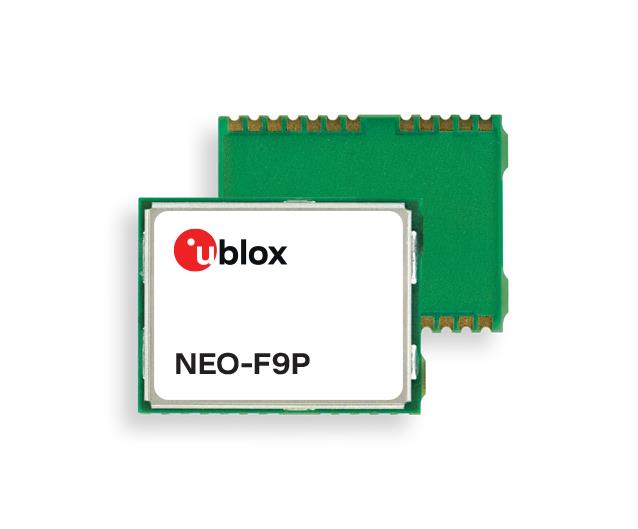
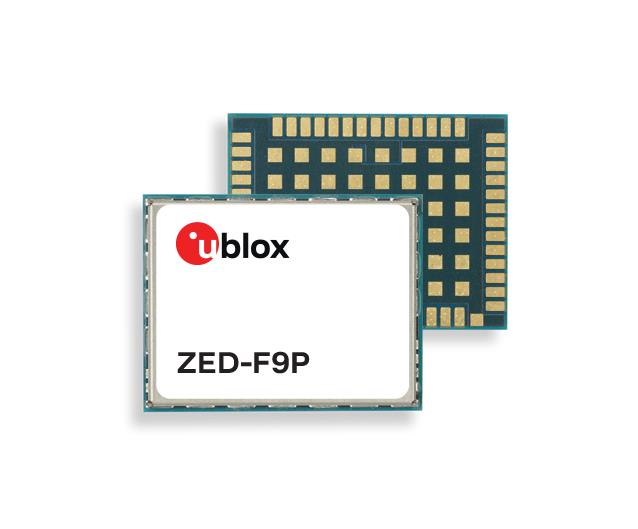
    U-blox has released two modules based on the u-blox F9 high-precision GNSS platform. The low-power NEO-F9P supports precise navigation and automation of moving industrial machinery, and the ZED-F9P-15B provides customers in the mobile robotics market with an L1/L5 option in addition to the L1/L2 bands.

    The NEO-F9P and the ZED-F9P-15B GNSS modules feature concurrent reception of GPS, Galileo, and BeiDou; multi-band L1/L5 real-time kinematic; short convergence times; and reliable performance. The modules deliver centimeter-level accuracy in seconds and comes in small, high-precision module form factors.

    ZED-F9P.png 
    Image: u-blox

    This small size, coupled with very low power consumption and ANN-MB1 antenna compatibility, makes the NEO-F9P suitable for a wide range of uses. Offering reliable and efficient positioning, the module supports open as well as standards-based correction services for enhanced performance, such as the u-blox PointPerfect GNSS augmentation service.

  • What positioning technology is right for your UAV – GCPs, GPS, GNSS, PPK or RTK?

    What positioning technology is right for your UAV – GCPs, GPS, GNSS, PPK or RTK?

    What positioning technology is right for your UAV?

    One of the things to evaluate is accuracy. Accuracy is important for two reasons: you want your UAV to be where it’s supposed to be, and you want to be able to accurately georeference the data you’re gathering with your payload. But (as you will no doubt have already discovered), accuracy isn’t as simple as looking for a number. You’ll have spotted various abbreviations accompanying those numbers — GPS, PPK, RTK, and GCP most commonly, but you may also see GNSS thrown into the mix. In this article, OxTS will explain what these abbreviations mean, and what they mean for your UAV project.

    What are GCPs?

    GCPs stands for ground control points, and they are the most inexpensive method of ensuring your data is accurately georeferenced. They are physical targets that you place on the ground, and for which you know the coordinates. Once your UAV has finished its survey, those points can be used to reference the position of your UAV in the global frame.

    Image: OxTS

    The biggest drawback with GCPs is that they don’t help your UAV know its own position. GCPs only help provide your UAV with a general position reference. So, GCPs aren’t any use if you want your UAV to fly pre-programmed flight plans. For that, you’ll need a solution such as an inertial navigation system (INS) paired with a GNSS receiver. GCPs can also be time consuming to use and cause additional difficulties at the post-processing stage.

    What is GNSS?

    GNSS stands for global navigation satellite system, which are systems that use satellite-based radio navigation to provide positioning, navigation and timing anywhere on Earth. The U.S. GPS is one of four GNSS constellations; the other three are the Russian GLONASS, the Chinese BeiDou, and the European Galileo. There are also two regional satellite navigation systems — the Indian NavIC and the Japanese QZSS.

    Many UAVs will have a GNSS receiver built in — it’s what enables them to know where they are on the planet, after all. Using GNSS only, most UAVs can get accuracy of 3 m to 5 m. This level of accuracy isn’t too bad for some applications, but not accurate enough if you’re trying to use the position data for mapping activities.

    What is PPK?

    Most UAVs advertise their ability to perform PPK — which stands for post-processed kinematics. It’s a method of squeezing extra accuracy out of your GNSS signal. OxTS has a blog post here that describes how it works.

    The main thing to note about PPK is that you can’t use it in real time. UAVs with PPK capabilities can provide data that’s centimeter-level accurate in optimum conditions, but that accuracy can’t be used for navigating the drone itself. It also means that for activities that require centimetre-level accuracy in real time, PPK doesn’t deliver.

    What is RTK?

    RTK is the best you can get when it comes to position accuracy. RTK stands for real-time kinematic, and just like PPK it can use it to obtain centimeter-level accuracy — but, in real time, rather than in post-processing.

    For most mobile mapping activities RTK accuracy is the goal, particularly if you’re using a lidar sensor to create georeferenced pointclouds.
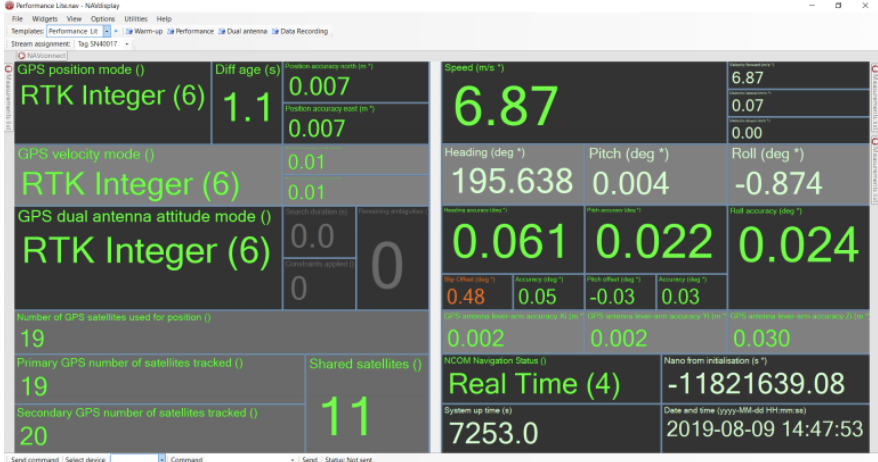
    Without RTK accuracy for the duration of your lidar survey, your point cloud may be unusable. The additional accuracy RTK offers could be used to tackle more challenging environments — providing that you have the tools to remain with RTK accuracy for as long as possible in the absence of GNSS.

    Most off-the shelf UAVs won’t have RTK capabilities built in; however, to get this level of accuracy, it’s likely that you’ll either need to purchase a top-of-the-range UAV or invest in a custom UAV (either built by you, or by a professional company).

    What’s right for me?

    If you’re involved in mobile mapping activities, then at the very least you will need PPK capabilities. Without those, you won’t be able to georeference your data with enough accuracy to be of use to anyone.

    When considering the difference between PPK and RTK, you need to consider:

    In what environment is your UAV operating? Do you need more accuracy than just a GNSS signal (remembering that PPK can only be applied after the survey takes place)?

    Is range of no particular importance – or is the payload on your drone sufficiently large that you need to calculate range very carefully? If so, RTK will give your UAV additional accuracy and, therefore, fuel efficiency.

    The final word in accuracy: gx/ix PPK and RTK from OxTS

    If you read the blog post mentioned above, you’ll know that RTK (and PPK) rely on having an optimal number of satellites visible. If those satellites are lost, then so is RTK lock. That is, unless you use an OxTS INS with gx/ix tight coupling technology. Gx/ix allows our INS devices to maintain RTK and PPK level accuracy even if the number of visible satellites starts to drop. Essentially, it protects the accuracy of your scan for longer — and it is available on the OxTS xNAV650, our UAV-mountable INS.

    The OxTS xNAV650 INS combines a best-in-class inertial measurement unit, with a survey-grade GNSS receiver to output highly accurate navigation data (position, heading, pitch and roll). The xNAV650 is used across the world for applications where reliability and accuracy are critical.
  • Harxon releases antennas for lawn mowers

    Harxon releases antennas for lawn mowers

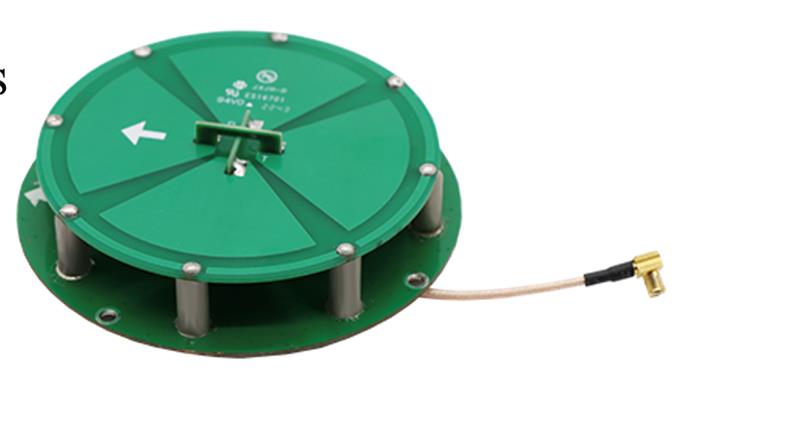
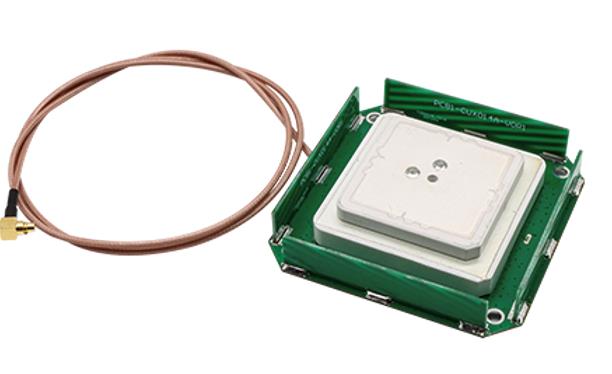
    Harxon has released two high-precision GNSS antennas suitable for robotic lawn mowers.

    The HX-CSX014A is a high gain, low profile and compact antenna with a new structure that simplifies integration into lawn mowers and minimizes the overall machine dimension. It features small size, high sensitivity and low power consumption.

    The HX-CSX231A, is a ready-to-use GNSS antenna with a highly reliable structure that makes it small and lightweight. It exhibits 4.5 dBi high gain performance with ultra-low signal loss. It also delivers wide beam width that covers wide frequencies with high marginal gain, a perfect option in complex environments.

    Additionally, the HX-CSX231A’s advanced LNA features improved signal filtering, out-of-band rejection, restrained unwanted electromagnetic interferences and a strong multi-path reduction capacity.

    To learn more about Harxon high precision GNSS solutions for lawn mowers, click here.

    Image: Harxon
    Image: Harxon
    Image: Harxon
    Image: Harxon
  • Leica Geosystems releases hybrid imaging and lidar sensor for airborne mapping

    Leica Geosystems releases hybrid imaging and lidar sensor for airborne mapping


    Image: Leica Geosystems
    Image: Leica Geosystems

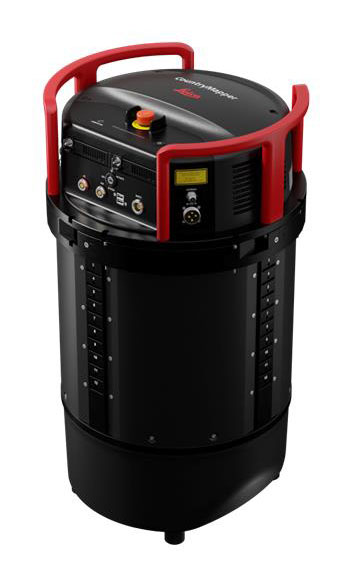
    Leica Geosystems, part of Hexagon, has released the Leica CountryMapper for large-area imaging and lidar mapping. Combining a large-format photogrammetric camera with a high-performance lidar unit into a single system, the CountryMapper collects foundational geospatial data simultaneously to support a wide variety of user applications.

    The CountryMapper combines imaging and lidar sensor modules into a highly efficient hybrid airborne system. The sensor features CMOS-based Leica MFC150 camera modules that leverage true mechanical forward-motion-compensation to deliver high image quality.

    The sensor’s new Hyperion3 lidar unit features 60° field of view, improving the performance and flexibility of the system compared to previous lidar modules, while reduced laser divergence provides greater planimetric accuracy and better foliage penetration. The CountryMapper fully integrates with Leica HxMap multi-sensor end-to-end processing workflow, enabling distributed processing of images and point clouds to optimize productivity for very large data sets.

    The CountryMapper supports applications such as orthophoto generation, terrain mapping, hydrography, forestry monitoring and infrastructure management. Users of previous-generation sensors can leverage their initial investment and upgrade their systems to the CountryMapper configuration.

  • Skydio gets BVLOS approval for UAV operations in Japan

    Skydio gets BVLOS approval for UAV operations in Japan

    Image: Screenshot of Skydio product video
    Image: Screenshot of Skydio product video

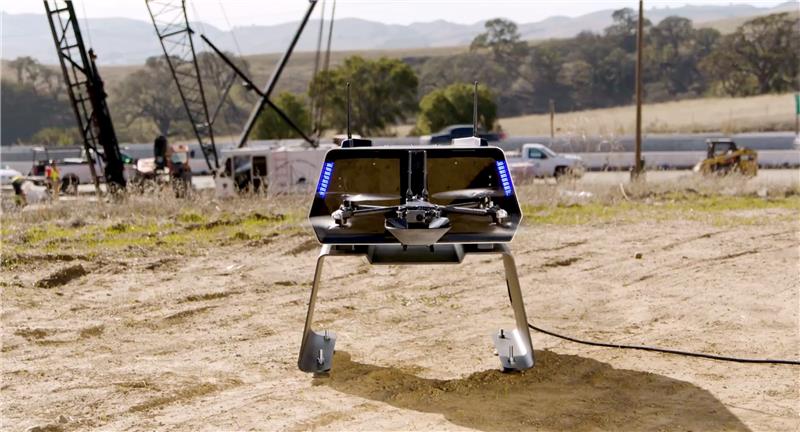
    The Japan Civil Aviation Bureau (JCAB) has granted Skydio nationwide approval to remotely fly UAVs beyond visual line of sight (BVLOS). The approval enables streamlined BVLOS operations using Skydio Dock and Remote Ops.

    Skydio’s artificial intelligence and autonomous technology enables UAVs to safely fly missions near structures in a way that would be difficult or impossible with manually-operated UAVs — even when operated remotely without a pilot on-site.

    Under the JCAB approval, there is no requirement to use additional crew members, such as visual observers, or technology to detect crewed aircraft — eliminating some of the challenges faced by UAV operators. The BVLOS approval applies across Japan.

    Notification of the flight area is required prior to takeoff using JCAB’s web portal. Operators can now remotely inspect critical infrastructure — buildings, roads, power plants and the scenes of natural disasters — safely and quickly without placing people at risk.

  • Talking to the satellites

    Talking to the satellites

    On the operations floor of the GPS Master Control Station at Schriever Space Force Base in Colorado, Luccio looks at feeds from a worldwide network of monitor stations and ground antennas. (Image: U.S. Space Force photo by Dennis Rogers)
    On the operations floor of the GPS Master Control Station at Schriever Space Force Base in Colorado, Luccio looks at feeds from a worldwide network of monitor stations and ground antennas. (Image: U.S. Space Force photo by Dennis Rogers)

    The young operators on duty at the GPS Master Control Station, at Schriever Space Force Base in Colorado, receive feeds from a worldwide network of monitor stations and ground antennas, monitor the GPS satellites, and send them commands as needed. This month’s cover story features excerpts of an interview with their commander, Lt. Col. Robert O. Wray, about the training and duties of his team members, the challenges they face, and what brought him to his current assignment.

    Also in this month’s cover story a Q & A with Spirent Federal Systems on how simulation supports GPS modernization and one with Hexagon | NovAtel on the company’s anti-jamming antennas.

    Check out the three Q&A’s featured in this cover story:

    GPS Master Control Station

    Spirent Federal

    Hexagon | NovAtel 

  • Frontier Precision announces upgraded UAV platform

    Frontier Precision announces upgraded UAV platform

    Photo:
    Image: Frontier Precision

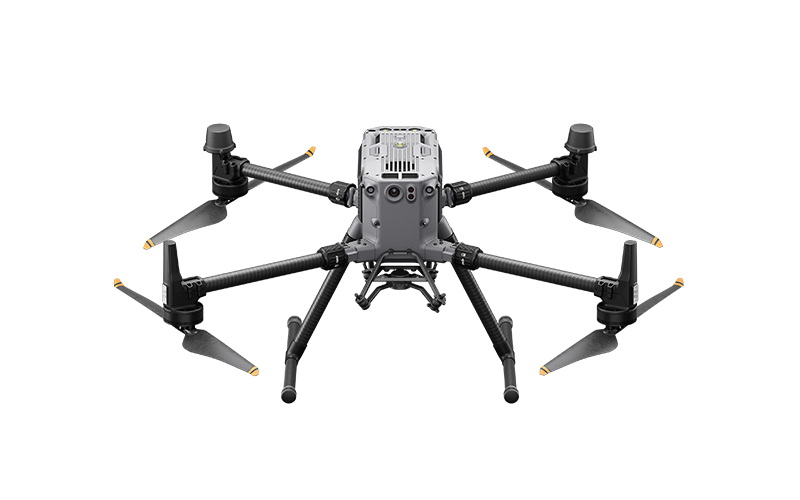
    Frontier Precision has announced the availability of an upgraded flagship UAV platform, the Matrice 350 RTK.

    This UAV platform features a new video transmission system and control experience, an efficient battery system, and more comprehensive safety features. It also offers robust payload and expansion capabilities.

    The Matrice 350 RTK has a 55-minute max flight time and an IP55 rating. It features six-directional sensing and positioning, as well as a night-vision FPV camera, and 400 battery cycles.

    Click here for more product information.

  • A2Z Drone Delivery launches delivery UAV

    A2Z Drone Delivery launches delivery UAV

    Photo:
    Image: A2Z Drone Delivery

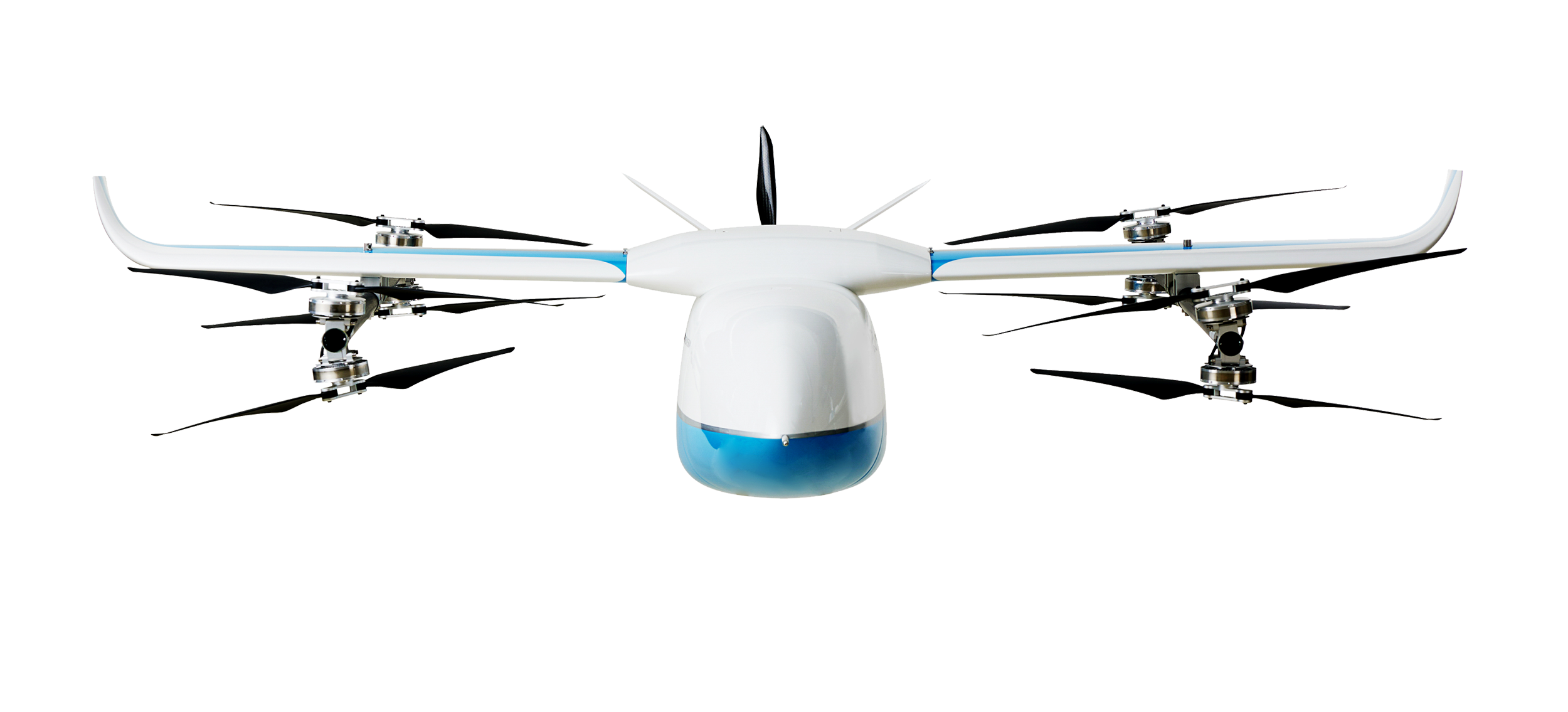
    A2Z Drone Delivery, developer of commercial UAV delivery solutions, has released its delivery UAV, the RDSX Pelican. The Pelican leverages a hybrid vertical takeoff and landing (VTOL) airframe with no control surfaces to combine the reliability and flight stability of a multirotor platform, with the extended range of a fixed-wing craft.

    With no ailerons, elevator, or rudder, the Pelican’s durable design eliminates common points of failure and extends operational time between maintenance overhauls. Designed to meet the 55 lb takeoff weight limitation for Federal Aviation Administration Part 107 compliance, the Pelican can carry payloads of 5 kg on missions up to 40 km, roundtrip.

    The Pelican can be optimized for extended range operations or to deliver payloads from altitude with the company’s RDS2 UAV delivery winch.

    Available in multiple configurations, the RDSX Pelican can be customized for an array of missions. The Pelican enables deliveries from altitude where spinning propellers are kept far from people and property, mitigating consumer privacy concerns of low-flying UAVs while abating intrusive rotor noise.

    Alternatively, for missions in which the UAV can safely land at its destination, a simple servo-release mechanism can release payloads and expand the Pelican’s payload capacity.

    Beyond logistics use cases such as residential deliveries, the Pelican is suitable for aerial mapping, UAV inspection, forestry services, search and rescue operations, water sample collection, offshore deliveries, mining, and more.

  • Trimble company added to GeoCue network

    Trimble company added to GeoCue network


    Image: AllTerra
    Image: AllTerra

    AllTerra, a Trimble geospatial dealer, has joined the GeoCue distribution network. AllTerra will provide GeoCue’s full line of TrueView 3D imaging sensors, a UAV, lidar and photogrammetry solution. The technology enables fast, automated generation of true 3D colorized point clouds, oblique imagery and orthophotos from a single UAV flight.

    AllTerra is also authorized to sell LP360 lidar and photogrammetry 3D point cloud software. LP360, an advanced desktop lidar software package, simplifies extracting information and generating deliverables in a GIS environment.

    The company offers Trimble and Spectra Precision solutions in surveying, MGIS, marine, forensics, mobile mapping and infrastructure. Alltera also offers mobile/airborne lidar and photogrammetry solutions from GeoCue and Microdrones.

  • Quanta Micro INS named a finalist for AUVSI XCELLENCE awards

    Quanta Micro INS named a finalist for AUVSI XCELLENCE awards

    Image: SBG Systems
    Image: SBG Systems

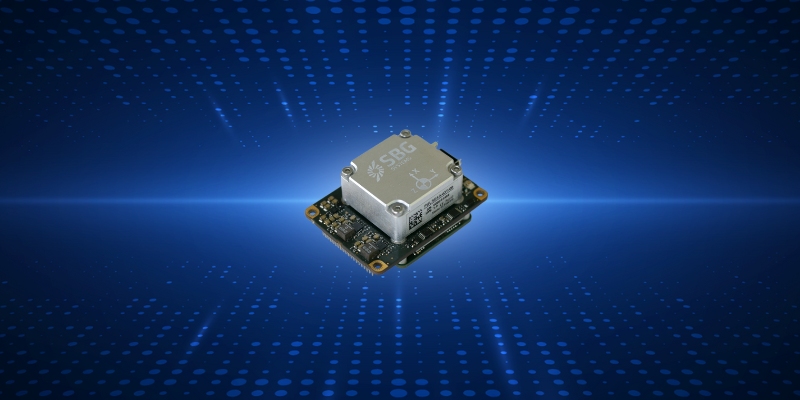
    The Quanta Micro inertial navigation system (INS) has been named a finalist for the AUVSI XCELLENCE Awards — “Enabling Components & Peripherals.” The winners will be announced during an awards ceremony at AUVSI XPONENTIAL 2023 at the Colorado Convention Center in Denver.

    The AUVSI XCELLENCE Awards honor innovators who demonstrate commitment to advancing technology, leading and promoting safe operations and developing programs that use unmanned systems to improve the human conditions.

    Quanta Micro is a GNSS-aided INS designed for space-constrained applications. Quanta Micro leverages a survey-grade inertial measurement unit (IMU) for heading performance in single antenna applications, and temperature calibration from -40° C to +85° C. An optional secondary antenna enables fast heading initialization in low dynamic applications.

    “This year, XPONENTIAL is all about designing a shared plan for the future of autonomy,” Brian Wynne, president and CEO of AUVSI, said. “There’s no better place to announce the 2023 XCELLENCE award finalists.”

  • VOTIX and Iris Automation partner on safe BVLOS operations

    VOTIX and Iris Automation partner on safe BVLOS operations

    Image: VOTIX
    Image: VOTIX

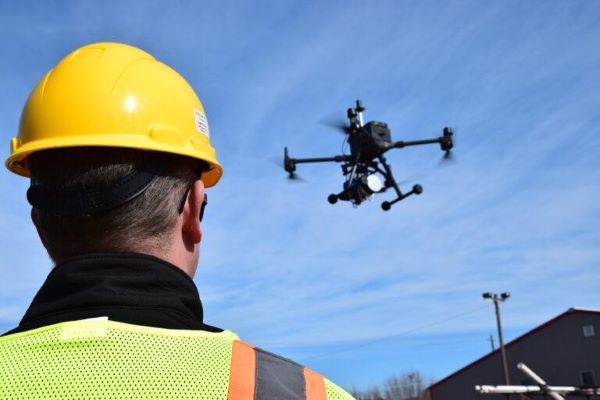
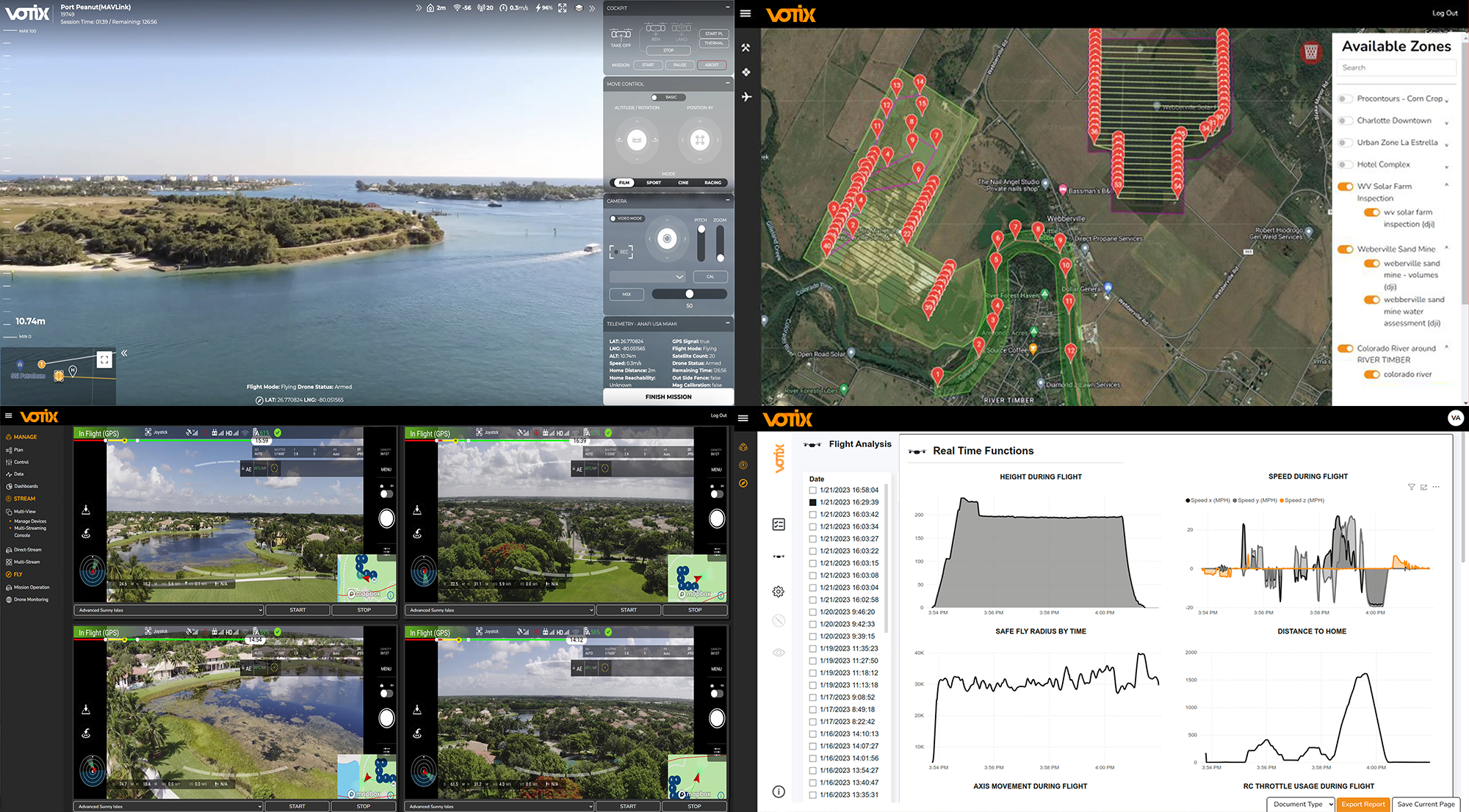
    VOTIX has partnered with Iris Automation to enable safe beyond visual line of sight (BVLOS) flights by integrating Iris Automation’s Casia G ground-based detect and alert system into the VOTIX cloud-based UAV operating system.

    This integration makes remote operations a reality for enterprises that need effective and flexible UAV BVLOS deployments, from routine automated inspections of critical infrastructure to rapid mobilization seen in UAV as first responder programs.

    This hardware-software solution will feed data from the Casia G system into the VOTIX platform to provide a complete picture of the operational airspace in real-time.

    The Casia G system can detect non-cooperative or intruder aircraft at a distance by monitoring the airspace and providing their precise location and classification data. This enabes automated conflict resolution via the VOTIX platform.

    “Our mission is to make BVLOS easy,” said Ed Boucas, VOTIX CEO. “We have integrated every aspect of drone operation in a single pane of glass so that pilots can easily perform safe and secure BVLOS flights.”

  • UAvionix launches module to meet FAA mandate

    UAvionix launches module to meet FAA mandate


    Image: uAvionix
    Image: uAvionix

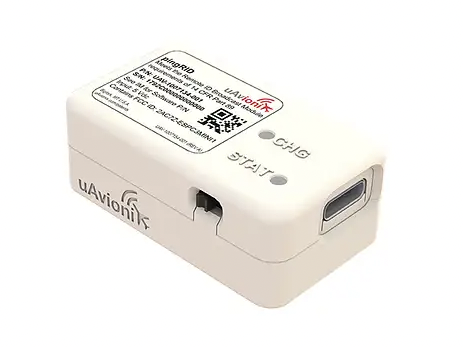
    UAvionix has launched its remote ID broadcast module for UAVs, pingRID. The pingRID meets the Part 89 remote ID standards of the Federal Aviation Administration (FAA), which will become effective on Sept. 16, 2023, to keep operators safe and compliant throughout a flight.

    The pingRID comes pre-configured and ready for use out of the box. After assigning the pingRID unique identification number to the aircraft’s registration with the FAA, operators can attach the battery-powered device to their UAV and prepare for flight.

    A set of LED indicators provides status on the battery charge, device readiness for flight and inflight operations. The compact, lightweight design fits most aircraft without impacting performance. The module can also be quickly recharged via USB-C.

    The FAA’s final rule on remote ID requires all UAV pilots to meet the operating requirements of Part 89. For most operators, this will require flying a UAV equipped with standard remote ID, a remote ID broadcast module such as the pingRID, or flying at a Federally Recognized Identification Area.