u-blox and Topcon Positioning Systems have formed a strategic partnership to develop a high-precision GNSS positioning service for the mass market.
The partnership was formed in response to the increasing demand for GNSS precise positioning across various applications. According to a recent EUSPA report, services enabled by GNSS devices are projected to generate approximately 80% of total GNSS revenues by 2033.
The comprehensive GNSS correction services will serve a wide range of applications requiring precise positioning, including automotive, industrial, robotics, construction, precision agriculture and mobility sectors. These services will integrate with u-blox’s current and future hardware products, as well as existing services such as PointPerfect.
The increasing prevalence of GNSS spoofing in commercial aviation poses significant safety concerns and highlights the need for robust alternative positioning, navigation and timing (A-PNT) sources. This form of electronic warfare, which uses fake signals to confuse aircraft navigation and safety systems, has become a growing issue for civilian flights worldwide.
Pilots told The Wall Street Journal that spoofing incidents have risen in recent months. According to analyses from SkAI Data Services and the Zurich University of Applied Sciences, the number of affected flights per day increased from a few dozen in February to more than 1,100 in August 2024.
The issue of spoofing has expanded beyond active conflict zones near Ukraine and the Middle East, and now affects hundreds of civilian pilots daily on a global scale. The modern cockpit’s heavy reliance on GPS technology means that falsified data can have far-reaching consequences, breaching multiple aircraft systems and causing disruptions that may last anywhere from a few minutes to an entire flight.
According to anonymized reports shared with government agencies and industry groups, pilots have experienced many alarming incidents, including sudden clock resets, false terrain warnings and unexpected flight path deviations. This surge in GNSS spoofing attacks highlights the vulnerability of critical navigation systems and raises significant concerns about aviation safety in an increasingly complex environment.
All jammed up The Wall Street Journal reported that in August 2024, a United Airlines flight from New Delhi to the New York area encountered a GPS spoofing incident that affected its navigation systems for the duration of the flight.
Initially, the flight seemed to adhere to the standard GPS route across Asia, mirroring the path taken by previous flights heading to Newark Liberty International Airport. The spoofing attack, originating in the Black Sea region south of Ukraine, caused the aircraft’s GPS coordinates to deviate progressively from its actual position throughout the remainder of the flight.
Even after the plane had left the affected area, its reported GPS location continued to show erratic behavior, occasionally making sudden jumps. This suggested that the navigation equipment was struggling to recalibrate accurately. While alternative navigation systems ensured the flight’s safe completion of its intended route, the compromised GPS data indicated that it had terminated in the Atlantic Ocean. In reality, the aircraft landed safely at its scheduled destination in Newark.
Keeping operations safe Aviation safety officials said spoofing has disrupted some flights but has not posed major safety risks. Pilots are trained to use A-PNT systems as backups. However, managing false GNSS signals and alerts risks dividing the operator’s attention if a more severe problem arises.
“If we lose an airplane because of workload issues because of these problems we’re encountering, compounded with an emergency, that is going to be a horrendous event,” said Ken Alexander, the Federal Aviation Administration’s chief scientist for satellite navigation, during a pilot union forum in Washington, D.C.
Airlines are collaborating with aircraft manufacturers, parts suppliers, and aviation safety authorities to devise immediate solutions and long-term strategies. For example, the International Air Transport Association (IATA) and the European Union Aviation Safety Agency (EASA) are openly discussing these challenges and holding workshops to share best practices. Safety bulletins have also been issued for operations where spoofing and jamming are known to have occurred.
Industry insiders told The Wall Street Journal that the development of new equipment standards to enhance civilian aircraft resilience against spoofing attacks is not expected to be finalized until 2025.
Navigating issues across sectors According to anonymized reports collected by OpsGroup, an aviation safety organization that includes pilots, dispatchers and other airline staff, various attacks have caused navigation issues across multiple sectors.
GNSS spoofing has disrupted operations in Europe but has not endangered flights, said Florian Guillermet, executive director of the European Union Aviation Safety Agency. Pilots had to divert to airports they did not intend to land at, and earlier this year, an airline temporarily halted operations at an Estonian airport that was not equipped with ground-based navigation as a backup for GNSS.
Boeing said manufacturers, carriers and regulators globally are contributing GPS expertise for solutions to ensure safety. Boeing and Airbus are working with airlines to help develop procedures to assist pilots, the companies said.
United and American said their pilots are equipped with several ways to navigate with precision, even with GPS interference. American said it has not experienced disruptions or significant safety concerns from GPS interference.
Insights from industry experts
During the 64th Civil GPS Service Interface Committee Meeting — hosted at ION GNSS+ 2024 from Sept. 16-17 — The presentation “Complementing GNSS for Resilient Performance Based Navigation” by Okuary Osechas Ph.D., and Gary A. McGraw, Ph.D., addressed the critical role of complementary positioning, navigation and timing (CPNT) technologies in aviation, particularly in light of increasing threats to GNSS.
The presentation highlights the impact of radio frequency interference (RFI) on aviation, including jamming and spoofing. These pose significant risks to aviation safety by reducing operational margins. The prevalence of these threats is increasing, necessitating alternative navigation solutions.
Performance-based navigation (PBN) is essential for modern aviation, enhancing efficiency and flexibility. However, it relies heavily on GNSS, making it vulnerable to disruptions, again highlighting the need for CPNT services.
Integrating CPNT sources ensures resilient navigation capabilities. This includes leveraging legacy navigation aids and modernized terrestrial systems. Various complementary technologies such as eDME, eLORAN, LDACS-NAV and LEO SATNAV are being assessed for their operational effectiveness, compatibility and potential to support aviation needs.
The researchers recommend the following to address these challenges:
Near-term solutions: Implementing eDME for backward compatibility. Medium-term strategies: Utilizing eLORAN for wide-area time distribution. Long-term goals: Developing LDACS-NAV to enhance spectrum efficiency and standardization. Collaborative efforts: The presentation calls for international cooperation in research and development to advance standards and infrastructure investments in complementary PNT technologies.
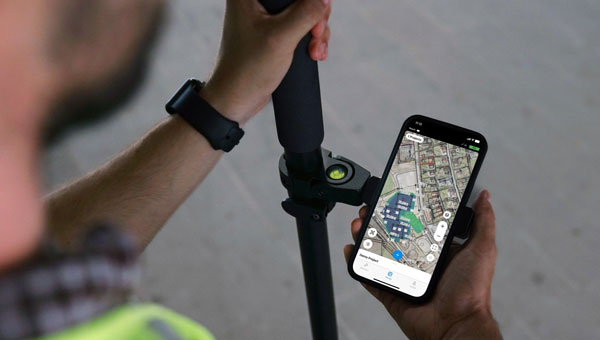
Emlid has released updates to its Emlid Flow mobile and cloud app for land surveying. The app now includes a full range of tools for earthworks, topographic and as-built surveys and features such as Surfaces support.
When used with Emlid’s survey-grade Reach GNSS receivers, the upgraded Emlid Flow app aims to improve efficiency for land surveying and construction workflows. Key features added to Emlid Flow include advanced linework capabilities, inverse and traverse tools, polygon support and an auto-collection mode. The recently released Surfaces support allows surveyors to incorporate digital terrain models (DTM) into projects and calculate cut and fill values during stakeout operations.
In developing these updates, Emlid seeks to create an uncluttered, intuitive interface for surveyors while maintaining all necessary controls and functionality. The app offers streamlined navigation and instant cloud syncing, enabling surveying professionals to complete tasks efficiently on their preferred device, whether a rugged Android smartphone or iPad. Projects prepared in the cloud are instantly accessible in the mobile app for field use, streamlining the entire survey process.
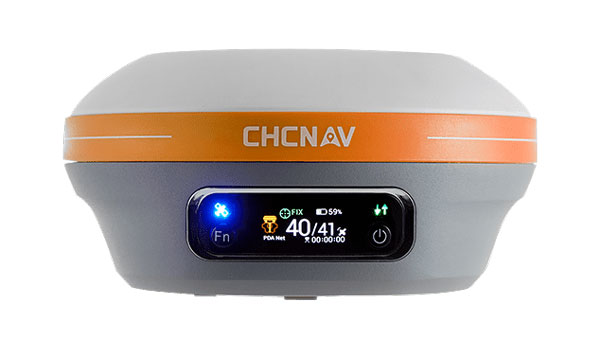
CHC Navigation (CHCNAV) has unveiled the i83 Pro, an inertial measurement unit (IMU)-real-time kinematic (RTK) GNSS receiver. This receiver combines GNSS capabilities with extensive compatibility options to address the diverse needs of surveying, construction and mapping professionals.
The i83 Pro incorporates CHCNAV’s third-generation GNSS antenna and the latest iStar algorithm, designed to boost GNSS signal tracking efficiency by 30%, according to the company. With 336 channels supporting GPS, GLONASS, BeiDou, Galileo and QZSS constellations, it can achieve centimeter-level precision rapidly, even in challenging environments.
The receiver offers comprehensive connectivity options, including built-in Wi-Fi, Bluetooth, NFC, 4G modem and UHF modem. These technologies support various GNSS surveying modes, such as RTK Networks NTRIP and UHF base-rover configurations. The i83 Pro is compatible with VRS, FKP and MAC for Network RTK for precise positioning across diverse operational settings.
Engineered for challenging environments, the i83 Pro features an IP68-rated enclosure for dust and water protection, a compact and lightweight design for enhanced portability, a high-resolution color display for clear status information and a 20-hour battery life for continuous operation in rover mode.
The i83 Pro offers optional Trimble RTX and OmniSTAR support, providing RTK-level accuracy without relying on a base station or VRS network. Additionally, it can be equipped with the optional Trimble MAXPro Positioning Engine for extended performance.
CHCNAV will showcase this receiver at INTERGEO 2024 in Hall 3, Booth B3.052.
Safran Navigation and Timing has unveiled its latest GNSS simulator, the Skydel GSG-8 Gen2, an evolution of its GSG-8 simulator. This new positioning, navigation and timing (PNT) test solution is part of Safran’s family of Skydel-based simulators.
The GPU-based GSG-8 Gen2 simulator delivers high-end GNSS signal testing capabilities in a user-friendly, turnkey package. It seeks to support the growing demand for location-aware applications and systems requiring navigation or timing.
It features six front-facing RF outputs and a combined output. It covers the entire GNSS bandwidth and offers a 1,000 Hz simulation iteration rate, high dynamics, real-time synchronization and simulation of all-in-view satellite signals.
This simulator is ideal for development, NavWar testing and integration projects that require high performance, increased constellation and satellite visibility and multi-vehicle/multi-antenna scenarios. It allows users to generate RF signals that simulate real-world receiver device reactions under user-defined parameters. Users can control various simulation aspects, including receiver trajectories with six degrees of freedom (DoF), multipath signals, advanced jamming and spoofing and atmospheric interferences.
The simulator can recreate various types of interference, both benign and malicious. Users can adjust power levels, interference signal types, spoofing signals, location, antenna patterns, and transmitter trajectories. In-band and out-of-band jamming signals can be generated without additional hardware.
The GSG-8 Gen2 can simulate up to 2,000 GNSS signals simultaneously across multiple bands, leveraging GPU power to overcome the limitations of FPGA-based simulators. A single GSG-8 Gen2 can run and control multiple instances, each representing an independent trajectory, vehicle or antenna with its own output connector.
As a low-Earth orbit (LEO) PNT signal simulator, the GSG-8 Gen2 can generate many signals required for LEO PNT simulations alongside legacy GNSS signals, threats and multipaths. It also supports S-Band signal generation.
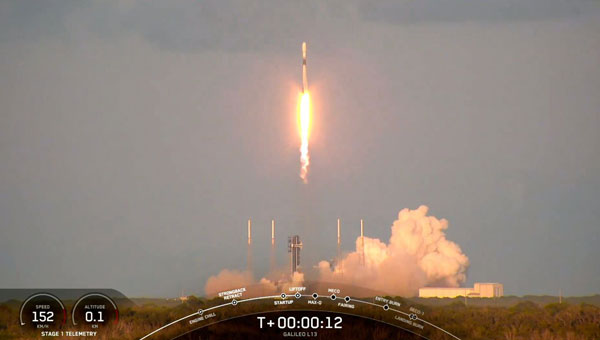
SpaceX has launched the latest pair of Galileo satellites from the Kennedy Space Center in Florida. The SpaceX Falcon 9 rocket carried satellites 31 and 32 (FM26 and FM32) to their designated orbits.
This launch, number 13 in the Galileo program, marks a crucial milestone in the constellation’s development. The addition of these satellites completes the designed constellation, with the required operational satellites plus one spare per orbital plane. The new pair will undergo testing at their final altitude of 23,222 km before becoming operational.
European Space Agency (ESA) Director of Navigation Javier Benedicto highlighted the importance of this launch, stating that the remaining six Galileo First Generation satellites are scheduled for deployment in 2025 and 2026.
These additional satellites are designed to enhance the system’s performance and reliability further, ensuring uninterrupted delivery of highly precise navigation services.
At ION GNSS+ 2024, Eric Châtre, head of EU GNSS exploitation and evolution at the European Commission, and Miguel Manteiga, Galileo project manager at ESA, participated in a panel titled “Status of GPS, Galileo, BDS, QZSS, KPS and NavIC.” They shared how 2024 has been a particularly eventful year for the Galileo program. In April, satellites 29 and 30 were launched and entered service in September. The new Public Regulated Service (PRS) signals began broadcasting, offering encrypted navigation for authorized governmental users. A significant upgrade of Galileo’s ground segment was completed without impacting users.
The Galileo system continues to evolve, with the development of Second Generation (G2) satellites underway. These satellites will feature fully digital navigation payloads, electric propulsion and inter-satellite link capacity.
Adtranhas launched its Oscilloquartz Time Scale System, designed to meet the precise timekeeping requirements of national metrology institutes, scientific research facilities and other applications demanding the highest levels of accuracy and traceability.
The comprehensive system integrates Adtran’s Oscilloquartz grandmaster clocks, GPS/GNSS receivers, and high-performance optical cesium atomic clocks alongside a combination of the phase comparator, reference generator, and time interval counter. This ensures synchronization with coordinated universal time (UTC) and provides robust protection against cybersecurity threats.
With its customizable design, real-time monitoring, and seamless transition capabilities, the Oscilloquartz Time Scale System addresses the increasing need for resilient and accurate time synchronization across various sectors to ensure operational continuity and data integrity.
Leica Geosystems, a part of Hexagon, has introduced the Leica iCON trades solution, which includes the iCS20 and iCS50 sensors designed for construction layout tasks. This solution integrates with existing Leica iCON build portfolio tools, offering tailored workflows for construction industry users.
The solution features the Leica vPole, allowing free movement during measurements. It works with the iCS50 to lock to the vPole using a unique combination of dot and stripe patterns. This system can automatically detect pole height and compensate for tilt, facilitating accurate point and line layouts even in difficult-to-reach areas. These features are designed to increase efficiency and precision in construction workflows.
Leica iCON trades has Hexagon’s 6-degree of freedom (6DoF) technology, traditionally used in industrial measurement, to the construction sector. This seeks to broaden the scope of applications in construction, offering new possibilities for improving workflow efficiency and ease of use.
The solution is designed for quick and efficient layout tasks, leveraging artificial intelligence (AI) to tackle current industry challenges. Features include computational photography for advanced imagery and realistic site documentation, while AI capabilities predict pole movement to enhance target lock and tracking, thereby streamlining the layout process.
Rx Networks, a GNSS data services provider, has released TruePoint | LITE, a correction service designed for power-conscious applications that require precise and reliable location data.
TruePoint | LITEaims to deliver sub-meter and lane-level accuracy with global coverage for low-power usage. It is engineered with power efficiency in mind, focusing on applications such as smartphones, wearables, asset tracking and Internet of Things (IoT) devices.
TruePoint | LITE uses patent-pending predictive technologies designed to reduce dominant GNSS ranging errors—including ionospheric, orbital, and clock errors—to ensure accurate GNSS positioning while minimizing data traffic and conserving battery life.
TruePoint | LITE leverages proprietary predictive technologies to correct key GNSS ranging errors, particularly ionospheric range errors, according to the company.
SiTime has launched the Endura Low Phase Noise Super-TCXO time synchronization and RF systems designed for high-performance applications requiring stability and low noise in challenging environments.
These devices operate within a frequency range of 10 to 220 MHz and offer frequency stability, with specifications as tight as ±0.1 ppm over a temperature range of -40°C to 105°C. Their phase noise performance can achieve -159 dBc/Hz at a 10 kHz offset for a 19.2 MHz carrier frequency and reach -172 dBc/Hz for broad base phase noise.
The Endura Super-TCXOs exhibit an acceleration sensitivity of 0.01 ppb/g and can withstand shocks up to 30,000g and vibrations up to 70g, making them suitable for demanding applications.
These Super-TCXOs are ideal for various applications, including time synchronization and RF systems, aerospace and defense networking, communication systems and positioning, navigation and timing (PNT) applications.
The European Geostationary Navigation Overlay Service (EGNOS) has released version 3.6 of its Safety of Life (SoL) Service for Aviation Service Definition Document (SDD), introducing several critical updates to enhance EGNOS satellite navigation-based operations.
SDD v3.6 describes improvements in EGNOS architecture for the space and ground segments. For the space segment, the document presents the latest technical information on the geostationary (GEO) satellites that deliver EGNOS services. In the ground segment, the ranging integrity monitoring station (RIMS) network has been expanded to include a new site in Kuusamo, Finland. The addition of this station in the far northern reaches of Europe extends coverage and heightens the robustness of SoL service in this remote and challenging environment.
SDD v3.6 also provides a detailed analysis of the impact of ionospheric activity during Solar Cycle 25, which began in December 2019 and is expected to peak around 2025. This extreme solar activity poses challenges to satellite navigation, and the document offers insights into how EGNOS maintains reliable performance under adverse ionospheric conditions.
The new updates aim to improve the precision, reliability and safety of satellite navigation services in aviation. The SoL service supports various transport domains, primarily focusing on civil aviation, covering localizer performance with vertical guidance (LPV) procedures.
OneWeb Technologies has launched Astra, which is designed to maintain low-Earth orbit (LEO) SATCOM connectivity in GNSS-compromised environments.
The package includes a software-defined outdoor receiver that leverages assured positioning, navigation and timing (A-PNT) broadcast services, significantly enhancing connectivity resilience. Astra can process PNT signals from GNSS and alternative sources across multiple frequency bands to offer continuous connectivity and situational awareness, even in challenging spectrum-contested environments.
The system is compatible with non-GNSS A-PNT broadcast services, such as Iridium. It can identify the optimal PNT source while producing an output signal compatible with the standard GPS L1 interface. In addition to its commercial applications, Astra aligns with the military’s Primary, Alternate, Contingency, Emergency (PACE) communications plan.