Author: Jesse Khalil

  • SSC completes software upgrade for OPIR monitoring

    SSC completes software upgrade for OPIR monitoring

    Photo: SSC
    Photo: SSC

    The Space Systems Command (SSC) Space Sensing program executive office, headquartered at Los Angeles Air Force Base in El Segundo, California, has delivered the first of two future operationally resilient ground evolution (FORGE) software deliveries to operations in the Overhead Persistent Infrared (OPIR) Battlespace Awareness Center (OBAC) at the Buckley Space Force Base in Colorado.

    The integration of the FORGE framework into OBAC operations offers increased cyber resilience and enhanced mission applications to operators. OBAC operations on FORGE aim to boost OPIR battlespace awareness and technical intelligence missions with significant cyber-security improvements and enhanced missile detection and tracking.

    Additionally, the operational trial period preparing for this delivery provided opportunities to stress the FORGE framework with real-world events. Notably, the framework performed in family with the legacy system, enabling the battlespace awareness and technical intelligence mission as the OBAC’s operational baseline.

    FORGE provides OPIR data to operational warfighters and allows the U.S. Space Force to pivot toward a resilient missile warning, tracking and defense architecture. The FORGE ground system will support continued operations of legacy Space Based Infrared System (SBIRS), as well as the next generation of OPIR sensors including Next Gen OPIR GEO & Polar, and Resilient Missile Warning / Missile Track medium-Earth orbit (MEO) space systems. It has a cyber-resilient, flexible, scalable and government-owned open architecture to support the development, integration and delivery of OPIR processing applications for rapid response to emerging threats.

    “Our nation’s ability to quickly sense and make sense of OPIR observations is crucial in maintaining decision-making advantage against adversarial threats and their advanced missile technologies,” said U.S. Space Force Col. Robert Davis, Space Force program executive officer for Space Sensing. “This effort enables target tracking earlier and for a longer duration, which significantly increases the event custody chain. Timely response to threats requires a modern architecture capable of hosting data from a range of new and legacy sensors that enables the development of applications to address these threats.”

    The FORGE framework promotes open architectures designed to maximize the use of the OPIR constellation and allow for new capabilities to be added frequently and efficiently. It uses existing commercial off-the-shelf (COTS), government off-the-shelf (GOTS), and free or open-source software (FOSS) products to offer users a rapid pivot to new solutions depending on mission needs. This strategy enhances the opportunities for a broad range of vendors and strengthens the government’s access to the latest industry innovations, thereby increasing resiliency in the weapon system and industrial base, according to SSC.

  • SpaceX successfully launches Galileo GNSS satellites

    SpaceX successfully launches Galileo GNSS satellites

    Photo: SpaceX
    Photo: SpaceX

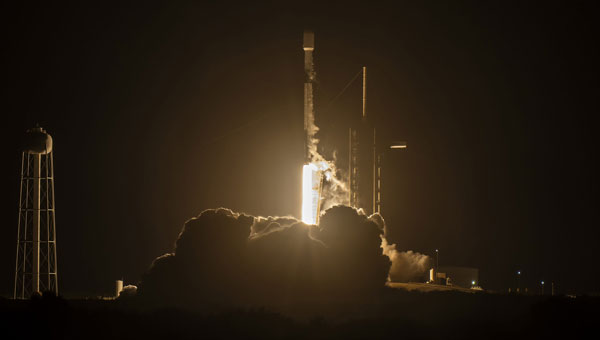
    On April 27, 2024 the SpaceX Falcon 9 medium-lift launch vehicle launched into orbit Galileo satellites GM25 and FM27 from Kennedy Space Center in Florida. This was Falcon 9’s 20th and final launch.

    The EU Agency for the Space Programme (EUSPA) confirmed in a statement that it is now in the Launch and Early Orbit Phase (LEOP) stage of the two new L12 Galileo satellites. They will join the current Galileo operational fleet in the upcoming months. The latest batch of Galileo satellites are being operated by EUSPA and the Galileo Service Operator for the Early Orbit Phase (EOP).

    The EUSPA operations team, through its Galileo Service Operations provider, took over the satellite operations as the satellites were separated from the launch vehicle and their automated initialization sequence started. Telemetry has been successfully acquired, their solar panels deployed and the batteries are charging, bringing the satellites to what is called the Holding Point, according to EUSPA.

    The EOP is a vital step in a space mission, running through the gradual activation and testing of platform satellite components, once in orbit. From the Galileo Control Centre in Oberpfaffenhofen, Germany, the dedicated LEOP team will navigate the satellites to their designated orbit within the coming days. Following rigorous in-orbit testing and commissioning, the satellites will integrate into Galileo’s operational constellation at 23,220 km.

    The mission is a collaboration between the European Commission, which lead the management of Galileo; EUSPA, which manages operations and services with the support of the Galileo service operator (SpaceOpal); and the European Space Agency (ESA), which serves as the design authority, responsible for development.

  • Launchpad: Rotating lasers, antennas and upgraded UAVs

    Launchpad: Rotating lasers, antennas and upgraded UAVs

    A roundup of recent products in the GNSS and inertial positioning industry from the April 2024 issue of GPS World magazine.


    SURVEYING & MAPPING
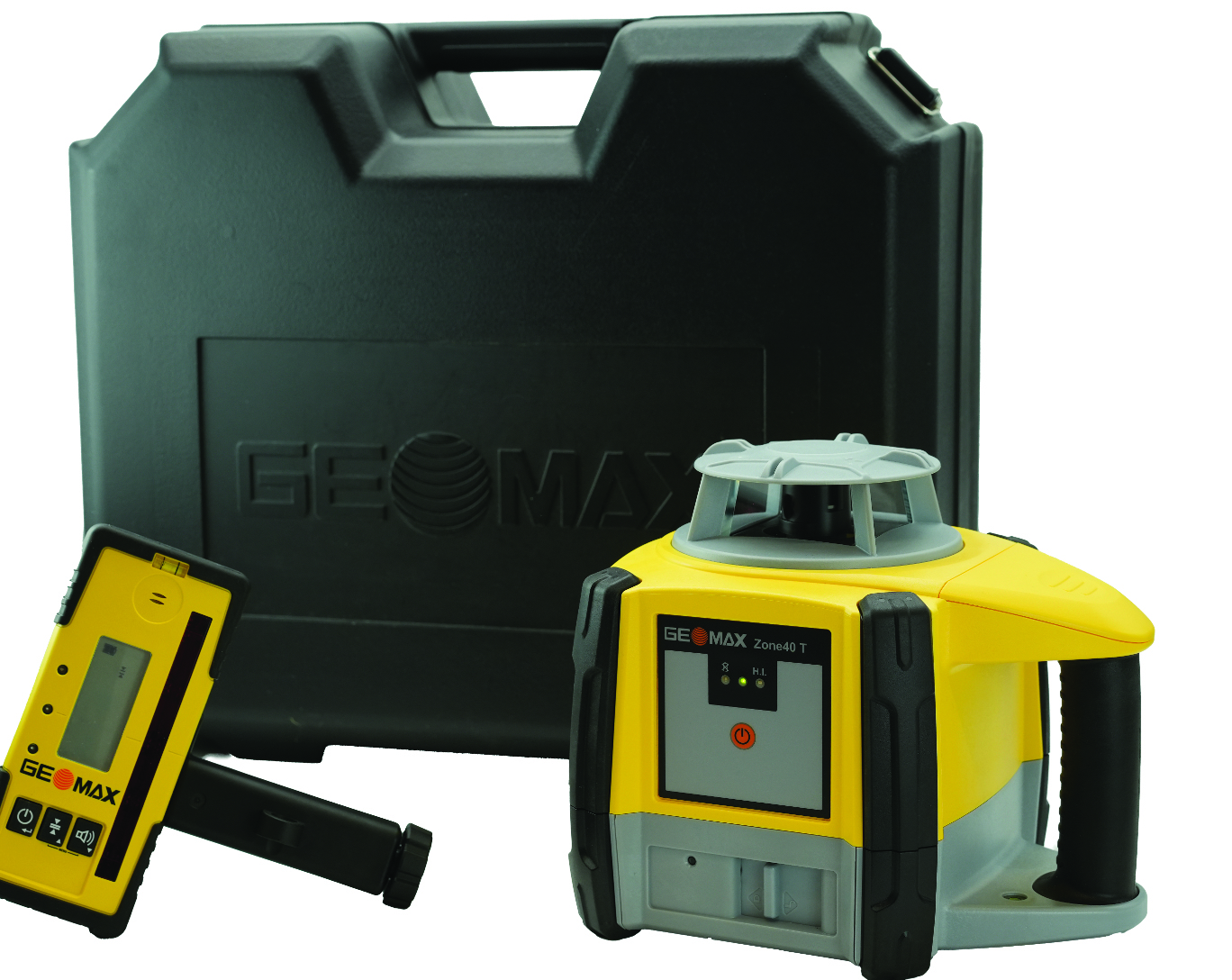

    Photo:

    Rotating Laser
    Built for challenging worksites

    The Zone40 T one-button rotating laser is designed for all types of grading and leveling jobs. It seeks to address the industry’s need for efficient and accurate alignment solutions.
    Its one-touch operation is designed to simplify and increase efficient workflows in a variety of jobs such as grading, paving, excavating, surveying, layout and more. It is ideal for contractors, crew chiefs, supervisors and trade professionals.

    GeoMax products are tested and proven to endure the toughest conditions. With an IP67 environmental rating, the Zone40 T accurately delivers in dust, water, wind and extreme temperatures.
    GeoMax Positioning, geomax-positioning.com
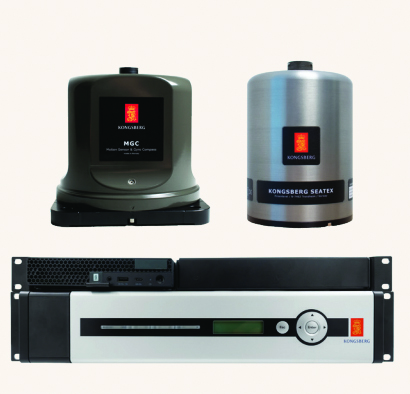
    Photo:

    Hydrographic Surveying Solution
    With advanced inertial sensors

    The Seapath 385 navigation system is designed to enhance precision in hydrographic surveying by using advanced navigation algorithms and integrating a range of satellite signals, including GPS, GLONASS, Galileo, BeiDou and QZSS, alongside geostationary satellite signals. The Seapath 385 system combines raw inertial sensor data from Kongsberg Discovery’s high-performance motion gyro compass (MGC) or motion reference unit (MRU) with GNSS data and corrections from real-time kinematics (RTK), precise-point positioning (PPP) or Differential Global Navigation Satellite System (DGNSS). The integration offers a robust and accurate navigation solution ideal for hydrographic surveying.

    The system’s dead reckoning capabilities are attributed to its advanced inertial sensors and updated navigation algorithms. It uses GNSS antennas for both positioning and heading determination designed to add an extra layer of robustness to the system. The Seapath 385 also introduces a new post-processing format that consolidates all necessary data and system configurations into a single file, which allows for centimeter-level position accuracy through either satellite orbit and clock data or data logged from base stations.

    Designed for ease of installation and continuous, reliable operation, the Seapath 385 is a modular system with a processing unit that handles all critical computations independently of the user interface on the HMI Unit. This feature offers precise measurements with a data rate of up to 200 Hz at multiple monitoring points, which makes it an ideal solution for accommodating sensors or systems that depend on motion or position data throughout the vessel.
    Kongsberg Discovery, Kongsberg.com

    Teledyne Geospatial

    Marine-Grade Sensor
    Compatible with USVs

    The Optech CL-360 Marine is a 360° long-range laser scanner. It combines a scan speed of 250 lines per second with 2 mm range resolution, a plug-and-play solution and an IP67 marine-grade sensor.The system can be seamlessly integrated with multibeam systems and the CARIS Ping-To-Chart workflow, which allows for full above-and-below-water image capture with survey-grade accuracy in a single workflow.It is ideal for mapping coastal infrastructure and is designed to be used on an uncrewed surface vessel (USV) that provides survey grade range and accuracy.
    Teledyne Geospatial, teledyneimaging.com
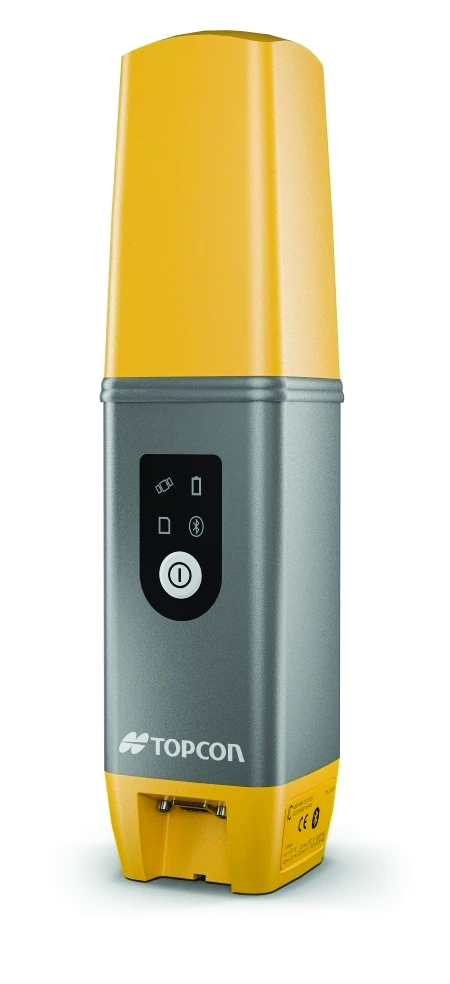
    Photo:

    GNSS Receiver
    Designed for centimeter-level and RTK accuracy

    The HiPer CR is a compact and lightweight GNSS receiver designed for centimeter-level and RTK accuracy for professionals in a wide range of applications in surveying, construction, engineering, forestry and mining. It joins a portfolio of fuller-featured receivers, including the HiPer HR and VR.

    The HiPer CR tracks the GPS, GLONASS, Galileo, BeiDou and QZSS constellations. It can be used in a variety of configurations, including as a network RTK rover, in base and rover setups and in integrated hybrid use with a robotic total station.

    When used as a network rover with Topnet Live — the company’s global GNSS correction service — the HiPer CR will have access to high-quality data corrections to increase efficiency and productivity. Users also can select to use the receiver as part of a hybrid positioning system, which allows users to use a robotic total station for prism measurements. Users also can switch to GNSS measurement with the HiPer CR for obstructed areas such as warehouses, trailers, or buildings.
    Topcon Positioning Systems, topconpositioning.com
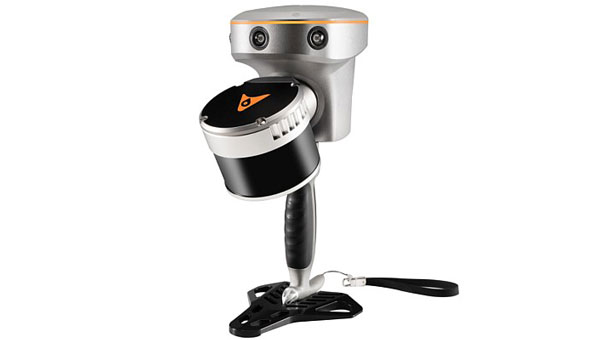
     

    Image: CHCNAV

    Handheld SLAM laser scanner
    For in the field and indoors

    The RS10 is a handheld SLAM lidar laser scanner integrated with a full real-time kinematics (RTK) GNSS receiver.
    Designed to improve efficiency across a wide range of mapping and surveying applications, the RS10 seeks to provide professionals with a versatile, all-in-one tool for capturing 3D geospatial data in both outdoor and indoor environments.

    The RS10 integrates a GNSS smart antenna for RTK positioning accuracy even in challenging environments. It delivers 5 cm measurement accuracy by fusing high-precision lidar, RTK, laser and visual SLAM using three HD cameras.
    The RS10 uses a powerful onboard processor for real-time georeferenced point cloud generation in the field. Users can receive instant feedback, which allows them to adjust while scanning. Large sites up to 13,000 square meters can be mapped in real time.

    The integration of high-precision GNSS and SLAM technologies eliminates the need for traditional loop closure, which often complicates the data collection process for handheld scanners. Users can freely scan target areas without having to return to previous locations, which can streamline field data capture and significantly reduce time spent in the field.
    CHC Navigation, chcnav.com
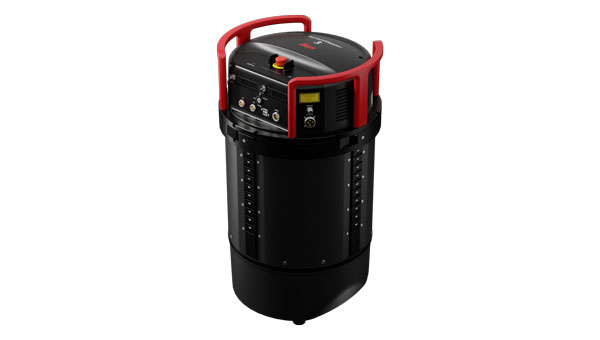
    Photo:

    Airborne lidar sensor
    With scan pattern reconfigurability

    The Leica TerrainMapper-3 airborne lidar sensor features a new scan pattern reconfigurability to support a variety of applications and requirements in a single system.

    The system offers three scan patterns, which allow users to customize the sensor’s performance to fit specific applications. Its circle scan patterns are designed to improve 3D modeling of urban areas or steep terrains. The ellipse scan patterns use data capture for more traditional mapping applications. Skew ellipse scan patterns are aimed at improving point density for infrastructures and corridor mapping applications.

    The sensor has a high scan speed rate and a 60° adjustable field of view to maximize data collection with fewer flight lines. The TerrainMapper-3 is complemented by the Leica MFC150 4-band camera, which operates with the same 60° field of view coverage as the lidar for exact data consistency.

    The device’s reduced beam divergence offers more accurate results, while its new multiple pulses in air (MPiA) handling is designed to deliver more consistent data acquisition, even in steep terrain.
    The system introduces possibilities for real-time full waveform recording at a maximum pulse rate to open opportunities for advanced and automated point classification.
    Leica Geosystems, leica-geosystems.com

    Photo: Trimble Geospatial

    Mobile Mapping Solution
    Mounted on vehicles or trains

    The Trimble MX90 mobile mapping system integrates advanced Trimble GNSS and inertial technology with Trimble field and office software. It offers users a comprehensive field-to-finish mobile mapping solution designed for robust workflows for data capture, processing and analysis.

    The MX90, mounted on vehicles or trains, captures detailed laser scans and imagery —panoramic and multi-angle. This data, collected at highway speeds, undergoes rapid processing to produce deliverables for feature detection and inspections.

    The mobile mapping system includes immersive 360° panoramic and targeted cameras to capture high-resolution imagery of various details, such as small or distant road and rail signs, telecommunications towers or cracks and holes in roads.

    Additionally, it offers high-density colorized point clouds with rich and accurate color projections. These dense point clouds, along with high-resolution imagery — panoramic and planar — and accurate trajectories, provide the basis for a wide range of deliverables, including street scenes, road and rail asset details, elevation models, volume calculations, 3D city models and as-built surveys.

    It features a high-end inertial measurement unit (IMU) combined with IN-Fusion+ data processing technology to achieve high-quality data in challenging GNSS environments. The MX90 also comes with reliable office software solutions to support multiple use cases and applications, such as road inspection workflows and integration into cloud-based applications for efficient data sharing.
    Trimble Geospatial, geospatial.trimble.com
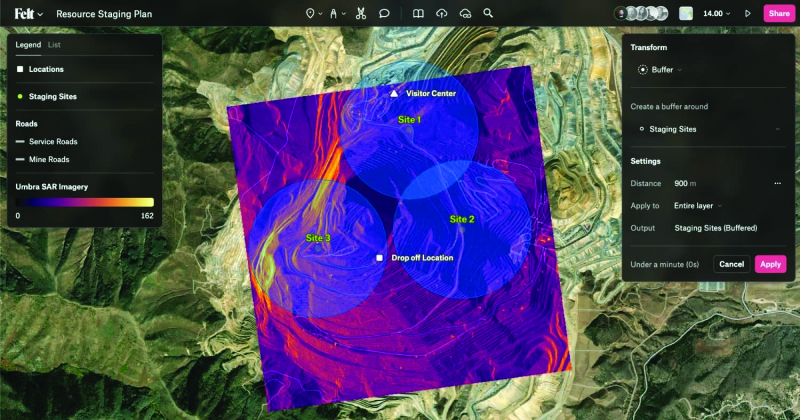
    Photo:

    Collaborative Mapping Tool
    With spatial analysis features

    Felt 2.0 is a collaborative mapping tool with powerful data transformation tools. Now with spatial analysis features, users can manipulate and analyze geographic data. It has web-based collaboration features designed to make mapping workflows interactive and accessible across organizations.
    The software uses artificial intelligence (AI) to deliver faster workflows for geographic information systems (GIS) professionals. Users can utilize Felt’s Upload Anything capabilities to visualize any file format. The system will read, understand and deliver an internet-fast visualization to the users’ workspace. The software is available for download on tablets and other mobile devices.
    Felt, felt.com

    Image: savvy navvy

    Automatic Identification System
    Available on Android, IOS, PC and Mac

    The Over the Horizon (OHA) automatic identification system (AIS) is the newest update to the savvy navvy app. The update uses a phone’s internet connection to stream other vessels’ locations in real-time directly to the app to improve safety on the water.

    Traditional AIS received from the transceiver on the boat has a range of a few miles, whereas OHA is designed to show vessels further afield. While OHA does require an internet connection, users do not need additional hardware to see information on vessel movements.

    OHA AIS allows users to see vessels directly on the chart with small and large vessel crafts defined by different colors. Users can also check how crowded an anchorage might be — either from onboard or while planning routes at home.

    The savvy navvy application highlights when no position has been received for more than 30 seconds, which marks the positional variance area around each vessel and allows users to be extra vigilant when navigating.
    Available on Android, IOS, PC and Mac, the savvy navvy app can be used on multiple devices and is available in both free and “premium” options with enhanced access and functionalities.
    savvy navvy, savvy-navvy.com


    UAV

    Photo:

    Real-Time Command and Control System
    Supports BVLOS

    VigilantHalo is a software-based platform designed for real-time command and control of uncrewed airspace. The system supports a wide range of missions from air traffic control (ATC) to beyond visual line-of-sight (BVLOS) operations and counter-uncrewed aerial systems (C-UAS).
    VigilantHalo combines radar and multi-sensor surveillance technology into a comprehensive situational awareness solution. It is designed for disaster response and critical infrastructure defense and can be customized for specific mission requirements. The system’s flexibility allows deployment across cloud, mobile or fixed-site installations, which aims to address the evolving threats in national security and the National Airspace System (NAS).

    The system features integrated data processing, a fusion tracker and a communications system that enables operators to monitor and manage air traffic under various conditions. It leverages weather analytics from the National Oceanic and Atmospheric Administration (NOAA) and other sources to assess flight paths and identify safety risks. VigilantHalo uses a custom sensor data processor (SDP) that integrates data from different sensors and surveillance feeds into a unified display tailored to specific missions such as ATC, BVLOS, air defense and more.
    BlueHalo, bluehalo.com
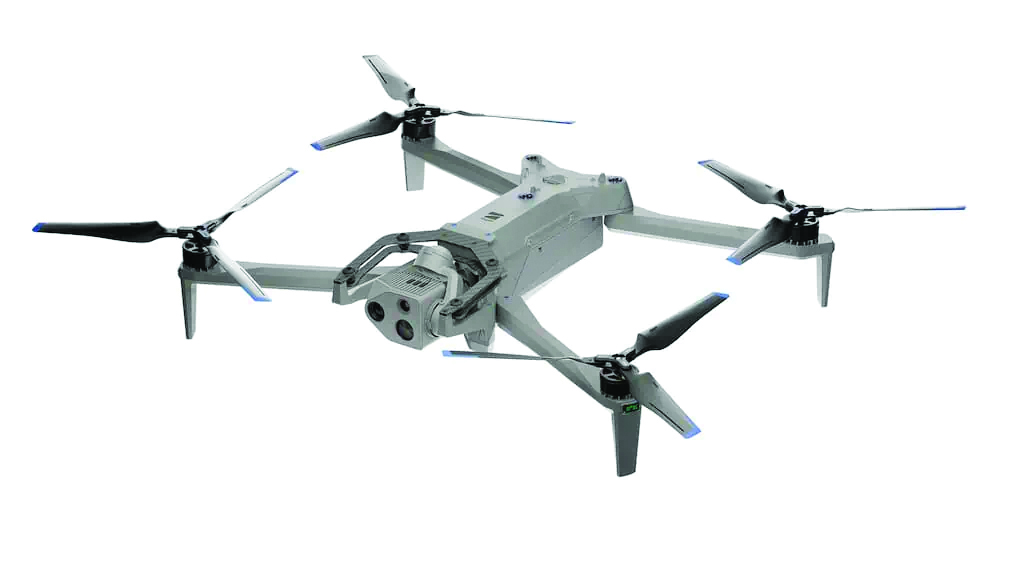
    Photo:

    Dynamic Channel Switching
    Improves communication in the field

    The Skydio X10D UAV features dynamic channel switching to monitor signal interference and move to a clearer channel. This aims to improve wireless transmission signal quality during flights to ensure troops maintain communication with the UAV to accomplish their mission.
    Dynamic channel switching allows the X10D to provide adaptable communications between the drone and its accompanying controller in situations where the airspace is congested or under electronic warfare conditions. This feature ensures that reliable command and control is maintained and real-time data feeds are available even in challenging conditions.

    The X10D is designed for intelligence, surveillance and reconnaissance (ISR) applications critical to defense and government agencies. It delivers advanced sensor technology, autonomous navigation and a modular, open architecture for military needs.

    Skydio’s onboard AI and autonomy for small unmanned aircraft systems (sUAS) offers obstacle avoidance in zero-light environments and autonomous flight. Skydio X10D delivers enhanced compliance with federal standards, including the Robotics and Autonomous Systems – Air (RAS-A) Interoperability Profile (IoP) and an open, modular platform that supports third-party applications. RAS-A compliance and open MAVLINK protocol enable the use of third-party and government-owned flight application software.
    Skydio, skydio.com

    Photo:

    Lidar Sensor
    Integrates with UAVs

    The JoLiDAR-1000 is a new lidar sensor for UAVs. It aims to improve applications in GIS, surveying, and precision inspections of power lines. The JoLiDAR-1000 incorporates advanced lidar technology to improve measurement accuracy for UAV applications.

    The sensor features a 1,000 m medium-range laser scanner, using RTK and inertial measurement unit (IMU) fusion technology and laser scanning for enhanced measurement precision. It achieves a measurement accuracy of 5 mm, a repetition accuracy of 10 mm and a line scanning speed ranging from 10 lines to 300 lines per second. It has a 100° field of view and an angular resolution of 0.001 to precisely detect objects at extended distances.

    Designed with compact dimensions and weighing only 1.9 kg, the JoLiDAR-1000 is portable and integrates seamlessly with various UAV platforms. It incorporates a suite of technologies, including a GNSS high-precision positioning system, IMU, high-speed data acquisition systems, time synchronization systems and a 26MP RGB camera to enhance its data collection capabilities.
    The JoLiDAR-1000 streamlines operational processes by eliminating the need for base station setup and ground control points. It is equipped with high-precision POS solution computation and point cloud fusion capabilities. The sensor is suitable for a wide range of applications such as terrain mapping, power line inspection, mining surveying, coastline measurement, emergency mapping and natural resource surveying.
    JOUAV, jouav.com
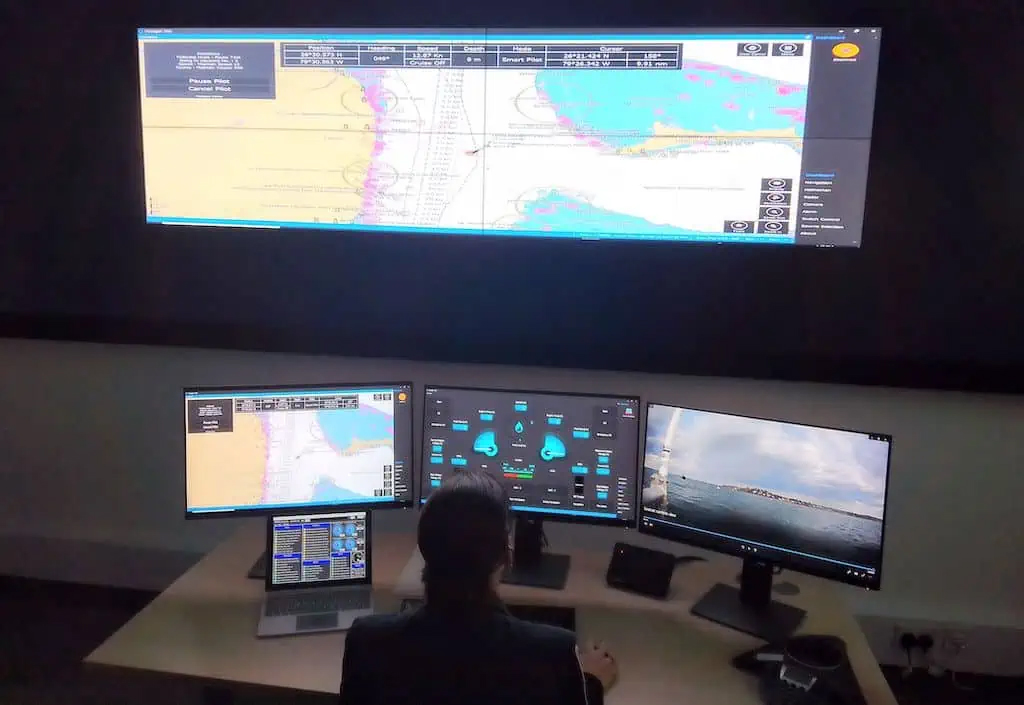
    Photo:

    AI Autopilot
    Designed for USVs

    The Voyager AI Autopilot converts newly built or retrofitted unmanned surface vessels (USVs) into fully autonomous craft.
    The Robosys Autopilot module seamlessly integrates with Robosys’ Voyager AI Survey as part of the Voyager AI software suite. It enables remote and autonomous heading and speed control as well as various other mission modes for navigation and vessel control, specifically for hydrographic and oceanic surveying operations.

    The marine autopilot is designed to meet the demands of 3 m to 12 m electric drive surveys. It is easily scalable to full advanced autonomous navigation, which seamlessly integrates with third-party steering, drive and motor control systems to provide optimal vessel functionality for USVs and other craft.
    Robosys Automation, robosysautomation.com


    OEM

    Photo:

    Satellite Positioning Chips
    With AEC-Q100 Grade 2 reliability qualification

    Designed for automotive applications, the AG3335MA satellite positioning chip series has earned AEC-Q100 Grade 2 reliability qualification. The AEC-Q100 is designed to ensure reliability and safety beyond the requirements for consumer electronics.
    The AG3335MA series chips have been certified by a third-party quality management system equipped with an automotive specification laboratory. Achieving Grade 2 certification, these chips are tested for operation in extreme temperatures ranging from -40°C to 105°C, which caters to the demanding environments of automotive applications.
    The AG3335MA features ultra-low power consumption, high endurance and dual-frequency capability. It supports the five major global satellite systems and NavIC to ensure reliable operation in a broad temperature range and challenging weather conditions. Its GNSS receiver measurement engine has a satellite tracking sensitivity of -167 dBm and a cold boot positioning time of 25 seconds. This allows it to receive and process signals from all visible satellites simultaneously, offering increased accuracy in positioning.
    Airoha Technology, airoha.com
    SOM-SMARC Modules
    Powered by Qualcomm

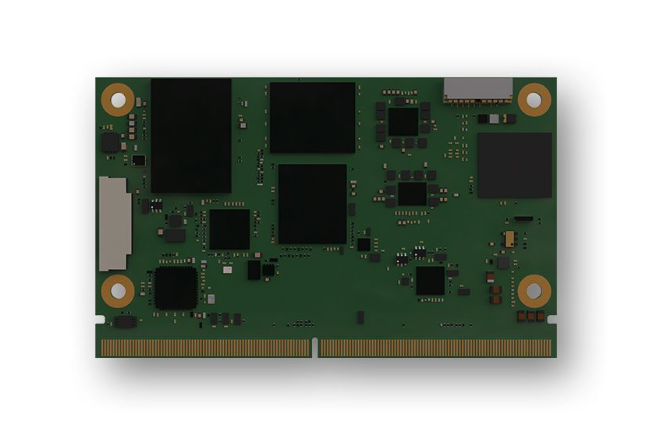
    The Smart Mobility Architecture (SMARC) System on Modules (SoMs) are based on Qualcomm QCS6490 and Qualcomm QCS5430 application processors. These new SMARC modules are the first results of SECO’s strategic collaboration with Qualcomm Technologies, announced in September 2023.
    The SOM-SMARC-QCS6490 is designed to simplify the use of the Qualcomm QCS6490 processor. The chipset offers support for artificial intelligence (AI) and computing, robust performance at low power and expanded interfaces and peripherals catering to diverse industrial use cases.
    The Qualcomm Adreno 643 GPU offers enhanced graphics performance and energy efficiency. It supports FHD+ at 120 fps resolution on primary and secondary displays up to 4k Ultra HD at 60 Hz. The SOM-SMARC-QCS6490 supports Microsoft Windows 11 IoT Enterprise, Yocto Linux and Android, with both commercial (0°C to +60°C) and industrial (-30°C to +85°C) temperature variants available.
    The SOM-SMARC-QCS5430, powered by the Qualcomm QCS5430, is a mid-tier solution that slightly moderates CPU and GPU performance. This system-on-chip (SoC) combines enhanced connectivity, performance and edge AI-powered camera capabilities. It also provides scope for field software-based upgrades of the CPU and GPU by using the processor’s capabilities.
    SECO, seco.com
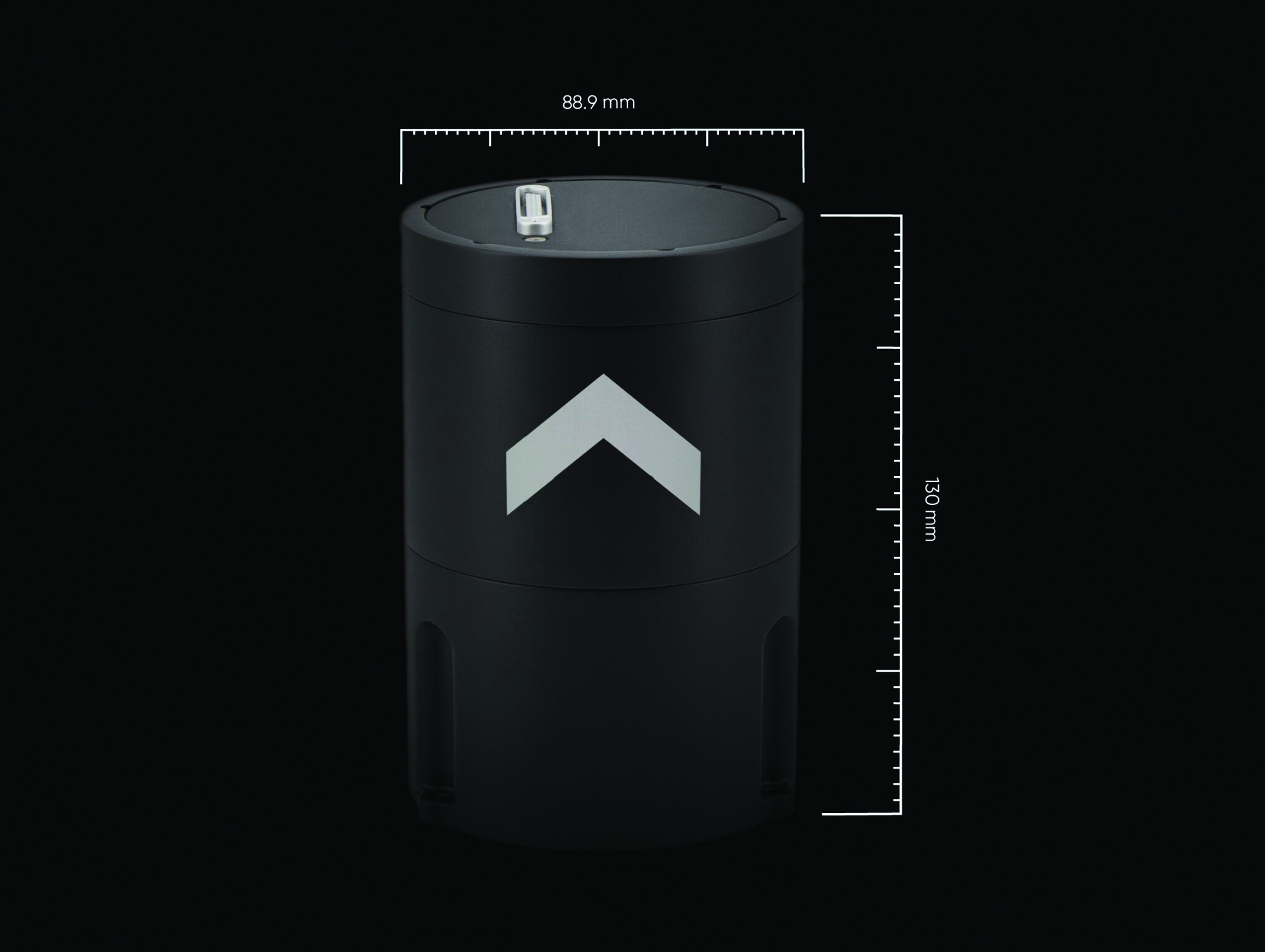
    Photo:

    INS
    Featuring FOG-based IMU

    The Phins 9 Compact is a high-performance inertial navigation system (INS) designed for all unmanned underwater vehicles. It offers a blend of navigation performance, reliability and size, weight and power (SWAP) efficiency.
    The Phins 9 Compact is built around a high-performance fiber-optic gyroscope (FOG)-based IMU with advanced accelerometers. With compact dimensions, a DVL-aided position accuracy of 0.1% TD, and a power consumption of less than 7 W, it is ideal for compact subsea vehicles in demanding applications with low power requirements.

    The INS aims to redefine the standards of subsea navigation in a wide range of applications, including survey-grade coastal and offshore seabed mapping, inspection repair and maintenance (IRM), defense and more.
    Exail, exail.com


    MOBILE

    Image: Abracon

    GNSS FR Antennas
    Supports a full spectrum of bands

    This series of GNSS RF antennas is designed to elevate location-based services with enhanced accuracy and precision. This new lineup aims to outperform conventional GPS technologies by offering faster signal acquisition, improved tracking capabilities and reduced power consumption.
    The antennas support a full spectrum of bands, including L1, L2, L5, and L-band data correction services. It can be used in a variety of sectors, such as agriculture, surveying, the Internet of Things (IoT), mapping, defense and aviation.
    The technology is designed to meet the rigorous demands for precise location data across various applications. These antennas offer multi-band and multi-constellation support to ensure broad compatibility. With centimeter-level accuracy, these antennas are crucial for aerospace, defense, asset tracking, geolocation, precision agriculture and industrial IoT.
    Abracon, abracon.com
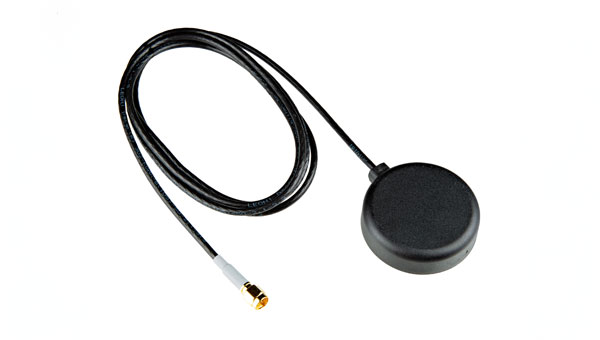
    Image: SparkFun Electronics

    Iridium on the Go
    Magnetic mount antenna

    The 2J7426MPz by 2J antenna is a high-performance magnetic mount antenna that is designed specifically to communicate efficiently with the Iridium satellite communication system. It is manufactured with high-quality polycarbonate (PC) and acrylic-styrene-acrylate terpolymer (ASA), a thermoplastic combination that offers strong resistance to UV, moisture, and heat and enhances mechanical properties.
    The antenna housing is waterproof to IP69 standards and designed to operate in extremely harsh environments, including those with frequent exposure to water, dust and debris. It has a recommended operational and storage temperature of -40°C to +85°C. The magnetic mount allows for easy installation and removal between vehicles or assets, and it is easily converted to an adhesive type for greater flexibility.
    It is delivered with a standard SMA-male connector and a standard 300 cm long coaxial LL100 cable. Iridium has certified the 2J7426MPz antenna for commercial use in connection with the Iridium communications system.
    SparkFun Electronics, sparkfun.com

  • Nearthlab debuts counter UAS technology in the US

    Nearthlab debuts counter UAS technology in the US


    Photo: Nearthlab
    Photo: Nearthlab

    Nearthlab has unveiled its latest counter-unmanned aircraft system (CUAS) technology.

    The system is a high-speed kinetic interceptor UAS that utilizes advanced autopilot algorithms for calculating and tracking precise target trajectories, neutralizing Group 1 and 2 aerial threats with pinpoint accuracy.

    Additionally, Nearthlab has released AiDEN, an autonomous drone designed for diverse operational contexts, including intelligence, surveillance and reconnaissance (ISR) missions, emergency response programs and infrastructure inspections.

    Nearthlab’s solutions, including the CUAS UAV and AiDEN, are manufactured in accordance with the National Defense Authorization Act (NDAA). The company strictly adheres to NDAA standards to ensure that its UAVs meet the federal requirements necessary for immediate deployment in both military and industrial settings in the United States.

  • Hexagon | NovAtel upgrades GNSS resilience and integrity technology

    Hexagon | NovAtel upgrades GNSS resilience and integrity technology

    PhotoPhoto: Hexagon | NovAtel
    Photo: Hexagon | NovAtel

    Hexagon | NovAtel has launched the NovAtel Application Suite Version 2.0, now including GNSS Resilience and Integrity Technology (GRIT). The GRIT Monitor application allows users to observe radio frequency (RF) interference through a comprehensive dashboard to make informed decisions to maintain robust positioning.

    GRIT is RF interference detection and mitigation technology available on all OEM7 GNSS receiver products, including individual cards and enclosures such as smart antennas, PwrPak and MarinePak.

    GRIT Monitor is a RF interference software visualization tool to offer a real-time, at-a-glance interface of all relevant data in a single dashboard view.

    It includes positioning and device status overviews to serve as a mitigation assistant that indicates whether interference is detected. It features an interactive spectrum viewer, which shows all constellations and frequency bands (spectrum and waterfall), and a signal matrix indicating the signal quality and interference status by frequency band and constellation.

    The updated suite also introduces improvements to user interface, firmware compatibility and extends support to include MarinePak among other enhancements. The Manage application, previously known as Setup and Monitor, now supports satellite tracking for L-Band and SBAS and offers a global map view of connected receivers.

    Version 2.0 of the NovAtel Application Suite is designed to assist users in maintaining accurate GNSS positioning by quickly identifying and responding to RF interference. This update is targeted at industries that require precise location data, such as aerial mapping, agriculture and autonomous vehicle navigation.

    To access the new GRIT Monitor application, download NovAtel Application Suite Version 2.0 at https://bit.ly/3weNXbi.

  • Rohde & Schwarz, IPG Automotive unveil HIL automotive radar test solution

    Rohde & Schwarz, IPG Automotive unveil HIL automotive radar test solution

    Photo: Rohde & Schwarz
    Photo: Rohde & Schwarz

    Rohde & Schwarz (R&S) has partnered with IPG Automotive, a virtual test-driving company, on an automotive radar hardware-in-the-loop (HIL) integration test system.

    The HIL radar test system combines IPG Automotive’s CarMaker simulation software with the R&S AREG800A radar object simulator and QAT100 advanced antenna array. This gives vehicle manufacturers the ability to simulate advanced driver assistance systems (ADAS) and autonomous driving scenarios, such as those defined in the European New Car Assessment Programme (Euro NCAP). It can be used for validation and real-time, closed-loop characterization of radar sensors and enables compliance with ASAM open standards.

    IPG Automotive’s CarMaker simulation solution is designed for the development and end-to-end testing of cars and light commercial vehicles. The open integration and test platform allows vehicle manufacturers, engineering services companies and Tier 1 suppliers to implement virtual test scenarios in powertrain, vehicle dynamic chassis functions and ADAS applications.

    The high-resolution 3D engine offers details in the simulation of the complete sensor stack, while the R&S AREG800A, combined with the R&S QAT100, generates multiple artificial objects, each with independent range, radar cross section (RCS), angle (azimuth/elevation) and radial velocity.

    The ASAM open simulation interface (ASAM OSI) links R&S AREG800A with the CarMaker HIL test automation, creating a comprehensive test setup.

    The HIL chain also includes a scenario editor specifically designed for non-simulation experts. This feature seeks to simplify the process of testing maneuver-based driving scenarios and associated complex traffic-related configurations.

    CarMaker also features a test manager, which can build or run automated test sequences. It can run tests individually or simultaneously, locally or in the cloud for flexibility and scalability. Additionally, it automates the calculation and evaluation of key performance indicators and generates reports automatically.

    The Model Manager CarMaker helps define the configuration of virtual vehicle prototypes, which is designed to improve the realism and accuracy of simulations for testing and development.

  • Virtual Surveyor upgrades UAV surveying software

    Virtual Surveyor upgrades UAV surveying software

    Photo: Virtual Surveyor
    Photo: Virtual Surveyor

    Virtual Surveyor has enhanced its smart UAV surveying software with new planimetric survey capabilities. The Virtual Surveyor version 9.5  allows users to quickly and accurately survey 2D features from UAV orthophotos and add them to the 3D topographic model generated from the same data set.

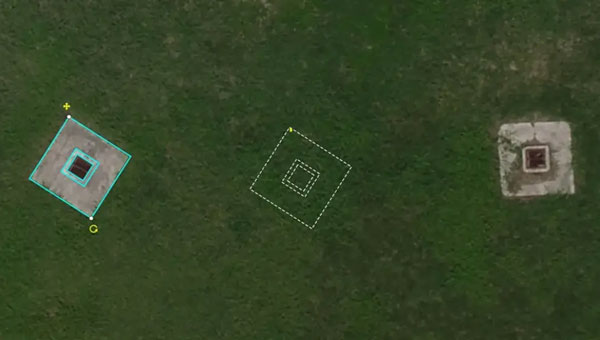
    True 2D features, for example, include the paint striping that delineates parking lot spaces and road lanes. Other objects that exist in 3D on the ground but can be surveyed in two dimensions for many applications are building footprints and tree canopies. These features are designed to offer a new level of efficiency to the UAV surveying process in Virtual Surveyor.

    Virtual Surveyor provides users with an end-to-end workflow to conduct 3D surveys from UAV imagery. The integrated Terrain Creator app photogrammetrically processes UAV photos to build survey-grade digital surface models (DSMs) and orthomosaics. These transfer seamlessly to the traditional Virtual Surveyor app where users perform the real survey work — generating CAD models, creating cut-and-fill maps, calculating soil volumes and deriving other 3D topographic information.

    No third-party software is needed to create surveys from drone data. The system ideal for users in construction, surface mining and excavation projects.

    These new functions include:

    • Move/copy – Once the feature, such as a paint stripe, has been surveyed, it can be copied and moved to delineate the next stripe. If the stripe bends along a turn in a road, this function lets the user rotate the feature to follow the curve. When multiple nearly identical objects, such as parking space stripes, have been surveyed, they can be moved to survey another group of stripes.
    • Diagonal first rectangle drawing – Users can simply click on diagonal corners, and the object is delineated and surveyed.
    • Edit side –As features are being copied, this tool allows the user to edit the feature sides.
    • Mini toolbars – Users can right-click on a feature, and a mini toolbar with the relevant tools pops open next to it for easy capture or editing.

    Current subscribers to Virtual Surveyor Ridge and Peak editions will see their software updated automatically to Version 9.5 with the planimetric tools and other new functionality. Click here to learn more and download the software.

  • Mapping the aftermath of Iceland’s volcanic eruptions

    Mapping the aftermath of Iceland’s volcanic eruptions

    The Icelandic Road and Coastal Administration (IRCA) has commissioned the Dutch UAV manufacturer Acecore to map the extent and aftermath of the Eldvörp-Svartsengi volcanic system eruption using its high-end UAV solutions. Grindavík, a fishing village on the Reykjanes Peninsula in southwestern Iceland, has only recently welcomed residents home following a series of earthquakes. However, the area is still not completely at ease, with the latest reports saying that a nearby magma chamber could again erupt near the village.

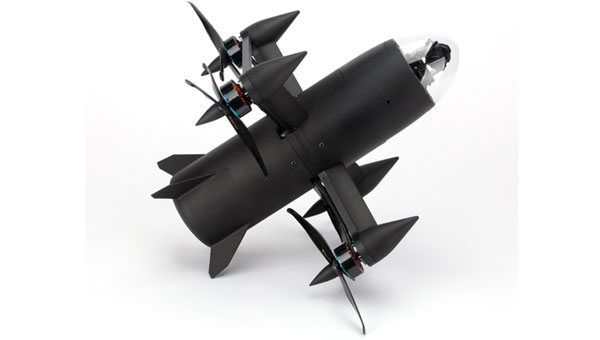
    Acecore’s new hybrid drone model. (Photo: Acecore)
    Acecore’s new hybrid drone model. (Photo: Acecore)

    “Acecore drones are particularly suitable for use under tough circumstances,” said Jorrit Linders, founder and CEO of Acecore, on the Dutch public-service radio station NPO Radio 1. “The drones can operate in severe weather conditions, such as wind force 7 or 8, temperatures well below zero and hail and snow showers. This is due to their robust frame, their strong design and the right components. The robust construction is produced entirely in the Netherlands. This, combined with a continuous flight time of 2.5 hours, is essential for projects such as the volcanic eruption in Iceland.”

    Acecore has been mapping in the region near Grindavík for four weeks as of March 2024. The surveys were done not without challenges and risks, as they involved operating in areas that had not yet been declared safe. The high workload and poor weather conditions forced the on-site team to rotate every five to six days. Linders was able to train both Acecore employees and pilots working for The Icelandic authorities on how to properly conduct aerial surveys to collect the relevant data effectively.

    Lava flowing down the main road toward Grindavík. (Photo: Acecore)
    Lava flowing down the main road toward Grindavík. (Photo: Acecore)

    Acecore developed and deployed a hybrid version of its Noa UAV, which already was used by the Icelandic authorities. The gas-electric platform was able to achieve flight times of 132 minutes with the Radarteam Cobra ground penetrating radar (GPR) of 5.2kg. The Noa Hybrid UAV has liquid heat management for its gasoline boxer engine, making it highly capable of dealing with Icelandic temperatures of up to -12°C. It uses a dual antenna and dual-band GNSS high-precision receiver to accurately measure yaw using GPS, so as not to be affected by electromagnetic interference from power lines and metal structures while mapping the village.

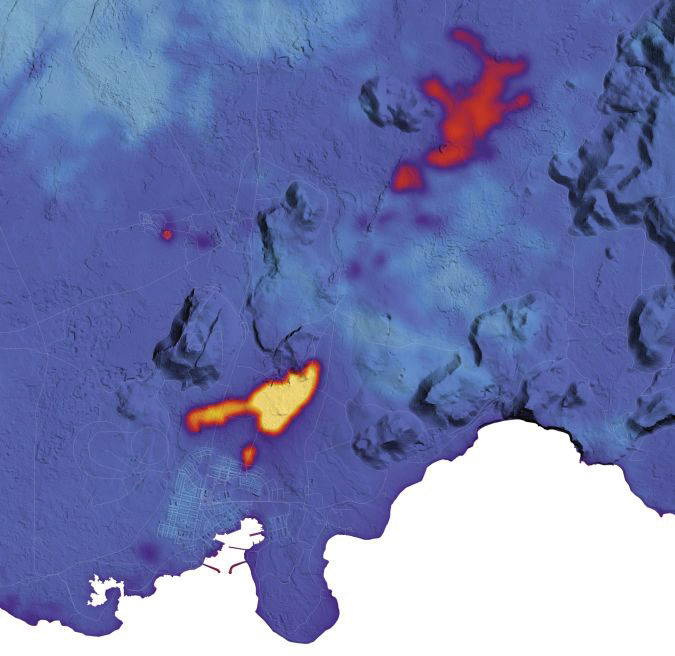
    This map indicates the location and extent of recent activity using data acquired on January 16, 2024, by the TIRS-2 (Thermal Infrared Sensor 2) on the Landsat 9 satellite. The data is overlaid on a digital elevation model of the area. (Photo: NASA Earth Observatory/Lauren Dauphin, contains Landsat data from the USGS)
    This map indicates the location and extent of recent activity using data acquired on January 16, 2024, by the TIRS-2 (Thermal Infrared Sensor 2) on the Landsat 9 satellite. The data is overlaid on a digital elevation model of the area. (Photo: NASA Earth Observatory/Lauren Dauphin, contains Landsat data from the USGS)

    The UAV flights take off from fixed locations to perform their automated missions: scanning the affected area to collect all data needed by the Icelandic authorities. This involves data generated by a GPR sensor mounted under the UAV.

    “We take a kind of X-ray of the ground as the basis for accurately mapping the subsidence and cracks,” explained Linders. “This then allows the Icelandic scientists to do a careful analysis of the area.” The GPR technology allows cracks to be scanned and underground fissures and shifts to be identified so scientists can predict where more eruptions are likely to occur and assess the safety of the location.”

    The GPR technology allows cracks to be scanned and underground fissures and shifts to be identified so scientists can predict where more eruptions are likely to occur and assess the safety of the location.

    The ongoing efforts in Iceland are a testament to Acecore Technologies’ dedication to pushing the boundaries of what is possible with UAVs. As they continue to map the area around Grindavik, their expertise and technology are not just tools for assessment but also a sign of hope for a community looking toward recovery. There is more work to be done, said Acecore’s Youri van Helden, “We haven’t put our snow boots in storage yet.”

  • Calian introduces smart GNSS antenna

    Calian introduces smart GNSS antenna

    Photo: Calian
    Photo: Calian

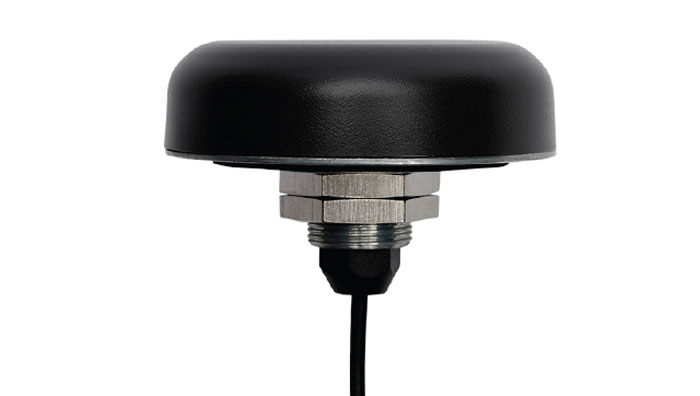
    Calian GNSS, formerly Tallysman Wireless, has released its TW5387 industrial-grade smart GNSS antenna. It integrates the Quectel ST TESEO V GNSS receiver chipset onto the Calian compact smart GNSS antenna platform to offer dual-band GNSS, eXtended filtering, low phase center variation, low signal-to-noise ratio and dual feed and patch for strong multi-path rejection.

    The TW5387 comes with RTK rover capability and a built-in IMU for sensor fusion. It is designed to minimize RF impairments that affect the performance of the GNSS receiver and provide GNSS coordinates to the host system over a robust digital interface for noise resilience.

    TW5387 is suited for automotive, UAV, robotics and defense applications that require precise location and timing. TW5387 is compatible with N-RTK correction services such as Point One Navigation’s Polaris and Swift Navigation’s Skylark.

    It tracks GPS, Galileo, BeiDou and L1/L5 band operation and is housed in an industrial-grade IP69K enclosure.

  • Comnav upgrades survey software

    Comnav upgrades survey software

    Image: Comnav
    Image: Comnav

    Comnav Technology has released the latest version of its Survey Master software — Survey Master 3.5.0.

    The software includes an enhanced super CAD engine. A measurement grade has been added to the CAD to improve the software’s utility in design and planning projects. Additionally, the latest version features expanded CAD drawing and survey functions to offer users a comprehensive toolset — including point, line, polyline, curve, arc, square, rectangle, polygon, circle and text.

    Survey Master 3.5.0 also has added CAD capture mode from any point and allows users to easily display or hide point icons. It can also open drawings in CAD to display progress and detailed selection element information.

    The system added the Dominican predefined coordinate system, SBAS configuration, PPP and RTK PPP fusion, updated satellite frequency and an external datalink CDL7 configuration.

    Existing software users can update directly in Survey Master. Click here to download the software.

  • NextNav petitions FCC for new spectrum band

    NextNav petitions FCC for new spectrum band

    NextNav has petitioned the Federal Communications Commission (FCC) to add a new spectrum solution in the Lower 900 MHz band (902-928 MHz band) to complement and backup GPS. The Lower 900 MHz band plan aims to give access to 15 MHz of low-band spectrum for 5G services.

    The company filed a rulemaking petition to the FCC, proposing to rearrange the band to facilitate a terrestrial positioning, navigation and timing (PNT) network and broadband. The petition specifically asks the FCC to reconfigure the band plan and adopt new rules, including enabling a high-quality terrestrial complement and backup to GPS for essential PNT services and providing 15 MHz of low-band spectrum for use by mobile broadband networks.

    The proposal, according to the filing, “enables high-quality terrestrial PNT, with the potential for widespread and inexpensive adoption in many use cases because it will use the 5G standard.” Because the company’s NextGen PNT solution uses a small amount of capacity in the 10 MHz downlink, mobile network providers can use most downlink capacity for broadband, “making the spectrum appealing for integration into existing networks and thereby accelerating the availability of terrestrial PNT services.”

    According to the filing, “The 15-megahertz band plan is necessary for this broadband deployment, which enables an at-scale PNT network to be deployed efficiently, providing a unique path to resolving the coverage, cost, and user device issues that have prevented broad terrestrial PNT usage to date.”

    NextNav recently signed an agreement to acquire spectrum licenses covering an additional 4 MHz in the lower 900 MHz band from Telesaurus Holdings GB and Skybridge Spectrum Foundation. In March 2024, the Superior Court of the State of California, County of Alameda, issued an Order approving the Receiver’s request to sell all of its Lower 900 MHz spectrum holdings to NextNav, allowing the parties to move forward with obtaining FCC approval.

    The company plans to partner with mobile network operators or others interested in commercial deployment in the band for 5G and will ensure incumbent operations are protected. According to the company, it has used its existing licenses to develop PNT expertise and products, but, because of a legacy band plan and rules that limit the use of the spectrum for 5G, much of this band is underused.

    The NextGen PNT technology and network are designed to use 5G and offer a 3D positioning solution with single-digit accuracy. The positioning solution is available indoors and outdoors and in urban corridors. It also seeks to provide wireless distribution of precise, resilient timing.

    The current Lower 900 MHz Band is “not conducive for either terrestrial PNT or mobile broadband,” according to the filing, with shortcomings that include fragmented geographic licensing arrangements, outdated command-and-control requirements and other restrictions. Consolidating the geographically licensed spectrum blocks into a 15MHz nationwide configuration for both PNT and 5G broadband changes. This allows the band to support better use cases and serve as a high-performing complement and backup to GPS.

  • MerlinTPS advances GNSS-independent positioning

    MerlinTPS advances GNSS-independent positioning

    Soldiers from the 101st Airborne Division conduct at terrain walk using the Dismounted Assured Positioning System during the 2023 PNTAX. (Photo: U.S. Army)
    Soldiers from the 101st Airborne Division conduct a terrain walk using the Dismounted Assured Positioning System during the 2023 PNTAX. (Photo: U.S. Army)

    MerlinTPS has tested its Terrestrial Positioning System (TPS) at the Department of Defense (DOD) PNT Assessment Exercises (PNTAX), demonstrating resilience against electromagnetic radio frequency interference. This test positions TPS as an alternative to GNSS-based systems in environments where GNSS is compromised or unavailable.

    PNTAX is designed to evaluate positioning, navigation and timing (PNT) technologies under conditions where traditional GPS signals are degraded or denied. MerlinTPS’s system uses broadcast radio signals, which are less susceptible to jamming and spoofing than satellite signals, to provide positioning and timing data.

    The company is also working to enhance the portability and integration of TPS, collaborating with a RISC-V core engineering firm to reduce the size of their neuromorphic design, facilitating easier integration into OEM devices.

    Throughout the PNTAX, Persistent Systems’ MPU5 radios supported backhaul communications reliably, even under ha­rsh environmental conditions.

    The tests at PNTAX represent a step forward for MerlinTPS in moving towards commercial deployment, with the goal of providing an alternative and reliable PNT solution across various industries globally, according to the company.