u-blox has partnered with Cellular Tracking Technologies (CTT), a specialist in wildlife telemetry and Internet of Things (IoT) solutions, in an initiative aimed at conserving Antarctic wildlife.
The collaboration has introduced a cloud-based positioning solution to monitor the activities of Adélie penguins in Ross Island, Antarctica. The venture began when Point Blue, an American wildlife conservation organization, reached out to CTT to create a tracking mechanism that could study the movements of young Adélie penguins. These birds are among the five penguin species inhabiting Antarctica and are considered crucial for environmental studies due to their sensitivity to ecological shifts caused by climate change and human activities, such as commercial fishing.
Due to the challenging conditions in Antarctica, tracking penguins required a device that was lightweight, non-intrusive, energy-efficient, and cost-effective in terms of data transmission. This was particularly important given the small size of the penguins, their rapid movement, and their extended underwater dives.
u-blox provided its CloudLocate positioning service to meet these stringent requirements, which led to the development of CTT’s Penguin Iridium GNSS tracker. The tracker is fixed to the penguins’ backs and uses one of u-blox’s compact GNSS modules. The CloudLocate service processes the positioning calculation in the cloud rather than on the device to save energy and enable prolonged monitoring periods without the need for frequent device replacements.
The tracker operates by sending a concise 50 B message, which captures essential location data during the brief moments when a penguin surfaces for air. This level of efficiency is critical in minimizing the costs associated with satellite connectivity, which is often prohibitively expensive in such remote regions.
This partnership marks an advancement in wildlife conservation technology by allowing for non-invasive, continuous monitoring of Adélie penguins and providing vital data for assessing the impacts of environmental changes. CTT aims to extend this tracking solution to a wider range of wildlife research and conservation projects to demonstrate the potential for technological innovation to contribute significantly to ecological preservation efforts.
Abracon has partnered with u-blox to combine the u-blox ZED-F9P GNSS receiver module and the Abracon APXG6016GH full-band, multi-constellation active GNSS antenna. This pairing offers centimeter-level accuracy designed for a variety of industries such as precision agriculture and mobile robotics.
The APXG6016GH antenna is designed with a robust pre-filtered low-noise amplifier (LNA), which offers strong anti-interference performance in challenging environments. It supports multi-frequency reception, including L1, L2, L5, and L-band correction services, for robust signal reception and enhanced accuracy.
The u-blox ZED-F9P module is designed to provide precise and reliable performance in various applications. When combined with the Abracon APXG6016GH antenna, this module gives users access to accurate positioning data critical for demanding navigation tasks.
The Abracon APXG6016GH antenna features tightly grouped phase center variation with advanced multi-feeding technology, which provides consistent performance across various scenarios. Its compact and lightweight design makes it ideal for portability and UAV applications, providing users with flexibility and ease of integration.
A roundup of recent products in the GNSS and inertial positioning industry from the March 2024 issue of GPS World magazine.
SURVEYING & MAPPING
GNSS Receiver Supports tilted measurement
PozStar P5 is a high-precision GNSS receiver. It is powered by a 1,408-channel multi-band GNSS receiver designed to improve surveying in the field. It is equipped with Bluetooth, WiFi and UHF radio. The inertial measuring unit (IMU) supports tilted measurement, which allows users to obtain quick initialization and accurate measurements with an inclination of up to 60°.
The receiver comes with radio connector options used in a frequency range of 410 MHz to 470 MHz and a 5-pin serial port, which allows for external radio system connectivity and NMEA data output. It is also weatherproof, rated IP67.
PozStar P5 can collect control and surveying data for RTK equipment to perform surveying, map input and drawing operations. The receiver can be used with PozPad, an Android-based RTK field software.
PozStar, pozstar.com
Lidar System Designed for aerial surveying
The TrueView 540 lidar system integrates lidar technology with LP360 3D point cloud processing software to enhance survey-grade lidar applications.
The system is designed to provide enhanced data density, accuracy, and precision for aerial surveying. It combines lidar, an accurate positioning and orientation system and a full-frame industrial camera in a compact, lightweight package. It is suitable for a variety of UAVs, including the DJI Matrice 350.
The TrueView 540 features high-precision lidar technology comparable to high-end industry-standard payloads in terms of range, density and accuracy. It will be made available through GeoCue and its authorized distributors. GeoCue, geocue.com
GNSS Solution Combined with Septentrio’s mosaic-X5 module
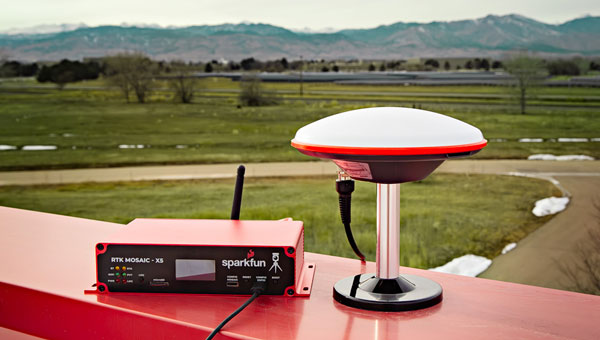
The SparkFun real-time kinematics (RTK) mosaic-X5 uses the multi-constellation, multi-frequency capabilities of the Septentrio mosaic-X5 module, which aims to improve accuracy and reliability in a variety of position applications.
The RTK mosaic-X5 is a 448-channel receiver that supports all four Global Navigation Satellite Systems (GNSS) — GPS, GLONASS, BeiDou and Galileo — and one of the two regional ones, NavIC. It can function as both an RTK base and rover, which allows users to achieve horizontal positioning accuracy down to 6 mm and updates at a rate of 100 Hz.
The device incorporates the Espressif ESP32-WROVER processor, which allows for high-speed processing and a variety of connectivity options. The ESP32 provides the device with USB-C, Ethernet-over-USB and an Ethernet to WiFi Bridge mode to ensure seamless integration into any project setup.
The device also has power flexibility, including USB-C, Power-over-Ethernet, and external DC sources, along with data logging in multiple formats such as RINEX and NMEA. Housed in a custom-designed aluminum case, the RTK mosaic-X5 features a comprehensive web server interface to simplify configuration and monitoring. SparkFun Electronics, sparkfun.com
Hybrid Mobile Mapping Solution Combines mobile scanning with a stationary mode
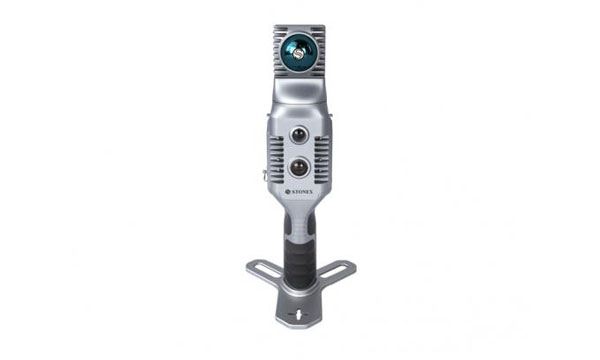
The X70GO SLAM laser scanner is designed for fast and efficient large-area surveys. It combines mobile scanning with a stationary mode to scan with high resolution to enhance overall surveying capabilities.
X70GO is a real-time 3D model reconstruction device that integrates an inertial navigation module, high-performance computer and storage system. It is equipped with a 360° rotating head, which, combined with the SLAM algorithm, can generate high-precision point cloud data. The built-in 512GB memory disk stores survey results and the dismountable handle has a 1.5-hour battery life.
A 12MP RGB camera offers texture information, while a visual camera aims to enhance the real-time preview with the GOapp. Mapping results can be generated immediately inside the scanner. Users can then color the points and improve their accuracy during post-processing with GOpost software.
The system comes with a hybrid scanning capability. The X-Whizz mode combines the advantages of SLAM mode with the resolution of a static scan, which eliminates the need for multiple scan stations. Users can move around the scene to collect the entire 3D point cloud without time-consuming cloud-to-cloud alignment.
The technology incorporated in the new scanner is designed to provide extended range, a higher number of points per second and advanced onboard processing algorithms. The SLAM laser scanner is well-suited for challenging environments and can be used in a variety of applications, including BIM, industrial sites, real estate, heritage preservation, tunnels and mining.
Users can add an RTK module to set a point cloud in a global coordinate system. This can support adding GNSS information to that from lidar and the inertial measurement unit (IMU) in the SLAM algorithm. In situations with limited GPS connectivity – such as indoors or in challenging environments – the system will rely on lidar and the IMU for positioning purposes. Stonex, stonex.it
Remote Sensing Payload Integrates with UAVs and other platforms
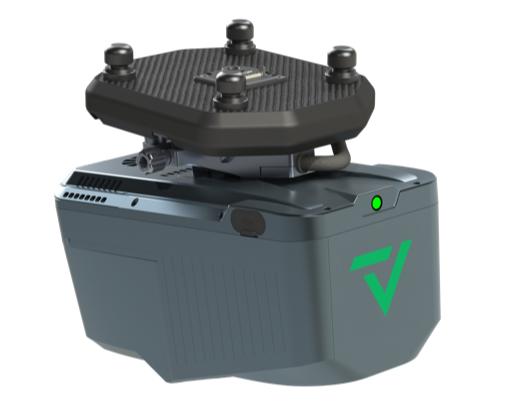
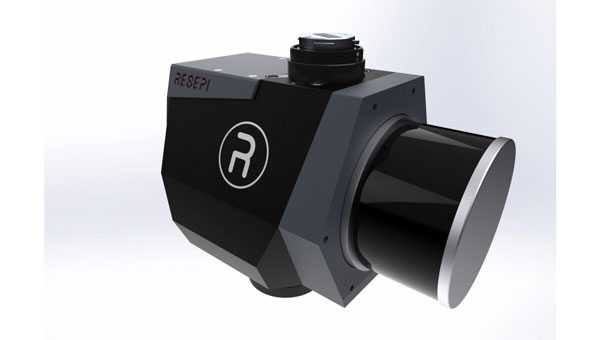
The RESEPI lidar Gen-II remote sensing payload instrument comes in three modes: aerial mode for comprehensive airborne data collection, mobile mode for dynamic vehicular data collection and a versatile handheld/backpack that aims to provide portability and ease of use for ground personnel.
The RESEPI lidar Gen-II has a 175% increase in computing power, designed to speed up processing and enhance efficiency during complex tasks. Its memory capacity has been increased by 700%, which allows for extensive data handling and improved system performance. The system’s 50% increase in storage capacity aims to facilitate longer durations of data collection without frequent offloads.
The Gen-II features seamless integration capabilities with UAVs and other platforms. The system’s sensor-agnostic design allows for external sensors to be easily integrated, including lidar and cameras. It also can compute point clouds, trajectories and solutions in real-time, which is critical in time-sensitive missions. The system can be used in a variety of applications including mapping, inspection, autonomous vehicles, navigation and robotics. Inertial Labs, inertiallabs.com
Mapping Software With upgraded cloud capabilities
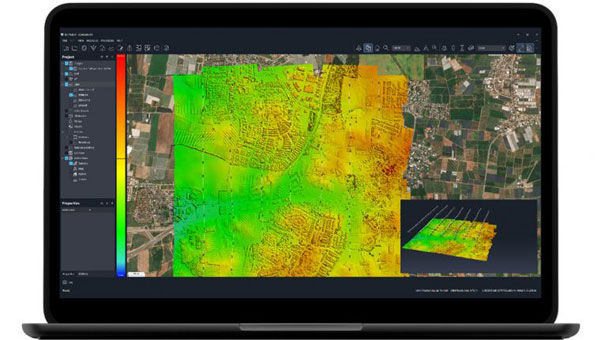
The Correlator3D mapping software now has upgraded cloud capabilities. With its distributed processing capabilities, Correlator3D allows users to scale their processing to match individual operational needs.
With the upgrade, Correlator3D can process large mapping projects and deliver results from UAV, aircraft and satellite imagery. It features a software package – a patented, end-to-end photogrammetry solution — designed to generate high-quality geospatial data from a variety of sources, including satellite and aerial imagery and UAVs. The upgrade aims to improve the technology’s performance in diverse cloud scenarios.
Correlator3D is designed to provide aerial triangulation (AT) and generate dense digital surface models (DSM), precise digital terrain models (DTM), point clouds, orthomosaics, 3D models and vectorized 3D features. By using GPU technology and multi-core CPUs, Correlator3D offers enhanced processing speed to support the rapid production of large datasets. SimActive, simactive.com
MOBILE
Handheld GNSS Data Collector Ideal for construction surveying
TDC6 is a handheld GNSS data collector designed for high-performance construction surveying. The device allows contractors to work with more complex data sets more effectively in the field, connect to the office for on-the-spot approvals, and quickly communicate changes to field crews.
The small, rugged device offers integrated Wi-Fi and Bluetooth, built-in cameras and 5G compatibility in a lightweight, shock-, dust- and water-resistant package. The device integrates seamlessly with Trimble data collection applications, including Trimble TerraFlex GIS software and Trimble Access survey field software, as well as third-party apps such as Esri ArcGIS Field Maps. Trimble Geospatial, geospatial.trimble.com
Military-Grade Antennas Designed for mission-critical applications
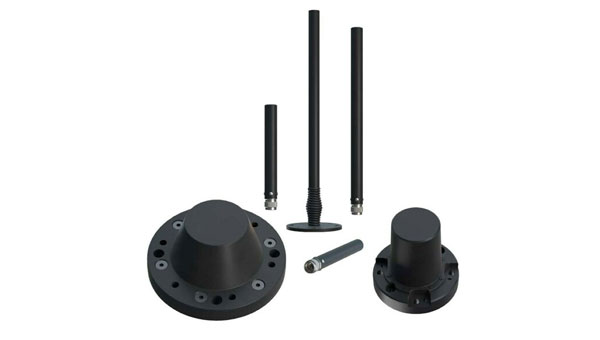
This advanced military-grade antenna product line includes ruggedized GPS, manpack omni and vehicle omni antennas. The products are designed for mission-critical applications such as vehicle navigation, personnel communications, vehicle communications, electronic warfare, and jamming.
The antennas meet MIL-STD-810 to offer durability while adhering to strict quality standards. The antennas also are compliant with the Trade Agreements Act (TAA), which makes them suitable for government and defense applications.
Built to withstand tough conditions, these antennas feature heavy-duty construction and a rugged design for long-lasting performance in challenging environments. They are designed to perform in extreme weather conditions and on rough terrains.
Its robust construction and NATO/U.S. standard mounting options aim to simplify integration into various setups during critical operations. Fairview Microwave, fairviewmicrowave.com
Trimble SiteVision Software 5.0. (Image: Trimble)
Outdoor Augmented Reality System With 3D scanning capabilities
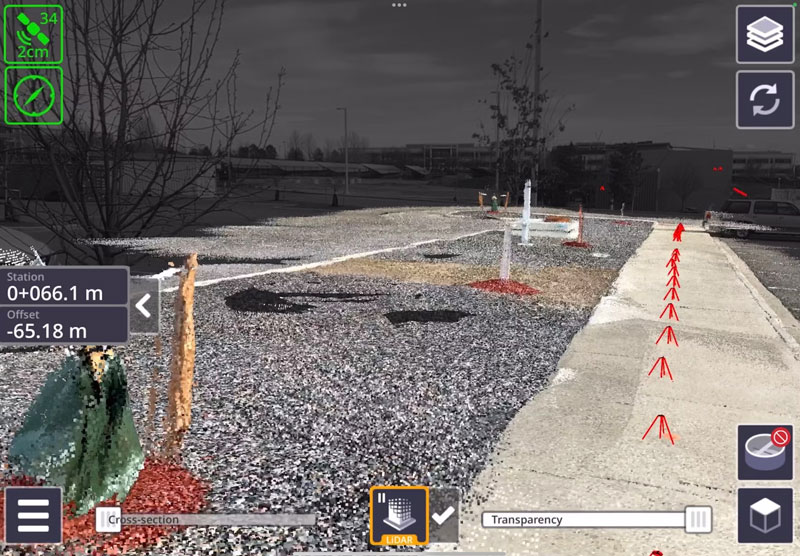
SiteVision Software 5.0 is a high-accuracy outdoor augmented reality system, now with a 3D scan tool. The new 3D scan tool allows users to use lidar sensors available on some Apple Pro devices. The Trimble DA2 GNSS receiver is designed to capture point clouds efficiently and accurately with a single handheld solution.
Users can visualize 3D scan data directly in the field with SiteVision’s augmented reality view. The software allows users to create as-builts of the job site on the go, measure and plan resource allocation, reduce scan times, supplement UAV data and more by combining scanning and precision in a mobile solution. The product aims to facilitate practical and accessible field-to-office workflows for surveyors, contractors and engineers.
Trimble Geospatial, geospatial.trimble.com
OEM
Two LTE Modules With integrated GNSS
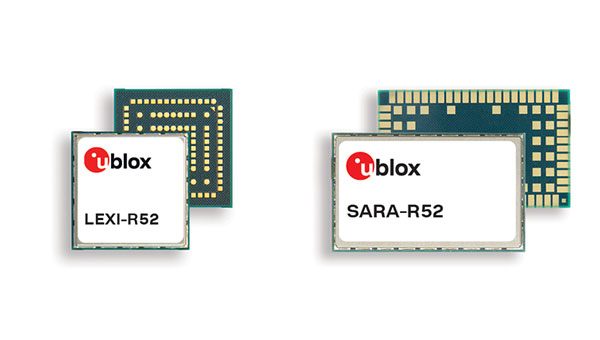
The LTE-M cellular module series, the SARA-R52 and LEXI-R52, are designed to meet the needs of industrial applications requiring both positioning and wireless communication capabilities. Based on the u-blox UBX-R52 cellular chip, these modules are designed for a variety of internet of things (IoT) use cases, including both fixed and mobile applications.
The UBX-R52 chip is designed to simplify product design by reducing the need for additional components. It includes SpotNow, a positioning function developed by u-blox, which aims to provide location data with an accuracy of up to 10 m within a few seconds. This function is targeted at applications requiring occasional tracking, such as waste management, personal trackers and industrial machinery.
The chip’s uCPU feature allows the execution of custom software directly on the chip and eliminates the necessity for an external microcontroller unit (MCU). The smart connection manager (uSCM) is a feature designed to manage connectivity automatically, focusing on optimizing performance or minimizing power consumption under varying connection conditions.
The R52 series introduces the SARA-R520M10 combo module, which is equipped with an integrated u-blox M10 GNSS receiver. This module is designed to provide simultaneous GNSS and cellular connectivity, supporting applications that require continuous or periodic tracking with features such as low power consumption, improved time-to-first-fix (TTFF) and increased RF sensitivity.
Unlike many LTE-M modules that typically offer an RF output power of 20-21 dBm, the new R52 series modules offer a higher output power of 23 dBm to improve connectivity in difficult coverage areas. The LEXI-R52 offers the same functionalities as the SARA-R52 but comes in a smaller form factor, making it ideal for applications with space constraints, such as wearable technology.
These additions to u-blox’s LTE-M module portfolio are designed to address the integration of GNSS and wireless communication in industrial IoT applications, offering solutions for a range of use cases that require robust connectivity. u-blox,u-blox.com
UAV
GNSS-Denied Navigation Kit For challenging environments
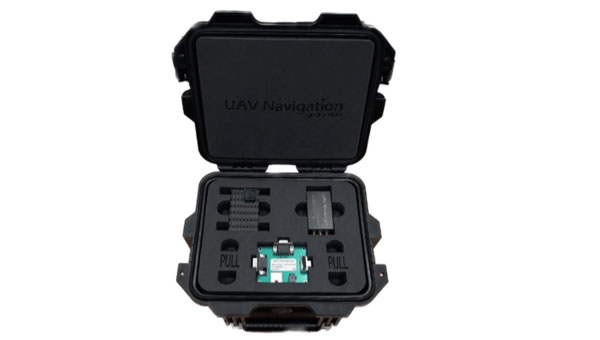
This GNSS-denied navigation kit is designed to offer navigation capabilities in challenging environments. It combines UAV Navigation’s attitude and heading reference system (AHRS), the POLAR-300, with its Visual Navigation System, the VNS01, to offer advanced dead reckoning navigation capabilities with minimal drift.
The technology has error rates as low as 0% to 1% over covered distances. This is made possible by the kit’s visual-based technology, which allows for precise attitude and position estimation to stabilize flights in challenging conditions. The kit is equipped with advanced algorithms that can detect and counter sophisticated spoofing and jamming techniques to offer reliable and secure navigation, even in the face of potential signal disruptions. The kit can be used in both civil and defense sectors.
UAV Navigation-Grupo Oesía, uavnavigation.com
Lidar UAV Solution Offers immediate access to terrain information
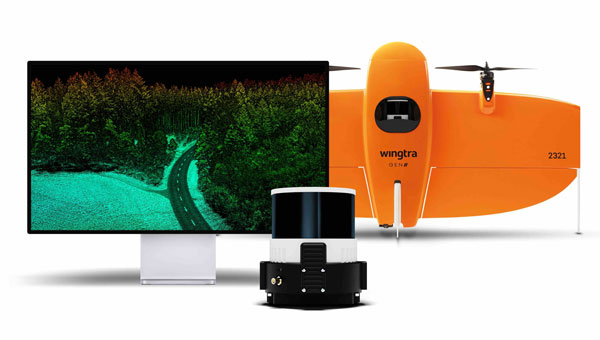
The lidar UAV mapping solution combines the WingtraOne GEN II UAV with a newly developed lidar sensor. This integration aims to advance UAV lidar efficiency, increase accuracy and simplify integration.
The solution incorporates a Hesai scanner, Inertial Labs IMU and NovAtel GNSS receiver designed to optimize data acquisition and reduce the need for post-processing strip alignment. This advancement offers immediate access to precise terrain information following each flight and enhances the efficiency of mapping and photogrammetric analysis in various sectors.
One of the key features of the lidar system is its reduced field time, with no calibration needed and a one-minute initialization process. The Wingtra lidar application and the system’s automated features offer a streamlined data capture process, which makes it accessible even to those new to lidar technology.
The solution offers a vertical accuracy of 3 cm from a 60 m flight height, with leading point density in its class. The WingtraOne GEN II’s design and automated flight patterns offer consistent results across different pilots. Wingtra, wingtra.com
MACHINE CONTROL
GNSS Smart Antenna Designed for industrial environments
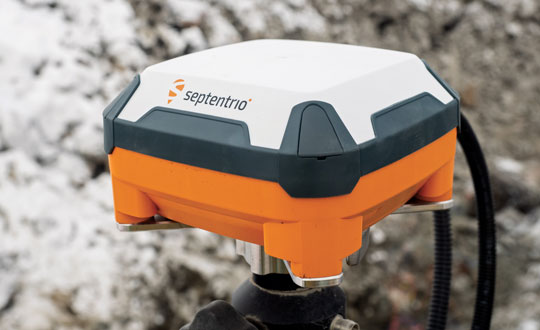
AntaRx-Si3 is a GNSS/INS smart antenna housed in an ultra-rugged enclosure, designed for straightforward installation on machinery such as agricultural robots. It combines Septentrio’s centimeter-level GNSS positioning with an inertial measurement unit (IMU) within the same enclosure as the GNSS antenna, which uses FUSE+ technology.
The AntaRx-Si3 is designed for challenging industrial environments where GNSS signals are at risk of obstruction, such as under heavy foliage. The antenna’s exterior is crafted from impact-resistant polycarbonate with an IP69K rating and can withstand significant shocks, vibrations, and harsh environmental conditions.
It uses Septentrio’s GNSS+ algorithms to offer advanced multipath mitigation to operate in environments where satellite signals could be reflected off surrounding machinery or structures, such as silos. The antenna delivers high update rates and low latency positioning, which are crucial for the control loops of autonomous movements or rotations. Septentrio, septentrio.com
3D Machine Control Software Suitable for construction sites
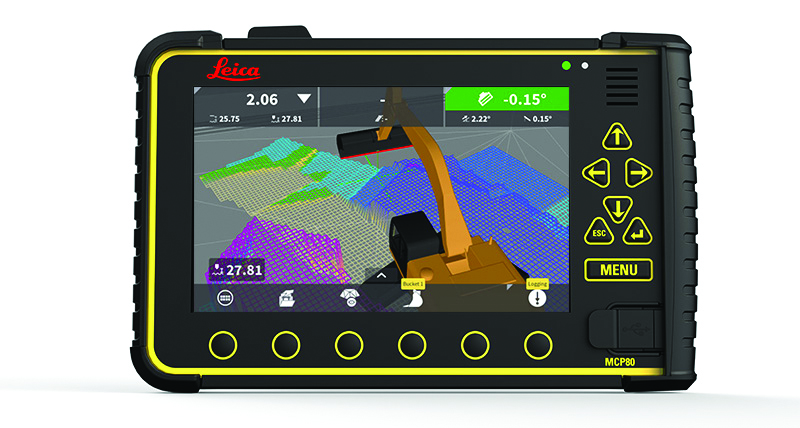
The Leica MC1 software platform is designed to guide and automate machine control solutions.
Leica MC1 machine control software continues to evolve toward achieving a smart digital reality, with features such as Modify Models and surface logging. It compares the design model to the actual position of the machine’s cutting edge, such as the bucket or blade edge. The technology aims to assist operators in positioning machinery to achieve the planned design while allowing for a live digital representation of the progress. The software automatically controls the position of the machine’s cutting edge.
It is carried by the rugged hardware platform, the Leica MCP80 panel and MDS Series docking station, offering an interchangeable panel between machines on a job site. The MC1 platform is supported by the cloud-based Leica ConX productivity platform to offer more efficient management of heavy construction projects.
Leica Geosystems, part of Hexagon, leica-geosystems.com
Abracon has introduced a new series of GNSS RF antennas designed to elevate location-based services with enhanced accuracy and precision. This new lineup aims to outperform conventional GPS technologies by offering faster signal acquisition, improved tracking capabilities and reduced power consumption.
The antennas support a full spectrum of bands, including L1, L2, L5, and L-band data correction services. It can be used in a variety of sectors — such as agriculture, surveying, the Internet of Things (IoT), mapping, defense and aviation.
The technology is designed to meet the rigorous demands for precise location data across various applications. These antennas offer multi-band and multi-constellation support to ensure broad compatibility. With centimeter-level accuracy, these antennas are crucial for aerospace, defense, asset tracking, geolocation, precision agriculture and industrial IoT.
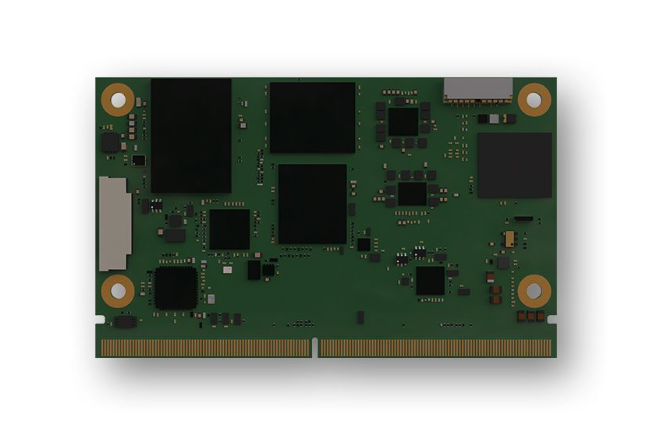
SECO, a global provider of end-to-end technological solutions for the digitalization of industrial products and processes, has released its first Smart Mobility Architecture (SMARC) System on Modules (SoMs) based on Qualcomm QCS6490 and Qualcomm QCS5430 application processors. These new SMARC modules are the first results of SECO’s strategic collaboration with Qualcomm Technologies, announced in September 2023. Both companies aim to help accelerate the development of innovative edge computing products for the industrial internet-of-things (IoT) world.
The SOM-SMARC-QCS6490 is designed to simplify the use of the Qualcomm QCS6490 processor. The chipset offers support for artificial intelligence (AI) and computing, robust performance at low power and expanded interfaces and peripherals catering to diverse industrial use cases.
The Qualcomm Adreno 643 GPU offers enhanced graphics performance and energy efficiency. It supports FHD+ at 120 fps resolution on primary and secondary displays up to 4k Ultra HD at 60Hz. The SOM-SMARC-QCS6490 supports Microsoft Windows 11 IoT Enterprise, Yocto Linux, and Android, with both commercial (0°C to +60°C) and industrial (-30°C to +85°C) temperature variants available.
The SOM-SMARC-QCS5430, powered by the Qualcomm QCS5430, is a mid-tier solution that slightly moderates CPU and GPU performance. This system-on-chip (SoC) combines enhanced connectivity, performance and edge AI-powered camera capabilities. It also provides scope for field software-based upgrades of the CPU and GPU by using the processor’s capabilities.
Vodafone Turkey has integrated Adtran’s Oscilloquartz optical cesium atomic clock technology into its national network. The integration aims to enhance the resilience of network synchronization against disruptions in GNSS signals, a crucial step as the company progresses towards the implementation of 5G services.
The deployment establishes a network-wide synchronization solution capable of maintaining precise timing, even during GNSS outages. This technology is essential for ensuring continuous, reliable connectivity across Vodafone Turkey’s services.
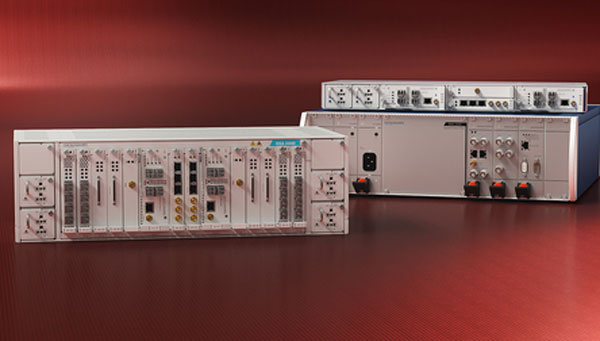
The core of the solution, the Oscilloquartz OSA 3350 ePRC+, uses optical pumping technology for frequency stability. This device, combined with Vodafone Turkey’s existing grandmaster clocks and the Oscilloquartz clock combiner, forms the ePRTC+ system.
The system is designed to achieve a 100-nanosecond accuracy level for a period extending to 45 days, which surpasses the ITU-T G.811.1 standards for network timing.
Vodafone Turkey will implement a system across five strategic sites to mitigate risks associated with GNSS signal loss that can impact network operations and service quality. This aims to enhance redundancy and ensure network stability under challenging conditions including natural disasters and electronic interference.
savvy navvy has released Over the Horizon (OHA) automatic identification systems (AIS) in its latest mobile application update. OHA uses a phone’s internet connection to stream other vessels’ locations in real-time directly to the app to improve safety on the water.
Traditional AIS received from the transceiver on the boat has a range of a few miles, whereas OHA is designed to show vessels further afield. While OHA does require an internet connection, users do not need additional hardware to see information on vessel movements.
“Not all boaters have AIS hardware on their boats,” said says Jelte Liebrand, founder and CEO of savvy navvy. “A recent study found that depending on the vessel type, 30% of boaters, and in some cases even as much as 75%, do not own AIS transceivers. But all these boaters could benefit from OHA AIS to be able to see what’s around them and stay safe.”
OHA AIS allows savvy navvy users to see vessels directly on the chart with small and large vessel crafts defined by different colors. Users can also check how crowded the anchorage might be — either from onboard or while planning routes at home.
The savvy navvy app highlights when no position has been received for more than 30 seconds, which marks the positional variance area around each vessel and allows users to be extra vigilant when navigating.
Available on Android, IOS, PC and Mac, the savvy navvy app can be used on multiple devices and is available in both free and “premium” options with enhanced access and functionalities.
Controlling an earthmoving machine to perform a task requires knowing exactly where its bucket or blade contacts the dirt. Therefore, in addition to knowing the machine’s position, it is necessary to model, in real-time, the rotation at each pivot point and apply some mathematics and trigonometry.
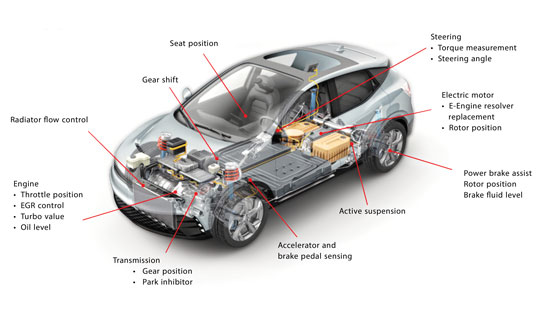
Microchip makes an integrated circuit, known as an inductive position sensor, that is very well suited for machine control because it is not affected by the harsh conditions on most construction sites — temperature extremes, water, dust and dirt — and the vibrations caused by the machine itself. Additionally, it is not affected by the stray magnetic fields generated by electric motors, which are increasingly common on those machines.
Inductive position sensors are used in many automotive systems. (Photo: Microchip)
“We use our inductive position sensing to measure the angle or the linear movement of some sort of target to get a machine to perform its task,” said Mark Smith, product line manager for many different mixed signal products at Microchip. “For example, to control a blade on an earthmoving machine to do something, you need to have feedback about its current angle.”
Microchip also makes sensors for human interfaces, such as accelerator pedals in cars, which no longer have cables that run up to the motor. “Any sort of movement, such as the angles of rotation of a robotic arm, must be monitored and measured. Inductive position sensing is one of the up-and-coming ways to do it,” said Smith.
To direct a task, a central processing unit must then analyze and integrate the data from the sensors. For that, Microchip makes many types of computing elements — including mini-computers and microcontrollers.
“One of the things that’s coming up with many of these vehicles is ambient magnetic noise in the system,” said Smith, “because you’re next to electric motors these days. You want sensors that are immune to stray magnetic fields. We started with automotive, but we’re also seeing it now in industrial environments, including earthmoving vehicles.” Inductive position sensors, Smith said, are simpler, cheaper, lighter, and better able to withstand extreme temperatures than what they are replacing. “Also, because they are non-contact, the circuit board can be environmentally protected.”
Vibrations also are a concern. “There is an air gap between the target and the sensor itself,” Smith said. “We have an automatic gain control at the sensing side that is constantly adjusting the gain to get the maximum signal strength. This is a fast-moving control algorithm that can adjust the gain to ensure that the vibration does not affect the performance. When everything is operating at its maximum torque, this starts to matter.”
Septentrio’s AntaRx GNSS smart antenna — a box containing a receiver, an antenna and supporting electronics — is designed for machine automation and control in construction, precision agriculture and logistics. The smart antenna is enclosed in a rugged and compact housing for simplified installation. It can handle strong shocks and vibrations, which makes it ideal for harsh industrial environments such as construction and mining.
Septentrio’s AntaRx GNSS smart antenna is designed for machine automation and control. (Photo: Septentrio)
From the early stages of the product’s design and development process, Septentrio collaborated with a leading heavy construction machinery OEM, which provided feedback that helped improve the product’s specifications.
I discussed the use of AntaRx for machine control with Silviu Taujan and Danilo Sabbatini, both product managers for the product — the former with a focus on the machine automation market and the latter with a focus on INS.
What type of customers were you addressing?
Taujan: Mainly OEMs and integrators for machine control systems looking for a GNSS receiver with this kind of form factor to build into their control, automation or guidance systems.
Photo: Septentrio
A smart antenna is easy to install on various machines, correct?
Taujan: Yes. It saves space and the cabling is much simpler. We have a single rugged connector for power and data. Our latest generation of GNSS boards has dual antenna support. You can deploy one smart antenna and feed an auxiliary antenna — the AntaRx-AUX — into it for dual antenna heading capability.
Where does the INS come in?
Sabbatini: The GNSS/INS version is the AntaRx-Si3. It has an industrial-grade IMU that gives very high quality sensor fusion to bridge gaps in GNSS or correction signals. It also provides accurate attitude — pitch, roll and heading. We use this INS mostly for applications that require full 3D attitude, and for integrity and availability. It is built for one minute without GNSS.
Does all the processing happen inside the box?
Sabbatini: The output is a 100 Hz fused position. It will be fused by default to GNSS, plus IMU. The system can also accept the platform’s velocity as an extra input for sensor fusion. The output can include the raw GNSS position, the GNSS-only position and the raw IMU data.
What are some use cases?
Sabbatini: For INS, the most important use case is precision agriculture. For many ag robots, a smart antenna is the form factor of choice and most of them require INS sensor fusion. This INS product is the easiest to integrate because everything is fused inside the enclosure. Also, compared to other form factors, the customers do not need to worry about the lever arm between the antenna and the IMU because it’s inside the box, so it’s already taken into account. So, this form factor eliminates all the installation problems inherent to an INS system. The German company Sodex is creating a real time mapping system to install on top of machine controls. Another application is for users who want to close gaps in signals, especially in smaller machines that are going more often between buildings and close to structures.
Taujan: For the version without INS, we’re looking at the more mainstream machine control customers and applications. Even from the conceptual phase of this, we started by engaging with some customers, including one large OEM in the Asian excavator market. Then, from the aftermarket or integrator side, one machine control integrator integrated it into a system for asphalt pavers. These are not yet commercially available systems, but we’re in the development phase with them.
Gundersen & Løken AS, in Oslo, Norway, founded in 1899, develops equipment for the construction industry. It uses Septentrio’s AntaRx in its Dig Pilot 3D machine guidance system, which it began to develop in 2007. The company is now launching the next-generation DigPilot to assist excavator drivers. Its DigPilot Terra user interface and graphics offer a wide range of functionalities for efficient earthwork. The development of DigPilot Terra is funded partly by Innovation Norway.
DigPilot uses multi-axial CAN bus angle sensors on all moving parts — chassis, boom, arm and bucket — to calculate the position of the bucket tip with centimeter precision. The sensors are gyro-stabilized and hold firmware that predicts angles in the coming milliseconds based on angles from the previous milliseconds. These calculated angles are pushed to the computer in the cabin, which can visualize the bucket position in real-time.
DigPilot is a two-antenna system. Until now, it relied on two Septentrio GNSS antennas installed on the rear of the excavator — one to determine the machine’s position and one to determine its heading. These data are fed to the Septentrio GNSS receiver (rover) inside the machine, which also receives correction data via internet or radio. The data from the GNSS rover is pushed to the computer in the cabin and, when combined with the angular sensor data, provides the exact coordinates of the bucket tip and the delta value of the finished project.
Now, Septentrio’s AntaRx technology makes DigPilot’s installation simpler and more robust because the built-in GNSS rover in one of the rear antennas greatly reduces the amount of cabling and the number of connectors.
I discussed DigPilot with Eric Floberg, the company’s managing director since 2019 when he took over from his father, and Erik Sørngård, the company’s R&D manager, who has been working with Septentrio products for 12 years.
When did you start working with Septentrio on AntaRx for DigPilot? At what stage of deployment is it?
Sørngård: We began to discuss features about four years ago. At that time, we had worked with other Septentrio products for eight years. So, they appreciated our cooperation and wanted to show us where their next stage in development was heading. Last year, they approached us again, to see whether we could start looking further into it.
Floberg: We now have one system here for testing and we have experience from the previous Septentrio products, such as the rover GNSS receivers, which have always given us the best of accuracy. Of course, now, we see the potential to make our system more robust and simpler. As soon as we have sold out the existing Septentrio products, we will incorporate the AntaRx into our next-generation machine control system.
Is DigPilot receiver-agnostic, even though you have a preference for the AntaRx?
Floberg: All the connections, the cabling and the components themselves are exposed to very tough environments and stresses of different kinds, such as extreme temperatures and vibrations. So, reducing the number of components and connections and cabling would definitely give us a higher uptime, which is the most important thing for our end users.
Having the antenna and the receiver in the same box means less cabling and easier installation, correct?
Floberg: Definitely. The anti-theft aspect here is also very important. In certain parts of the world, you will appreciate the opportunity to easily remove it from your excavator or bulldozer when you leave at night.
What are the key challenges?
Floberg: This winter has been the toughest one in Norway in 30 years. We have also had the chance to do some testing in very low temperatures and harsh environments. When we see it work as well as it does, we feel very confident about it.
What accuracy have you been getting?
Sørngård: When it comes to machine control, we look at the end result on the tip of the bucket. We have several sensors, and we have to calibrate the machine accurately. The receiver is not the biggest contribution to the noise in the algorithms. We trust that the Septentrio receiver delivers accurate numbers, and we must push ourselves to make the rest of the system meet the same standards.
Floberg: On 30-ton or 40-ton excavators with booms up to 10 meters long we are able to get sub-centimeter accuracy, but the tip of the bucket in such a machine is 1 in thick. Of course, there are many other factors, such as the wear and tear of the machine.
Is DigPilot typically factory-installed or aftermarket?
Floberg: We’ll do both. We are often called by the distributor — say, Volvo or Hitachi or Kobelco — to install an integrated system.
BAE Systems has been awarded a contract by Boeing to enhance the U.S. Navy’s MQ-25 unmanned aerial refueling system with a modernized vehicle management system computer (VMSC). This upgrade aims to enhance the computing power of the MQ-25 and address both obsolescence issues and overall aircraft performance for future operations.
The MQ-25 — recognized as the Navy’s inaugural operational carrier-based UAV — is primarily tasked with aerial refueling capabilities designed to alleviate the burden on F/A-18 aircraft and improve the fleet’s operational flexibility.
The next-generation VMSC developed by BAE Systems is key to controlling the MQ-25’s flight surfaces and managing the vehicle. The upgrade is designed to enhance the MQ-25’s functionality and make its critical missions more efficient by consolidating hardware components into a single computer system.
The VMSC upgrade will incorporate quad-core processors, which augment the system’s computing power without increasing its size, weight, or power consumption. The selection of a multi-core processor, already qualified on another U.S. military platform, aims to mitigate cost, schedule, and integration risks associated with the MQ-25 program.
By replacing multiple onboard computers with a single VMSC, the upgrade is expected to improve aircraft reliability and decrease the total cost of ownership for the Navy. Additionally, the VMSC is designed to support the expansion of the MQ-25’s mission set, potentially including intelligence, surveillance and reconnaissance (ISR) capabilities, and to establish a foundation for future carrier-based unmanned systems through the implementation of manned-unmanned teaming (MUM-T) operational concepts.
The VMSC enhancement work is conducted at BAE Systems’ engineering and manufacturing facility in Endicott, New York, underscoring the company’s commitment to advancing the U.S. Navy’s unmanned aerial capabilities.
The Global Earth Observation Decentralized Network (GEODNET) Foundation — the organization governing the blockchain-based global navigation network GEODNET — has completed a $3.5 million seed funding round. The round was led by North Island Ventures, with participation from Modular Capital, Road Capital, Tangent, Reverie, and select angels, who join existing GEODNET backers Borderless, IoTeX and JDI Ventures.
The GEODNET Foundation is building a Global Navigation Satellite System (GNSS) reference network for positioning based on real-time kinematics (RTK). Standard GPS is typically off by two meters; however, devices connected to GEODNET’s global RTK network are designed to achieve instant accuracy within 1 cm to 2 cm. Many internet-of-things (IoT) and autonomous applications, such as UAVs, smart mowers and advanced driver assistance systems (ADAS), have shifted to RTK in place of standard GPS positioning, the company said.
GEODNET is a community-based decentralized physical infrastructure network (DePIN). Anyone can contribute to the network by installing and operating a reference station, known as a satellite miner. Satellite miners are designed to deliver precise RTK correction data to devices equipped with GNSS receivers in a range of approximately 20 km to 40 km. By building and participating in the network, satellite mining operators earn GEOD tokens.
GEODNET has more than 4,000 registered reference stations in more than 2,500 cities across 120 countries. GEODNET aims to provide robust precision navigation systems to a variety of industries, including self-driving cars, agriculture, consumer robots, and more.